Best Anchors and Windlasses for Sailboats
The anchor is the piece of gear you rely on when everything else is off. Here's how to choose one — plus the windlass that will lift it reliably for a decade of cruising.
Sailboat Atlas may earn a commission from qualifying purchases made through links on this page, at no extra cost to you.
How to choose an anchor
Size up, not to spec
Manufacturer size tables are based on average conditions with a properly deployed rode. Real cruising means anchoring in squalls, crowded harbors with short scope, and grass. Almost every experienced cruiser recommends going one size up from the manufacturer's chart. The weight penalty is small; the confidence gain is enormous.
Modern scoop designs vs. legacy
The last 20 years have produced dramatically better anchors than the CQR, Bruce, and Danforth designs that came before. Concave scoops (Rocna, Spade, Mantus, Ultra) dig in faster and hold harder in the sand and mud that make up 80% of anchorages. There's no good reason to buy a legacy plow or claw as a primary anchor on a new cruising boat.
All chain vs. rope-and-chain
All-chain rode is the standard for cruising sailboats over 35 feet: it doesn't chafe, it adds catenary that damps loads, and modern windlasses handle it cleanly. Rope-and-chain works fine for smaller boats and can save significant weight in the bow — 30 feet of chain plus 200 feet of nylon is a reasonable compromise for a 30-footer.
Best anchors
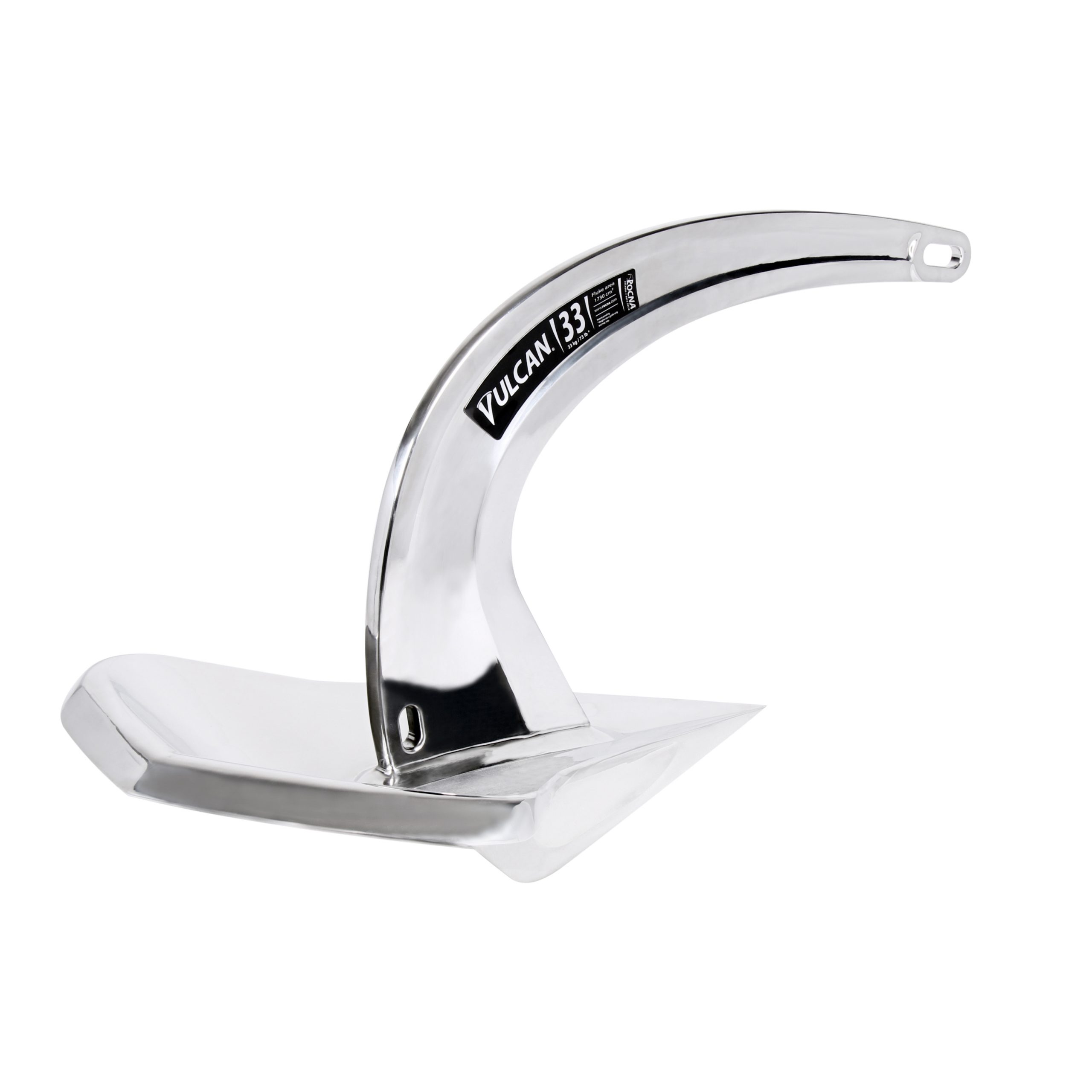
Rocna Vulcan
Best all-around modern-scoop anchor
The Vulcan is Rocna's rollbar-less design and it's become the default modern anchor for cruising sailboats. It sets fast, holds hard, and resets quickly when the wind shifts overnight — the failure mode that drags most anchors. Independent anchor testing puts it in the top tier along with the Mantus M1 and Spade, but the Vulcan tends to fit stock bow rollers better than either. For a boat you'd trust in a squall, this is the default.
- Boat size
- 20 kg (44 lb) fits 33–43 ft; sizes from 9 kg to 100 kg
- Best bottoms
- Excellent in sand, mud, and mixed; solid in weed
- Typical price
- $650–$1,500 depending on size
Pros
- Sets in a boat length or less in most bottoms — noticeably faster than plow-style anchors
- Rollbar-free design (unlike original Rocna) fits stock bow rollers on more boats
- Independently tested to hold well above rated load in sand and mud
- Concave scoop keeps it dug in as wind shifts, rather than pulling out
Cons
- Struggles in hard rocky bottoms where any anchor is a compromise
- Galvanizing wears through in about 5–7 years of daily cruising; plan on re-galvanizing
- Expensive compared to legacy anchor designs — but this is not the place to save money
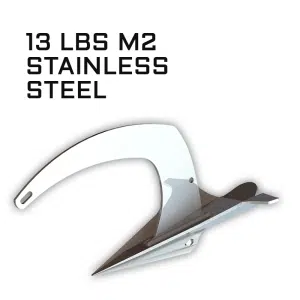
Mantus M2
Best for weed and grass bottoms
If you cruise the Chesapeake, Long Island Sound, the Med, or anywhere with turtle grass and mixed weedy bottoms, the M2 is the anchor to specify. The sharp toe cuts through vegetation that skates a Vulcan or CQR across the top. The disassembly feature also matters more than it sounds — it lets you carry a proper storm-size anchor in a locker for a second bow anchor without dedicating rail space.
- Boat size
- 45 lb fits 40 ft; 65 lb fits 45 ft — Mantus recommends generous sizing
- Best bottoms
- Best-in-class weed penetration; also excellent in sand and mud
- Typical price
- $700–$1,400
Pros
- Sharp toe design penetrates weed and grass that trips other anchors
- Disassembles into three parts — the only major cruising anchor you can stow flat
- Roll bar guarantees fluke-down orientation on set
- Independent testing shows top-tier holding across bottom types
Cons
- Assembly bolts need thread-locker and periodic checking
- Rollbar can interfere with some anchor rollers — measure carefully
- Slightly slower to reset in shifting wind than the Vulcan
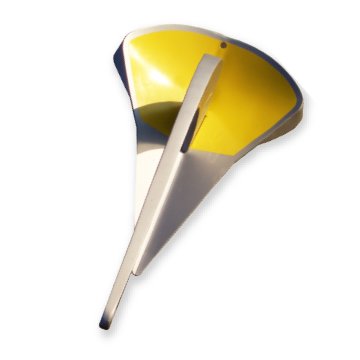
Spade Anchor A140
Best premium build-quality
The Spade is the anchor cruising sailors mention when the conversation turns to 'if money was no object.' The lead-loaded tip drives into the bottom faster than anything else, and the reputation among ocean voyagers is deservedly strong. If your budget stretches to it, and especially if you cruise remote or high-latitude waters where dragging is expensive, this is the pick.
- Boat size
- A140 (30 kg) fits 39–52 ft; sizes from 4 kg to 200 kg
- Best bottoms
- Excellent in sand, mud, gravel; adequate in weed
- Typical price
- $1,100–$2,800
Pros
- Concentrated tip loading gets the fluke dug in fastest of any anchor tested
- Removable shank makes stowage possible where fixed-shank anchors won't fit
- Widely regarded as the anchor of choice by high-latitude and long-distance voyagers
- Galvanized-steel or stainless variants available
Cons
- Most expensive mainstream cruising anchor by a significant margin
- Slower delivery in some regions than Rocna or Mantus
- Larger sizes are heavy to handle when re-galvanizing or servicing
Best windlasses
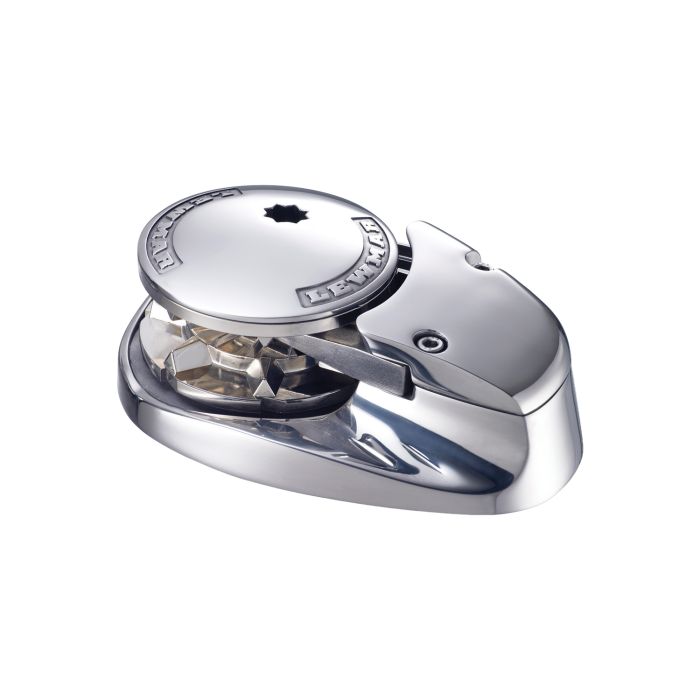
Lewmar V700 (with capstan)
Best overall for 30–45 ft cruisers
The V700 is the default vertical windlass on modern production cruisers because it works. Sized right for 5/16" chain on a 35–45 ft boat, it lifts a properly sized chain-and-rode setup without struggling, and the vertical motor location keeps the mechanicals dry. Most cruisers don't need more windlass than this, and the ones who do are pulling 3/8" chain and stepping up to the V3 or V4 anyway.
- Max pull
- 700 lb (317 kg) working load
- Chain
- 5/16" (8 mm) G4, G43, ISO Grade 4/40 compatible
- Typical price
- $1,600–$2,200
Pros
- Standard on many new production cruisers — proven, well-supported design
- Vertical layout keeps the motor and gearbox below deck, protected from weather
- Optional deck capstan handles secondary line duties (kedge, warp)
- Parts available from any Lewmar dealer worldwide
Cons
- Motor amperage is high enough to warrant a dedicated large-gauge cable run from the house bank
- Chain gypsy must match your exact chain spec — get this wrong and it slips
- Deck cut-out is significant; not a trivial retrofit

Maxwell RC10-10
Best for larger cruising boats
For cruisers at the larger end (45+ feet, 3/8" chain, 100+ ft of rode routinely deployed), the RC10-10 is the windlass that won't be the weak link. Maxwell has built ground tackle for commercial workboats for decades and the pedigree shows — this is a windlass you specify and forget about. If your boat is smaller, spend the money elsewhere.
- Max pull
- 2,200 lb (1,000 kg) working load
- Chain
- 3/8" (10 mm) G4/G43
- Typical price
- $3,500–$4,800
Pros
- Heavy-duty motor and gearbox designed for daily cruising use — not weekend loads
- Automatic chain-flip and clean rope-to-chain transition on rope/chain rodes
- Excellent build quality; Maxwell windlasses regularly hit 20+ years of service
- Deck capstan handles anchor lines and secondary loads with authority
Cons
- Serious price step up from mid-size windlasses
- Motor pulls heavy amperage — cable and breaker sizing is not trivial
- Overkill for boats under 45 ft with proper 5/16" chain
Frequently asked questions
How much anchor rode should I carry?
Enough to anchor at 7:1 scope in the deepest anchorage you'll visit. For most coastal cruisers that's 200 ft of chain; for offshore or higher-latitude cruising, plan on 300+ ft.
Do I really need a windlass?
On any boat over 30 ft with all-chain rode, effectively yes. Manual retrieval of 100+ feet of 5/16\" chain and a proper anchor is a young-person's exercise that gets old fast.
What's the best second anchor?
A Fortress FX-37 aluminum Danforth-style stowed in a cockpit locker. Light, cheap, and holds spectacularly well in sand and mud as a kedge or backup.