Guide
Types of Sailboats: A Complete Guide
Sailboats come in a wide range of hull shapes and rig configurations. This guide walks through the main sailing boat types you'll encounter — from small dinghies to offshore cruising catamarans — and what each one is built for. When you're ready to look at specific models, browse the sailboat atlas.
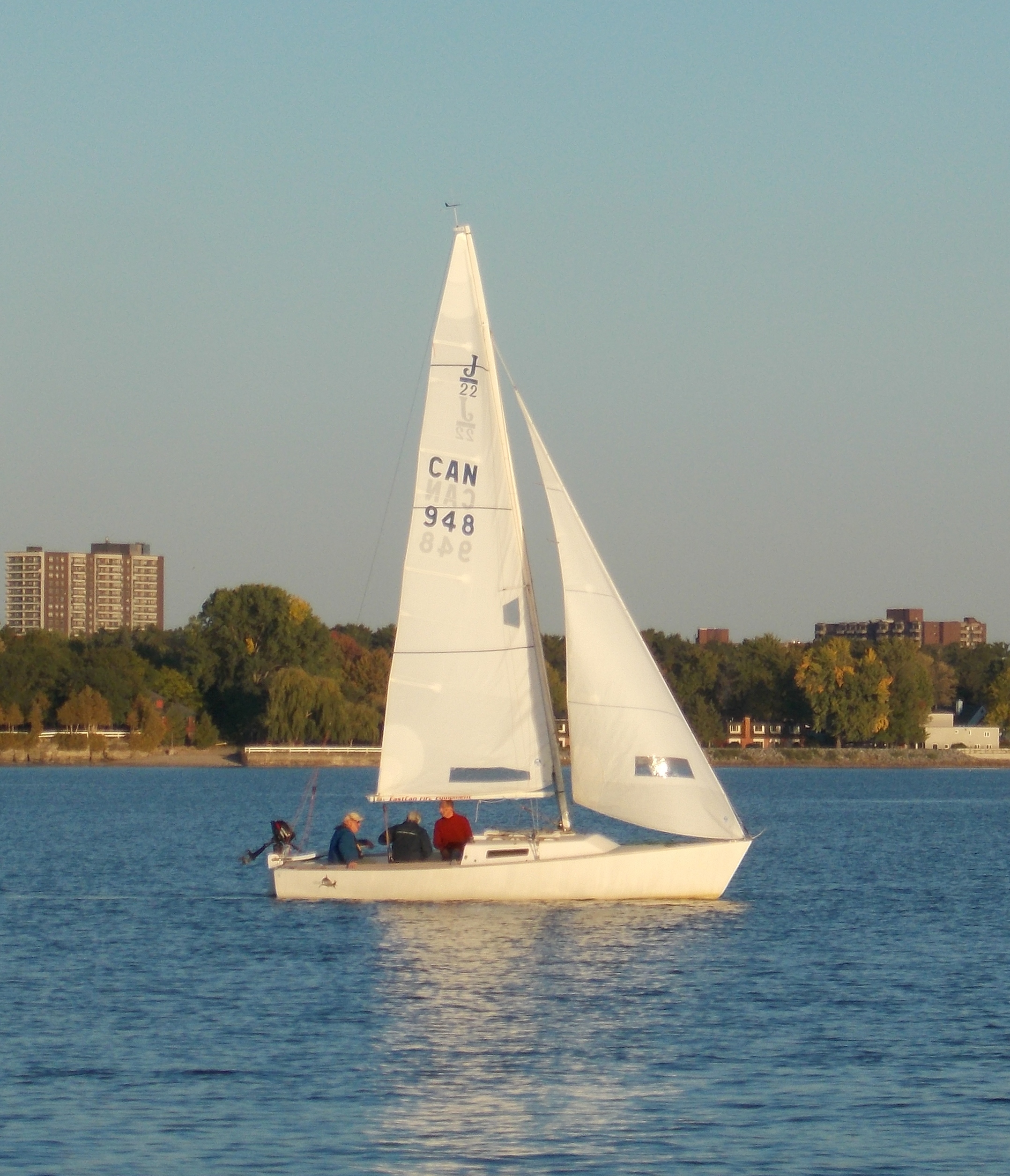
Sloop
The most common modern sailboat rig: a single mast with one mainsail and one headsail (jib or genoa).
Best for: Coastal cruising, club racing, learning to sail, and single-handed sailing.
Sloops are efficient upwind and simple to handle thanks to their minimal sail plan. The Bermuda (or Marconi) sloop is the standard today, with a tall triangular mainsail. Fractional sloops put the forestay below the masthead for easier sail trim, while masthead sloops carry larger headsails for power off the wind.
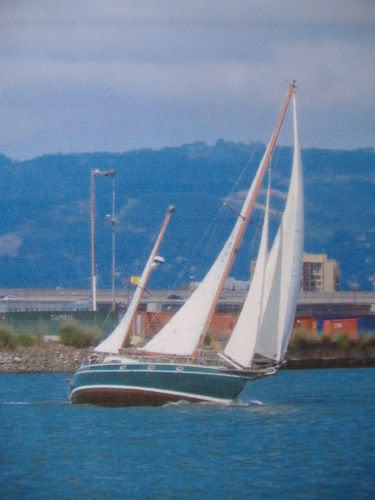
Cutter
A single-masted rig that flies two headsails — a yankee or jib forward and a smaller staysail behind it.
Best for: Offshore passages, heavy weather, and long-distance cruising.
Splitting the foretriangle gives cutters more sail combinations and smaller, more manageable sails when the wind builds. The inner staysail is especially useful when reefing down in a blow. Many bluewater cruising boats are cutter-rigged or sloop-with-removable-inner-stay 'slutters'.
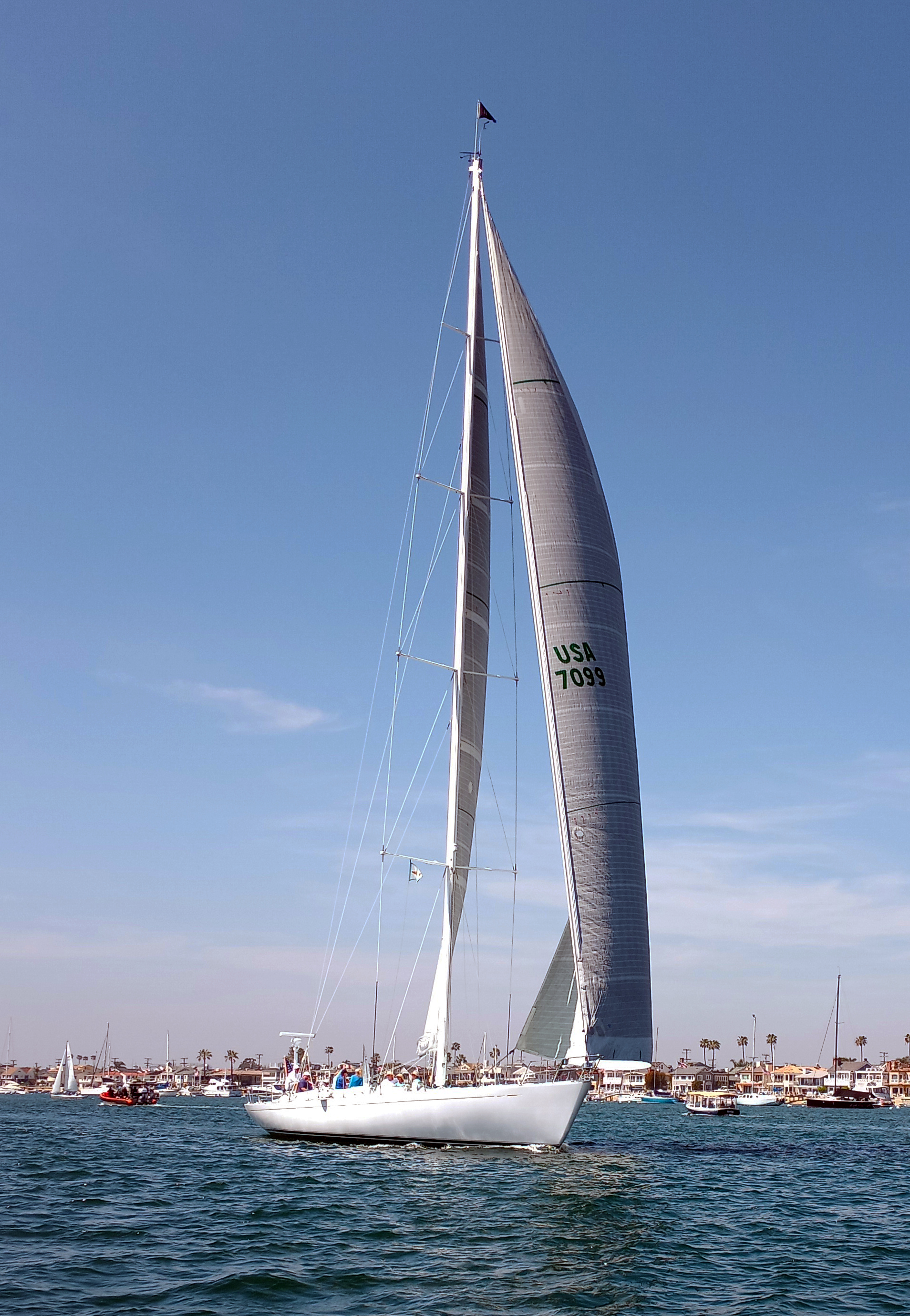
Ketch
A two-masted rig with a tall mainmast forward and a shorter mizzenmast stepped ahead of the rudder post.
Best for: Comfortable long-distance cruising and shorthanded crews.
The divided sail plan means smaller individual sails, making the boat easier on aging arms and small crews. The mizzen also doubles as a 'riding sail' at anchor and can balance the helm in heavy weather. Ketches give up some upwind performance compared with a sloop of the same size.
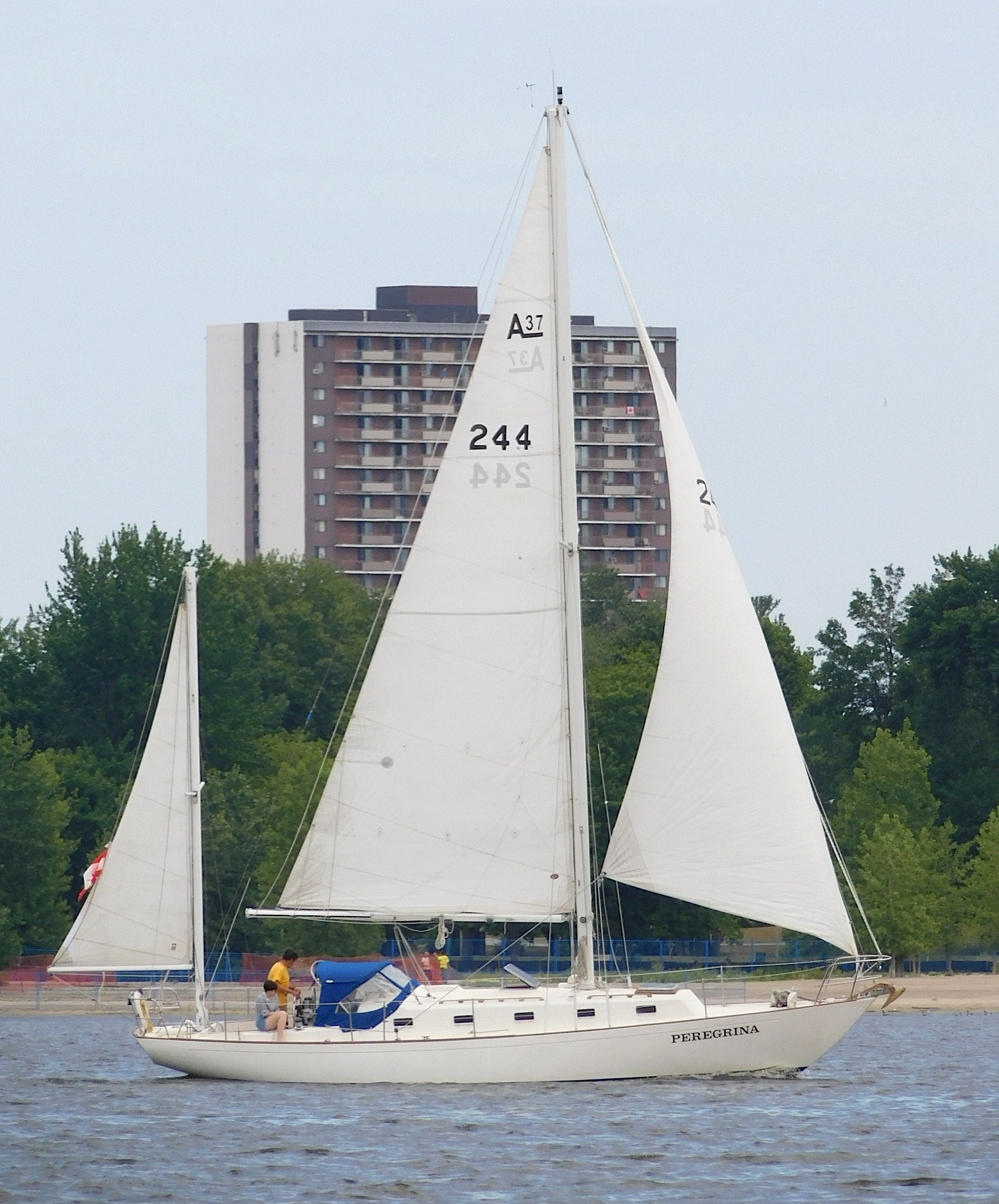
Yawl
Similar to a ketch but with the mizzenmast stepped behind the rudder post, and usually much smaller.
Best for: Traditional cruising, classic-boat racing, and balancing the helm.
The yawl's mizzen is primarily a trim sail. It is less powerful than a ketch's mizzen but adds versatility for heaving-to and balancing the boat under reduced sail. Yawls are a common rig on classic American cruisers from the mid-20th century.
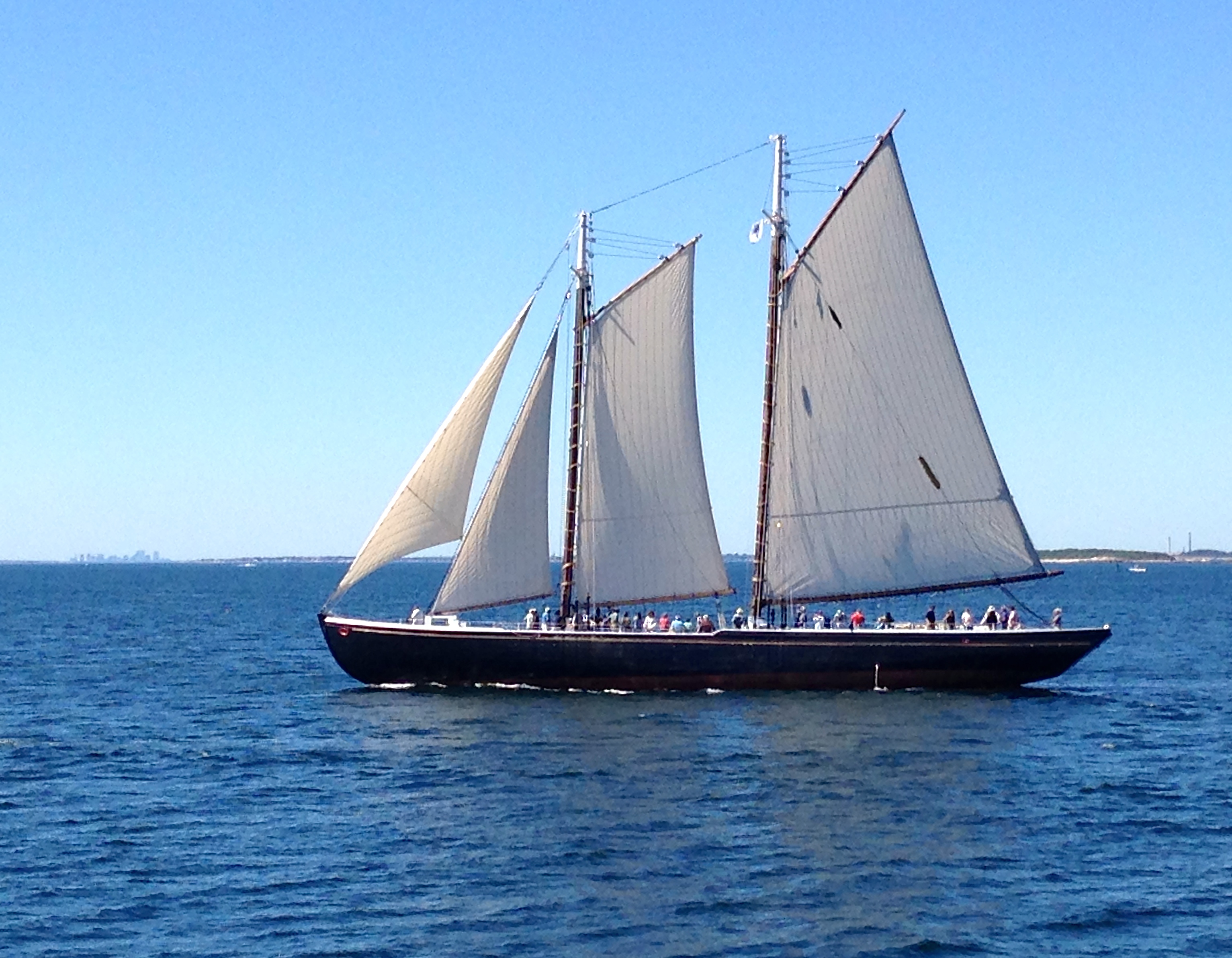
Schooner
Two or more masts with the forward mast shorter than (or equal to) the main aft mast.
Best for: Coastal cruising in steady winds, charter, and traditional sailing.
Schooners excel in reaching conditions and look magnificent under sail, but they require more crew to handle the multiple sails and are not as efficient upwind as a Bermuda sloop. Gaff-rigged schooners remain popular in classic and replica fleets.
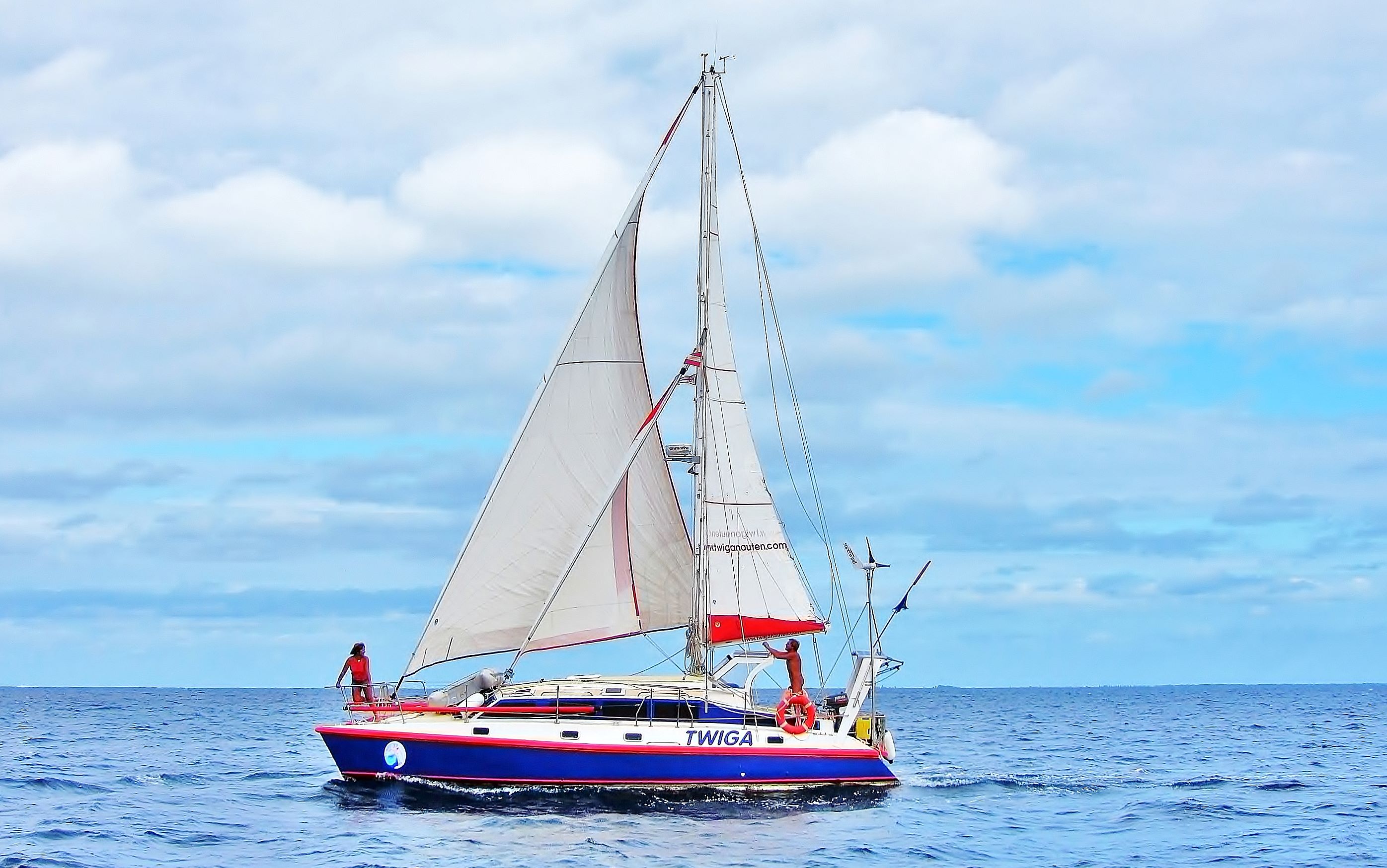
Catamaran
Two parallel hulls joined by a deck or bridgedeck. Usually sloop-rigged on a single mast above the bridgedeck.
Best for: Charter, liveaboard cruising, and stable family sailing.
Catamarans offer huge interior volume, level sailing, shallow draft, and high average speeds. The trade-offs are higher slip and haul-out costs, less feel through the helm, and reduced upwind performance compared with a deep-keel monohull.
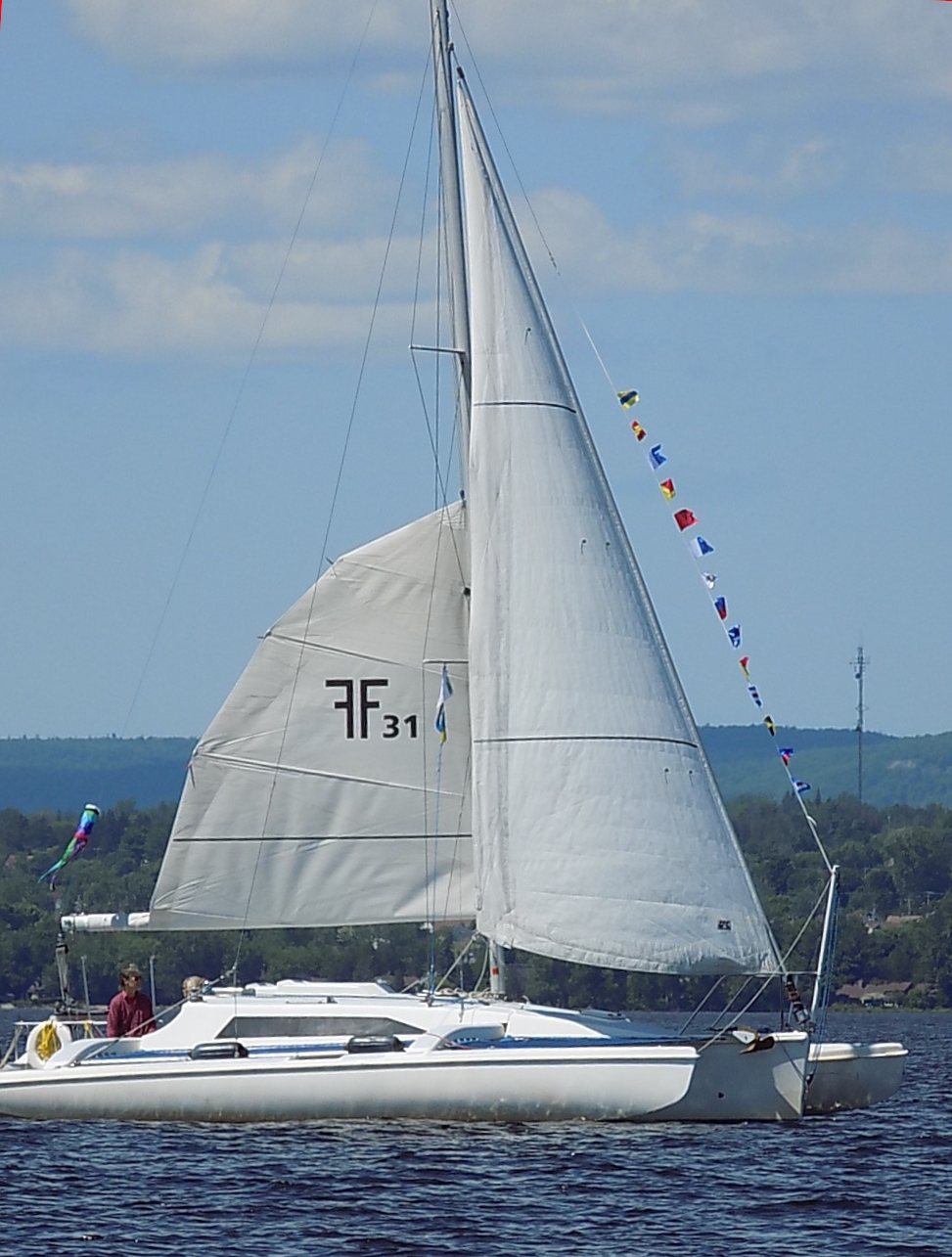
Trimaran
A central main hull flanked by two smaller outrigger amas. Very fast and stable.
Best for: Performance cruising and shorthanded fast passages.
Trimarans combine the speed of a multihull with sharper handling than a catamaran. Modern folding trimarans (Corsair, Dragonfly) trailer easily, which makes them popular for sailors without permanent dockage.
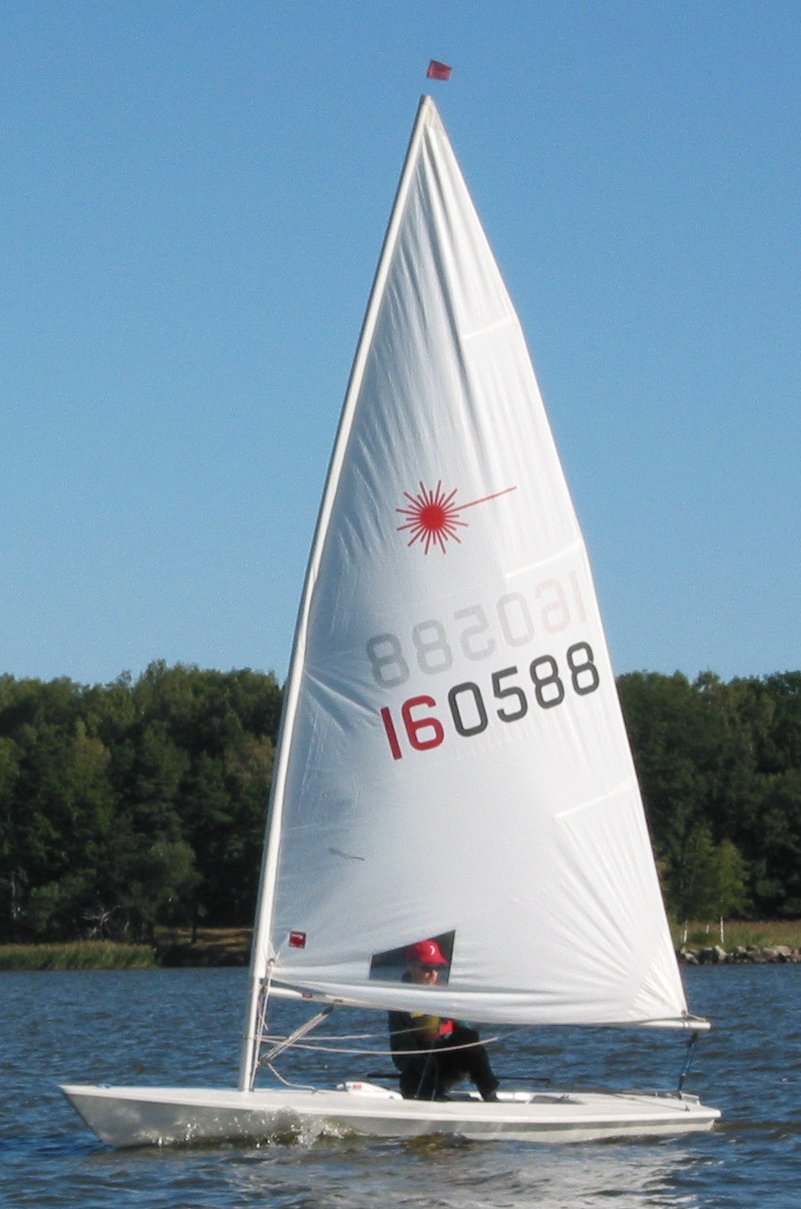
Dinghy
Small open sailboats, typically under 16 feet, sailed by one or two people.
Best for: Learning to sail, racing, and small-water sailing.
Dinghies like the Optimist, Laser (ILCA), 420, and Sunfish are the backbone of sailing instruction worldwide. Their immediate response teaches sail trim and weight placement better than any keelboat.
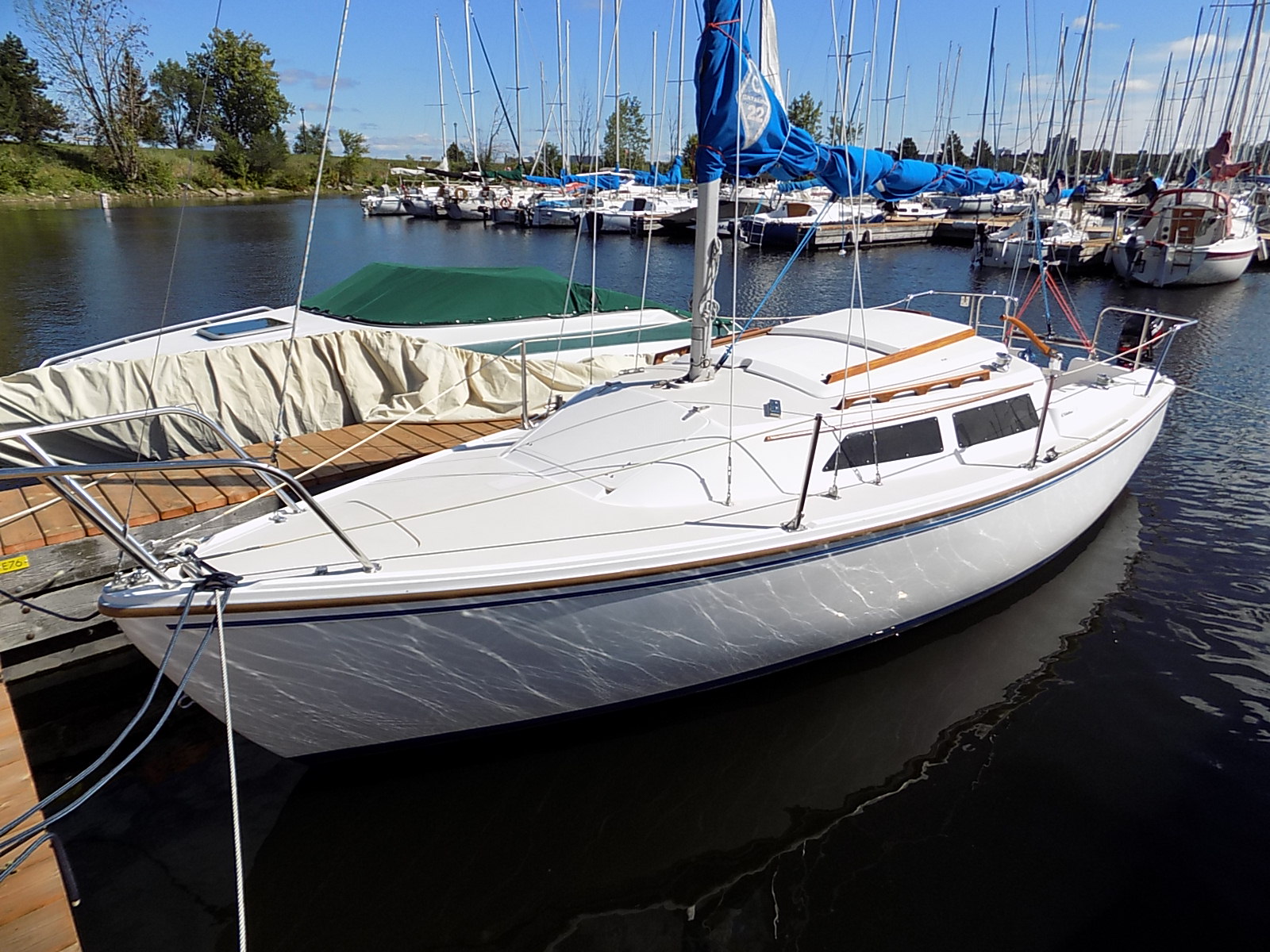
Daysailer / Keelboat
Small ballasted sailboats, usually 14–26 feet, designed for short outings rather than overnight cruising.
Best for: Lakes, bays, and afternoon sailing without the maintenance of a bigger boat.
Daysailers like the Catalina 22, Flying Scot, and Sonar add a fixed keel or swing keel for stability while keeping a simple sail plan. Many have a small cuddy for shelter and gear but no full cabin.
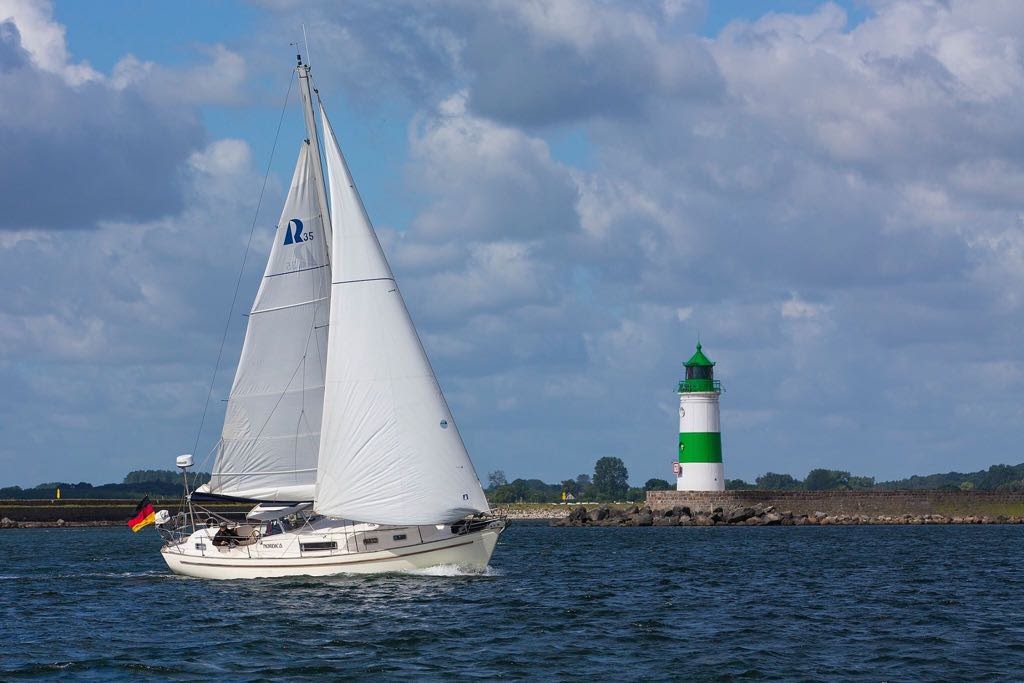
Cruising Sailboat
Monohull keelboats from roughly 27 to 50+ feet built for overnight passages, with full galley, head, and berths.
Best for: Coastal cruising, liveaboard sailing, and offshore voyaging.
Cruising sailboats prioritize interior comfort, tankage, and storage over outright speed. Most are sloop or cutter rigged. Bluewater cruisers add heavier scantlings, smaller windows, and offshore safety features like solid handholds and high cockpit coamings.
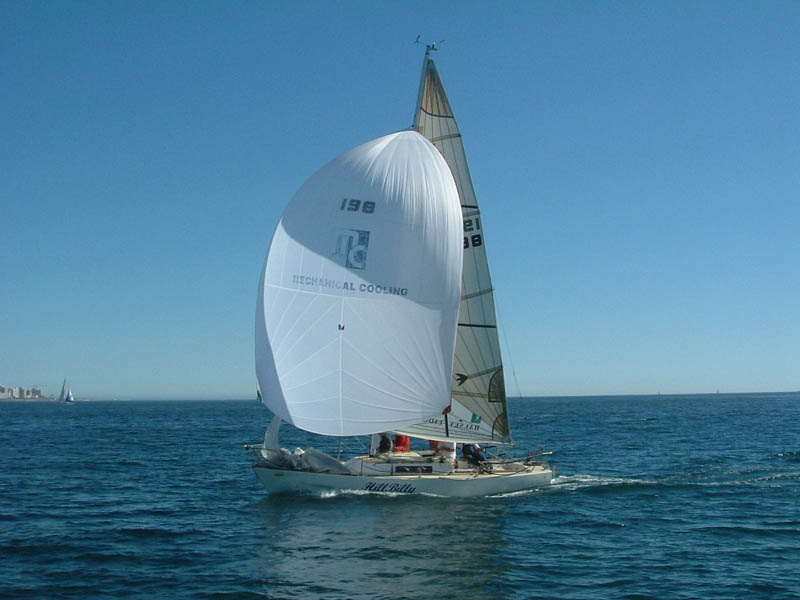
Racing Sailboat
Light, stiff monohulls optimized for performance under a rating rule or one-design class.
Best for: Buoy racing, distance racing, and high-performance sailing.
Racers carry tall rigs, deep keels, and minimal interiors. One-design classes (J/70, Melges 24, Etchells) keep the boats identical so the crew makes the difference; handicap racers (IRC, ORC, PHRF) compete across designs using a rating.
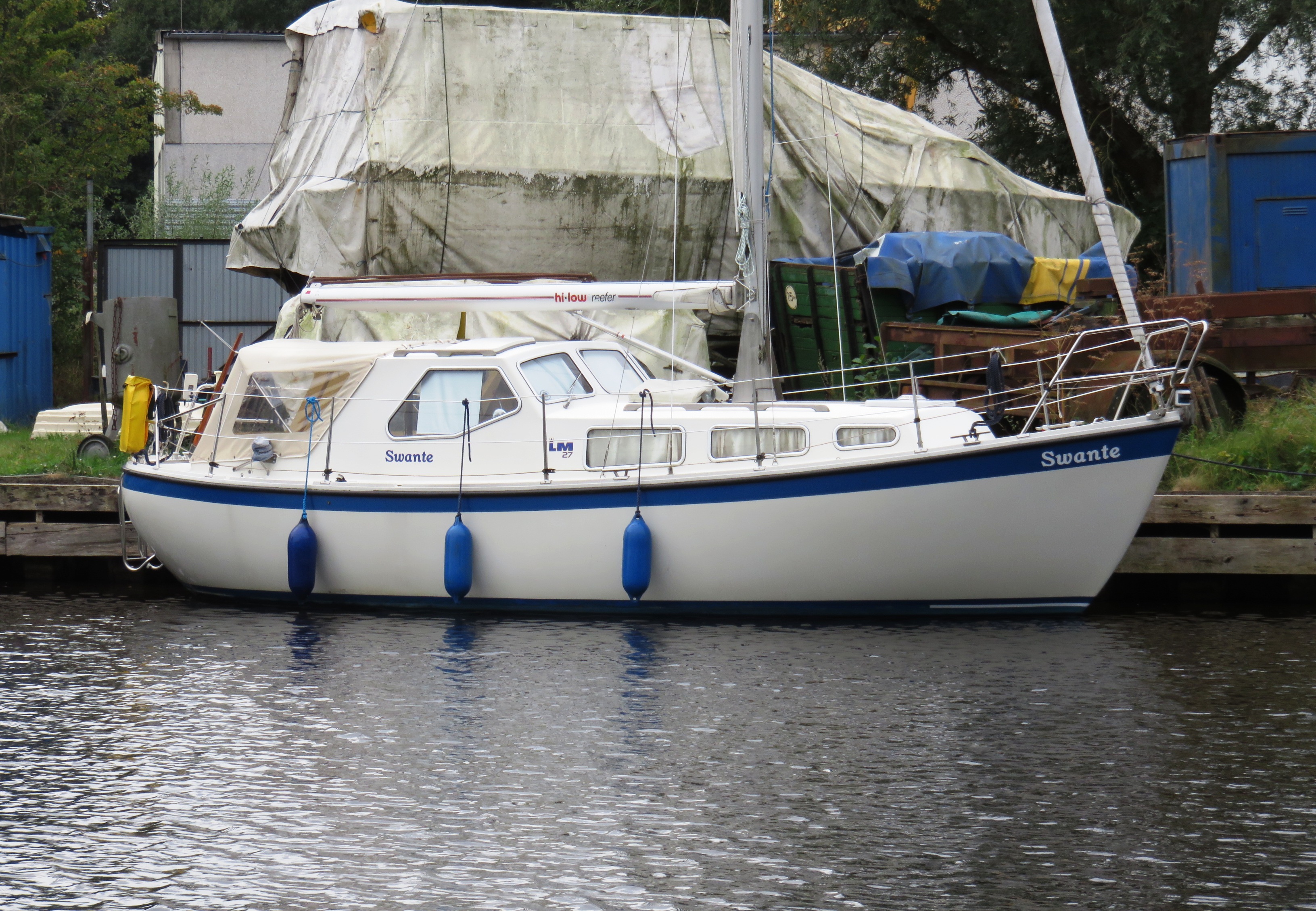
Motorsailer
A hybrid that gives equal weight to sail and engine power, with a generous deckhouse and large fuel tanks.
Best for: All-weather cruising and sailors who want to make schedule.
Motorsailers sail respectably but never as well as a dedicated sailboat. In exchange you get a heated pilothouse, a strong powerplant, and the ability to motor straight into a head sea — popular in the Pacific Northwest, northern Europe, and other rough-weather waters.
How to choose
Start with the kind of sailing you actually plan to do — afternoon sails on a lake, weekend coastal trips, or an offshore passage — then work backward to the rig and hull form that fits. A simple sloop covers the majority of recreational sailing. Cutters and ketches earn their keep on long passages. Catamarans shine for charter and liveaboard. Dinghies are unbeatable for learning.
Related guides
 Boats
BoatsBest Liveaboard Sailboats
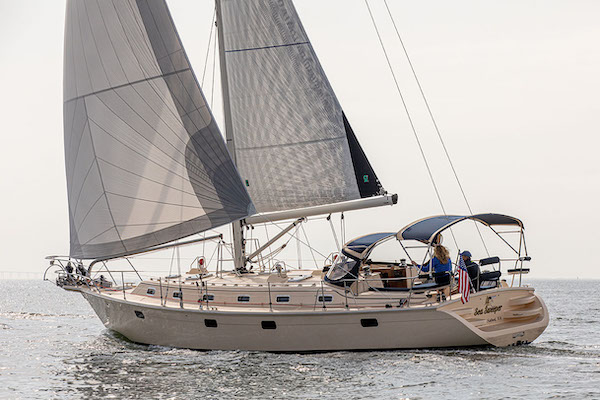
Monohulls and catamarans compared for full-time living — space, running costs, comfort at anchor and systems.
 Reference
Sailboat Keel Types Explained: Fin, Full, Wing and Swing
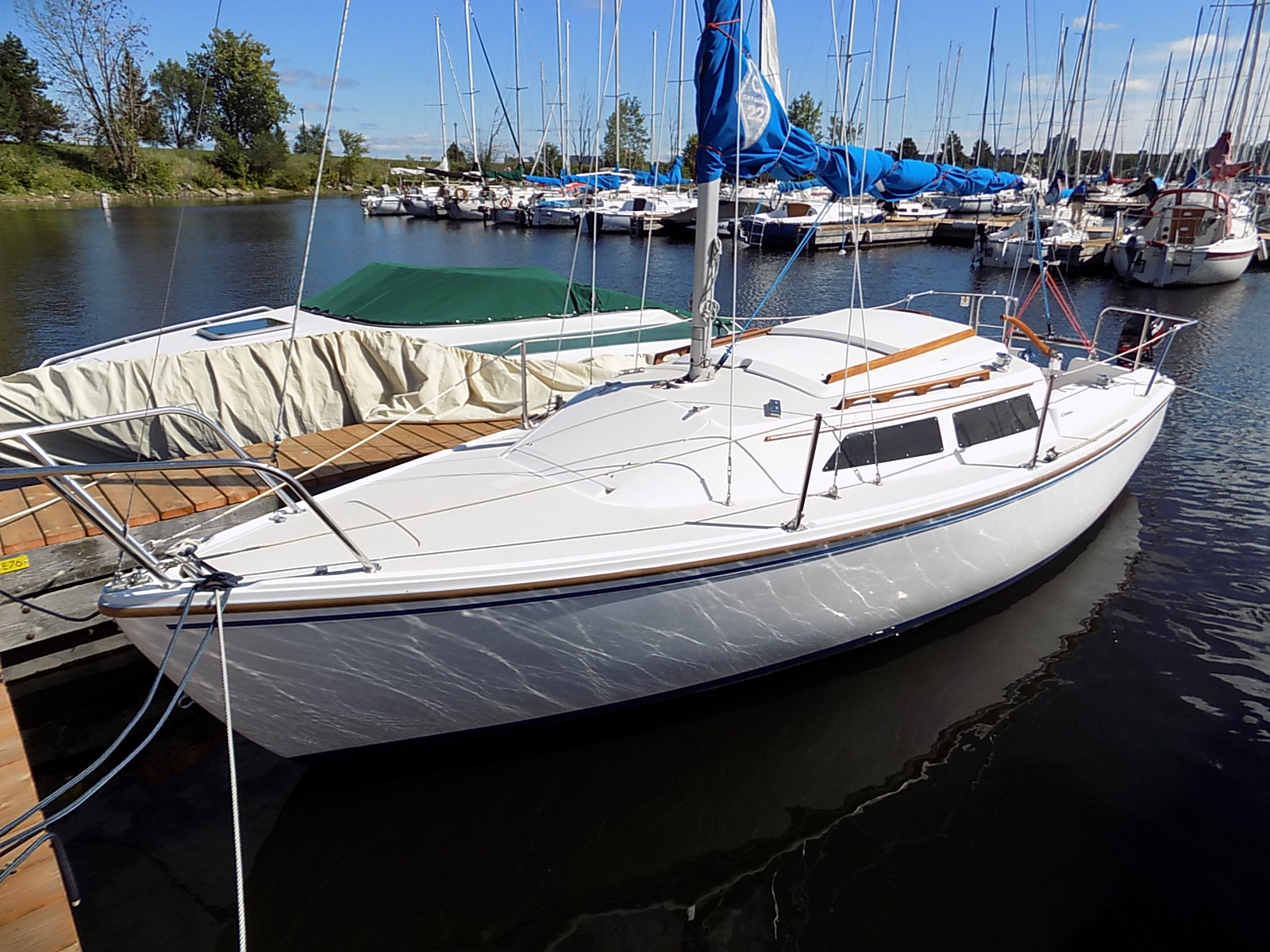
How fin, full, bulb, wing, bilge and swing keels differ in draft, stability and handling, and which keel suits your sailing grounds.
 Reference
What It Really Costs to Own a 40-Foot Sailboat
A realistic annual budget for a 40-footer: dockage, insurance, haul-outs, rigging, sails, engine work and the costs owners forget.
 Reference
Sailboat Insurance Explained: Costs and Coverage Gaps
What boat insurance costs, how navigation limits and named-storm clauses work, and the exclusions that catch cruisers out.