
Sailboat Insurance Explained: What It Costs and What It Won't Cover
Most sailing yachts in the US are insured for roughly 1-3 percent of hull value a year — so a $120,000 fiberglass cruiser typically pays somewhere between $1,200 and $3,600 annually for a policy covering hull damage, third-party liability, salvage and wreck removal, with the price moving on where the boat sleeps, how old she is, and whether the owner can document her condition. A trailer-sailer may cost a couple of hundred dollars; a wooden boat on a mooring in hurricane country may be declined outright.
The more useful question is not what the premium is but what the policy does not do. Wear and tear is not covered. A dead engine is not covered. A hose that has been weeping all season is not covered. And a claim made against a boat whose maintenance cannot be documented is the point at which owners discover they have been buying a receipt rather than a risk transfer.
This guide walks through how marine policies are actually structured, what drives the rate, the exclusions that catch owners, how the survey and the claims process work, and what you can do — including a short list of equipment that makes an underwriter's decision easier — to pay less and be better protected at the same time.
Sailboat Atlas may earn a commission from qualifying purchases made through links on this page, at no extra cost to you.
How a marine policy is actually built
A cruising boat's insurance is usually three products in one folder. The hull policy covers physical damage to the boat, her spars, sails and equipment, on the same logic as a car's comprehensive cover: a list of named perils or an all-risks wording, a deductible, and a limit of liability. The protection and indemnity (P&I) section covers third-party liability — injury to someone else's crew, damage to a dock or another vessel, medical payments, and, critically, wreck removal and pollution liability, which are the exposures that can exceed the boat's value. The warranties page sets the conditions you must satisfy for either of those to respond, and it is the part of the policy that gets read for the first time during a claim.
On top of that structure sit the valuation choices. An agreed value policy fixes the boat's worth in advance and pays it on a total loss. A market value or actual cash value policy pays what the boat was worth immediately before the loss, determined after the fact, with depreciation applied. Endorsements can add or remove specific things: personal effects, racing, towing, a mooring instead of a slip, a charter operation, or machinery breakdown. Every one of those choices is negotiable and every one is priced.
What drives the premium
Where the boat sleeps is the dominant factor. A slip in a named-storm corridor, a mooring in shallow water with a lee shore, and a boat on a trailer in a driveway are three different risk pools, and the rate differences are large. Hull material and age come next: fiberglass is cheap to write, steel is written by a handful of specialists, aluminium by fewer still, and wood is often only insurable with a survey and a strict maintenance record. Construction quality and design matter more than owners expect — a proven production cruiser with a documented history is a straightforward submission; a one-off or a heavily modified boat may need an agreed value inspection and a broker who likes you.
How the boat is used sets the tone of the whole policy. Coastal day sailing and weekend cruising is the base rate. Offshore and ocean voyages add an exposure rating and sometimes a crew requirement. Charter and racing are different markets entirely and must be declared — an undisclosed charter is one of the fastest ways to have a claim declined. Finally, the owner's record: training certificates, a clean claims history, a recent survey and a rigging report all move the number, and a lapse in coverage or a couple of small claims can move it the other way.
If you want the honest summary of how the market thinks: it is far more interested in your maintenance records than in your boat's price. A modest, documented, well-kept boat is often easier to insure than an expensive one with a cloudy history.
What is covered, in plain terms
Under a typical hull policy you are looking at damage from collision, grounding, sinking, fire, explosion, lightning, theft and vandalism, storm damage within the policy's weather conditions, and damage caused by another vessel or by objects in the water. Machinery and electronics damage from a sudden event is generally included; gradual failure is not. Salvage and towage — paying the commercial boat that pulls you off the ledge or brings you in — are usually covered up to a stated limit, and that limit is worth reading, because offshore towage from a shipping lane is expensive. Wreck removal is often a separate limit under the P&I section and is the line most likely to be too small for a boat that goes aground in a sensitive environment.
Unlapped or 'uncharted' warranties, deductibles for in-water storage, and specific arrangements for unattended boats all appear in ordinary policies. A common requirement on boats kept afloat: adequate automatic bilge pumping, sometimes with a specified number of pumps and switches, and sometimes a requirement that shore power be connected or the boat be checked at stated intervals. These are not bureaucratic fictions; they are the insurer's way of pricing the single most common total loss in the fleet, which is a boat sinking quietly at her mooring.
What is not covered, and why owners get burned
The big one is wear and tear and gradual deterioration. Marine policies are not maintenance contracts. A rotting core, a soft deck, a corroded through-hull, a chafed line that eventually lets go, a sail that has given up its shape, a rigging swage that has been quietly corroding — none of those are 'perils'. Where the loss is caused by a maintenance failure, the insurer will often point at the exclusion, and the resulting argument turns on whether the proximate cause was sudden or gradual. That is why the survey and the maintenance file are not paperwork: they are your evidence that the failure was not foreseeable.
Next: mechanical breakdown. A seized engine, a failed transmission, a refrigeration compressor that has slowly lost its charge — ordinarily excluded, occasionally available by endorsement. Then condensation, mould, and rodent damage, which are frequently excluded or capped because they are so common and so tied to inaction. And consequential loss: if your policy excludes the cause, the flooding that follows is often excluded too, which is the trap in a 'weeps for a season then bursts' hose.
Then the operational exclusions. Racing, towing, charter, and crewed delivery must be declared. Navigation limits may be a coastline, a latitude band, or a distance from a safe harbour. Crew warranties can require a minimum number of experienced hands on an ocean passage. And the named storm clause — one of the most frequently misunderstood provisions on the water — typically restricts or voids cover if you sail into a storm after it has been identified in a forecast, or if you fail to take reasonable protective action when one approaches. Read it before hurricane season, not during it.
The survey, the claim, and how the money actually moves
A marine survey is an inspection with a written opinion on condition and value. It is normally required above a certain hull value or on an older boat, and it is done for the insurer: they want to know what they are writing. You get a copy, and it is worth keeping — the survey identifies deferred work, and in a later claim, the existence of a survey plus your records of fixing what it found is powerful evidence of reasonable maintenance. Above a modest value, expect a haul-out survey with the bottom inspected, and consider a separate rigging inspection from a qualified rigger.
In a claim, the practical sequence is: notify the insurer promptly, take photographs before anything is moved or cleaned, stop further damage (mitigation is a policy condition, not a courtesy), get approvals before major work, and expect an adjuster's opinion that may differ from your yard's estimate. Total losses are usually 'constructive' — the repair estimate exceeds a stated percentage of value — and on an agreed value policy the settlement is the agreed number less any deductible, while a market-value policy invites an argument about depreciation. Keep every receipt, every invoice and every email; the file is the difference between a smooth settlement and a slow one.
If you are buying your first boat and trying to work out the total commitment, our guide to what a sailboat costs to own each year puts the insurance line in context with dockage, haul-outs and maintenance.
Lowering the premium without lowering your protection
Start with the levers that are actually large. Move the boat from a slip to a mooring or from a storm-exposed harbour to a safer one, and the rate can drop materially. Raise the deductible to a number you could pay from savings. Complete a recognised boating safety course — most insurers discount for it, and it is the cheapest hour you will spend. Keep the boat ashore or on a trailer over the worst of the season if the yard cost is lower than the rate difference. Then document everything: dated haul-out invoices, a rigging inspection, a battery and electrical check, and photographs of a tidy bilge. Brokers shop submissions, and a clean, complete file gets better terms at more carriers.
Equipment helps in two ways. Some of it earns a specific discount — alarms and monitoring arrangements, a documented automatic pumping system, a serviced fire-suppression installation. Most of it works by making the submission legible: a boat with radar, AIS, an EPIRB, a serviced liferaft and a storm sail is a boat whose skipper has thought about what could go wrong, and underwriters write those boats more happily. The picks below are the gear that supports that argument, and they are worth having for their own sake.
Our picks
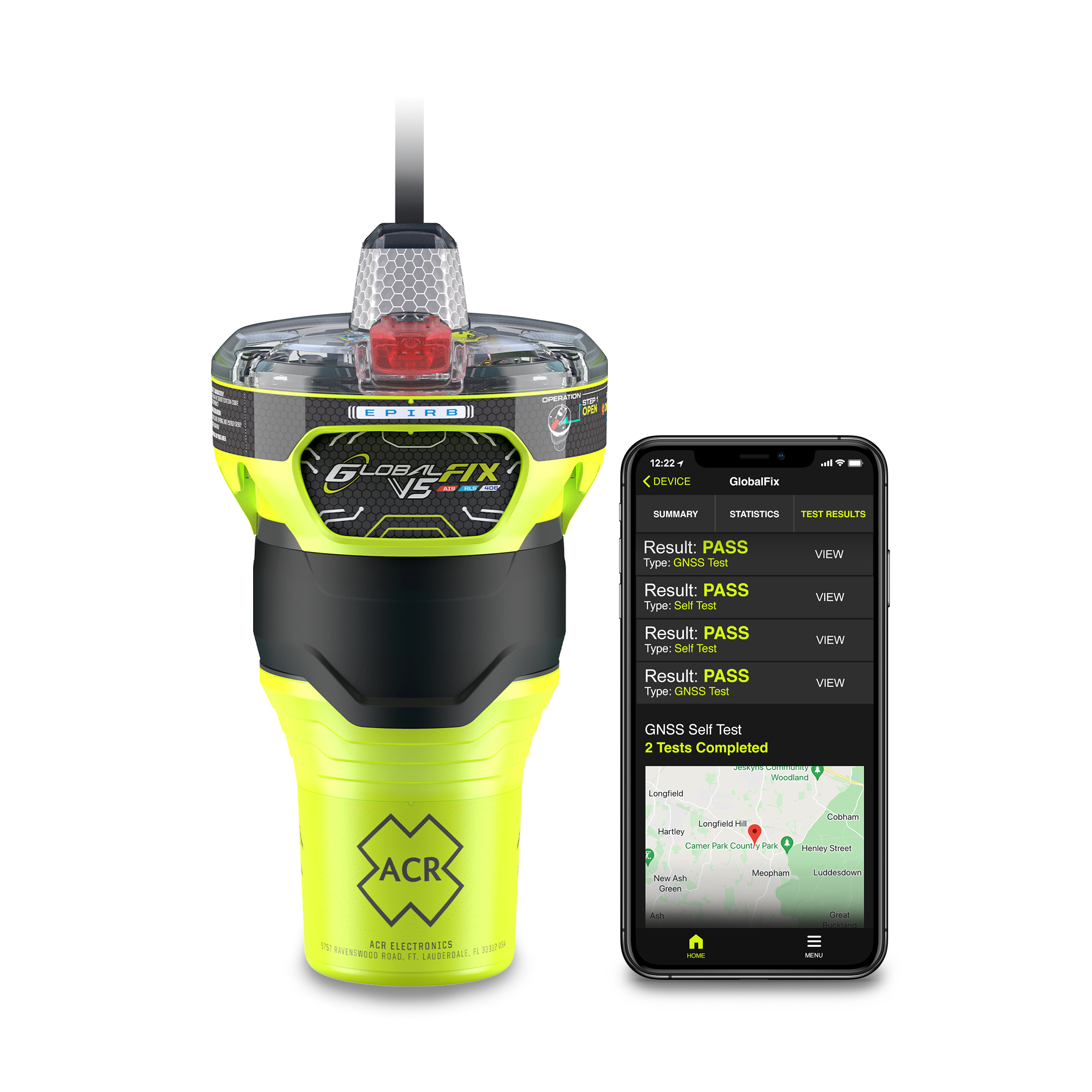
ACR GlobalFix V5 EPIRB
Best single purchase for satisfying an underwriter that you can summon help offshore
Insurers do not price an EPIRB as a discount item so much as a competence signal: it tells the underwriter the boat is being prepared for the kind of passage where things go wrong. Buy it with the correct mounting bracket, register it the day it arrives, and put the service date in the same calendar as the liferaft inspection — an out-of-date raft is the other half of the story, and the rest of that inventory is covered in our life raft guide.
- Type
- 406 MHz satellite EPIRB with GPS position, category II float-free bracket available
- Registration
- Must be registered to your vessel in your country's beacon database
- Service
- Battery and function testing on a manufacturer schedule
- Typical price
- Commonly priced around $450-$650
Pros
- Provides a documented, verifiable distress capability — exactly the sort of thing a broker can point to in a submission
- GPS-encoded position cuts search time from days to hours, which is what actually saves boats
- Float-free bracket means it can transmit even if you cannot reach the cockpit
Cons
- An unregistered beacon is close to useless — registration and the bracket are part of the purchase, not optional extras
- Battery replacement and testing on a schedule add a real, if modest, recurring cost
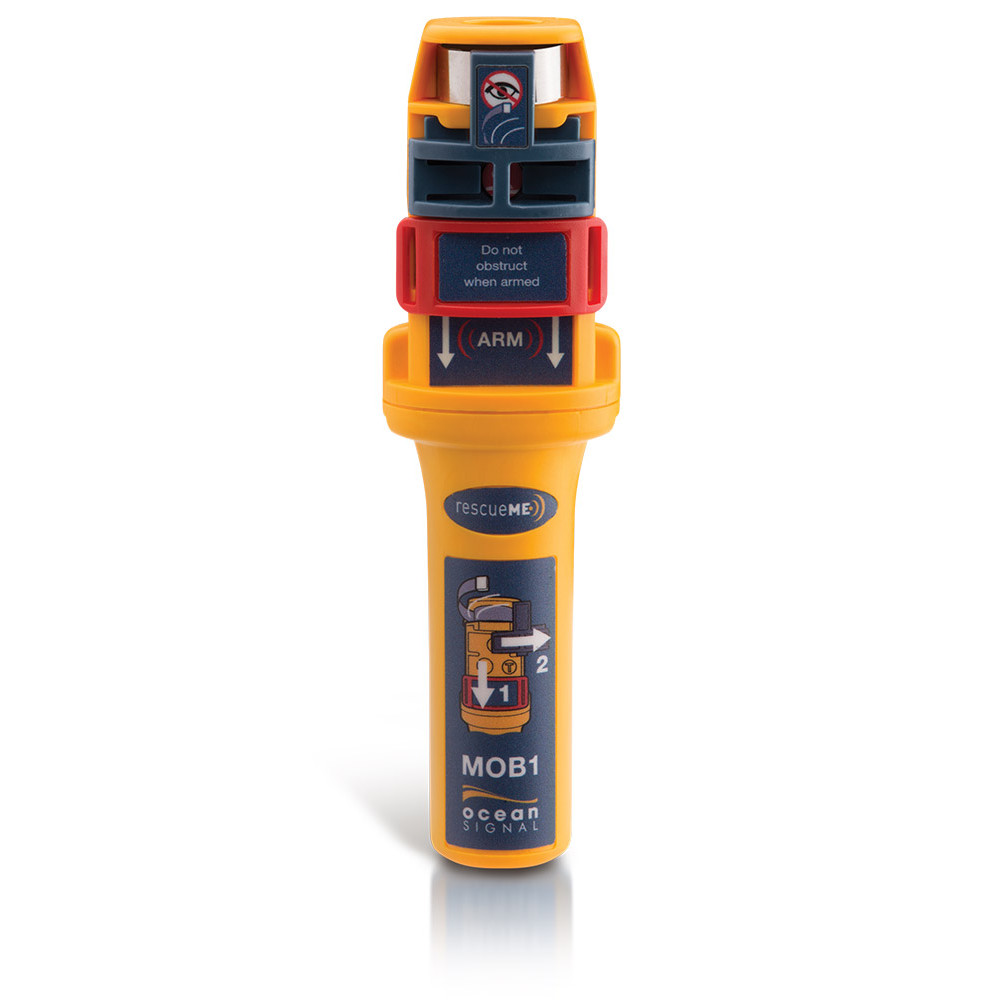
Ocean Signal MOB1
Best crew-overboard device for boats that want a verifiable safety system without a fixed install
Crew overboard is the claim that turns into a fatality report, and it is the reason many insurers ask about man-overboard gear on boats that go offshore. A personal beacon is the cheapest credible answer: it costs less than a season of dockage and it produces a position. Pair it with a harness and crotch strap that is actually worn in rough weather — the device in a drawer is worth nothing at all.
- Type
- Personal AIS-type MOB beacon with DSC-capable options
- Activation
- Manual pull-tag plus automatic activation on immersion
- Mounting
- Clips to a harness or foul-weather gear; no wiring
- Typical price
- Frequently around $200-$350 per unit
Pros
- Gives the boat a position for the person in the water rather than a vague search area
- No installation, so the system survives refits and changes of electronics
- Crew can be issued and checked individually, which is how a delivery skipper or charter operator manages risk
Cons
- Only useful if every crew member is wearing it and it is not stowed in a locker
- Batteries and test cycles still need to be tracked, and cheap clones vary in real-world reliability
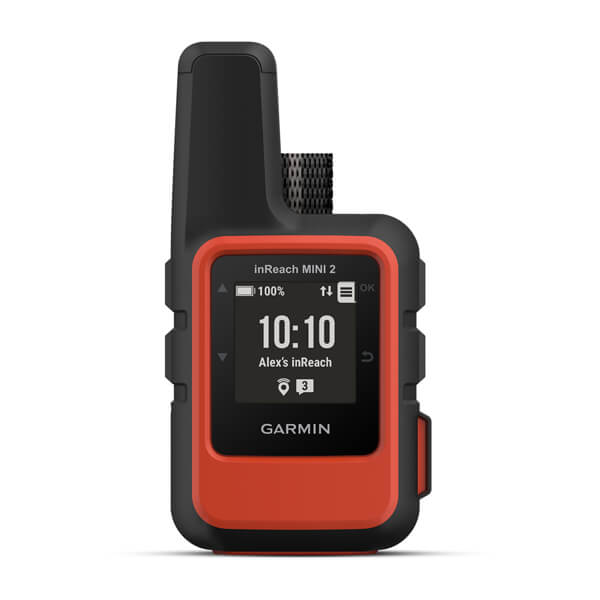
Garmin inReach Mini 2
Best two-way satellite communicator for keeping a shore contact and starting a rescue early
This is the device that changes the arithmetic on a marginal decision: whether to push on in a deteriorating forecast, whether to run a rig repair yourself, whether to leave an anchorage in the dark. Being able to text a shore contact and, if needed, trigger a monitored SOS is genuinely risk-reducing, and brokers like it because it means a boat in trouble is a boat that asks for help early rather than one that turns into an unexplained absence.
- Network
- Two-way messaging over a global satellite network with tracking
- Emergency
- SOS path to a monitoring centre with two-way confirmation
- Subscription
- Requires an active service plan to be useful
- Typical price
- Typically around $300-$400 plus a plan
Pros
- Lets you call for help before the situation becomes a distress, which is when rescue is cheap and safe
- Tracking gives a shore contact a live path, and that record helps a claim as well as a rescue
- Small enough that crew actually carry it on the dock, in the dinghy and on the hike
Cons
- The subscription is a permanent line item, and an expired plan is a very expensive paperweight
- Message latency and short message lengths make it a poor substitute for VHF in the last mile
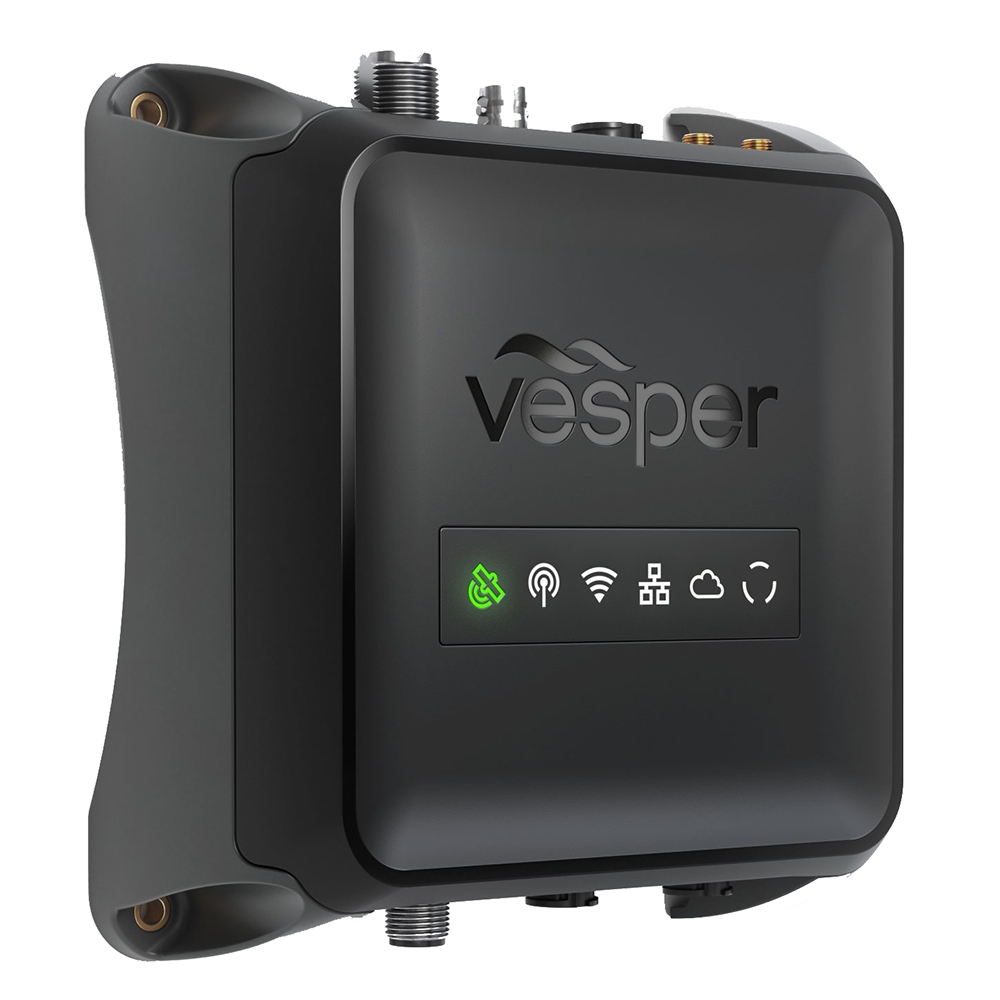
Vesper Cortex-M1
Best collision-avoidance upgrade for a boat that sails at night or in fog
Night and fog sailing generate a disproportionate share of hull-loss claims, and collision with commercial traffic is the version that kills people. AIS gives you a name, a course and a CPA on a chart instead of a shape on a radar screen you have to interpret while tired. It also makes you visible to the bridge that is otherwise not looking for a sailboat, which is the point.
- Type
- Class B AIS transceiver with MMSI, networked over NMEA 2000
- Benefit
- Sees and is seen by AIS-equipped vessels, including commercial traffic
- Install
- Requires VHF antenna split or a dedicated AIS antenna
- Typical price
- Often priced around $600-$900 installed parts only
Pros
- Detects ships that radar may not show you and that you certainly cannot see in the dark
- Transmits your identity and course, which is what makes a commercial watchkeeper alter course for you
- Networks cleanly with existing NMEA 2000 electronics rather than adding another display
Cons
- Antenna work is the real cost — a shared or marginal VHF antenna degrades both radio and AIS
- AIS is not a substitute for a lookout, and unregulated small vessels do not carry it at all

Garmin GMR 18xHD3 Fantom radar
Best radar for a boat that wants to see weather, land and traffic without a masthead radome
For a boat that does more than day trips, radar is the single most valuable collision-avoidance purchase, and the underwriting logic is straightforward: a boat that can see is a boat that does not hit things. If your budget only stretches to one of radar or AIS, buy radar — it sees the vessels that do not have transmitters. Then set the guard-zone alarm and actually use it, because every radar claim involves gear that was switched off.
- Type
- Pulsed-open-array radar with solid-state transmit
- Range
- Long-range target detection with high definition at close range
- Extra
- Bird/ground returns help with navigation in low visibility
- Typical price
- Commonly in the $2,000-$3,500 range before installation
Pros
- The only reliable way to see a container, a fishing boat or a squall line at 2 a.m. in a seaway
- Solid-state arrays wake faster and resolve close targets better than older magnetron radomes
- Overlay on a chartplotter makes a fog passage genuinely manageable for a short-handed crew
Cons
- Real money, and an open array adds windage, a mast step and a maintenance item aloft
- Radar that nobody watches is decoration: it only pays off with a lookout or a properly set alarm
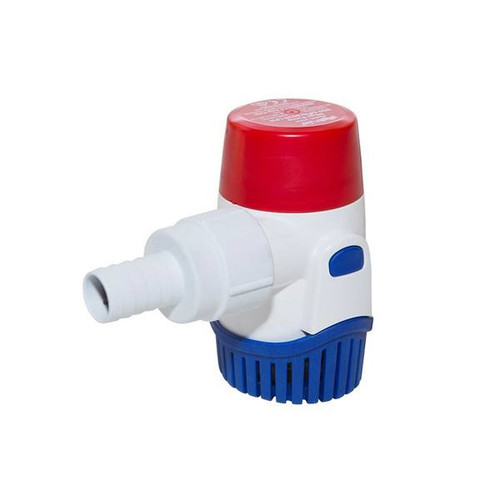
Rule 1100 GPH submersible bilge pump
Best insurance-friendly upgrade for the failure that sinks more boats than collisions
Sinking at a dock is the most common total loss in the small-boat fleet, and the usual cause is not drama but a hose clamp, a clogged strainer or a burned-out pump that nobody noticed because the boat was unattended. Insurers know this: they ask about pumping capacity, and they ask how the pump is triggered. A second pump with an independent switch and a high-water alarm is a few hundred dollars and is the highest-return safety purchase on a boat that lives in the water.
- Type
- Submersible centrifugal bilge pump with removable strainer base
- Capacity
- Rated around 1,100 GPH at zero head, less as lift increases
- Wiring
- Dedicated fused circuit with a float switch or electronic sensing
- Typical price
- Usually a $100-$200 part
Pros
- Cheap, replaceable redundancy for the pump that is quietly keeping the boat afloat
- A serviceable pump on a clean circuit is exactly what a surveyor wants to see and what an insurer funds
- Fits the bilge wells most production boats already have
Cons
- Impellers and intakers clog with the very debris you are pumping, so the strainer needs cleaning
- A single pump on a single float switch is a single point of failure — the backup is the actual system
Sailrite storm trysail kit
Best heavy-weather sail for a boat whose rig is not set up for a storm jib and trysail
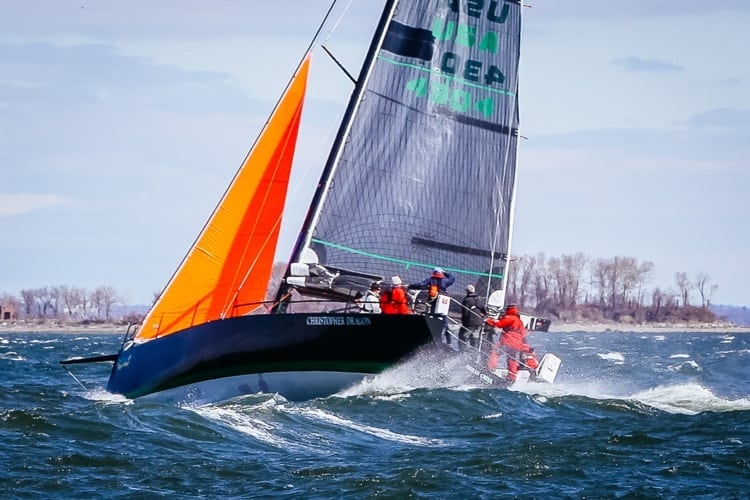
Weather-related claims — dismasting, rigging failure, sail damage, dragging into a lee shore — cluster on boats whose storm plan was never rehearsed. A trysail and a small storm jib are the physical version of a decision you should have already made, and the fact that you can build one for a few hundred dollars removes the last excuse. Set it up at the dock, in calm weather, with the crew, before you need it.
- Type
- Kit to build a storm trysail with heavy canvas and full battens
- Purpose
- Carries the boat in conditions where the mainsail is too much sail
- Rig
- Needs a separate track or a proper attachment arrangement
- Typical price
- Kits typically run a few hundred dollars in materials
Pros
- Makes a real heavy-weather plan possible rather than a theory about reefing one more time
- Build-it-yourself keeps the cost within reach of an ordinary cruising budget
- Forces the honest conversation about your rig: can you actually set it in 35 knots with cold hands?
Cons
- If it lives in a bag in the forepeak you will not get it up in time — deployment practice is mandatory
- Many boats cannot set a trysail properly without a second track, which is a real rigging expense
How to choose
Use this table to work out which type of policy fits your boat, then take it to two or three brokers with the same documentation. The market is narrow, the wording differences are real, and a broker who writes a lot of sailing vessels will know which carriers like your particular hull, mooring and voyage plan.
| Your situation | Sensible coverage | Notes |
|---|---|---|
| Dinghy or trailer-sailer under $10k | Actual cash value hull plus liability | Check whether your homeowners policy responds at all before buying |
| Coastal cruiser, financed or in a marina | Agreed value hull plus P&I with a generous liability limit | Marina will ask for proof; lender will specify limits |
| Older boat, no recent survey | Survey first, then agreed value | Fixing survey items is cheaper than accepting an exclusion |
| Passage-making or offshore cruising | Ocean warranty with realistic navigation limits | Ask about crew requirements and salvage limits in writing |
| Liveaboard on a mooring | Agreed value with in-water storage and pumping warranties reviewed | Confirm what 'adequate bilge pumping' means for your boat |
| Charter, delivery or racing | Declared commercial or racing cover | Undisclosed use is the most common reason a claim is refused |
Budget tiers. A trailer-sailer or small daysailer: often $150-$500 a year. A mainstream fiberglass coastal cruiser: commonly $1,000-$4,000 with a survey on file. A heavy passage boat, an older or unusual hull, or a boat with an ocean warranty: $3,000-$8,000 and rising with exposure. Add the cost of the documents that make the rate possible — a survey typically a few hundred dollars, a rigging inspection a few hundred more, and an annual haul-out that is often the largest single item. Those costs are not insurance, but they are what makes insurable boats insurable, and they also reduce the chance you ever need the policy.
Frequently asked questions
Do I actually need sailboat insurance?
Legally, usually no — a state or province rarely requires it for a small recreational vessel. In practice you will need it: marinas and mooring fields commonly require proof of liability coverage, lenders require hull coverage, and yacht clubs with moorings do the same. Beyond the paperwork, the reason to carry a policy is third-party liability and wreck removal, which are the two exposures that can genuinely cost more than the boat.
What is an agreed value policy and should I buy one?
An agreed value policy fixes the boat's worth in the policy document before a loss, so a total loss pays that number rather than a post-claim valuation. It costs more than a market-value or actual-cash-value policy and is worth it for almost any boat that is not brand new, because it removes the argument at the worst possible moment. On a modest trailer-sailer, an actual-cash-value policy may be reasonable; on a cruiser you have spent years equipping, agreed value is the norm.
Will my homeowners policy cover my boat?
Rarely in any way that matters. Homeowners policies typically exclude or severely limit watercraft liability, cap property coverage on trailers and small craft, and do not respond to salvage, wreck removal, or pollution liability on the water. Some policies extend a token amount of personal property to a dinghy or a small sailboat. Read the watercraft exclusion in your own policy — and if it is silent, that is a reason to call, not a reason to relax.
Does insurance cover a dead engine or a leaky hose?
Generally no, and this is the most common misunderstanding in the market. Standard hull policies cover sudden and accidental losses; they do not cover wear and tear, gradual deterioration, lack of maintenance, or mechanical breakdown. A hose that bursts and floods the boat may be covered as an accidental discharge; a hose that has been weeping for a season is maintenance. Some insurers sell endorsements for machinery or electronics breakdown, and a few will require a recent survey before writing them. If engine coverage matters to you, ask specifically for it in writing.
Will a survey be required?
Commonly yes, for anything above a modest hull value, for older boats, or for boats with a claims history. A survey protects the insurer by verifying condition, and it protects you by telling you what you are buying before a loss happens. Brokers will often accept a phone survey or a recent inspection report on a newer boat in good standing. Keep your survey, your rigging report and your haul-out records — they are the difference between a smooth renewal and a policy with a new exclusion.
What are the exclusions people get caught by?
The usual list: commercial use or charter when the policy is written for private use; racing or towing when not declared; a crew requirement (some offshore warranties specify a minimum number of experienced crew for voyages); navigation limits that stop at a boundary you did not notice; sailing in a named storm after it has been forecast; unattended in-water storage without a specified pumping arrangement; and deferred maintenance discovered during the claim. Read the warranties page of your own policy, not the marketing page.
Does safety gear lower the premium?
Sometimes directly and often indirectly. Many insurers offer a discount for formal training, for a recent survey, for a boat with a documented alarm or monitoring arrangement, and for a mooring with a haul-out history. EPIRBs, AIS, radar, a properly installed fire-suppression system and a serviced liferaft rarely produce a dramatic discount on their own, but they change how an underwriter reads the submission — and on an older boat or a passage plan, that difference can decide whether you get a policy at all.
How do I actually reduce what I pay?
Take a higher deductible; keep the boat on a mooring or ashore rather than in a slip in a storm-exposed harbour; complete a recognised boating safety course; maintain a documented haul-out and rigging inspection record; remove racing and charter exposure from the policy wording; and shop the submission to more than one broker with the same clean documentation. The largest single lever is usually where the boat sleeps, followed by the deductible.
Looking for more gear guides? Browse all our gear recommendations or the full guides index.