What a 40-Foot Sailboat Really Costs to Own Each Year
A well-kept 40-foot cruising sailboat in a US marina typically costs somewhere between $15,000 and $30,000 a year to own once dockage, insurance, a haul-out, antifouling, and ordinary maintenance are all counted — and a trailer-sailer or a dinghy on a car-top can be owned for a few hundred dollars a year. The gap between those two numbers is almost entirely real estate: where the boat sleeps, not how expensive the boat is.
Most ownership articles quote the 'ten percent of hull value' rule and stop there. That rule is a mnemonic, not a budget, and it hides the structure of the actual bill: a handful of fixed costs that happen whether or not you sail, a smaller pile of annual maintenance you can control with your own hands, and a repair budget for the year the refrigerator, the cutless bearing and the alternator all decide to go at once.
Below, each of those buckets is broken out with the ranges that marinas, yards and insurers actually quote, then the same numbers are applied across boat sizes so you can see what you are really committing to. Every boat named has its own specifications page here, so you can check the dimensions that drive the charges.
Sailboat Atlas may earn a commission from qualifying purchases made through links on this page, at no extra cost to you.
The fixed costs that do not care whether you sail
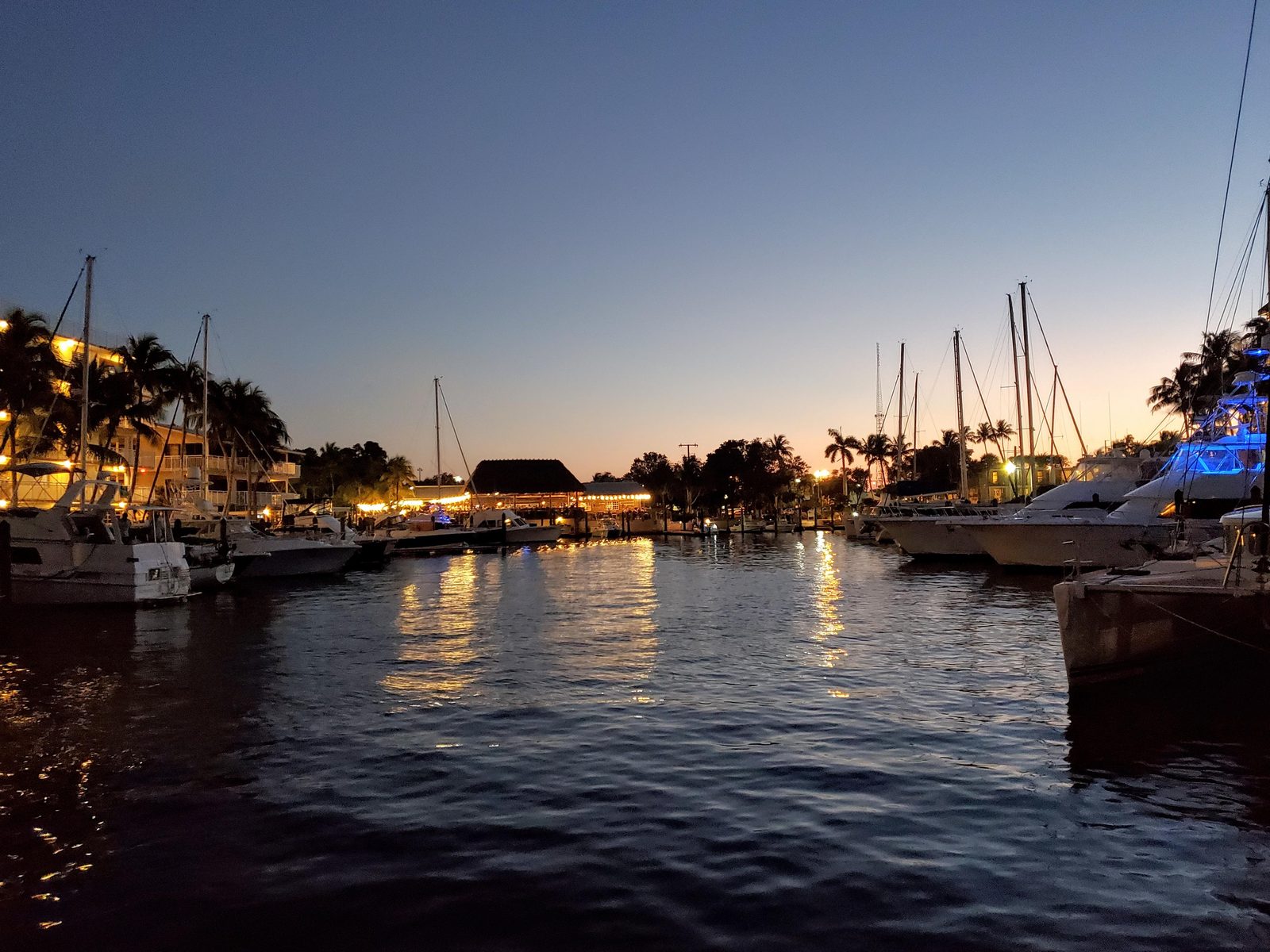
Dockage and mooring are the largest recurring cost for most owners and the least negotiable. Marinas price by length overall and, on multihulls, by beam. In many US harbours a 35-to-40-foot monohull pays roughly $200-$400 per foot per year in a slip — commonly $7,000 to $15,000 annually — while a mooring in the same water often runs $1,500-$5,000 a year, and a driveway costs nothing but time. Those ranges are wide because location dominates: the same hull in a Mediterranean resort marina, a Chesapeake back creek and a Pacific Northwest tidal inlet will generate three completely different invoices.
Insurance for a fiberglass cruising boat in coastal US waters commonly runs about 1-3 percent of insured hull value a year, so a $150,000 boat might cost $1,500-$4,500, with discounts for a recent survey, an alarm, a mooring with a haul-out history, and completed safety courses. Wooden boats, boats in named-storm exposure, and boats with older wiring sit at the top of the range or get declined outright. Our guide to sailboat insurance covers what the policy actually pays for and the exclusions that surprise people.
Taxes, registration and miscellany are small individually and add up: state registration or documentation, personal property tax or sales tax in some jurisdictions, harbour district fees, and the little subscriptions and memberships that quietly renew. Budget a few hundred dollars and stop thinking about it.
Annual maintenance you can largely control
This is the bucket where your own hands change the answer. A routine annual list on a 35-to-40-foot cruiser looks like this: engine oil and filters, transmission fluid and a new impeller, gear oil, check and top up the batteries and water, inspect and replace zinc anodes, service the head and the raw-water strainer, check and lubricate steering and seacock hardware, inspect standing rigging for broken strands and swage corrosion, test all safety flares and electronics, clean the bottom and inspect the antifouling, and go through the ground tackle for chafe. The parts on that list commonly total $300-$900; the same work at yard labour rates can run $1,500-$4,000.
Bottom work deserves its own line. A haul-out, pressure wash, touch-up and two coats of antifouling on a 40-footer frequently totals $2,500-$6,000 at a yard, which is why owners either learn to do it themselves or stretch intervals with good paint and regular diving. Note that stretching intervals is only legitimate if you actually look: growth in a warm harbour can foul a boat in eight weeks, and a fouled bottom costs you speed, fuel and engine temperature.
Sail and rigging service is annual-ish rather than yearly: a sailmaker's look at the mainsail's leech and the genoa's UV strip, a check of the furling drum and swivel, and a professional rig inspection every few years. Sails themselves are a long-cycle cost — a working genoa and mainsail for a 40-footer is commonly $3,000-$8,000 and lasts a decade or more of coastal use, far less under racing loads.
Repairs: budget for the bad year, not the average year
Ownership budgets fail on variance, not on averages. The systems that fail on a schedule rather than on luck are the ones with heat, saltwater or moving parts in them: refrigeration compressors and control boards, watermakers' high-pressure pumps and membranes, cutless bearings and shaft seals, alternators and regulators, the raw-water pump and its impeller, the head's pump and valve, the autopilot drive, and any galvanically isolated bonding you have neglected. Individual tickets typically run from a few hundred to a few thousand dollars.
The expensive ones arrive on a longer cycle and are easy to miss when you are budgeting from last year's receipts: standing rigging replacement every 15-25 years depending on water and inspection results, an engine rebuild or replacement, a new set of sails, a refrigerator that has lost its compressor, a waterlogged core in a deck, or a keel that needs its bolts and joint attended to. These are four- and five-figure events, and on an older boat at least one of them is waiting in every direction.
The practical answer is a sinking fund: set aside a fixed amount each month into an account you do not spend, sized to your boat and age. Owners who do this keep boats; owners who do not sell them in September after an August of failures. If you are buying used, our article on sailboat keel types covers what to inspect before the survey, because the cheapest repair is the one you negotiate out of the price at the table.
Fuel, provisioning and the cost of actually going somewhere
A mid-size diesel in a 35-to-40-foot cruising monohull typically burns somewhere in the region of half a gallon to a gallon an hour at displacement speed — plan on 0.5-1.0 gallons per hour at 6-7 knots, more in a head sea or with a fouled bottom. With a 40- to 60-gallon tank, that is a practical motoring range of a few hundred gallons-worth of hours, and the fuel bill for a summer of coastal cruising is usually a few hundred dollars. Long passages change the picture: an Atlantic crossing involves days of motor sailing, and the diesel is the smaller part of the cost once you add provisions, clearing fees, and harbour stops.
Cruising budgets are dominated by choices that are not boat-related: how often you take a paid slip versus anchor out, whether you eat ashore, whether you clear in and out of countries or stay in one. A couple living aboard and anchoring most nights can spend less per month than a land-based household with the same tastes; a family doing a Med season with a slip every night and restaurants nightly will spend multiples of that. The boat's own costs are the fixed floor under all of it, and they are the part you can actually forecast.
The costs nobody puts in the spreadsheet
Depreciation is a choice. Production boats in ordinary condition lose value every year, and that loss is a real cost even though no invoice arrives for it. Well-kept, well-equipped boats from respected builders in a strong class hold value far better, and genuinely exceptional examples sometimes hold flat. The difference between a boat that has been maintained and one that has been used is commonly tens of thousands of dollars at resale — which is the same money you were deciding whether to spend on the anodes and the rigging check.
Time is a cost with a rate. Boats absorb hours: winter projects, washing, troubleshooting at the dock, driving to the marine store. If you value your time at anything, a boat you maintain yourself is cheaper in cash and more expensive in hours, and the right answer depends on whether you want the hours. Many owners find the honest version of the question is 'how many weekends a year am I willing to spend working on the boat instead of sailing it?'
Resale liquidity is a hidden risk. A boat is not a liquid asset. Selling in season in the right market with good photos and clean records takes weeks; selling in a bad season, in the wrong region, or with an incomplete maintenance history can take two years and a serious price reduction. Do not own a boat with money you may need on a schedule.
How boat size and type change the math
Most of the expensive line items scale with length, weight and beam, and not with purchase price. Dockage scales roughly linearly with length and jumps when you cross the size bands a harbour uses for rate cards. Haul-out and bottom paint scale with wetted surface and weight. Antifouling quantities, anode sizes, and the labour hours for a rig check all follow size. Insurance scales with hull value and with exposure. That is why the annual cost per foot rises with length rather than staying flat: a bigger boat does not just cost more, it costs more per foot.
Type changes it again. A catamaran pays by beam and doubles most mechanical items. A heavy full-keel boat costs more to lift and to paint than a light fin-keel boat of the same length, and often less to repair. A trailer-sailer escapes almost every fixed charge. A wooden boat pays more for insurance and for the constant varnish and bedding cycle. A modern production boat with a lithium house bank, a watermaker and a hydraulic windlass has more to break and more to service than the same model with basic equipment — the technology is a cost, not just a feature.
Making it affordable: the honest strategies
The savings that actually matter, in rough order of size: move the boat from a slip to a mooring or a driveway; buy the well-kept boat instead of the cheap project and refuse the refit spiral; do the annual maintenance yourself and hire out only what needs a crane or a licence; sail closer to home so you are not paying a marina's nightly rate to get there; and buy smaller than your ambition — a 34-footer that is fully paid for, well-maintained and used every weekend beats a 45-footer that sits in a slip because the owner cannot afford to fix the refrigerator.
The false economies are worth naming too. Skipping antifouling to save a haul-out usually ends in a larger haul-out plus a fouled engine. Buying a boat with a known keel or rigging problem 'because you can do it later' is how owners lose the boat. And cutting the safety gear budget — the EPIRB service, the liferaft inspection, the flares — saves a few hundred dollars against a risk you cannot insure away. Our gear recommendations index covers where spending on equipment genuinely pays for itself and where it does not.
Our picks
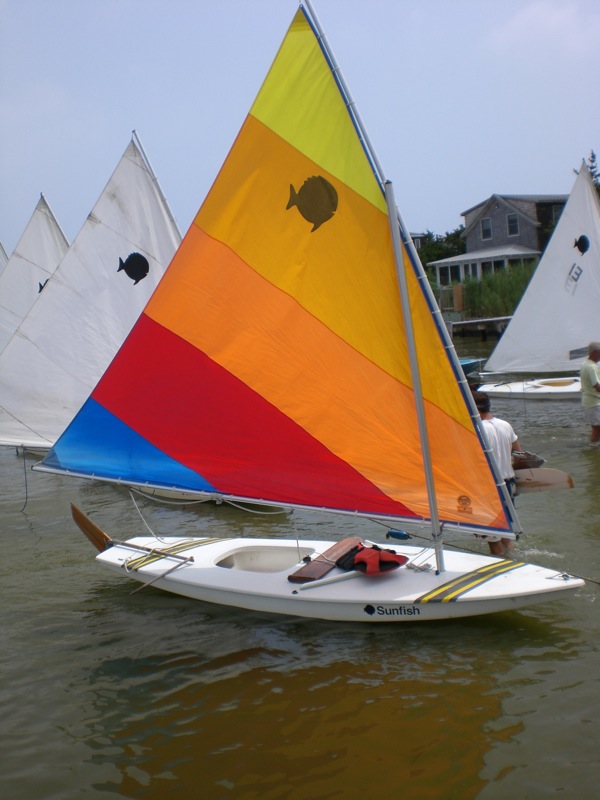
Sunfish
The cheapest way to own a sailboat that still counts as sailing
It is worth stating the obvious in an article about cost: the cheapest boat to own is the one that never touches a marina. A Sunfish on a car-top rack behind a house costs a fraction of a percent of what a 40-footer costs, and plenty of sailors who could afford a cruiser keep one because the ratio of sailing hours to money spent is unbeatable. If your real goal is time on the water rather than a boat to live on, start here and buy the cruiser later, with the money you did not spend.
- Length
- 11' 6" sailboard-style dinghy
- Weight
- About 125 lb — car-top on any vehicle
- Typical used price
- Roughly $500-$2,500 depending on condition
- Annual running cost
- Often under $300 if you do nothing but sail it
Pros
- No dock, no slip, no haul-out, no bottom paint, no insurance bill worth mentioning
- Huge used supply and an enthusiastic class association, so parts and advice are cheap
- It teaches boat handling better than most keelboats twice its price
Cons
- No cabin, no ballast, no range — it is daysailing within sight of the ramp
- Storage at home matters: left in the sun the hull fades and gets brittle fast
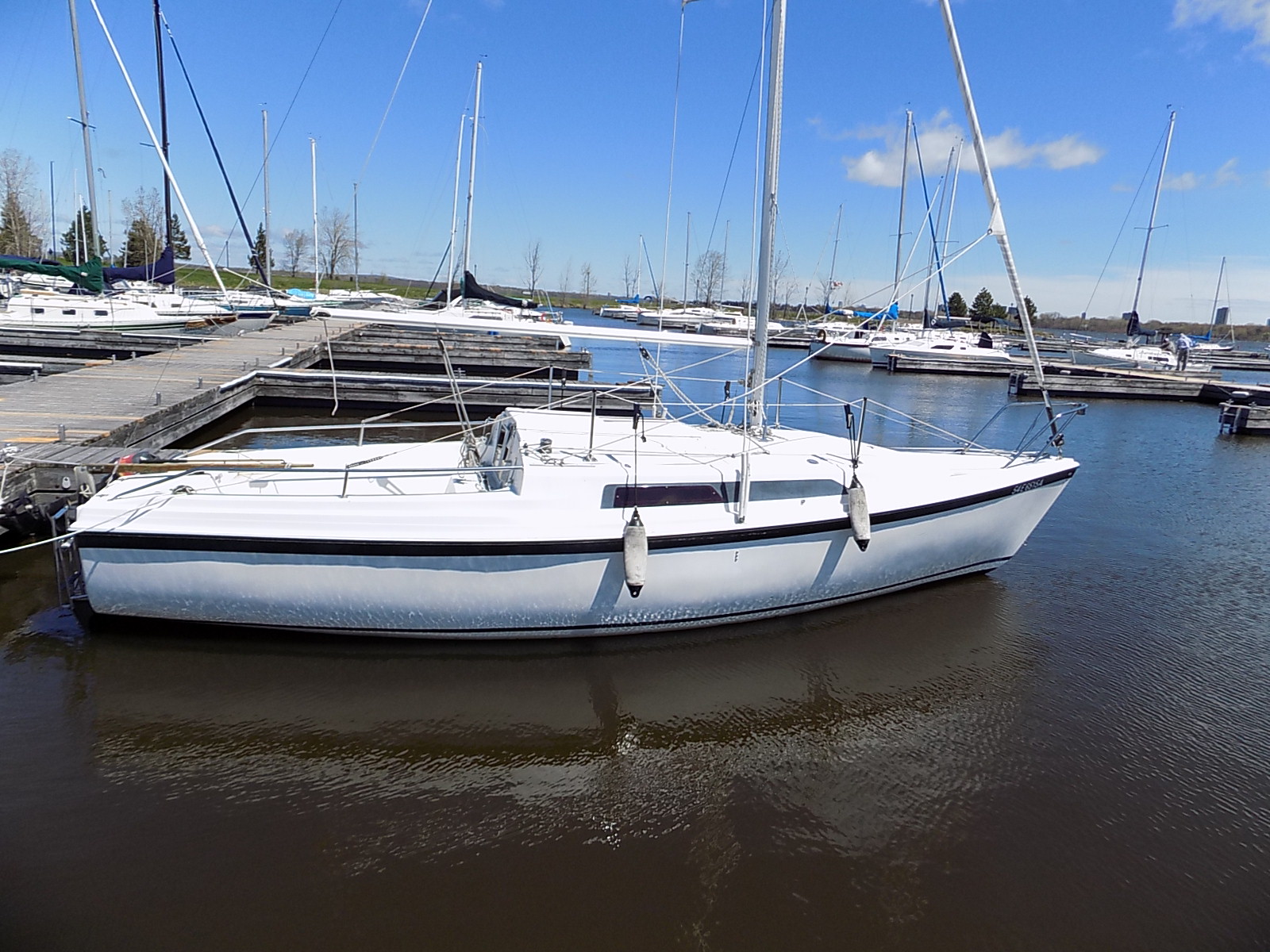
MacGregor 26
Best trailer-sailer for sailors who refuse to pay for a slip
The trailer-sailer is the honest answer to the question 'why is boating so expensive?' Most of the answer is real estate in the water, and a boat on a trailer in a driveway does not pay it. What you give up is comfort and range: no proper head to speak of, minimal standing room, and a boat that is a project to rig rather than a boat you walk aboard. For couples and families who mainly want weekends on a lake or a bay, the economics are hard to argue with.
- LOA
- 25' 6"
- Draft
- About 1' 6" keel up, 5' 6" down
- Typical used price
- Commonly $4,000-$15,000
- Annual running cost
- Frequently $500-$1,500: trailer upkeep, ramp fees, paint, minor gear
Pros
- Eliminates the single biggest fixed cost in boating — dockage or mooring fees
- Trailering lets you sail different water every weekend instead of one harbour
- Simple systems mean most work is a weekend job with hand tools
Cons
- You are buying a lifestyle of hitching, backing ramps and washing the trailer
- Light construction and a pivoting keel mean the survey and yearly inspection matter more, not less
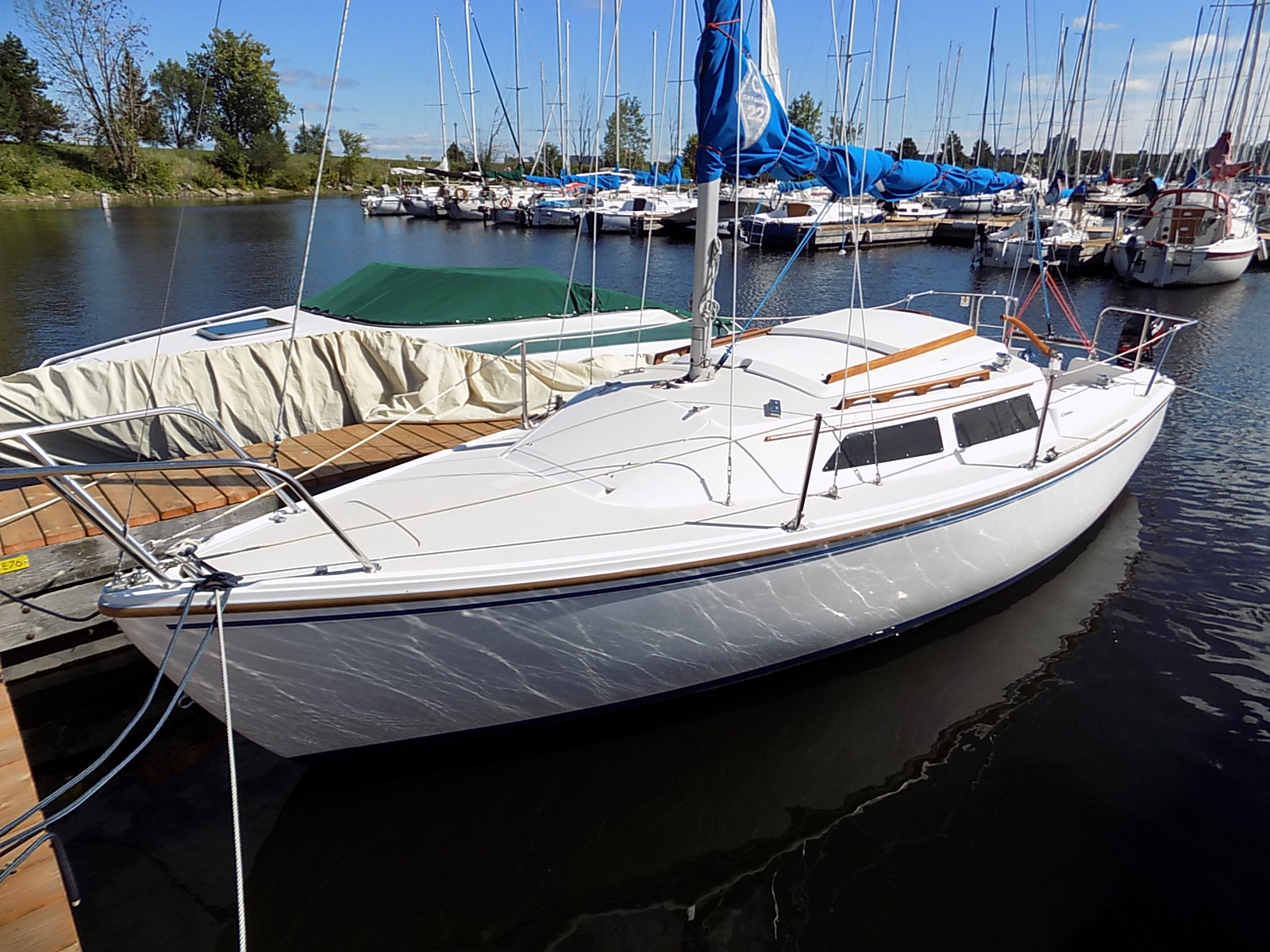
Catalina 22
The cheapest way to own a keelboat with a real cabin
This is the boat that shows how much fixed costs dominate the equation. A Catalina 22 in decent shape can be bought for the price of one season of slip fees for a 40-footer, and its annual costs — a mooring, a bag of bottom paint, an impeller, a few fittings — stay low. The trap is the refit spiral: an inexpensive boat with tired electronics, a wet bilge and a ten-year-old cushion can absorb more money than a well-kept example cost to buy, so buy the best-conditioned hull you can afford and keep the refit out of the first year.
- LOA
- 22' 6"
- Draft
- Shoal wing about 1' 6"; fin about 4' 6"
- Typical used price
- Roughly $3,000-$20,000 depending on year and kit
- Annual running cost
- Often $1,500-$4,000 on a mooring; considerably more in a slip
Pros
- Sleeps four in a real cabin, so weekend overnights are genuinely possible
- The largest used inventory in North America means prices are set by supply, not by a dealer
- Every repair is documented, and any marine store can supply the parts
Cons
- Cheap hulls hide cheap systems: the boat's condition matters far more than its asking price
- On a mooring the bottom, through-hulls and rigging are all your problem, every year
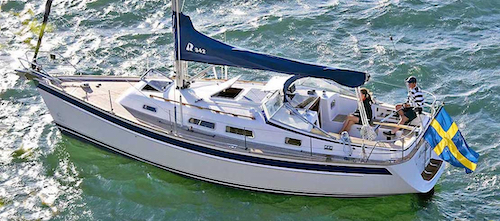
Hallberg-Rassy 342
Mainstream 34-foot cruiser: the realistic cost baseline for coastal cruising
A boat like this is the middle of the market and the middle of the cost curve: real fixed costs, real maintenance, and real cruising ability. It is also where the '10 percent of hull value' rule of thumb collapses. A well-kept 342 that has already depreciated may cost $12,000 a year in a mid-priced harbour — which is nowhere near 10 percent of what she is worth — while a neglected boat of half the value can demand more in a single year of deferred repairs. Budget from the work list, not from a percentage.
- LOA
- 34' 6"
- Draft
- About 5' 5" (shoal option offered)
- Typical used price
- Often $120,000-$220,000 depending on year and equipment
- Annual running cost
- Roughly $8,000-$18,000 with a slip, haul-out and normal maintenance
Pros
- Well-built boats hold value unusually well, which turns 'depreciation' from a certainty into a question
- Sensible systems make most annual work a DIY job rather than a yard invoice
- Big enough to cruise in comfort, small enough that one person can handle it
Cons
- Dockage, haul-out and bottom work all scale with length, and 35 feet is where rates jump
- Owners who skip maintenance pay for it later at premium yard rates
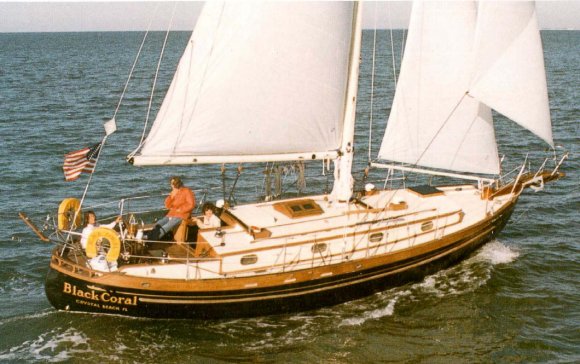
Tayana 37
Heavy bluewater cruiser: what offshore readiness does to the annual bill
Passage boats carry a second ledger: the safety and redundancy items a coastal weekend never demands. An EPIRB that must be serviced on a schedule, a liferaft that needs annual or biennial inspection, an autopilot and windvane both worth maintaining, offshore sails, and the spares locker all add up, and none of them appear in a brochure's price. None of it is optional if you intend to cross an ocean, and it is the honest reason a 37-foot passage boat costs more per year than a 37-foot coastal boat of the same value.
- LOA
- 37' 0"
- Draft
- About 5' 0" full keel
- Typical used price
- Widely variable: roughly $80,000-$300,000
- Annual running cost
- Roughly $10,000-$22,000, higher with offshore safety gear servicing
Pros
- Displacement and ballast mean the boat is genuinely suited to passages, so the gear budget buys something real
- Long keel and robust construction keep some categories of repair off the list
- A devoted owner network makes knowledge and parts findable in remote cruising grounds
Cons
- Weight raises the cost of every service that depends on lifting her: haul-outs, bottom work, rigging
- Insurance underwriters ask hard questions about heavy boats with tired rigging and ageing systems
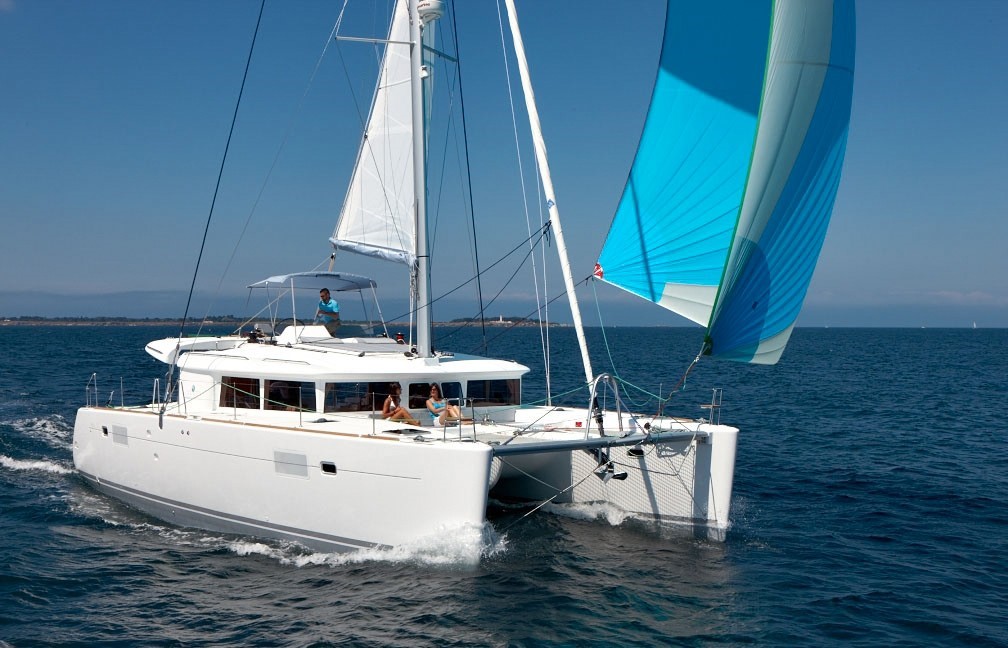
Lagoon 450
The catamaran cost picture: double the dock, different tradeoffs
Catamarans are sold on space and value, and the annual costs are where that value is repaid to the marina. Because dockage is usually priced on beam, and because bottom area and hardware counts are high, a cruising cat's running costs commonly exceed a monohull's at the same purchase price. That does not make a bad trade for a family living aboard — the space is worth something real — but it should be priced into the decision rather than discovered in the second season.
- LOA
- 45' 4"
- Draft
- About 4' 0"
- Typical used price
- Commonly $300,000-$600,000 depending on year and charter history
- Annual running cost
- Frequently $25,000-$45,000 in a Caribbean or Mediterranean marina
Pros
- Two shallow hulls mean you can anchor where a deep monohull cannot, and you dry out upright
- Living space per dollar is unmatched, which is why liveaboards and charter fleets cluster here
- Sails easily: modest loads on halyards and sheets keep winch and gear costs sensible
Cons
- Most marinas charge by overall width, so a 45-foot cat pays something close to double the slip rate of a 45-foot monohull
- Two hulls, two rudders, two daggerboards, two engines: nearly every service item is a multiple, not a sum
How to choose
These are the ranges we see quoted by marinas, yards and insurers across the US for ordinary coastal cruising, assuming the owner does much of the annual work and the boat has no major failures. Treat them as planning numbers to be replaced by three local quotes — one marina, one haul-out yard, one insurance broker — which is the only way to get a number worth budgeting from.
| Boat | Where she sleeps | Typical annual total | What drives it |
|---|---|---|---|
| Dinghy or Sunfish | Driveway, car-top | $0-$400 | Ramp fees and occasional fittings |
| Trailer-sailer, 22-26 ft | Trailer at home | $500-$1,500 | Trailer upkeep, paint, small gear |
| Keelboat, 22-27 ft | Mooring | $1,500-$4,000 | Mooring fee plus a modest bottom job |
| Cruiser, 30-35 ft | Mooring or slip | $5,000-$14,000 | Slip rates are the swing factor |
| Cruiser, 38-42 ft | Slip | $15,000-$30,000 | Dockage, haul-out, insurance, repairs |
| Cruising catamaran, 40-45 ft | Marina | $25,000-$45,000 | Beam-based dockage and duplicated gear |
How to build your own number. Take the boat's length overall and weight, then get three prices: a marina or mooring field, quoted for that LOA; a haul-out yard, quoted for that weight including wash and two coats of antifouling; and an insurance broker, given a survey or an inspection report. Add a maintenance allowance of $1,500-$3,500 for a mid-size cruiser doing its own work, plus one year of running costs held in reserve for the bad year. If the total makes you wince, the answer is a smaller boat, a mooring instead of a slip, or a trailer — not a lower purchase price, which changes almost none of the numbers above.
Frequently asked questions
Is the 'ten percent of hull value per year' rule real?
It is a rough memory aid, not a budget. It works by accident for a mid-priced boat in a mid-priced harbour and fails in both directions everywhere else. Dockage is priced by length and location, not by what you paid; insurance is priced by value, age, hull material and where the boat sleeps; and haul-out, bottom work and rigging are priced by size and condition. A ten-thousand-dollar trailer-sailer can cost more than ten percent of its value in a bad year, and a well-kept boat that has already depreciated can cost well under ten percent in a good one. Build your number from the actual line items in your area.
What is the single biggest cost of owning a sailboat?
Where the boat sleeps. Marina slip fees and mooring rentals are the largest recurring line for most owners and the one least responsive to anything you do — you cannot cut them by buying cheaper antifouling or doing your own oil changes. That is why trailer-sailers and driveway boats are so much cheaper to own, and why moving from a slip to a mooring is often the largest single saving available to an owner who is willing to row to the boat.
How much should I keep in reserve?
Most experienced owners suggest a cash reserve equal to one full year of running costs, on top of the annual budget, because the expensive failures arrive in clusters and rarely in the season you expect them. A refrigeration compressor, a cutless bearing and a failed alternator are individually affordable; together in one August they are the reason boats get sold in September. If you cannot hold a reserve, buy smaller and simpler until you can.
Does insurance cost more for an older boat?
Often yes, but not automatically for age alone. Underwriters care about hull material, rigging condition, the age and type of the electrical system, whether the boat has been surveyed recently, and how she is moored — a wooden boat on a mooring in hurricane country is priced very differently from a fiberglass boat of the same age in a marina with a security gate. Most insurers require a recent survey above a certain hull value and will decline or restrict coverage on boats over a certain age without one, so a good survey is frequently the cheapest way to get a better rate.
Why is a catamaran's dockage roughly double?
Because most marinas price slips by overall width, and a catamaran's beam is a large fraction of its length. A 45-foot cruising cat can be 24 to 26 feet wide, which occupies the footprint of two monohull slips. Add haul-out charges that scale with beam and weight, plus two engines and two sets of running gear, and the whole cost structure tilts upward relative to a monohull of the same length.
What does hauling out actually cost?
It depends on your region, the boat's weight and whether you need a travel lift or a railway, and the range is wide — commonly a few hundred dollars for a small trailer-sailer, roughly $1,000-$3,000 for a 30 to 35-foot cruiser, and materially more for a heavy 40-plus footer or a wide catamaran. That is only the lift: add pressure washing, bottom prep, antifouling and any keel or through-hull work, which frequently doubles the invoice. Many owners now extend haul-out intervals with good antifouling and occasional dives, which is a legitimate way to cut cost — provided you actually inspect the bottom rather than assume.
Is living aboard cheaper than renting?
Sometimes, and the arithmetic is more specific than the marketing suggests. You still pay for a slip or mooring, and you add electricity, water, pump-out, laundry, showers, and internet that a landlord used to absorb. What you avoid is rent and property costs, and what you gain is a boat you can move. The calculation usually works best on a mooring in a low-cost harbour with a modest, well-kept boat, and worst in a high-demand marina where slip fees have risen faster than rents. Do the local math with real quoted numbers before you commit.
Looking for more gear guides? Browse all our gear recommendations or the full guides index.