Dive Compressors and Hookah Systems for Cleaning Your Own Bottom
For most cruising sailboats, a 12V surface-supplied hookah system in the $1,500-$3,000 range is the right tool for cleaning your own hull, clearing a fouled prop and checking the running gear without hauling out. Brownie's Third Lung is the default choice because it is built specifically for breathing air and runs off the house bank at anchor.
Before any of that: never use a general-purpose air compressor to breathe from. Workshop and tyre compressors are not oil-free and have no breathing-air filtration, and people have been seriously hurt doing exactly this. If it is not sold and certified as a breathing-air compressor, it is not one.
Sailboat Atlas may earn a commission from qualifying purchases made through links on this page, at no extra cost to you.
Why cruisers end up cleaning their own hulls
Growth is not cosmetic. A soft slime layer costs perhaps half a knot on a cruising boat; a barnacle-crusted bottom can cost well over a knot and meaningfully increase fuel burn under power. Over a season of passages that difference is hours of extra motoring and measurable diesel.
Professional cleaning is widely priced around $3-$6 per foot per visit, and in a warm growth season a boat needs it monthly. For a 40-footer that is $120-$240 a visit and possibly $1,000 or more across a season — before you count the times you are anchored somewhere with no diver available, which for cruisers is most of the time.
The other driver is the prop. A line around the shaft, a plastic bag on the intake or a fouled folding propeller are all jobs that take ten minutes with reliable air and are genuinely hazardous when you are free-diving repeatedly in a chop. That capability, more than the hull cleaning, is what most owners say justified the purchase.
Hookah systems versus dive compressors: two different machines
Low-pressure hookah systems are surface-supplied: a small oil-free compressor floats at the surface or sits on deck and feeds air down a hose to a second-stage regulator. There is no tank, no fills, no cylinder inspection, and set-up takes a few minutes. Depth is limited by hose length, typically 40 ft, and you are tethered the entire time.
High-pressure dive compressors fill scuba cylinders to 3,000 psi and above. They are heavy, power-hungry and expensive, and they exist to give you tank autonomy in places with no dive shop. They are a serious cruising investment, not a hull cleaning tool.
The practical decision is straightforward. If you want to clean the hull and look after the running gear, buy a hookah. If you dive recreationally and cruise to places without fill stations, consider a high-pressure compressor as well — but do not buy one thinking it replaces the other.
The safety rules that are not optional
Breathing air only. A compressor for breathing must be oil-free or fitted with a proper filtration stack, and it must draw its intake well away from engine exhaust. Carbon monoxide poisoning from a badly sited intake is the classic surface-supplied accident, and it happens with the compressor working perfectly.
Never hold your breath. You are breathing compressed air, so the gas in your lungs expands on the way up even from 10 ft. Lung overexpansion injury is the reason certification matters, and it is why 'it is only shallow' is not a defence.
Isolate the engine. Before anyone goes in, the engine key is out, the battery switch is off, and someone competent knows you are in the water. A prop turning over while you are working on it does not leave room for a second mistake.
Carry a knife. You are attached to the boat by a hose, in an environment that also contains anchor rodes, mooring lines and the line you came down to cut. A mounted knife on your person is the answer.
Respect current and traffic. Most in-water incidents in anchorages involve a dinghy or a tender, not the diving itself. Fly a dive flag, and do not work in a channel or a running tide.
Power, stowage and the practical reality aboard
A 12V hookah compressor is a continuous-duty load, not a momentary one. Running it for forty minutes pulls real amp-hours from the house bank, and if you clean the hull at anchor on a cloudy day you will notice. Owners who use these regularly tend to have either a generous solar array or the habit of running the engine during the session. Our solar sizing guide covers how to check whether your bank can take it.
Stowage is the other honest constraint. A floating-raft system plus 40 ft of hose, harness, weights, regulator and mask takes a cockpit locker. It is not a large amount of gear by cruising standards, but it needs a home where it will not be buried under the fenders, because gear that is inconvenient to reach does not get used.
Finally, maintain the filtration. The air quality depends entirely on filters being changed at the manufacturer's interval, and a neglected filter is not visibly different from a fresh one. Put the change interval in your maintenance schedule alongside the items in our bottom paint and haul-out guide.
Does the maths actually work?
Take a 40-footer in a warm-water growth season. Professional cleaning at $4 per foot is $160 a visit; cleaned monthly for eight months, that is $1,280 a year. A $2,500 hookah system pays for itself in roughly two seasons of regular cleaning, and after that it is filters, the occasional hose and your own time.
Now take a boat in a cool northern climate hauled every winter and cleaned twice a season. That is maybe $320 a year, and a $2,500 system takes eight years to break even while occupying a locker the whole time. A $150 float-head scrubber and a diver twice a year is plainly the better answer.
The systems make sense for cruisers, liveaboards and anyone in a growth-heavy climate. They rarely make sense for a coastal weekender, whatever the boat is worth.
Our picks
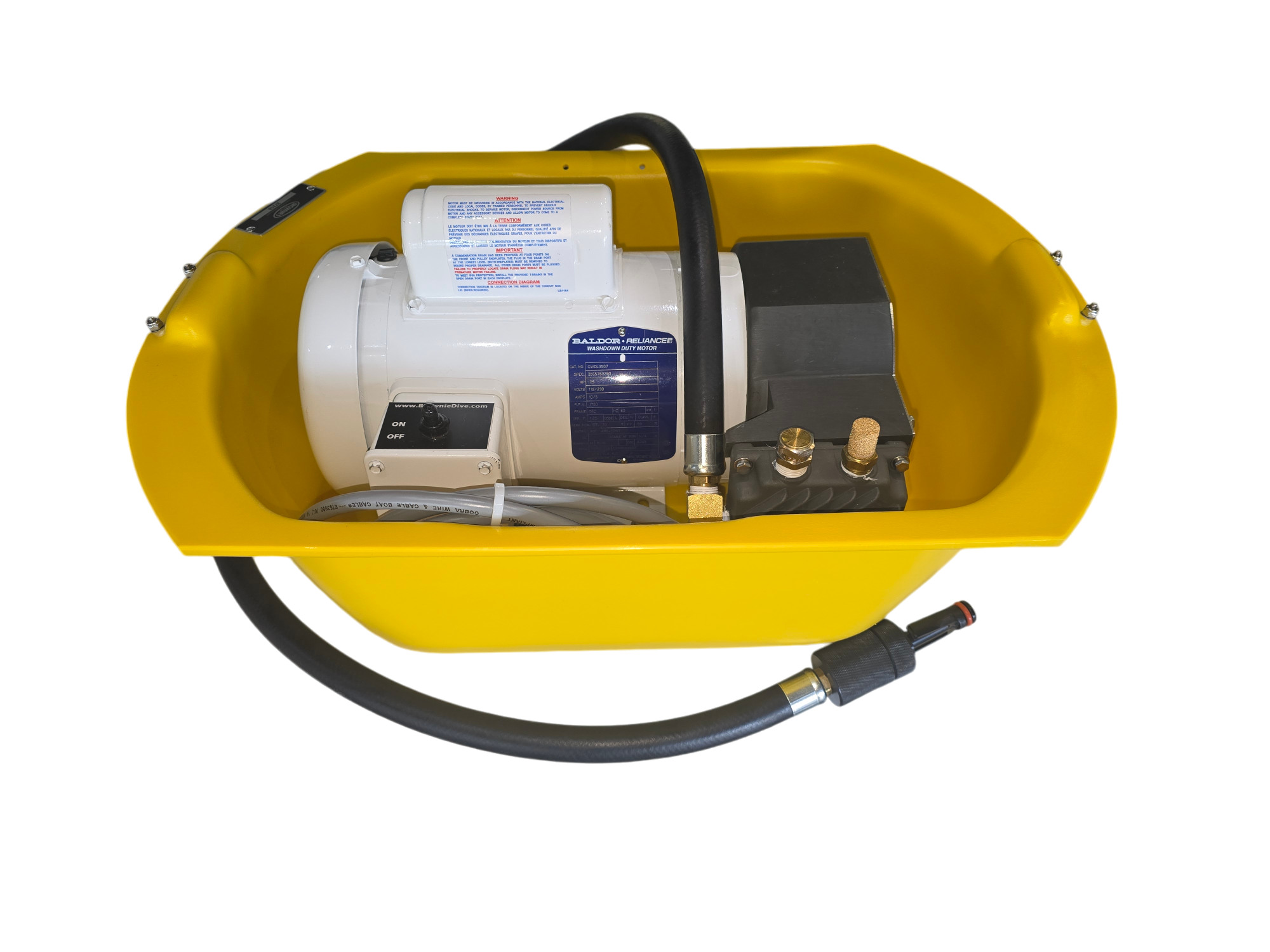
Brownie's Third Lung E150X
Best all-round surface-supplied system for cruising sailboats
Brownie's is the name that comes up in every cruiser anchorage conversation about hull cleaning, and for good reason: the systems are built specifically for breathing air, which is the thing that separates them from the compressor in a hardware store. The floating raft design suits sailboat use well because you are not finding deck space or a mount for it. Budget for a spare hose and the recommended filter maintenance from the start — the filtration is the part that keeps the air breathable, not an accessory.
- Divers
- Up to two, sharing surface-supplied air
- Depth
- Rated to roughly 40 ft of hose
- Power
- 12V DC battery operation from the boat's bank
- Typical price
- Usually in the $2,000-$3,000 range
Pros
- Purpose-built breathing-air compressor with the filtration and oil-free design that requires
- Floats on the surface and follows the divers, so nothing needs mounting on deck
- 12V operation means you can run it at anchor without starting a generator
Cons
- Battery draw while running is substantial — plan for the load before you rely on it daily
- Two-diver capacity encourages exactly the buddy-pair use that requires proper training first

Air Line by J Sink 12V160-3 Hookah System
Best compact 12V hookah for a single diver working the hull
If the job is scrubbing your own hull and clearing the occasional line from the prop, one diver is all you need, and a single-diver system is meaningfully smaller to stow. The tradeoff is that solo in-water work should mean someone competent on deck watching, a knife on your person, and no work at all in current or traffic. Treat that as a hard rule rather than advice.
- Divers
- One diver on the standard configuration
- Hose
- Typically supplied in 40 ft lengths
- Power
- 12V DC, designed for small-boat electrical systems
- Typical price
- Commonly around $1,500-$2,200
Pros
- Smaller and lighter than twin-diver systems, which matters on a boat where every locker is spoken for
- Single-diver simplicity keeps the setup routine short enough that you actually use it
- Runs directly from the house bank without an inverter or generator
Cons
- One diver at a time means no in-water buddy, which is a real safety consideration for hull work
- Availability and dealer support are thinner than Brownie's in some regions
Nardi Atlantic / Extreme Series Breathing-Air Compressor
Best choice if you want to fill tanks as well as run a hookah
This is the step beyond hull cleaning. A high-pressure compressor makes sense when you are diving recreationally in places with no fill station, and it turns your boat into its own dive operation. It is not the right answer to 'I want to scrub my bottom' — that is what the low-pressure hookah systems above are for. Weight, power and filter maintenance all make this a decision to take seriously rather than an upgrade to squeeze in.
- Type
- High-pressure breathing-air compressor with multi-stage filtration
- Output
- Fills scuba cylinders as well as supplying surface-supplied air setups
- Power
- Electric and petrol models; electric needs generator or shore power
- Typical price
- Several thousand dollars — quote from a dealer
Pros
- Filling your own cylinders removes the dependence on dive shops in remote cruising grounds
- Proper breathing-air filtration stack, serviceable and well documented
- Italian-built and widely supported in the commercial and dive-centre market
Cons
- Heavy, expensive and needs significant power — this is a large-boat or long-term-cruiser purchase
- Filters and maintenance are an ongoing cost, and air quality testing is genuinely necessary
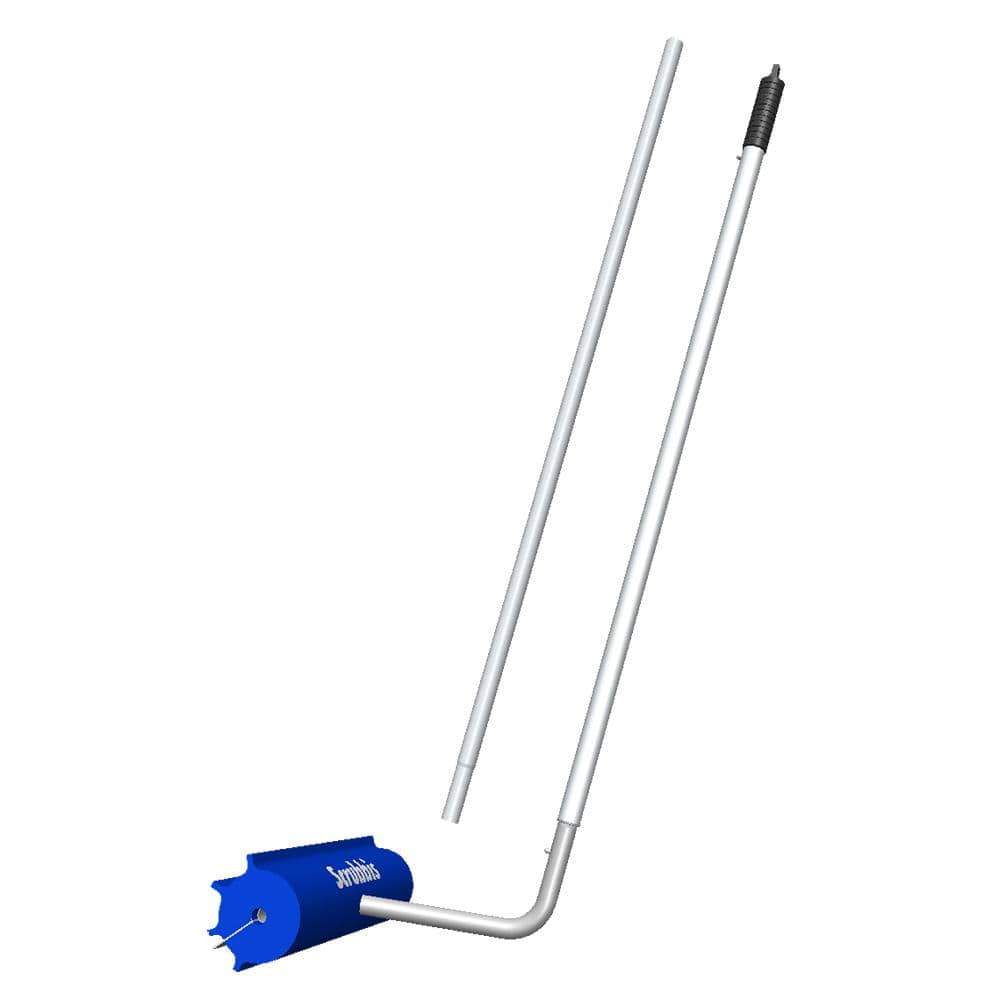
Scrubbis Hull Scrubber
Best way to clean a hull without getting in the water at all
Most boats do not need a hookah system; they need someone to wipe the slime off before it turns into barnacles. A float-head scrubber run around the topsides and waterline every couple of weeks in a growth season delays the real haul-out and makes the eventual dive far shorter. Start here, and buy the air system only if you have established that you genuinely dive often enough to justify it.
- Type
- Buoyant long-handled hull scrubber with float head
- Reach
- Extension handles reach well below the waterline from the dock or dinghy
- Pads
- Interchangeable heads for hard growth and for soft antifouling
- Typical price
- Roughly $100-$250 depending on kit and handle length
Pros
- No training, no air supply, no risk — a genuine option for owners who will not dive
- Perfect for the weekly slime wipe that prevents growth from ever becoming a diving job
- Cheap enough that it is worth owning even if you also have a hookah rig
Cons
- Cannot reach the keel, rudder or prop properly, which is where the worst growth usually is
- Hard work from a dinghy, and the float head fights you the whole time
Dive Knife and Line Cutter
Non-negotiable safety kit for any in-water work
Surface-supplied diving means you are tethered to the boat by a hose, which is the source of both the convenience and the primary hazard. A knife mounted where your hand goes instinctively is the answer to entanglement, and it belongs on you every time you go in, including the two-minute jobs. Buy titanium — a stainless knife left in a wet sheath is welded in place by the third season.
- Blade
- Titanium or 316 stainless, blunt tip preferred for hull work
- Mount
- Leg or BCD sheath with positive retention
- Feature
- Serrated edge plus a dedicated line-cutting notch
- Typical price
- $30-$120
Pros
- The one piece of kit that matters when you are entangled in a hookah hose or a fouled line
- Titanium blades do not rust into their sheath between uses, which stainless reliably does
- Cheap insurance relative to everything else in this guide
Cons
- Only useful if it is on your person, not in a locker — sheath mounting is the whole point
- Cheap knives have poor edge retention and dull quickly in saltwater use
How to choose
Match the tool to how often you will actually get in the water, not to the boat's size.
| Option | Typical price | Best for | Key spec |
|---|---|---|---|
| Brownie's Third Lung E150X | $2,000-$3,000 | Cruising couples, two divers | 12V, about 40 ft hose |
| Air Line by J Sink 12V160-3 | $1,500-$2,200 | Single-diver hull work | 12V, compact stowage |
| Nardi high-pressure compressor | Several thousand | Remote cruising with tank diving | Fills cylinders to 3,000+ psi |
| Float-head hull scrubber | $100-$250 | Owners who will not dive | Reaches waterline and topsides only |
How to choose. Buy the scrubber first regardless — every boat benefits from a regular slime wipe, and it costs less than one professional visit. If you are cruising in warm water and cleaning monthly, a 12V hookah is a two-season payback and a genuine capability upgrade for prop work. Add the dive knife to whichever you buy, get certified before you breathe compressed air, and check the local in-water cleaning rules for the waters you are in. The high-pressure compressor is a separate decision entirely — it is about tank autonomy in remote places, not about hull maintenance.
Frequently asked questions
Do I need scuba certification to use a hookah system?
Manufacturers do not always require it, but you should have it. Surface-supplied diving carries the same core risks as scuba — lung overexpansion injury above all — and the training that teaches you never to hold your breath on ascent is exactly what prevents the accident that kills untrained hookah users. Get certified, or at minimum take a manufacturer-run hookah course.
Can I use a regular air compressor for hookah diving?
No. This is the single most dangerous misconception in the category. General-purpose compressors — including tyre inflators and workshop units — are not oil-free and have no breathing-air filtration, so they can deliver oil mist and carbon monoxide directly to your lungs. Only use a compressor specifically rated and filtered for breathing air.
How deep can you go on a hookah system?
Typical cruising systems supply air through 40 ft of hose, and manufacturers generally advise staying well within recreational no-decompression limits. For hull cleaning, you are working in the top 10 ft, where the practical risks are boat traffic, current and entanglement rather than depth.
Is cleaning your own bottom actually worth the investment?
Professional hull cleaning commonly runs $3-$6 per foot per visit, so a 40-footer cleaned monthly in a growth season is meaningful money. A $2,000 system pays back over a couple of seasons if you clean regularly. If you clean twice a year, a scrubber and a diver's invoice are cheaper and simpler.
Is it legal to clean your hull in the water?
Not everywhere. Many jurisdictions restrict in-water hull cleaning because it releases antifouling biocides and can spread invasive species, and some require a certified diver using approved methods or capture equipment. Check the local rules before you start — the fines are real, and they vary widely between marinas and states.
How much power does a 12V hookah draw from the house bank?
Enough to matter. These compressors are continuous-duty motors, not momentary loads, so a session pulls real amp-hours out of the bank. If you plan to use one regularly at anchor, size the bank and charging around it — our solar guide covers how to work that out honestly.
Looking for more gear guides? Browse all our gear recommendations or the full guides index.