Bottom Paint and Haul-Outs: What It Really Costs
For most seasonally hauled cruisers, a copper ablative like Interlux Micron CSC is the sensible default — it wears with use instead of building up, and it performs reasonably across most conditions. If your boat sits in the water year-round without much sailing, a hard paint like Pettit Trinidad SR holds its protection better at rest. If copper is restricted where you haul, or you have an aluminum drive to protect, Pettit Ultima Eco is the copper-free option worth the premium.
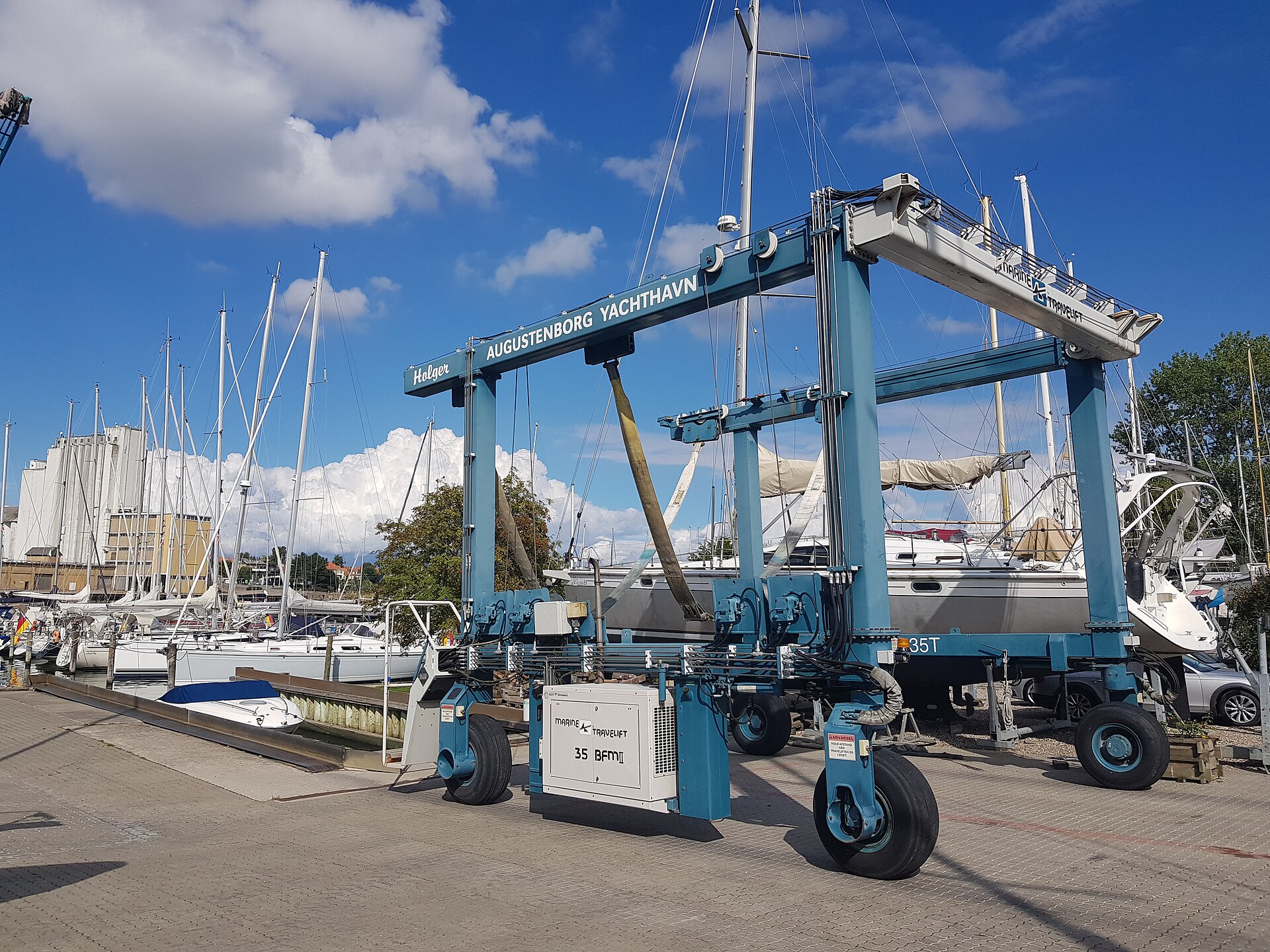
Bottom paint is not a one-time purchase — it's a recurring line item you'll pay every one to three seasons for as long as you own the boat, and the yard bill around it (haul, blocking, prep, launch) often costs more than the paint itself. This guide walks through how the paint chemistries actually differ, how much paint your hull really needs, what drives the yard invoice, and when the smarter move is a diver and a scrub brush instead of a full haul-out.
Sailboat Atlas may earn a commission from qualifying purchases made through links on this page, at no extra cost to you.
Ablative vs hard vs water-based ablative: who each suits
The three antifouling families answer different questions, and the right choice depends more on how the boat is used than on brand loyalty. Ablative paints (both solvent- and water-based) wear away gradually as the hull moves through the water, continually exposing fresh biocide and self-limiting how thick the paint film gets over repeated seasons. That makes them the right choice for a boat that actually sails and is hauled on a predictable annual or biennial schedule — the classic seasonal cruiser or weekend racer.
Hard, modified-epoxy paints like Trinidad SR do the opposite: they build a tough film that doesn't erode with speed, so they keep protecting even when the boat sits still at a dock for weeks. That's exactly the profile of a liveaboard or a marina-kept boat that motors more than it sails. The cost is that the film accumulates coat over coat, season after season, until it eventually needs aggressive sanding or blasting back to a manageable thickness.
Water-based ablatives like Hydrocoat SR split the difference on chemistry but win on ease of use — soap-and-water cleanup, lower solvent odor, and simpler disposal. They generally sit a notch below the strongest solvent-based ablatives on raw fouling resistance in tough, warm-water conditions, which makes them a good match for a DIY owner in a moderate climate rather than a boat racing the clock against tropical barnacle growth. If you're also upgrading other systems on a haul-out, see our guide to sailboat repowering for what else typically gets addressed while the boat is out of the water.
Copper loading, copper-free alternatives, and where copper is restricted
Antifouling paint works primarily by releasing a biocide — historically cuprous oxide (copper) — at a controlled rate so growth can't establish on the hull. Higher copper-load paints, in the 40-65% range by weight, generally hold up longer against hard growth like barnacles in warm or heavily fouled water. Lower-copper paints are adequate in cooler or cleaner water and cost less.
Copper isn't free of consequences: it accumulates in sediment in enclosed harbors and marinas, and a growing number of jurisdictions restrict or ban it outright. Parts of California and Washington State have moved toward copper limits or phased bans, and individual marinas sometimes add their own rules. Copper-free alternatives using biocides like Econea (as in Pettit's Ultima Eco and ECO HRT lines) close much of the old performance gap for moderate fouling, though they still generally lag the highest-copper hard paints in the worst conditions. Copper paint is also incompatible with aluminum — outdrives, centerboards, and trim tabs need a copper-free coating to avoid setting up a galvanic corrosion cell.
How much paint does your boat actually need?
Manufacturers publish coverage in square feet per gallon per coat — commonly in the 350-490 sq ft/gallon range depending on the product — but that number only helps once you know your hull's wetted surface area. A commonly used rough estimate for a monohull sailboat is:
Wetted surface area (sq ft) ≈ (LWL × Beam) + (2 × LWL × Draft), as a rough estimate only — actual wetted area varies with hull shape, keel type, and how much of the draft is fin keel versus full keel.
For example, a 34-foot boat with a 28-foot waterline, 11-foot beam and 5-foot draft comes out to roughly (28 × 11) + (2 × 28 × 5) = 308 + 280 = 588 sq ft of estimated wetted surface, needing two coats. At roughly 400 sq ft/gallon per coat, that's close to three gallons for two full coats — again, treat this as a planning estimate, not a precise order quantity, and always round up rather than run short mid-coat. Most owners apply two coats overall, with an extra third coat at the leading edges of the keel, rudder and waterline where wear is heaviest.
Compatibility: why you can't just paint over what's already there
Bottom paint chemistries don't all bond to each other reliably. The classic failure is applying a hard, modified-epoxy paint directly over old ablative: the ablative layer is designed to release and wear away, and a stiffer hard-paint film on top can lose its grip and peel in sheets, sometimes within a single season. The reverse — ablative over hard paint — is usually fine, since the ablative simply wears normally regardless of what's underneath.
Manufacturers publish compatibility charts for exactly this reason, and reputable paint lines nearly always recommend a test patch on an inconspicuous area before committing the whole hull, especially when switching brands or when the existing paint history is unknown (very common on a used-boat purchase). When in doubt, or when the existing paint stack is a mystery of multiple old layers, the safer route is a barrier coat that gives the new paint a known, stable surface rather than gambling on compatibility.
When the paint stack fails: soda blasting, barrier coats, and osmotic blisters
Years of recoating without ever stripping back eventually catches up with most hulls — the paint gets thick, prone to cracking, and unpredictable in how it takes a new coat. Soda blasting (as opposed to sand blasting, which can damage gelcoat) is the common professional fix: it strips old antifouling layers down close to gelcoat without the aggressive abrasion of sand, though it still needs to be followed by proper cleaning and priming before new paint goes on.
Osmotic blisters — the small, weeping bumps sometimes found under old antifouling on older fiberglass hulls — are a separate issue from paint compatibility. They form when water migrates through the gelcoat over years and reacts with residual chemicals in the laminate. Isolated small blisters are common and often cosmetic; widespread blistering usually calls for professional assessment, drying the hull out for weeks to months, grinding out affected areas, and rebuilding with an epoxy barrier system before repainting. A barrier coat is also worth applying proactively on any hull getting stripped back to bare gelcoat, since it seals the laminate and gives the new antifouling a consistent surface.
Prop, running gear, and zincs while you're out of the water
A haul-out is the obvious time to address everything else below the waterline. Propellers and shafts benefit from a dedicated antifouling coating formulated for metal — regular bottom paint doesn't adhere well or conduct the same way — since bare bronze and stainless foul just as readily as fiberglass. Sacrificial zinc (or aluminum/magnesium in fresh water) anodes on the shaft, prop and any through-hulls should be inspected and replaced if more than about half consumed; a badly wasted zinc is a sign of a stray-current or bonding issue worth chasing down rather than just swapping the anode and moving on. If you're considering an electric or hybrid drive at the same haul-out, our guide to electric propulsion for sailboats covers what a drive change means for haul-out and maintenance routines going forward.
Yard costs, DIY vs yard-applied, and the safety gear the job needs
A haul-out invoice is really several line items, and it pays to ask for them itemized rather than accepting one lump sum: the haul and pressure wash itself (commonly priced per foot of LOA), blocking and any lay days the boat spends on stands, the launch back into the water, and — if you're not doing the work yourself — yard labor for sanding, masking, and painting. Many yards also charge a separate DIY fee simply for the right to work on your own boat on their hard stand, since it affects their insurance and schedule.
Doing the paint yourself is by far the biggest cost lever, but it is genuinely unpleasant, physical work: hours on your back or crouched under a hull, breathing sanding dust and paint fumes. At minimum, wear a properly rated half-face respirator with organic vapor cartridges, nitrile gloves, disposable coveralls, and eye protection — a paper dust mask does not protect against biocide exposure. Because antifouling paint ships as hazardous material, many sailors buy it locally at a chandlery or have the yard order it rather than trying to ship it themselves. If you're weighing this project against other rigging or deck work on the same haul-out, our standing rigging guide and anchor and windlass guide cover two other systems worth inspecting while the boat is up on stands.
How diver cleaning changes the math
Regular in-water diver cleaning doesn't replace a haul-out, but it stretches the interval between them and keeps performance up in the meantime. A diver scrubbing slime and soft growth off monthly to quarterly (frequency depends heavily on your location and season) keeps fuel burn down under power and keeps the boat looking presentable, without disturbing the antifouling film the way aggressive scrubbing can. Some antifouling paints are explicitly marketed as diver-friendly (soft enough to wipe rather than requiring an abrasive pad); check the datasheet if you plan on regular in-water cleaning, since abrasive cleaning strips ablative paint faster than normal wear. Diver cleaning does not, however, add biocide back into an exhausted paint film — once the copper or alternative biocide is spent, the boat needs to come out and get repainted regardless of how clean the surface looks.
Our picks
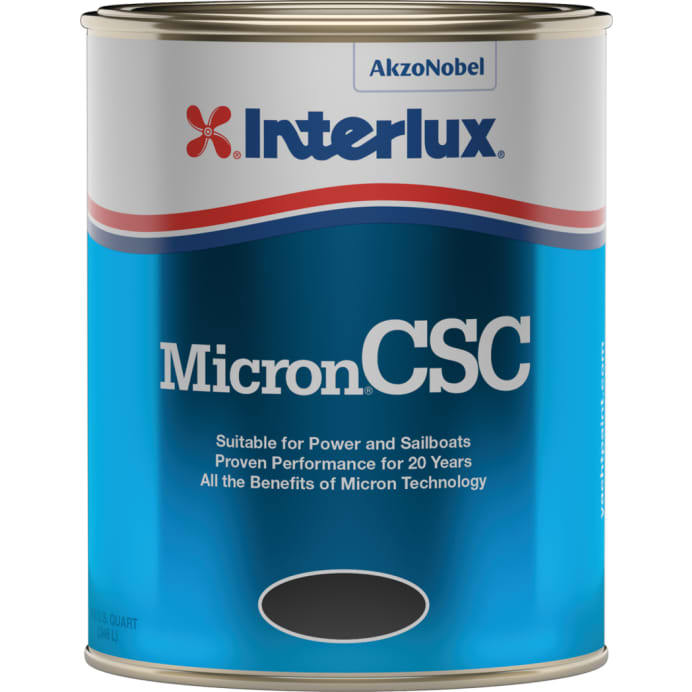
Interlux Micron CSC
Best copper ablative for boats that haul out annually in mixed waters
Micron CSC is the paint most yards reach for by default on a seasonal cruiser hauled every year, and that reputation is earned. Its copolymer resin releases copper as the boat moves through the water, which limits paint buildup over repeated seasons and keeps prep sanding reasonable. It is a genuinely multi-purpose choice — fine in fresh or salt water, sailed hard or left mostly on the mooring — which is exactly why it's the safe pick when you're not sure what next year looks like. Note that antifouling paint ships as hazmat, so many owners buy a gallon at the local chandlery rather than waiting on freight.
- Type
- Copper-copolymer controlled-depletion ablative
- Copper content
- Roughly 37% cuprous oxide by weight
- Coverage
- Manufacturer figures are typically 350-450 sq ft per gallon per coat, thinner near the datasheet's high end
- Haul interval
- Designed for annual to biennial haul-out cycles
Pros
- Controlled polishing means the paint wears with use instead of building up thick multi-year layers, so prep stays manageable at each haul
- Performs across a wide range of water types and speeds, a sensible default if you don't know next season's cruising ground yet
- One of the most widely stocked ablatives, so touch-up paint and compatible undercoats are easy to find in most yards
Cons
- Copper-based, so it's restricted or banned outright in some states and countries — check local rules before buying
- Ablative paints thin as they polish, so a boat that sits in the slip more than it sails gets less of the self-cleaning benefit
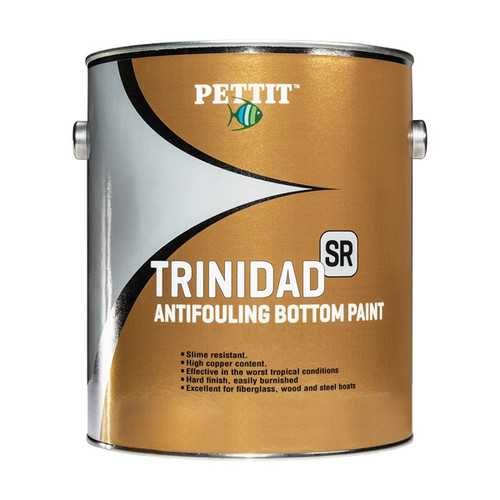
Pettit Trinidad SR
Best hard paint for boats that stay in the water year-round
Hard antifouling earns its keep on any boat that spends more time tied to a dock than moving — a liveaboard, a charter boat, or a racer that only sails on weekends. Because the paint doesn't polish away with hull speed, it keeps a working copper surface exposed even at rest, where an ablative can load up with slime. The tradeoff is the same durability working against you at haul-out time: film builds year over year, and eventually needs a soda blast or heavy sanding to bring it back to a manageable thickness.
- Type
- Hard, modified-epoxy antifouling — does not wear away like an ablative
- Copper content
- High copper load, around 65% by Pettit's published figures
- Burnishing
- Can be wet-sanded and burnished smooth, a common racer's trick
- Best suited to
- Boats left in the water continuously, including liveaboards and marina-kept cruisers
Pros
- Builds a durable film that keeps protecting even if the boat sits still for long stretches, unlike an ablative that needs motion to release biocide efficiently
- Can be burnished to a smooth, fast finish for racing without stripping the antifouling protection
- Very high copper load gives strong resistance to hard growth like barnacles in warm, fouling-prone water
Cons
- Builds up over repeated seasons since it doesn't wear away, eventually requiring a full strip back to gelcoat or barrier coat
- You cannot simply roll a hard paint over old ablative — the ablative will let go under the new coat unless properly tested and sealed first
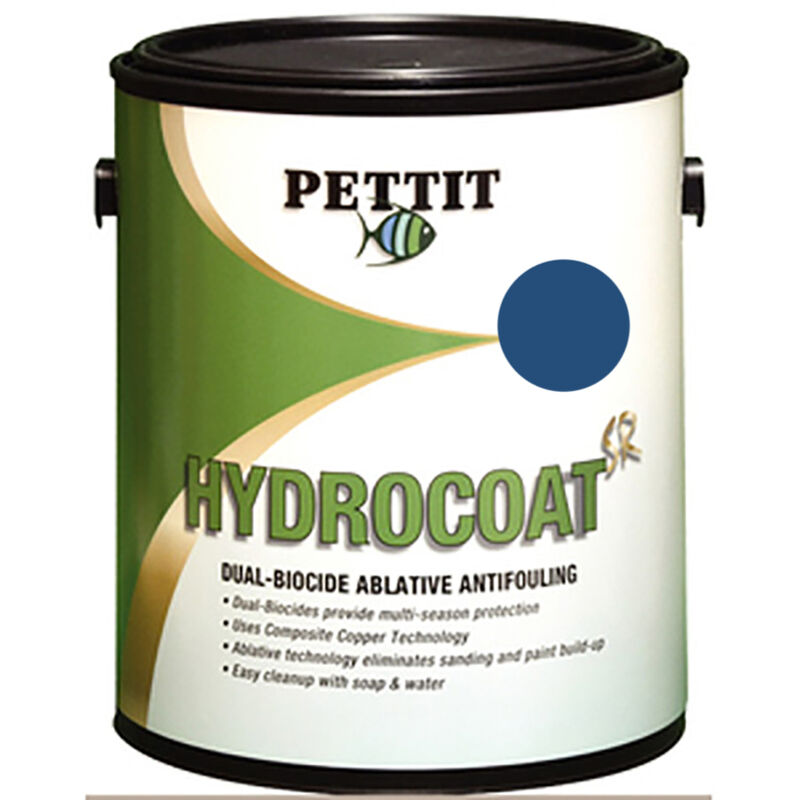
Pettit Hydrocoat SR
Best water-based ablative for easier prep and cleanup
Hydrocoat SR is the paint to reach for if the annual haul-out is a DIY weekend project rather than a yard job, because the entire application and cleanup happens with water rather than mineral spirits — easier on your lungs, your gear, and the yard's waste disposal rules. It's a sound multi-season ablative for moderate fouling conditions. In warmer water with heavy barnacle pressure, a higher-copper-load paint like Trinidad SR or Micron CSC will generally hold up better between haul-outs.
- Type
- Water-based, dual-biocide ablative
- Coverage
- Pettit's datasheet lists roughly 490 sq ft per gallon per coat
- Cleanup
- Soap and water — no solvent thinner needed for rollers and trays
- VOCs
- Low-VOC formulation compared with solvent-based ablatives
Pros
- Soap-and-water cleanup is a real quality-of-life difference for a DIY owner working solo on a weekend haul-out
- Multi-season ablative technology means less paint buildup than a hard paint, without the stronger solvent smell of an oil-based ablative
- PTFE additive is marketed to reduce drag slightly versus a straight ablative, a minor bonus for cruisers who also race occasionally
Cons
- Water-based ablatives are generally regarded as a step behind the strongest solvent-based ablatives in heavy, warm-water fouling pressure
- Still needs the same compatibility testing as any ablative before recoating over an unknown existing paint stack
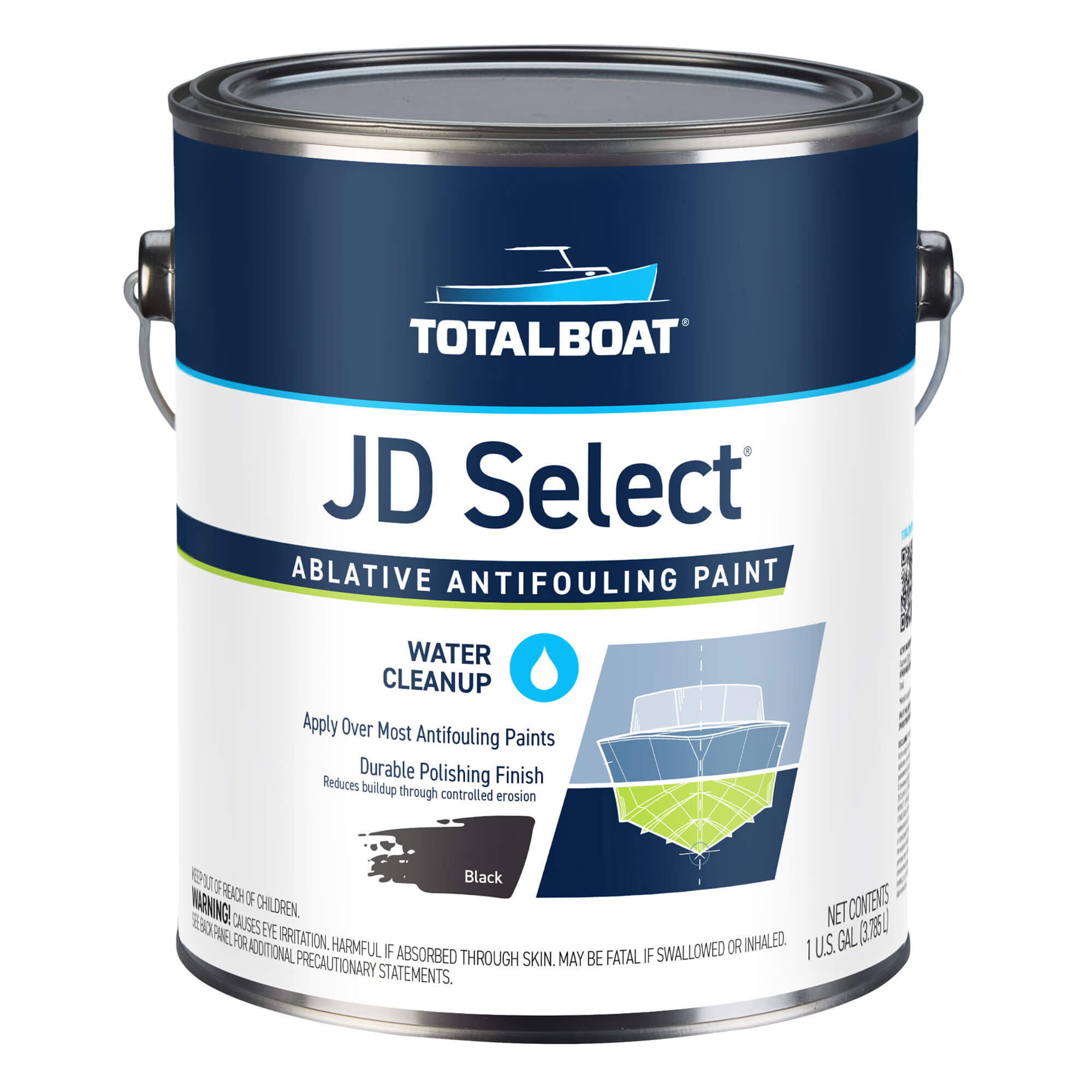
TotalBoat JD Select
Best budget ablative for a straightforward single-season repaint
JD Select is the paint for a sailor who hauls out every year regardless, sails a moderate-fouling area, and wants a competent coat of antifouling without paying for multi-season protection they won't use. It applies easily, cleans up with water, and TotalBoat's gallon kits routinely throw in the roller and prep tools that would otherwise be separate line items. It is not the paint for a boat left in a warm marina slip through a long season of hard growth — step up to a higher-copper hard or ablative paint for that use case.
- Type
- Water-based, single-season ablative with medium copper load
- Coverage
- TotalBoat's data sheet targets roughly 350-400 sq ft per gallon per coat
- Cleanup
- Soap and water
- Bundled extras
- Gallon orders typically include a paint suit, roller, tray and prep tools
Pros
- One of the lowest-cost antifouling paints that still carries a real copper biocide load, good value for a seasonal sailor on a budget
- Bundled prep and application gear removes a few small purchases from the shopping list
- Straightforward for a first-time DIY painter — no special thinning or solvent handling
Cons
- Medium copper load is aimed at low-to-moderate fouling — not the right choice for a boat sitting in warm, heavily fouling water all season
- Single-season rating means it needs recoating annually if the boat stays in the water year-round
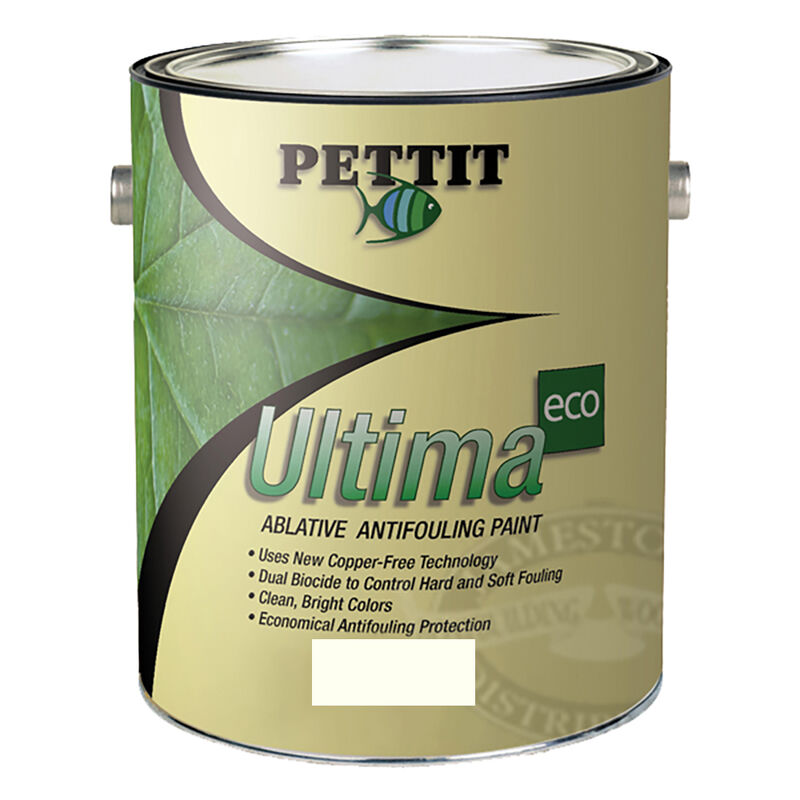
Pettit Ultima Eco
Best copper-free antifouling for restricted waters
Copper-free paint used to mean a real performance compromise; Econea-based formulas like Ultima Eco have closed much of that gap for moderate fouling conditions. It's the mandatory choice in places like parts of California and Washington State that restrict copper leaching into the water, and it's the only sensible option on an aluminum leg or centerboard where copper paint would set up a corrosion cell. In a heavily fouled tropical marina, budget for more frequent diver cleaning to make up the difference.
- Type
- Copper-free, multi-season ablative
- Biocide
- Organic Econea biocide plus a slime-fighting additive, no copper
- Substrates
- Rated for use on aluminum hulls and drives as well as fiberglass
- Compatibility
- Pettit states it can go over most existing bottom paint after proper prep
Pros
- The only practical option in the growing number of states, counties and marinas that restrict or ban copper-based antifouling
- Safe over aluminum outdrives and centerboards where copper paint causes galvanic corrosion
- Multi-season ablative wear pattern similar to a copper ablative, so the maintenance rhythm doesn't change much
Cons
- Copper-free biocides are generally considered less effective against hard growth like barnacles in warm, heavily fouled water
- Costs more per gallon than an equivalent copper-based ablative in most markets
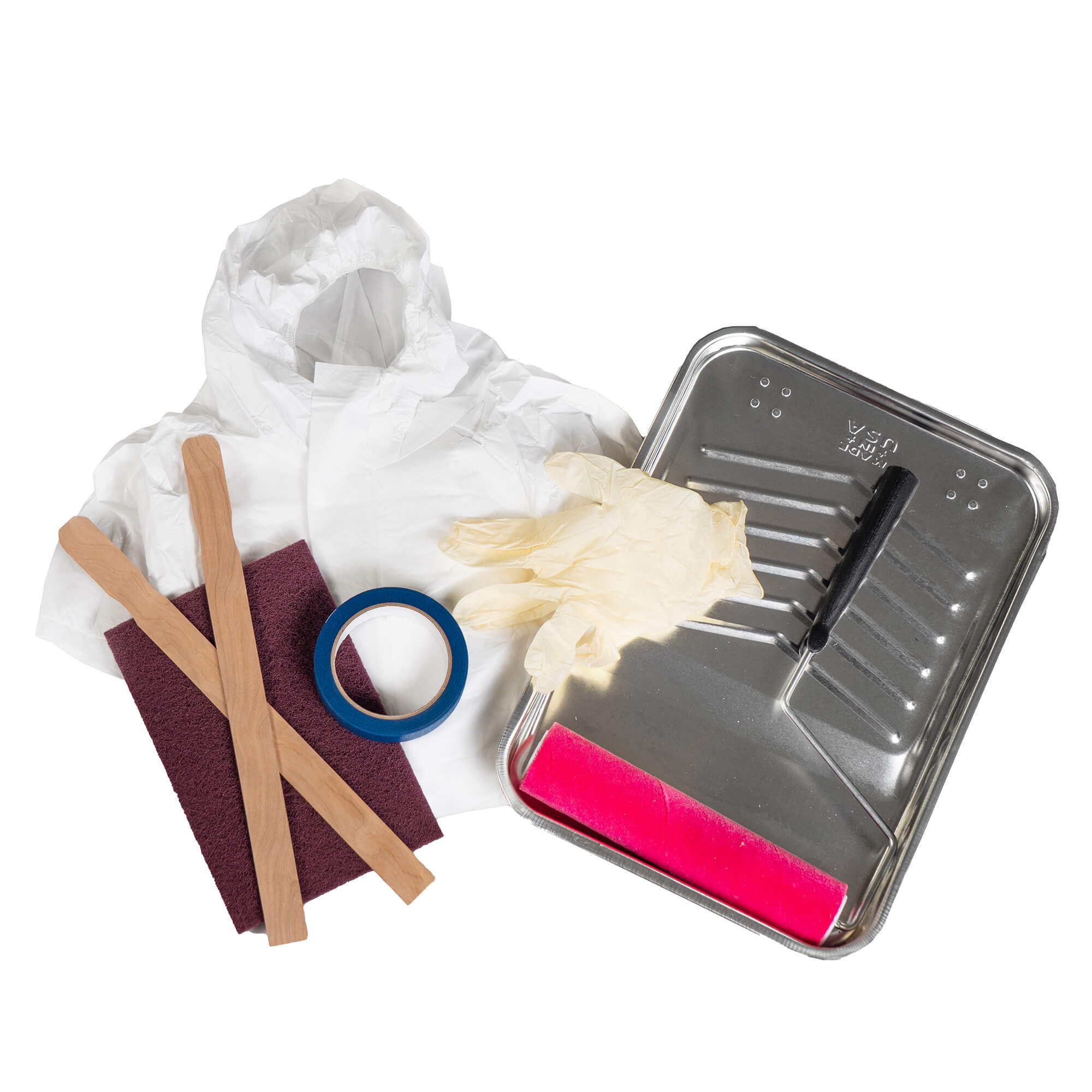
TotalBoat Antifouling Bottom Paint Supplies Kit
Best prep and application kit for a DIY haul-out
The unglamorous truth about a DIY bottom job is that most of the frustration comes from cheap application gear, not the paint itself. This kit covers rollers, trays and mixing sticks sized for the job so you're not improvising with a household roller that melts in solvent-based paint. Pair it with a proper half-face respirator rated for organic vapors and particulates — a paper dust mask does not protect you from biocide and solvent exposure — plus disposable coveralls, nitrile gloves and eye protection, especially if you're sanding old antifouling.
- Contents
- Roller frames, phenolic-core mini rollers, paint tray liners and mixing sticks sized for bottom paint
- Compatibility
- Sold as compatible with solvent-based and water-based antifouling alike
- What it doesn't include
- A respirator — buy a NIOSH-rated organic-vapor half-mask separately
- Use case
- One kit is sized for a single full bottom job on a small-to-midsize hull
Pros
- Bundles the small disposable items that are easy to forget until you're standing under the boat mid-coat
- Phenolic-core rollers hold up to solvent-based paints that dissolve cheap foam rollers
- Cheap insurance against a botched coat from a roller shedding fibers into wet antifouling
Cons
- Does not include respiratory protection — that is a separate, non-negotiable purchase
- Generic hardware-store rollers work almost as well for a fraction of the cost if you already have a tray and stir sticks
How to choose
| Paint type | Best for | Wears with use? | Typical haul cycle |
|---|---|---|---|
| Copper ablative | Seasonal sailors, annual haul-outs | Yes, self-limiting buildup | 1-2 seasons |
| Hard/modified-epoxy | Liveaboards, marina-kept boats, racers who burnish | No, builds up over seasons | 2-3 seasons before stripping |
| Water-based ablative | DIY owners, moderate fouling climates | Yes | 1-2 seasons |
| Copper-free ablative | Restricted waters, aluminum drives/hulls | Yes | 1-2 seasons |
Budget tiers: a value-tier single-season water-based ablative like JD Select keeps per-gallon cost down for a boat that just needs a competent annual coat in moderate fouling. A mid-tier multi-season copper ablative like Micron CSC or Hydrocoat SR costs more per gallon but can stretch the interval between haul-outs on some cruising grounds. A premium hard paint like Trinidad SR costs the most upfront and demands a stripping project eventually, but it's the right tool for a boat that doesn't move enough to make an ablative's self-polishing action worthwhile. Copper-free paints generally sit at a price premium over an equivalent copper paint, which is the trade a restricted marina or an aluminum hull requires you to make.
Frequently asked questions
How often do I actually need to haul out and repaint the bottom?
It depends on paint type and how much the boat sits still versus sails. A copper ablative on a boat hauled annually is typically repainted every one to two seasons. A hard paint left in the water year-round can go two to three seasons between full recoats, though it needs periodic diver cleaning in between. Boats in warm, heavily fouling water generally need more frequent attention than boats in cooler, cleaner water regardless of paint type.
Can I put ablative paint over old hard paint, or hard paint over old ablative?
Going hard-over-ablative is the riskier direction and generally not recommended without a barrier coat, because the ablative layer beneath can let go under the newer, less flexible film. Ablative-over-hard is usually fine. In both directions, do a small test patch first, or ask your paint manufacturer's compatibility chart before committing a whole hull — mixing brands and generic types is the single most common cause of peeling bottom paint.
How much does a haul-out actually cost?
Costs vary widely by region and yard, but as rough ranges: the haul and pressure wash itself commonly runs $10-$20 per foot, blocking and lay days add a daily storage fee (often $5-$15 per foot per week), and the launch is typically priced similarly to the haul. DIY-in-the-yard fees, where you do your own bottom work on their hard stand, often run $200-$500 flat on top of the haul/launch. Yard-applied labor for sanding, prep and painting is usually priced separately and can easily match or exceed the cost of the paint itself.
Do I need a barrier coat?
Only if the underlying gelcoat is failing, you're dealing with osmotic blisters, or the old antifouling stack has become an incompatible mess that needs isolating before a fresh start. A barrier coat — typically an epoxy-based product — seals the hull and gives new antifouling a stable, known surface to bond to. It is not a routine annual step; most healthy hulls just need scuffing and a compatible topcoat.
Is diver cleaning a substitute for haul-out and paint?
No, but it extends the interval between them. Regular diver cleaning (commonly monthly to quarterly depending on your location and fouling pressure) keeps slime and soft growth from taking hold, which both looks better and reduces fuel burn under power. It does not replenish the biocide in the paint, so eventually the antifouling itself is exhausted regardless of how clean a diver keeps the surface, and a repaint is still due.
Why do some places ban copper antifouling?
Copper leaching from boat hulls accumulates in enclosed harbors and marinas, and some jurisdictions — parts of California and Washington State among them — have moved to restrict or phase out copper-based antifouling to protect water quality. Rules vary by state, county and even by marina, so check locally before buying paint rather than assuming your usual brand is allowed everywhere you might haul out.
Do I need special safety gear to apply bottom paint myself?
Yes. At minimum: a NIOSH-approved half-face respirator with organic vapor cartridges (not a paper dust mask), nitrile gloves, disposable coveralls, and eye protection. If you're sanding old antifouling, add a properly rated dust mask or powered respirator and consider that old paint may contain now-banned biocides like tributyltin — bag and dispose of sanding dust as hazardous waste per your yard's rules, not in a household bin.
Looking for more gear guides? Browse all our gear recommendations or the full guides index.