Sailboat Repowering: Beta vs Yanmar vs Volvo Penta
If you value parts availability and being able to service the engine yourself, Beta Marine is the repower to buy. If your engine bay is genuinely tight or you need a saildrive, Yanmar usually wins on packaging and dealer coverage. And if the boat already has a Volvo Penta saildrive installed, staying with Volvo avoids re-engineering the entire drive train — at a higher long-term cost of ownership.
A repower is a $15,000 to $30,000 decision on a typical 30 to 40 foot cruiser, and roughly half of that is labour and ancillaries rather than the engine on the pallet. This guide covers how to size the engine, what the installation actually involves, where each brand genuinely differs, and the mistakes that turn a two-week yard job into a two-month one.
Sailboat Atlas may earn a commission from qualifying purchases made through links on this page, at no extra cost to you.
When repowering is the right call — and when it is not
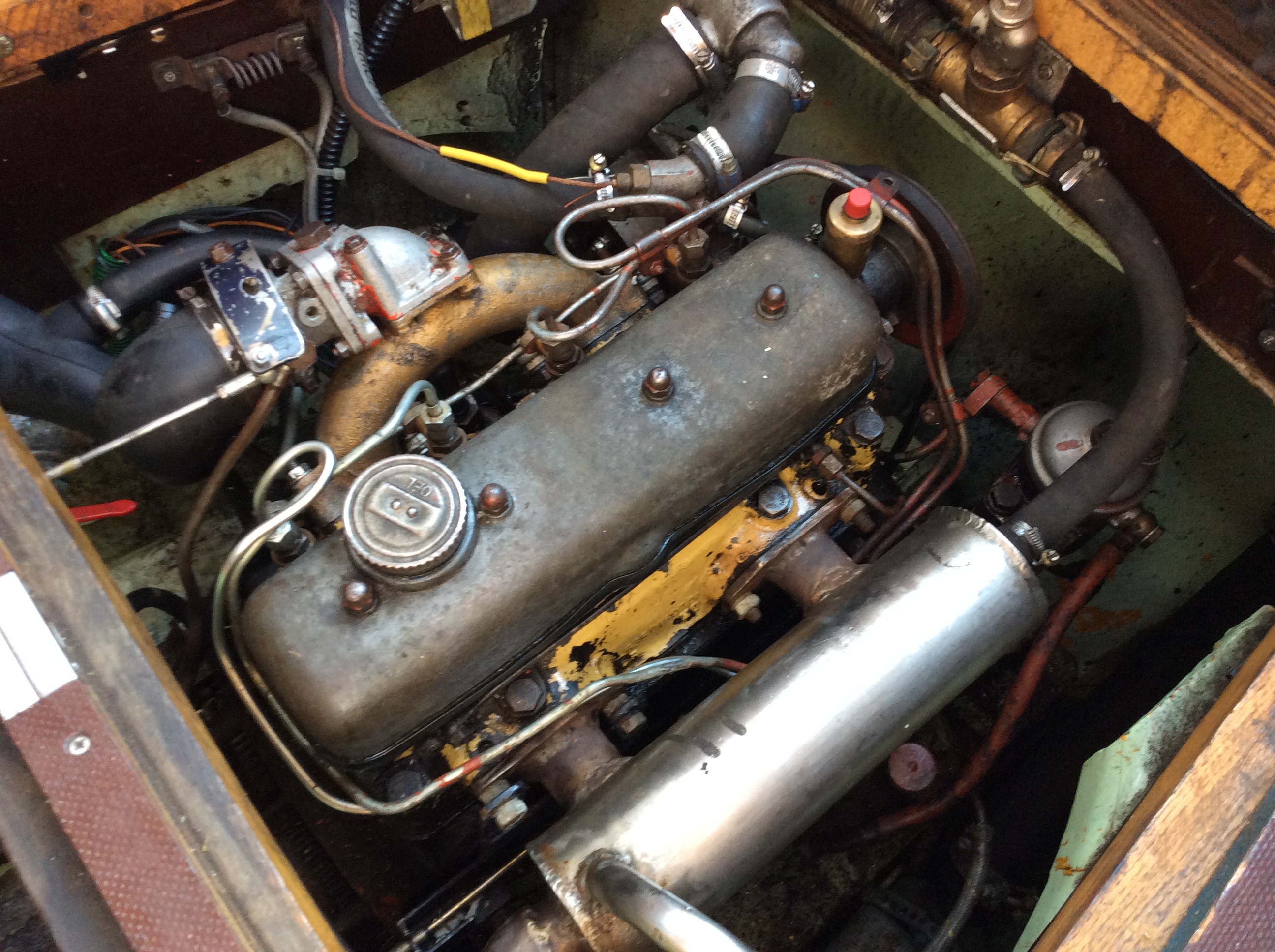
Marine auxiliaries rarely wear out the way a truck engine does. A cruising sailboat might put 150 to 300 hours a year on the engine, which means a 40-year-old diesel may have fewer hours than a three-year-old delivery van. What kills them is time and salt: heat exchangers silt up and corrode, exhaust elbows scale shut, wiring harnesses go brittle and green, and raw-water pumps eat impellers into the cooling passages.
That points to a useful test. If the compression is good, the block and head are sound, and the failure is a discrete component — injectors, lift pump, head gasket, heat exchanger — rebuild or repair. If the surrounding systems are all at end of life at the same time, and especially if the engine is an orphan model whose parts you hunt on forums, repower. Spending $6,000 rebuilding an engine that still hangs off cracked mounts and feeds a corroded exhaust just relocates the next breakdown.
The other strong repower trigger is resale and insurability. A documented new engine with a warranty is one of the few upgrades that reliably moves an older boat, because every buyer's surveyor looks hard at the engine and every buyer knows what a mid-passage failure costs.
How to size the engine for your boat
The conventional starting point for a displacement sailboat is 2 to 3 horsepower per 1,000 pounds of loaded displacement. A 15,000lb 34-footer therefore sits around 30 to 45hp. Note the word loaded: designers quote empty displacement, and a cruising boat carries several hundred kilos of water, fuel, chain, dinghy, outboard, tools and provisions that were never in the brochure figure.
Push toward the upper end of the range if you sail somewhere with strong tidal streams, if you regularly motor into short steep chop, if the boat is beamy with a lot of wetted surface, or if you carry a fixed three-blade propeller. Stay lower if the boat is light, fine-ended, and mostly sailed in benign conditions — extra horsepower you never use is extra weight, extra fuel burn and extra purchase price.
Do not automatically copy the original engine's rating. Some 1970s and 1980s boats were badly under-engined by modern expectations, and others were fitted with far more power than the hull can convert into speed. Hull speed is set by waterline length; beyond that point additional horsepower produces wake, noise and fuel consumption, not knots.
Finally, size the gearbox reduction and propeller as part of the same calculation. A well-matched larger, slower-turning propeller converts engine power into thrust far more effectively than a small prop spinning fast, and the moment the shaft is out for a repower is the only cheap opportunity to change it.
Saildrive or shaft: the decision that constrains everything
A saildrive is a leg that passes vertically through the hull, with the gearbox and propeller in one underwater unit and a rubber diaphragm sealing the aperture. It is compact, quiet, needs no shaft alignment, and is why most modern production cruisers use one. The costs are a scheduled diaphragm replacement — a haul-out job — anode discipline on a dissimilar-metal leg sitting in salt water, and a hole in your hull whose integrity depends on a rubber component.
A shaft drive puts the engine on flexible mounts driving a shaft through a stern tube and cutless bearing. It needs periodic alignment, a working stern gland, and more engine-room length, but there is nothing rubber below the waterline holding the ocean out, and every part is generic and repairable anywhere.
For repowering purposes the important point is that this decision is already made for you. Converting between the two involves cutting or glassing the hull, fabricating new engine beds and re-engineering the drive geometry — routinely more expensive than the engine. So filter your engine shortlist by drive type first: Beta offers shaft only, Yanmar and Volvo Penta both offer saildrive and shaft variants.
What the installation really involves
Owners budget for the engine and are then surprised by everything around it. A complete, properly done repower typically includes: new flexible engine mounts, often on modified or re-fabricated bearers; a new wiring harness and instrument panel; new engine controls and cables; a new exhaust elbow, hose and waterlock; fuel system work including new hose, a primary filter and often tank cleaning; new raw water intake plumbing and seacock inspection; shaft coupling and alignment or a new saildrive installation; and sound insulation renewal while the space is empty.
Then there is getting the old engine out. On many boats the answer is through the companionway with the cockpit sole or a bulkhead section removed, occasionally through a deliberately cut and later re-glassed hole in the cockpit floor. Measure the physical path before you choose an engine — engines that are 30mm too tall have stopped more repowers than any spec sheet difference.
Expect roughly $15,000 to $30,000 all-in on a typical 30 to 40 foot cruiser, with the engine itself accounting for perhaps half. Owner-installed repowers with yard help for the heavy lifting and the alignment can cut that substantially, but only if you are genuinely competent at fuel, exhaust and electrical work — this is not a job where partial competence is safe.
Where the three brands genuinely differ
Beta Marine marinises Kubota industrial engines. That single fact drives everything owners like about them: parts cross-reference to a globally distributed agricultural engine, the marinisation is laid out for hand access rather than factory assembly, and Beta supplies mounting kits matched to a long list of specific production sailboats. The costs are physical size and weight, and no saildrive option.
Yanmar builds purpose-designed compact marine diesels with the widest dealer network in the business. They are small and light for their output, which is repeatedly the deciding factor in older hulls, and they offer both saildrive and shaft variants. Parts are marine-priced, and the compact packaging that helps them fit can make some service points awkward once installed.
Volvo Penta sells an integrated system — engine, saildrive, controls, panels — that production builders love because it arrives coherent. If your boat has that system already, staying with it is the path of least engineering resistance. The consistent owner complaint is cost of ownership: parts, dealer labour and the saildrive service schedule all run higher than the alternatives.
One question worth asking before brand loyalty: who will service this engine where I sail? A Beta is easy to keep alive in a place with tractors. A Yanmar is supported in almost every marine centre in the world. A Volvo is superbly supported in Europe and North America and thinner in remote cruising grounds.
Common repowering mistakes
Reusing the old exhaust and harness. Both are consumables with a lifespan, both are hidden, and both will fail shortly after the shiny new engine goes in — with the failure blamed on the engine.
Ignoring the propeller. A new engine turning an old, incorrectly pitched prop will either fail to reach rated rpm (overpropped, which cokes the engine and shortens its life) or scream without producing thrust. Have the prop assessed against the new engine and gearbox ratio.
Not cleaning the fuel tank. Decades of sediment and diesel bug in the tank will find their way to a brand-new injection system the first time you pitch in a seaway. Clean or replace the tank while the engine is out and access is unrepeatable.
Undersizing the alternator. If you have moved or plan to move to a lithium house bank, specify the charging system with the engine — see our guides to alternators and external regulators and lithium batteries. Retrofitting a large alternator and regulator later means going back into the same space you just closed up.
Our picks
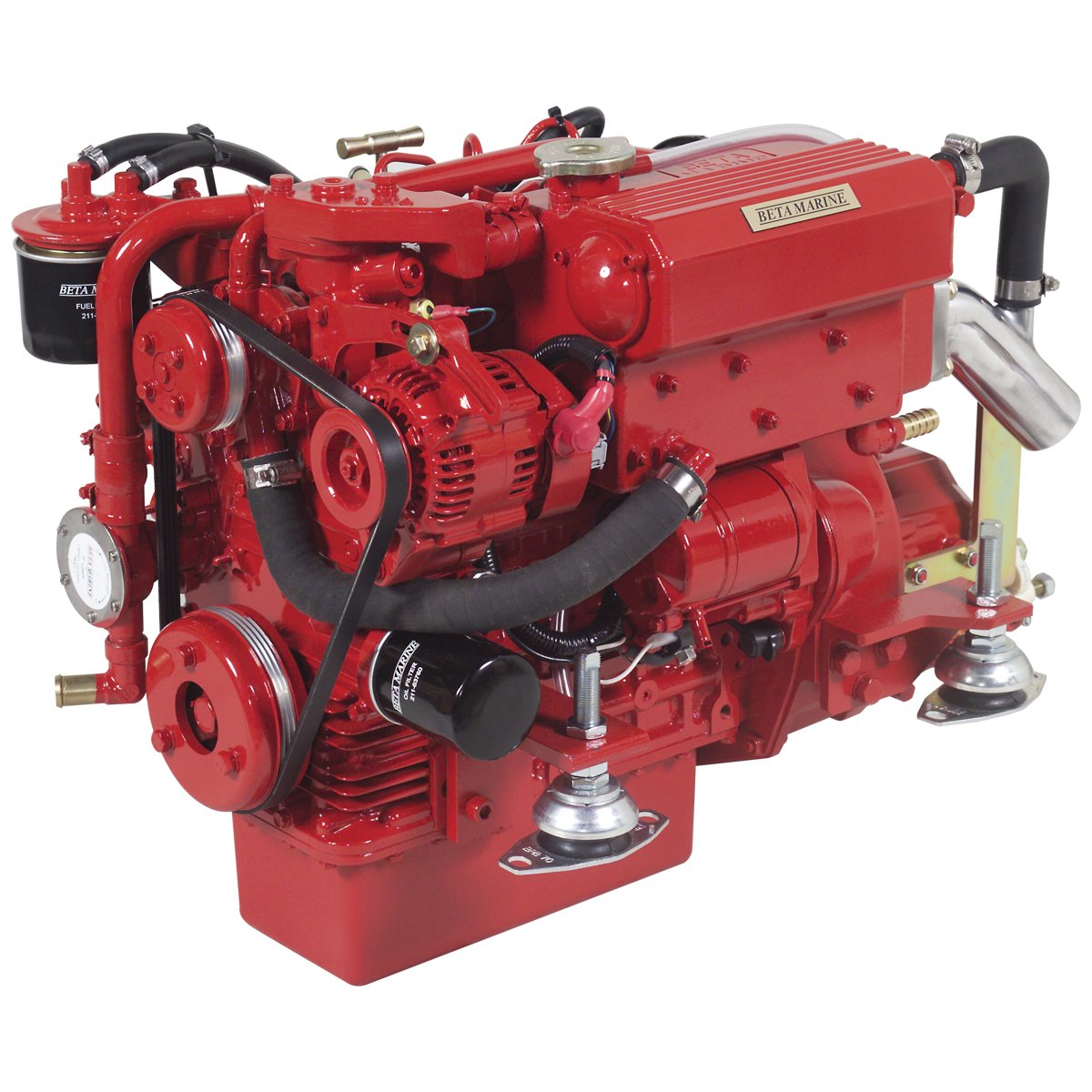
Beta Marine Beta 25
Best repower for a 26-32ft cruiser that wants serviceability above all
The Beta 25 is the engine cruisers recommend to each other, and the reason is almost never peak performance. It is a Kubota industrial diesel — the same family that runs in compact tractors worldwide — marinised with the assumption that the owner, not a technician on a lift, will be doing the maintenance. In a 28 to 32 foot cruiser it delivers ample power for motoring into a head sea. Skip it if you have a saildrive, if your engine bay is genuinely undersized, or if your boat's design weight distribution cannot absorb the extra mass low and aft.
- Output
- 25hp, three cylinders, naturally aspirated
- Base engine
- Kubota industrial block, marinised by Beta Marine
- Gearbox options
- Conventional mechanical gearbox in several reduction ratios; saildrive not offered — shaft drive only
- Service parts
- Filters, belts and many wear items cross-reference to widely available Kubota tractor parts
Pros
- Kubota base engine means genuine parts availability in almost any country with agriculture, not just marine chandleries
- Engineered around access: filters, dipstick and impeller are placed where a human arm can reach them in a sailboat engine bay
- Beta will supply engine mounts and adapter plates matched to a long list of production sailboats, which cuts the fabrication bill dramatically
Cons
- Heavier and physically larger than an equivalent-output Yanmar, which matters if your bearers and hatch opening are tight
- No saildrive option, so it is a non-starter as a like-for-like replacement in a saildrive-equipped hull
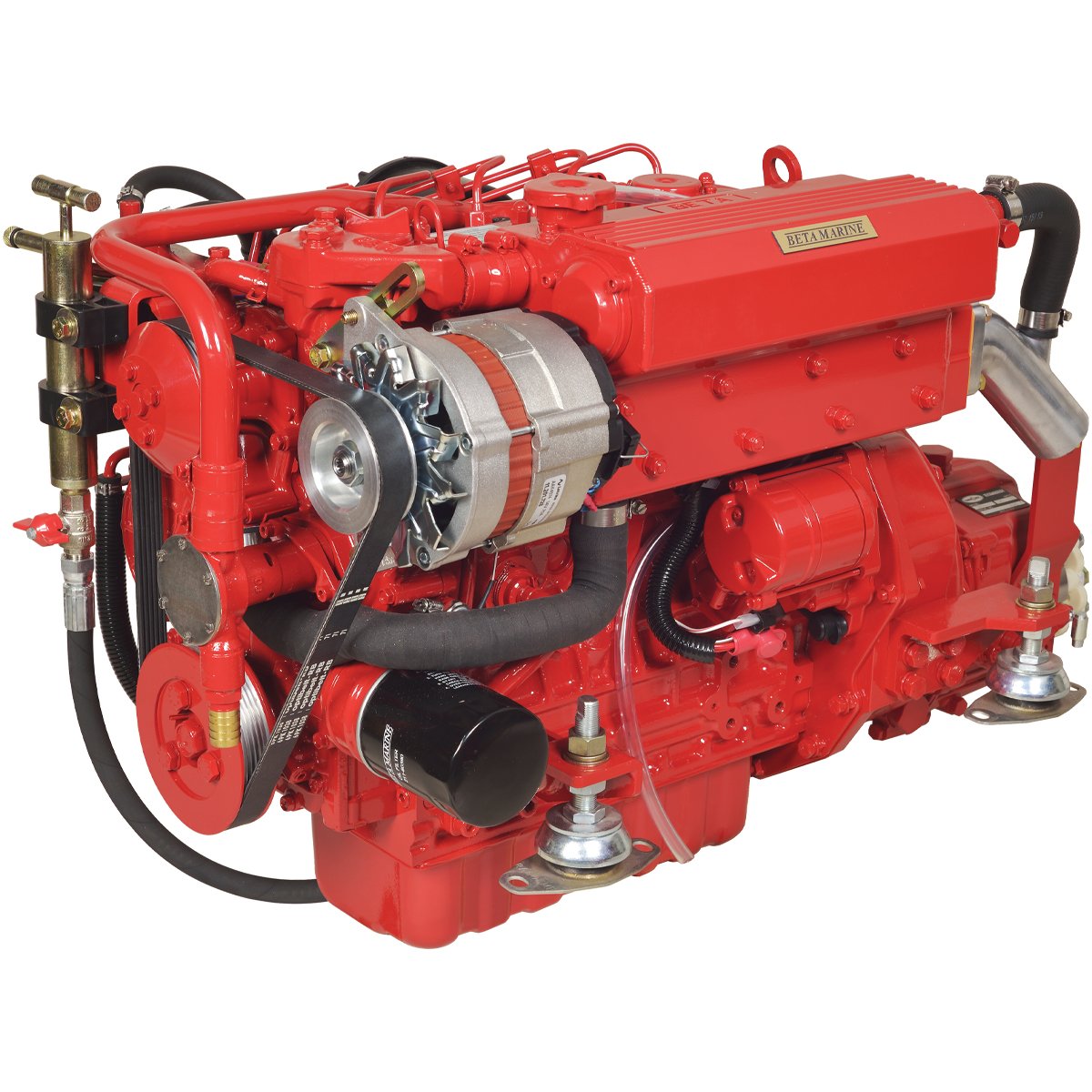
Beta Marine Beta 38
Best repower for a 35-42ft cruiser carrying real load
The Beta 38 is the sweet spot for a 36 to 42 foot cruising boat that is actually loaded — water, fuel, ground tackle, a dinghy on davits — rather than sailed light on weekends. The extra cylinder over the Beta 25 smooths the vibration signature and the power reserve means you are not running near maximum continuous rating every time you motor into a foul tide. Its real selling point remains the same: an industrial base engine with parts you can find and access designed for a human being working in an awkward space.
- Output
- 38hp, four cylinders
- Base engine
- Kubota block, same marinisation philosophy as the smaller Betas
- Alternator
- Available with high-output alternator options suited to a large house bank
- Installation
- Wide range of factory mounting kits and gearbox ratios for common production hulls
Pros
- Four cylinders run noticeably smoother than a three at cruising revs, which you feel on a long motor-sail
- Comfortable power reserve for a loaded cruising boat punching into chop with a dirty bottom
- Straightforward accommodation of a large second alternator, which is the practical way to charge a lithium bank underway
Cons
- Physically bulky — measure the hatch, the bearers and the shaft angle before committing, not after
- Overkill for a light 34-footer, where the extra weight and fuel burn buy you little
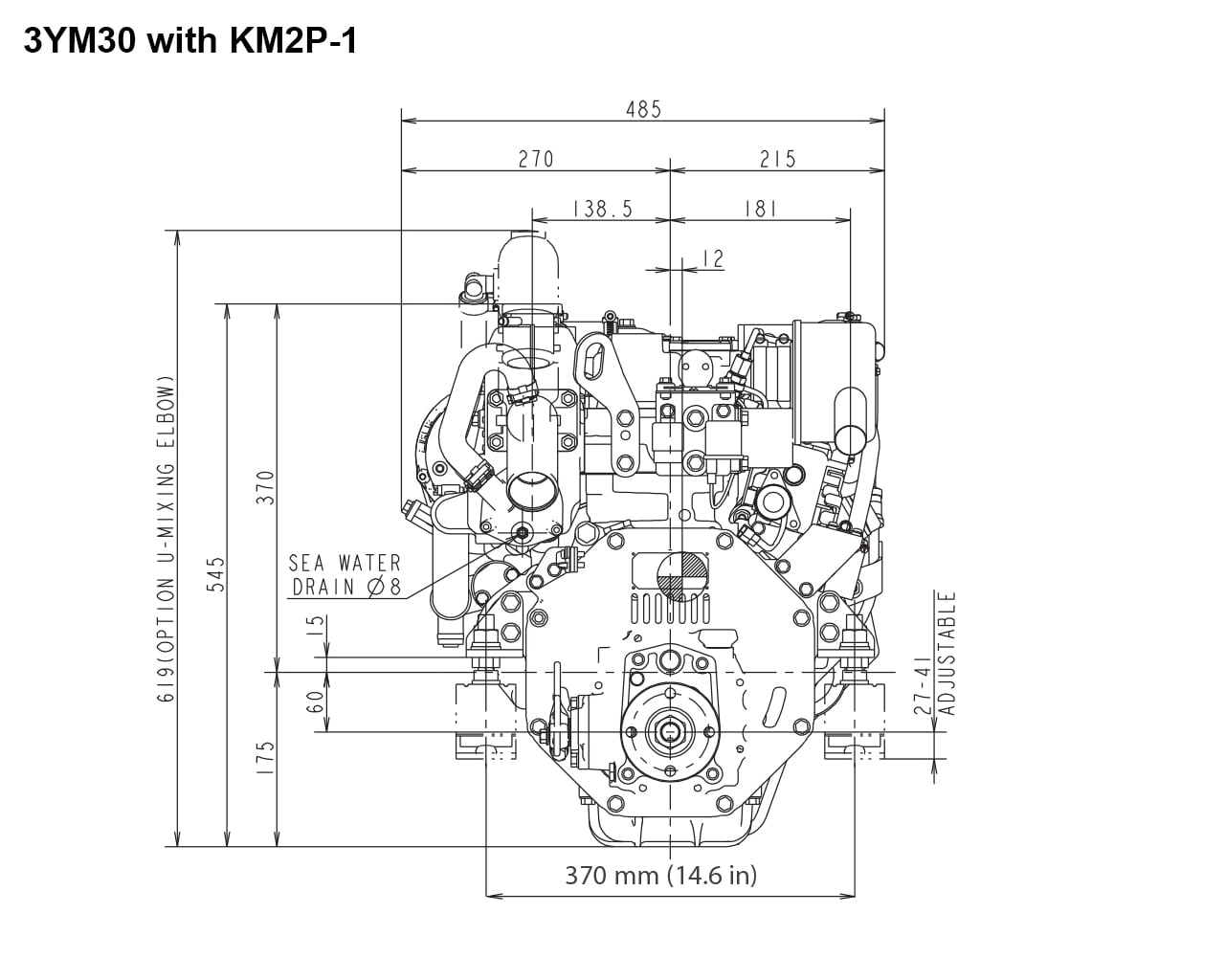
Yanmar 3YM30AE
Best compact repower where space and weight are tight
Yanmar dominates the sailboat repower market for one very practical reason: their engines are small. When a 1980s hull was designed around a compact diesel and you need something in the same envelope, a 3YM30AE often drops in where a competitor simply will not. It runs smoothly, it is well supported everywhere, and the saildrive option matters enormously for boats built that way. The trade is on parts economics — you will pay marine prices for consumables and you will not be cross-referencing filters at a farm supply store in the Caribbean.
- Output
- About 29hp, three cylinders, naturally aspirated
- Drive options
- Conventional gearbox or Yanmar saildrive — one of the few families offering both cleanly
- Footprint
- Compact and light for its output; a common factory fit in production sailboats
- Dealer network
- Very broad global marine dealer coverage
Pros
- Small and light for the power, which frequently makes it the only engine that physically fits an existing bay
- Saildrive option makes a like-for-like swap possible in the many production boats built that way
- Marine dealer network is genuinely worldwide, so warranty and specialist service are rarely far away
Cons
- Parts are marine-priced and marine-sourced — there is no agricultural equivalent to fall back on in a remote port
- Packaging that makes it fit so well also makes some routine service points awkward to reach once installed
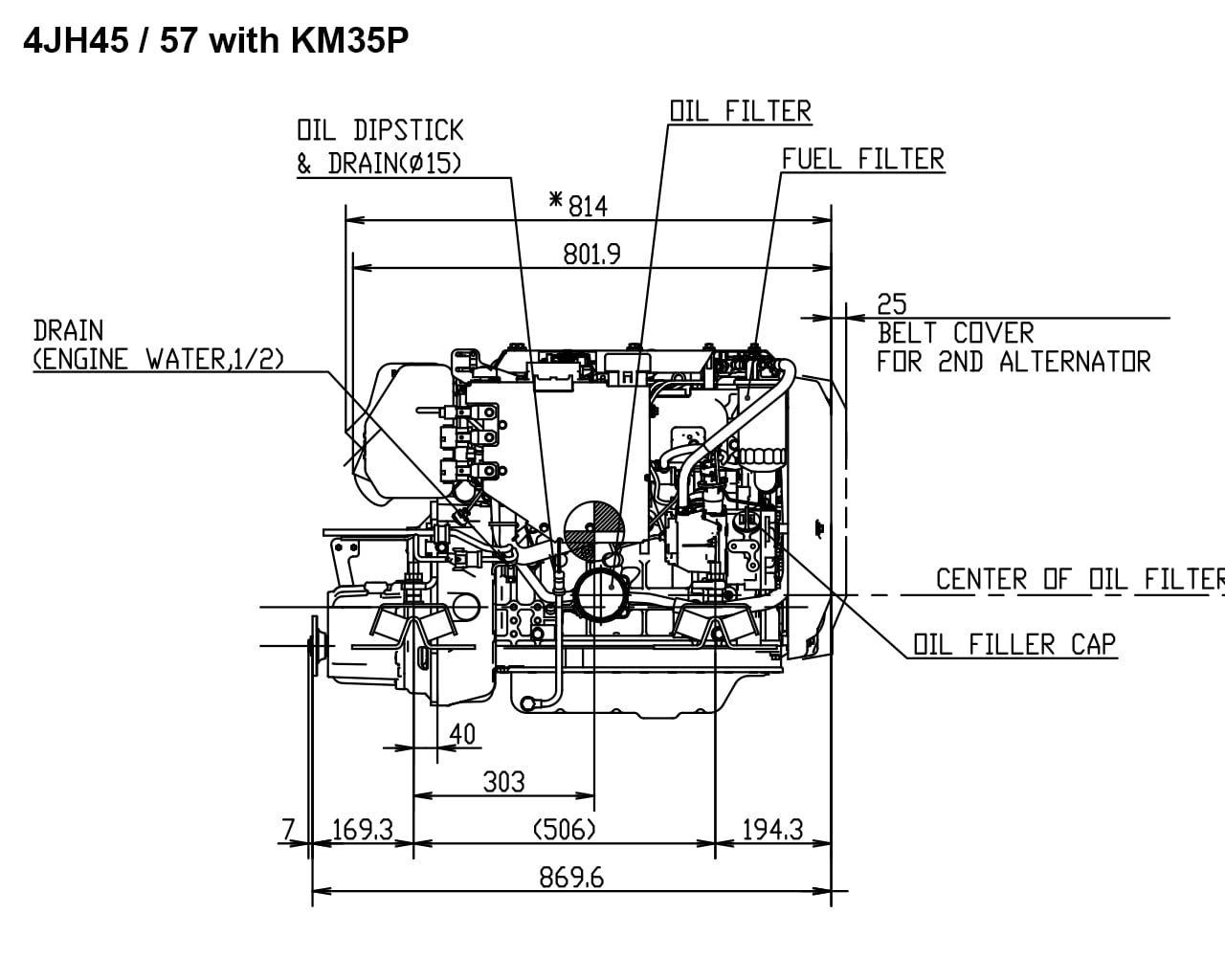
Yanmar 4JH45
Best higher-output repower for larger or heavier cruisers
The 4JH45 is the right answer when the boat genuinely needs the power: a heavy 42-footer, a catamaran hull, or a cruiser that regularly motors against real weather to keep a schedule. Four cylinders and a turbo give you output in a package that still fits a sailboat bay. Be honest about how you sail, though — a turbo diesel that spends its life idling in and out of berths at 1,200rpm will glaze bores and coke a turbo, and the fix for that is running it hard periodically rather than pretending the problem does not exist.
- Output
- About 45hp, four cylinders, turbocharged
- Drive options
- Mechanical gearbox or saildrive variants within the 4JH family
- Application
- Common factory fit in 40-48ft production cruisers and performance cruisers
- Electrical
- Supports high-output alternator arrangements for large house banks
Pros
- Strong power-to-weight for a boat that needs to hold speed against a seaway, not just get in and out of a marina
- Family is extremely widely fitted, so technicians know it and parts move quickly
- Turbocharging delivers the output without the physical bulk of a larger naturally aspirated block
Cons
- A turbo adds a maintenance item and dislikes prolonged low-load running, which is exactly how many sailors use an engine
- Higher purchase price and higher fuel burn than a naturally aspirated engine you may not actually need
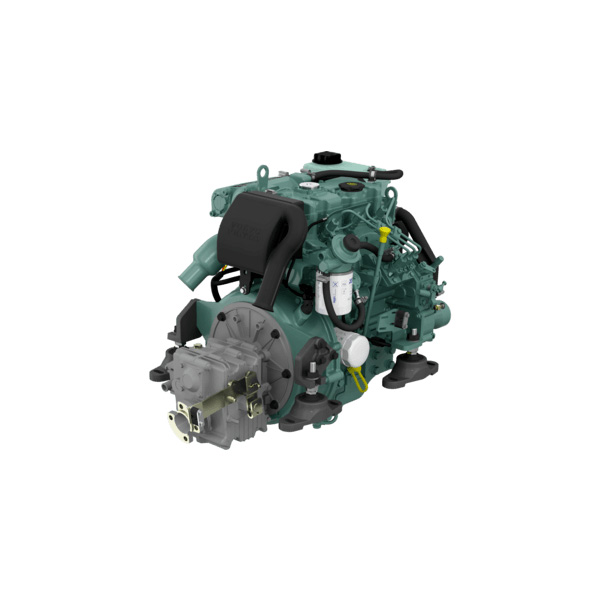
Volvo Penta D1-30
Best repower when keeping an existing Volvo saildrive installation
The D1-30 makes most sense as a continuity decision rather than a clean-sheet choice. If your boat left the factory with a Volvo saildrive, the leg, the hull aperture, the diaphragm and the control cabling are all Volvo-shaped, and replacing the engine alone with a Volvo is dramatically simpler than converting to a shaft or another brand's saildrive. The engine itself is a good one — smooth and well isolated. The recurring complaint is cost of ownership: consumables and dealer service run higher, and that difference compounds over a decade.
- Output
- About 28-29hp, three cylinders, freshwater cooled
- Drive options
- Volvo saildrive (130S family) or conventional reverse gear
- Base engine
- Marinised industrial block, Volvo-specific accessories and electronics
- Integration
- Slots into Volvo's own instrument, control and saildrive ecosystem
Pros
- If the boat already has a Volvo saildrive leg and a serviceable diaphragm, staying in the family avoids re-engineering the whole drive installation
- Smooth, quiet and well isolated in factory installations, which is why so many builders specify it
- Volvo's controls, panels and instrumentation integrate without adapters
Cons
- Parts and dealer labour are widely reported as the most expensive of the three brands here — budget consumables accordingly
- Volvo's ecosystem is comparatively closed; substituting generic components is harder than on a Kubota-based engine
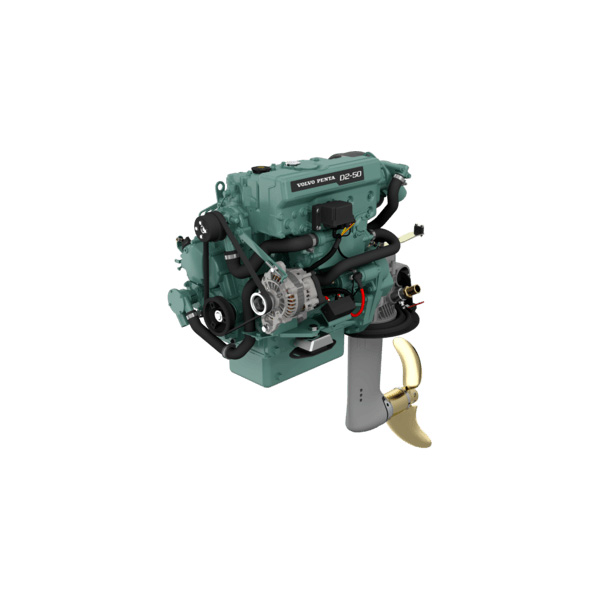
Volvo Penta D2-50
Best Volvo option for 40ft-plus cruisers with saildrive
For a 42-foot production cruiser or a cruising cat that came with Volvo saildrives, the D2-50 keeps the entire drive train coherent — engine, leg, controls and panels all designed to work together. That coherence is worth real money at installation time. What you must budget for is the ongoing cost: Volvo servicing is expensive, and the saildrive diaphragm replacement interval is a scheduled haul-out job with meaningful labour attached. Owners who plan for it are happy; owners who discover it at survey time are not.
- Output
- About 50hp, four cylinders, turbocharged, freshwater cooled
- Drive options
- Volvo 130S saildrive or reverse gear
- Application
- Common factory fit in 40-46ft production cruisers and cruising catamarans
- Electrical
- Supports high-output charging arrangements
Pros
- Well-proven pairing with Volvo's saildrive in a huge number of modern production cruisers
- Comfortable output for a heavier boat or one hull of a cruising catamaran
- Refined installation quality — noise and vibration isolation in factory fits is genuinely good
Cons
- Highest ownership cost of the engines here once you count servicing, saildrive diaphragm replacement and parts
- Saildrive maintenance schedule is non-negotiable: the rubber diaphragm through the hull is a periodic replacement, not a fit-and-forget item
How to choose
Filter by drive type first, then by physical fit, then by where you will be when something needs servicing. Only after those three constraints should brand preference enter the conversation — and by then the shortlist is usually one or two engines.
| Engine | Typical engine price | Best for | Key spec |
|---|---|---|---|
| Beta Marine Beta 25 | $9,000–$13,000 | 26–32ft cruiser, shaft drive | 25hp, 3cyl Kubota base |
| Beta Marine Beta 38 | $12,000–$17,000 | 35–42ft loaded cruiser | 38hp, 4cyl Kubota base |
| Yanmar 3YM30AE | $10,000–$14,000 | Tight engine bays, saildrive boats | ~29hp, 3cyl, shaft or saildrive |
| Yanmar 4JH45 | $16,000–$22,000 | 40ft+ or heavy cruisers | ~45hp, 4cyl turbo |
| Volvo Penta D1-30 | $12,000–$16,000 | Existing Volvo saildrive boats | ~29hp, 3cyl, 130S saildrive option |
| Volvo Penta D2-50 | $17,000–$24,000 | 40–46ft cruisers and catamarans | ~50hp, 4cyl turbo, saildrive option |
Budget tiers
$15,000–$20,000 installed: a 25–30hp engine in a 28–34ft shaft-drive cruiser, with new mounts, harness, panel, exhaust and controls, installed by a yard with straightforward access. The realistic floor for a complete, properly done job.
$20,000–$30,000 installed: a 38–45hp engine in a 36–42ft cruiser, or any repower where the bearers need fabrication, the tank needs replacing, or the engine has to come out through the cockpit sole.
$30,000 and up: saildrive replacements requiring hull work, twin-engine catamarans, and repowers bundled with a new propeller, tank, and a lithium-capable charging system. Expensive, but done once it resets the boat's entire mechanical clock.
If you are weighing a repower against going electric, read our guide to electric sailboat propulsion before deciding — the economics differ sharply depending on how you actually use the engine.
Frequently asked questions
How much does it cost to repower a sailboat?
For a 30 to 40 foot cruiser, a complete repower with a new 25 to 45hp diesel typically lands somewhere between $15,000 and $30,000 once you include the engine, gearbox, mounts, exhaust, wiring harness, panel, controls, fuel system work and yard labour. The engine itself is often only half the total. Costs climb quickly if the engine will not fit through the existing opening, if the bearers need re-fabricating, or if the shaft, coupling and stern gear also need replacing.
Should I repower or rebuild my existing engine?
Rebuild if the block and head are sound, the engine model still has parts support, and the failure is confined to something specific like injectors, a head gasket or a raw water pump. Repower when the engine has significant corrosion in the heat exchanger and exhaust path, when the boat has an orphan engine nobody stocks parts for, or when the surrounding systems — wiring harness, panel, exhaust, mounts — are all at end of life too. A rebuild that leaves a 40-year-old harness and exhaust in place often just relocates the next failure.
How much horsepower does my sailboat need?
A widely used starting point for a displacement cruising sailboat is roughly 2 to 3 horsepower per 1,000 pounds of loaded displacement, which puts a 15,000lb 34-footer somewhere around 30 to 45hp. Heavier, beamier boats and those that regularly motor into steep chop or strong current sit at the top of that range; light coastal boats sit at the bottom. Do not simply match the original engine's rating if the boat is now carrying far more gear, ground tackle and water than the designer assumed.
Can I convert from saildrive to shaft drive, or the other way?
Technically yes, practically it is a major structural job. A saildrive passes through a hull aperture with a rubber diaphragm and a moulded engine bed; a shaft needs a stern tube, a cutless bearing, a shaft log and correct alignment. Converting means glassing up or cutting the hull, fabricating new bearers and re-engineering the whole drive geometry. Almost always, the cheaper decision is to choose a new engine that matches the drive type the boat already has.
How long does a marine diesel last in a sailboat?
Sailboat auxiliaries usually die of neglect and corrosion rather than worn-out bores. Hours are low — a few hundred a year at most for many cruisers — but salt water sits in the heat exchanger and exhaust for months at a time. Well-maintained engines commonly reach 5,000 to 10,000 hours; the ones that fail early are typically those run at light load for short periods, never brought up to full temperature, and left with an aging raw-water system.
Will a new engine improve my boat's performance under sail?
Only marginally, and mostly through weight and propeller choice rather than the engine itself. What often does make a noticeable difference is fitting a properly sized folding or feathering propeller at the same time as the repower, since drag from a fixed three-blade prop is significant. If you are already paying for the shaft to come out, that is the moment to reconsider the propeller and the gearbox reduction ratio together.
Looking for more gear guides? Browse all our gear recommendations or the full guides index.