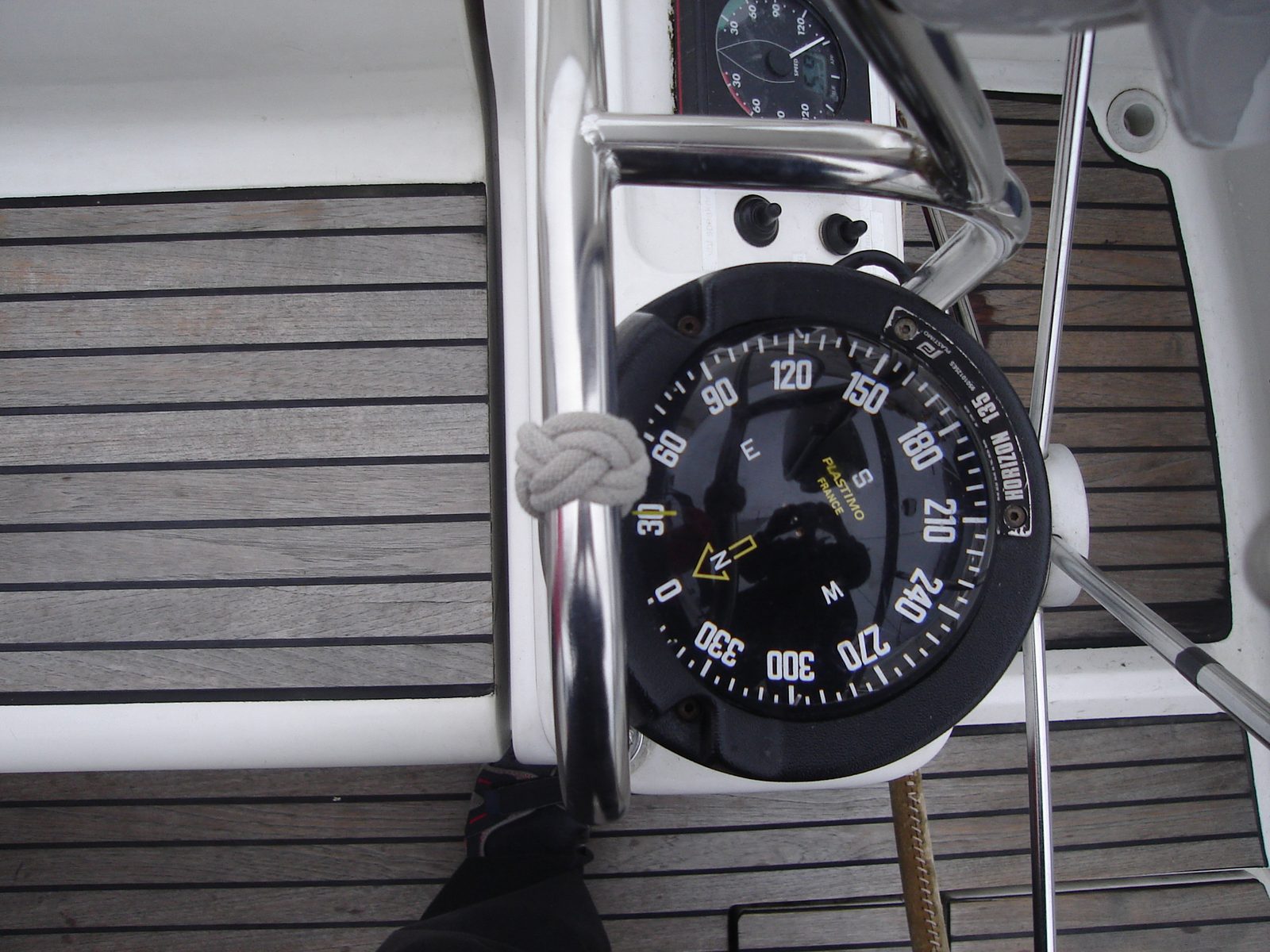
Sailboat Teak Decks: Repair, Replace, or Rip It Out?
Measure the teak before you decide anything. If more than about 6 mm remains above the fastener heads across the whole deck, maintain and recaulk it. Between 4 and 6 mm you are managing a deck towards the end of its life and should be budgeting. Below 4 mm, or with widespread lifting bungs and soft core beneath, your two real options are full replacement at $30,000-$60,000 on a 40-footer or removal and non-skid paint at a small fraction of that.
Almost everything written about teak decks either romanticises them or condemns them. The useful version is arithmetic: what thickness you have left, what each path costs, and what the boat is worth with and without. This guide walks through all three.
Sailboat Atlas may earn a commission from qualifying purchases made through links on this page, at no extra cost to you.
How to measure what you actually have left
A new laid teak deck typically starts at 10-12 mm of plank thickness. Screwed decks have fasteners set below the surface with teak bungs glued over them, usually leaving 4-6 mm of wood above each screw head when new. The deck's life ends when wear reaches those screw heads, because from then on water tracks straight down the fastener into the deck core.
To measure, find a bung that has already lifted — on most older boats this takes about thirty seconds — and measure from the deck surface to the top of the screw with a depth gauge or a drill bit marked with tape. Do it in at least six places: the side decks abreast the cockpit, the foredeck, around the mast, and near the companionway. Wear is never even. The side decks where crew walk and the area around the mast where halyards are handled go first, sometimes by several millimetres.
While you are down there, check the seams. Caulk that has shrunk below the plank surface, is lifting at one edge, or has gone hard and cracked is telling you a recaulk is due. Then tap around the deck with a plastic mallet and listen: a dull, flat sound where the rest rings sharp means wet core beneath, which changes the project entirely.
The three paths and what each one costs
Maintain and recaulk. Suitable when the teak is 6 mm or thicker and the core is dry. Removing old seam caulk, cleaning the seams and laying new compound is straightforward but extremely labour-intensive — a hundred-plus hours on a 40 ft deck. Materials are modest, perhaps $600-$1,500 in caulk and consumables. Professional recaulking commonly lands in the $10,000-$20,000 range because it is nearly all labour.
Full replacement. Suitable when the teak is worn out but the boat justifies the spend — classic yachts, high-value cruisers, boats where a painted deck would cost more in resale than the replacement costs to do. Budget $30,000-$60,000 professionally on a 40-footer, more for complex deck layouts with curved margin boards and king planks. Modern practice bonds the planks rather than screwing them, which eliminates the fastener-leak problem for the next deck's life.
Remove and paint non-skid. Suitable for most older production boats. Lift the teak, remove the fasteners, fill every hole with thickened epoxy, fair the deck, prime and roll non-skid. Materials run roughly $800-$2,000; the work is weeks of your own time or perhaps $8,000-$15,000 professionally. You lose the look and some resale appeal on boats where teak is expected, and you gain a lighter, cooler, leak-free deck that needs washing rather than maintenance.
Wet core: the thing that changes the budget
A teak deck over a dry, sound core is a cosmetic and waterproofing problem. A teak deck over a saturated balsa or plywood core is a structural one, and it is far more common than owners want to believe, because decks screwed down with thousands of fasteners have thousands of opportunities to leak. Once core is wet it loses stiffness, delaminates from the skins, and in freezing climates expands and cracks the laminate from inside.
Symptoms are a springy feel underfoot, a dull sound on tapping, weeping at deck hardware, and stains appearing on the headliner below. A moisture meter confirms it, though on a deck under teak the readings need interpretation — get a surveyor to do this rather than guessing from a rented meter.
If the core is wet over a meaningful area, the removal-and-paint path becomes the obvious one, because you will be opening the deck to replace core regardless. Doing that and then laying new teak over it is spending replacement money twice. It also means the purchase price you are negotiating, if this is a survey finding, should come down by the full repair cost, not a token amount — the work is unavoidable rather than optional.
What good teak-deck maintenance actually looks like
The single biggest determinant of how long a teak deck lasts is how aggressively it has been cleaned. Decks that are rinsed with salt water, scrubbed gently across the grain with a soft brush, and chemically cleaned once or twice a season last decades. Decks attacked with a stiff brush along the grain, pressure-washed, or bleached regularly are worn out in a fraction of the time — pressure washing in particular blasts out the soft grain and can lift caulk out of the seams in a single afternoon.
Keep bungs glued. A missing bung is an open funnel to a fastener and the deck core beneath it; replacing one takes five minutes with a teak plug, waterproof glue and a sharp chisel. Rebed deck hardware on a schedule rather than when it leaks, using a medium-strength sealant. And accept the silver-grey colour rather than chasing honey tones with monthly cleaning, because every cleaning cycle costs wood.
If the deck is already leaking around hardware, fix that before anything else. Water entering at a stanchion base travels along the core and damages far more than the local area, and the repair is a weekend job compared with a core replacement. Our haul-out guide covers how to sequence deck work around a yard period so you are not paying for the stand twice.
How the decision affects the boat's value
On a classic yacht — a Hinckley, a Swan, a Hallberg-Rassy — teak decks are part of what the buyer is paying for, and removing them takes a real bite out of the asking price. On a 1980s production cruiser where teak was a factory option, a tidy painted non-skid deck sells no worse than a tired teak one and often better, because buyers can price paint and cannot price a deck project of unknown depth.
Worn teak actively suppresses offers. A buyer looking at lifting bungs and cracked seams mentally deducts the full replacement cost, whether or not that is what they would actually spend. If you are selling within a year or two, the cheapest route to a better price is usually a good clean, a recaulk of the worst seams, and honest disclosure — not a rushed partial replacement that looks patchy.
If you are buying, treat a teak deck as a survey priority equal to the rig and the engine, and use the numbers in this guide to put a figure on it before you make an offer. Our ownership cost guide puts deck work in the context of the rest of the annual and capital bills.
Our picks
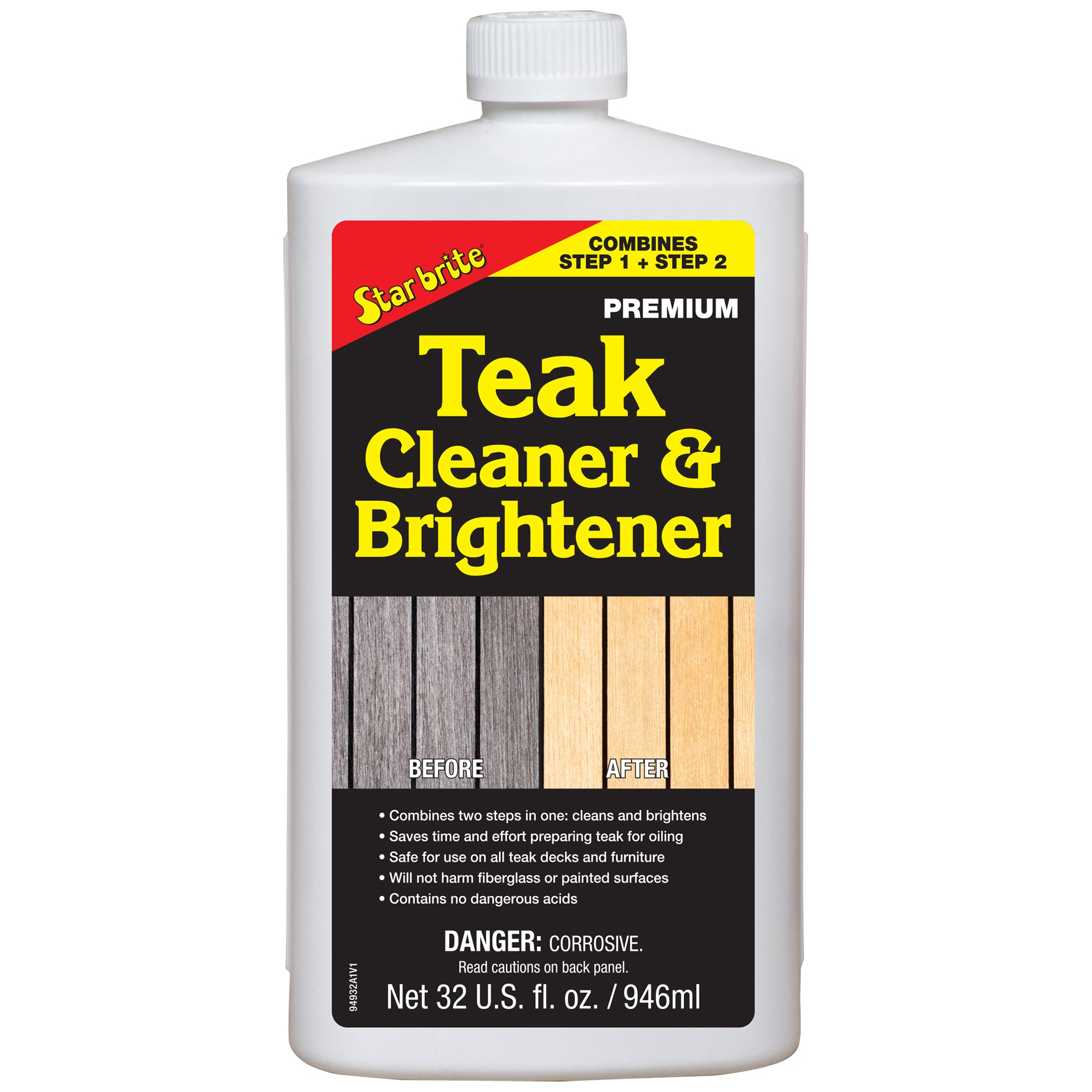
Star brite Teak Cleaner & Brightener
Best routine cleaner for decks you intend to keep
Chemical cleaning is how you keep a teak deck alive, because the alternative — sanding — removes thickness you cannot put back. Work in the shade, keep the deck wet at the edges so the product does not dry in patches, scrub across the grain with a soft brush rather than along it, and rinse far more thoroughly than feels necessary. Clean once or twice a season, not monthly: each cleaning is a small withdrawal from a finite account.
- Type
- One-step acid cleaner and brightener, bleach-free
- Sizes
- 16 oz, 32 oz, gallon and 5-gallon
- Typical price
- About $18 for 16 oz, $24-$37 for 32 oz, around $103 a gallon
- Compatibility
- Rated safe on adjacent fibreglass and painted surfaces
Pros
- One-step formula avoids the two-part acid systems that are harsher on caulk and surrounding gelcoat
- Widely stocked in every chandlery, so you are never hunting for it mid-project
- Restores grey, weathered teak to honey colour without sanding away thickness
Cons
- It is acid-based — uneven rinsing leaves streaks, and repeated aggressive use lightens the wood past natural colour
- Cleaning chemically still erodes soft grain slightly; every cleaning cycle costs a little teak
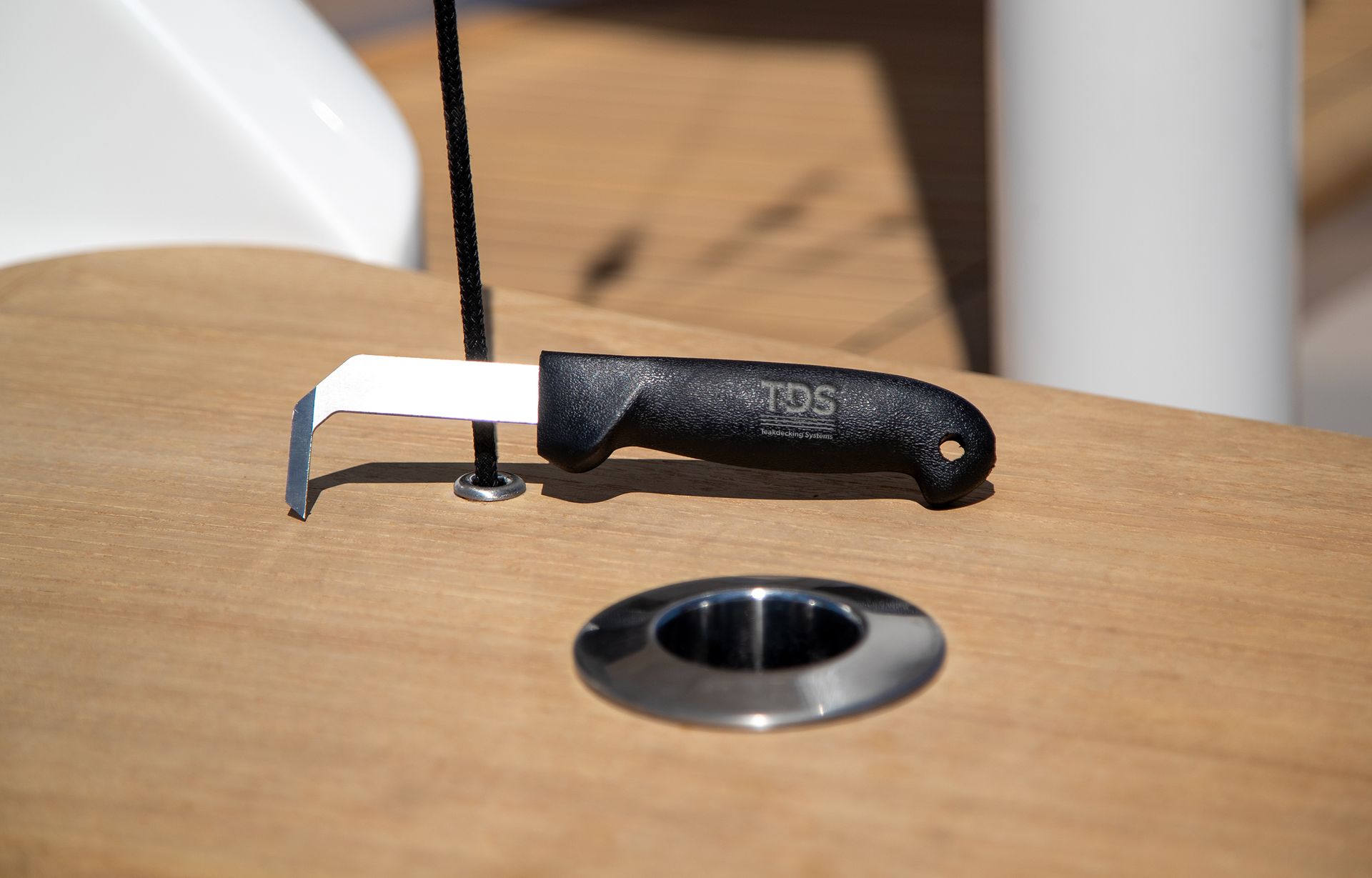
Teakdecking Systems Reefing Hook (part 123-001)
Best hand tool for removing failed deck seam caulk
If you are recaulking rather than replacing, this is the tool the professionals reach for. The technique is to score both plank edges with a razor knife first, then pull the hook along the seam to lift the old caulk out cleanly without digging into the teak. Rushing it with a screwdriver or a multi-tool is how amateurs widen seams and turn a recaulk into a replank. Budget realistically: a full deck recaulk is a hundred-plus hours of hand work, which is exactly why quotes for professional recaulking run into five figures.
- Material
- Stainless steel, re-sharpenable blade
- Blade width
- 0.1" (2.5 mm), sized for standard deck seams
- Length
- 8.5" overall
- Typical price
- About $38-$46
Pros
- Purpose-made for the job, so it follows the seam instead of gouging the plank edges
- Re-sharpenable, which matters because caulk dulls a blade quickly
- Made by the company that installs teak decks professionally, not a generic tool brand
Cons
- It is a hand tool — recaulking a whole 40 ft deck with it is days of tedious, knee-punishing work
- Takes practice; your first metre of seam will look worse than your last
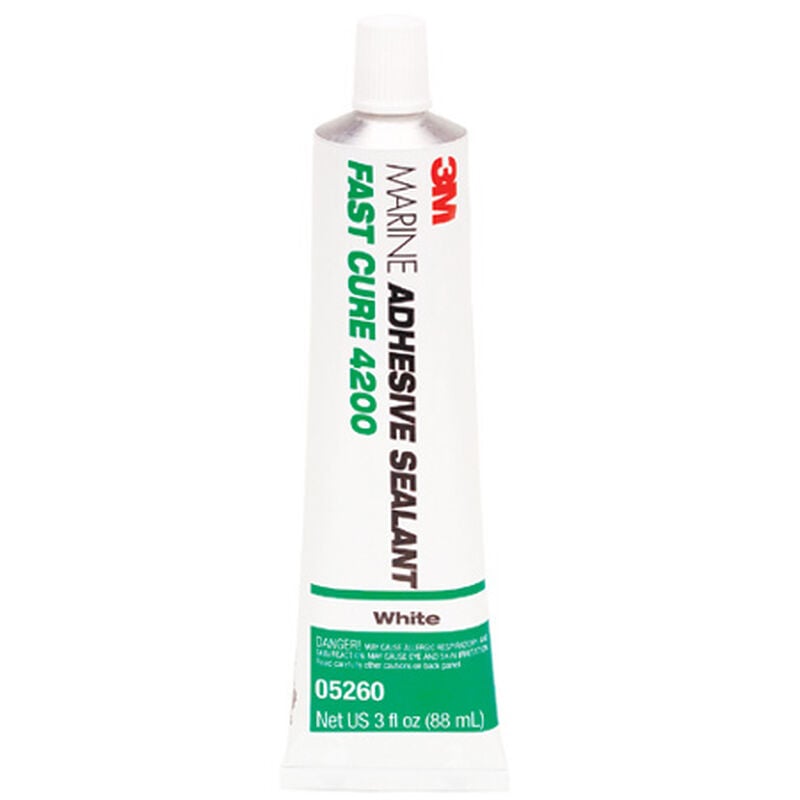
3M Marine Adhesive Sealant 4200 Fast Cure
Best sealant for bedding deck hardware on or near a teak deck
Most teak deck leaks are not the deck's fault — they come from a stanchion base, a cleat or a genoa track fastening that was bedded badly and has been working in the wet for twenty years. 4200 is the right product for rebedding those, because it seals properly and still allows removal later. Avoid 5200 for anything you might ever want to take apart, and note that 3M's 4000UV had documented peeling problems that made owners wary; 4200 and 4200FC are the safe picks in this family. For deck seams themselves, use a purpose-made teak seam compound such as Teakdecking Systems SIS 440, not a general bedding sealant.
- Type
- Polyurethane, medium strength (removable with effort)
- Cure
- Tack-free in about 90 minutes
- Properties
- About 300 psi tensile, Shore A 40, 750% elongation
- Typical price
- Around $22 for a 3 oz tube
Pros
- Medium strength means you can remove the fitting later without destroying the deck around it
- Fast cure lets you finish a hardware bedding job in a day rather than over a weekend
- Available in every chandlery and on Amazon, at a predictable price
Cons
- It is a bedding sealant, not a deck seam caulk — do not use it to fill teak seams
- 3M's old 101 polysulfide is discontinued and 4200 is not a true equivalent for below-waterline seam work
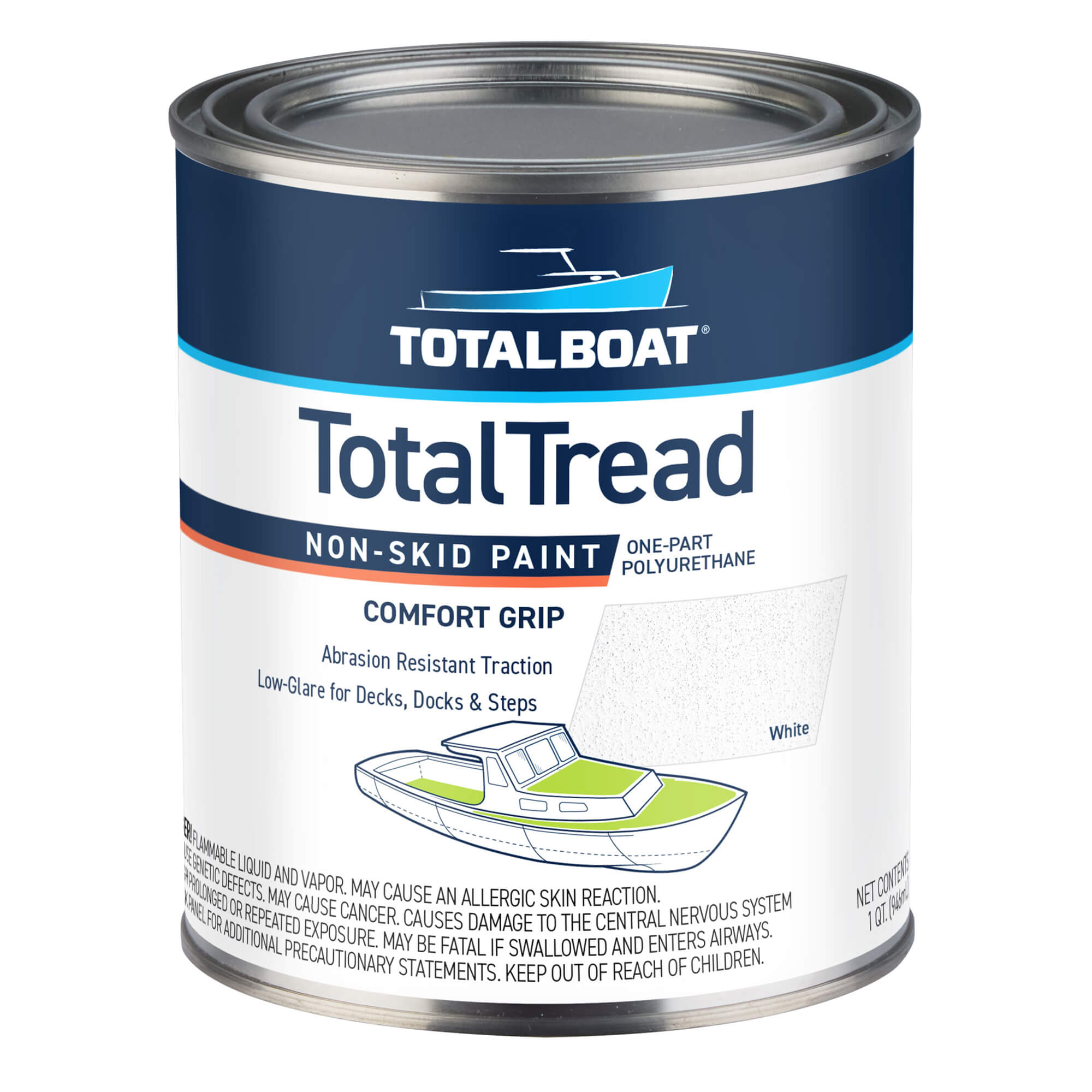
TotalBoat TotalTread Non-Skid Deck Paint
Best surface if you decide to remove the teak entirely
Removing teak and painting non-skid is the honest answer for many older boats, and TotalTread is the product most owners land on. The work is mostly preparation: lift the teak, remove several thousand screws, fill and fair every hole with epoxy, then fair the deck flat before any paint goes on. Skipping the fairing shows badly under a gloss-adjacent finish. Done properly the result is lighter, cooler underfoot, leak-free and needs washing rather than maintaining — at the cost of a boat that looks like a production hull rather than a classic.
- Type
- One-part polyurethane with Propyltex texturing particles
- Colours
- White, Sand Beige, Kingston Gray, Light Gray
- Coverage
- 250-300 sq ft per gallon
- Typical price
- About $52 a quart, $130 a gallon
Pros
- Propyltex particles give grip without the skin-shredding harshness of silica-based non-skid
- One-part means no mixing ratios and no pot life pressure on a hot day
- Repairable and recoatable years later without stripping back to gelcoat
Cons
- Keeping the low-density texturing additive suspended while you roll is genuinely fiddly — stir constantly
- Masking a complex deck properly takes far longer than the painting itself

Festool ETS EC 125/3 EQ-Plus Random Orbit Sander
Best sander for the fairing and refinishing work either path requires
Do not sand a teak deck to clean it — that is how a 12 mm deck becomes an 8 mm deck. Where a sander earns its place is in the other jobs this decision creates: fairing a deck after teak removal, sanding epoxy fills flush, and prepping for non-skid paint. If you are doing one boat and never again, hire one or buy a decent mid-priced orbital with a shop vacuum attached. If you are working through a full refit over several seasons, the dust control alone justifies the Festool, because sanding old deck material without extraction is unpleasant and, with old antifoul in the mix, genuinely unhealthy. We could not verify a hotlinkable photo of this model, so the card uses our placeholder.
- Pad
- 125 mm (5"), 3 mm random-orbit stroke
- Motor
- Brushless EC-TEC with load-sensing electronics
- Dust
- Jetstream extraction — requires a separate dust extractor
- Typical price
- About $549
Pros
- The 3 mm stroke is fine enough for fairing compound and finish sanding without leaving swirl marks
- Genuinely effective dust extraction, which matters when the dust is old teak, caulk and antifoul residue
- Load-sensing electronics hold speed when you lean on it, so the finish stays consistent
Cons
- No dust bag or onboard fan — you must buy or hire an extractor, adding several hundred dollars
- $549 is steep against a $90 consumer orbital that will do a slower, dustier version of the same job
How to choose
Match the path to what you measured, not to what you wish you had. The table below summarises the three routes for a nominal 40 ft boat.
| Path | Typical cost | Best for | Key requirement |
|---|---|---|---|
| Clean and maintain | $50-$200 a year | Decks over 6 mm, dry core | Gentle technique, sparing chemical use |
| Recaulk | $600-$1,500 DIY; $10k-$20k professionally | Good teak, failed seams | 100+ hours of patient hand work |
| Full replacement | $30,000-$60,000 | Classic and high-value yachts | A boat whose value carries the spend |
| Remove and paint | $800-$2,000 DIY; $8k-$15k professionally | Most production cruisers | Thorough fairing before paint |
How to choose. Measure thickness in six places and tap-test for wet core first — those two findings make the decision for you in most cases. Then weigh the boat's identity: teak is part of the value on a classic and a maintenance liability on a production cruiser. If you are undecided and the deck still has life in it, recaulk and defer; recaulking buys years, costs a fraction of replacement, and leaves every option open. What you should not do is sand the deck to make it look better — that is the one action that permanently removes the thickness the decision depends on.
Frequently asked questions
How thick does a teak deck need to be to be worth saving?
The usual rule is that below about 6 mm of teak remaining above the fastener heads you are on borrowed time, and below 4 mm replacement is the only honest option. Measure in several places — decks wear unevenly, with side decks and the area around the mast going first. A depth gauge or a fine drill bit with tape as a depth stop will tell you in ten minutes.
What does a teak deck replacement cost?
Professional full replacement on a 40 ft boat commonly runs $30,000-$60,000 and can exceed that on a complex deck with a lot of curved trim. The teak itself is a minority of the bill; labour dominates. Recaulking alone is far cheaper but still typically five figures professionally, or a hundred-plus hours of your own time.
Should I remove the teak deck and paint instead?
For many older production boats, yes. Removing teak sheds substantial weight high up, eliminates thousands of deck penetrations that will eventually leak, lowers deck temperature underfoot, and costs a fraction of replacement. It reduces resale appeal on classic boats where teak is part of the identity, so the decision is partly about which boat you own.
Why do teak decks leak?
Traditionally laid decks are screwed down through the deck core, and each screw is a potential path once the bung above it lifts and water reaches the fastener. Modern decks are bonded rather than screwed, which removes that problem. On a screwed deck, leaks usually start at the fasteners and around deck hardware rather than through the seams themselves.
Is scrubbing a teak deck bad for it?
Scrubbing along the grain with a stiff brush is, because it erodes the soft grain between the hard rings and leaves a ridged surface that holds dirt. Scrub across the grain with a soft brush and plenty of water, and use chemical cleaners sparingly. Salt water rinses are traditional and fine; hard mechanical scrubbing is what wears decks out prematurely.
Can I oil a teak deck?
You can, but most professionals advise against it on decks as opposed to trim. Oil traps dirt, encourages mildew in shaded areas, and makes the deck slippery when wet — the opposite of what a deck is for. Let deck teak weather to silver grey and clean it occasionally; save the oils for handrails, toe rails and cockpit table.
Looking for more gear guides? Browse all our gear recommendations or the full guides index.