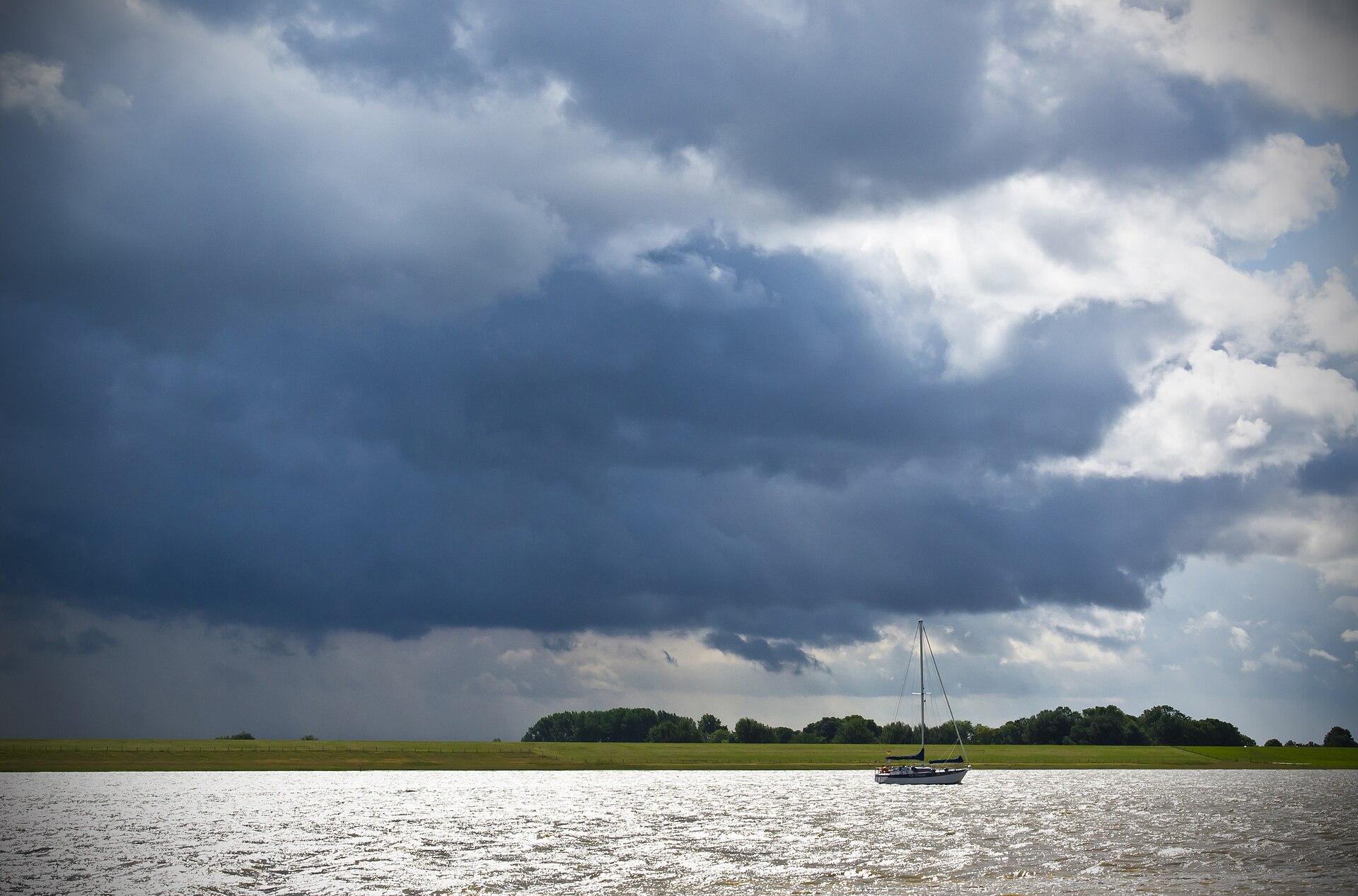
Storm Anchors: Building a Second Anchor Setup That Holds
For most cruising boats, the right second anchor is a modern steel scoop anchor like the Rocna Vulcan or Mantus M2 if you have the bow roller or stern-mount space for the weight, or a Fortress FX-37 if you don't — its aluminium build and flat-pack stowage let it live in a locker instead of demanding its own roller. Either way, pair it with a stretchy nylon rode and a proper snubber, not a second length of all-chain.
This guide is deliberately not another primary-anchor roundup — see our best anchors and windlasses guide for that. It's about the backup: the anchor and rode you deploy when the primary drags in a squall, when you need to kedge off a grounding, or when you want the reduced swing of a tandem set or Bahamian moor. We'll cover sizing, seabed behavior, scope in real heavy weather, snubbers, stowage, and how to actually set a second hook from a dinghy when the wind is already up.
Sailboat Atlas may earn a commission from qualifying purchases made through links on this page, at no extra cost to you.
Why carry a second anchor at all
A primary anchor and a good windlass handle the vast majority of anchoring nights. The second anchor exists for the minority of nights that go wrong, and there are more scenarios than most sailors plan for. The obvious one is dragging: a squall comes through, the primary breaks out or skips across a patch of harder bottom, and you need holding power in the water fast while you sort out why the first anchor let go. A second anchor, already rigged and reachable, turns that from an emergency into a procedure.
Less obviously, a second anchor is a tool you use deliberately, not just in a crisis. Tandem anchoring — running two anchors in line to multiply holding power in one direction — is the right answer when a genuine blow is forecast from a known quarter and you want more than one anchor's worth of resistance without over-scoping a single hook. A Bahamian moor, with anchors set roughly opposite each other, trades some ultimate holding power for a dramatically reduced swing circle, which matters in a crowded or narrow anchorage where boats around you are swinging on all-chain rodes of different lengths. And kedging — carrying an anchor out by dinghy to pull a grounded boat free, or to reposition without the engine — is a job only a second, separately deployable anchor can do while the primary stays down.
None of this replaces a properly sized primary. See our best anchors and windlasses guide for choosing that anchor and the ground tackle that runs it. This guide picks up where that one leaves off.
Holding power, weight, and fluke area aren't the same thing
It's tempting to size a second anchor purely by weight, the way manufacturer charts are usually laid out. But holding power in a given bottom is a function of fluke area and geometry as much as mass. A modern concave scoop anchor buries its whole fluke and generates holding power well beyond its weight class in mud and sand. A flat-fluke Danforth-style anchor achieves excellent holding-to-weight in soft bottoms through fluke area and angle, not bulk. An aluminium Fortress-style anchor trades steel's density for a larger fluke at a fraction of the weight, and holds accordingly well in the bottoms it's designed for.
What none of these designs fix is bottom type. A large fluke that's brilliant in soft mud can skate uselessly across hard-packed sand or rock, and a design that sets instantly in sand may struggle to penetrate heavy weed at all. This is the real argument for choosing a second anchor that's genuinely different from your primary, rather than a second copy of it: redundancy across bottom types, not just redundancy of steel in the water.
As a rough sizing starting point — and only a starting point, since manufacturers' own charts vary and should always be your final word — a second/storm anchor is often sized at or slightly above the weight a manufacturer recommends for your boat's length as a primary, on the logic that it may need to hold alone in worse conditions than the primary was ever asked to. A lighter kedge anchor, by contrast, is sized for control and dinghy-handling rather than maximum holding, since its job is repositioning rather than surviving a storm.
Reading the seabed before you commit an anchor
Soft mud rewards fluke area over weight — a Danforth-style or aluminium anchor with a wide, thin fluke will often out-hold a heavier, narrower design because it doesn't need to fight its way through resistance to bury. The trade-off is that mud-optimized anchors can be slower to reset if the boat swings through a big wind shift, since they need to break out and re-dig rather than simply rotate.
Thin sand over rock is deceptive and dangerous: an anchor that sets beautifully on the first try may be riding on a thin veneer of sand with almost no real penetration, and a wind shift can pop it straight out onto bare rock. This is a bottom where you want to dive on the anchor if at all possible, or at minimum back down hard and watch for the anchor dragging sideways rather than digging deeper.
Weed defeats most fluke-style anchors outright — the flukes ride up on a mat of grass or kelp roots and never reach the sand beneath. Heavier, sharper, narrower-fluke designs with real point-loading at the tip do better, and sometimes the only real answer is finding a sandy patch between weed beds rather than fighting the bottom you're given.
Coral is its own category and, where it's alive, an ecological one: anchoring on live coral damages a slow-growing habitat and is illegal in many marine parks. Where anchoring on coral rubble or dead coral is unavoidable, expect chain to snag and chafe against rock edges even where the anchor itself holds fine, and rig chafe gear accordingly, as covered in our anchor chain and rode guide.
Scope and catenary when it's really blowing
Catenary — the sag in a chain rode that lets it absorb load by lifting rather than pulling straight — does real work in moderate conditions, but it largely disappears in genuine heavy weather. At 40 knots and above, the wind loads the rode enough to pull most of the chain's belly straight, and the rode behaves much more like a straight-line connection between boat and anchor than the gentle catenary curve you see on a calm night. That's precisely why scope, snubbers, and rode stretch matter more, not less, as the wind builds — catenary can't be relied on to do the shock absorption for you.
Practically, that means going longer on scope than the calm-weather rule of thumb when swing room allows — many experienced cruisers move from the standard 5:1 or 7:1 toward 8:1 or 10:1 as a blow sets in, specifically to keep the angle of pull on the anchor as low as possible and to let the rode itself absorb more of the shock loading through stretch and (what little remains of) catenary. When you're anchoring with two anchors down, remember that scope calculations get more complex — a tandem set effectively shares one rode axis, while a Bahamian moor needs each rode individually assessed for the swing room actually available in each direction.
Snubbers, bridles, and stopping chafe before it starts
Any all-chain rode transmits shock loads directly and violently to whatever it's attached to — the anchor, the windlass, the bow roller, the boat's structure. A snubber, a length of stretchy nylon between a chain hook and a deck cleat, exists to interrupt that chain of stiffness with something that can stretch. This matters for a primary anchor and matters even more for a second anchor set specifically because the weather has turned, since that's exactly when shock loads spike.
A single-leg snubber to one cleat is simpler to rig, but a Y-shaped bridle to both bow cleats spreads the load across more of the boat's structure and — just as usefully — reduces the yawing that drives a boat to sail around at anchor, generating its own additional loads on both rodes. In a tandem or Bahamian-moor setup, a bridle on whichever anchor is taking the brunt of the wind is close to essential.
Chafe is the silent failure mode that undoes good ground tackle choices. Every point where line or chain runs over metal or across a hard edge — a bow roller, a fairlead, a chain hook under load — needs inspection and, where the rode is nylon, real chafe protection: leather, hose, or a dedicated chafe guard, checked and adjusted through the worst of a blow, not just rigged once and forgotten. See our anchor chain and rode guide for more on rode construction and chafe management specifically.
Stowing a heavy second anchor on a small boat
The single biggest reason sailors skip a second anchor isn't cost — it's that there's nowhere obvious to put it. A few workable answers, in rough order of how much deck hardware they require: a disassembling aluminium anchor bagged flat in a cockpit locker or lazarette; a stern rail mount, which keeps a full steel anchor ready to deploy without a second bow roller but adds weight aft and a boarding obstruction; a second, offset bow roller sized for a smaller anchor than the primary; or simply lashed stowage on deck against the pulpit, accepting some chafe risk to the gelcoat and rig where the anchor's flukes contact the boat.
Whichever you choose, security in a seaway is non-negotiable — a loose 20-40lb anchor in a knockdown or a hard sea is a genuine hazard to the hull and to crew. And the anchor needs to be reachable and deployable in the conditions you'd actually use it in, not buried under sail bags and fenders that need clearing first. If deploying your second anchor requires a ten-minute locker excavation, it will not get deployed in time when it matters.
Deploying a second anchor from a dinghy — and when not to
For a tandem set or a Bahamian moor, precise placement matters, and a dinghy gives you control that motoring the boat itself can't match. The anchor, enough rode to reach the intended spot plus some slack, and a fender or float to mark the rode's end all need to fit in the dinghy without swamping it — a heavier steel anchor is a genuine two-person job in a small tender, one to row or motor and one to manage the anchor and rode paying out cleanly over the side, not tangled around anyone's ankles.
Pay the rode out from the boat as the dinghy moves away, rather than trying to carry a coiled pile of chain or rope in the dinghy itself, and communicate clearly about when to drop — dropping the anchor at the wrong point defeats the whole purpose of a deliberately placed second hook. Once it's down, back down on it from the primary boat's position to set it properly, exactly as you would a primary anchor.
The critical judgment call is timing: launching a dinghy gets progressively harder, then genuinely dangerous, as wind and sea build. If a blow is forecast and you intend to set a second anchor, do it early, while conditions are still calm enough for safe dinghy work — not after the squall has already arrived and you're trying to launch a tender into breaking chop. For storm sail handling and heavy-weather tactics more broadly, see our storm sails and drogues guide.
Our picks
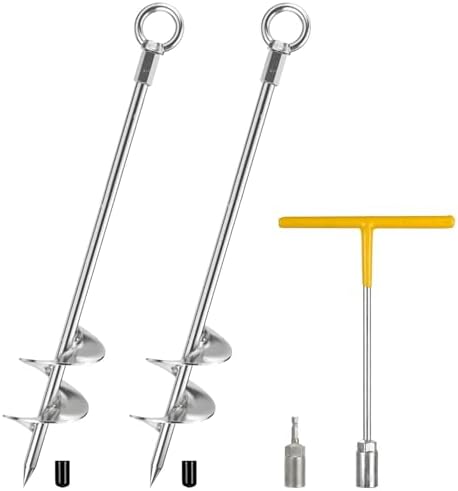
Fortress FX-37
Best aluminium storm/kedge anchor for boats that can't spare weight or locker space
This is the classic second-anchor answer for boats where a full-size steel anchor simply has nowhere to live. Because it breaks down into a bolted flat-pack, an FX-37 can sit in a cockpit locker or lazarette instead of forcing you to find bow real estate for a spare roller. It genuinely holds well in mud and sand for its weight, which is exactly the profile you want for a kedge or storm backup rather than an everyday primary. Keep the assembly hardware taped to the anchor itself, practice assembling it once in calm conditions, and store it pre-greased so a 2am reassembly isn't fighting corrosion too.
- Weight
- 21 lb, rated by Fortress for roughly 46-51ft boats
- Material
- Aluminium-magnesium alloy, not steel
- Stowage
- Bolts apart into a flat, bagged package for a lazarette or cockpit locker
- Fluke angle
- Adjustable shank/fluke angle for harder or softer bottoms
Pros
- A fraction of the weight of a steel anchor of comparable holding power, which matters when it lives somewhere other than the bow
- Disassembles completely, so it can be stowed flat instead of eating a locker as one rigid lump
- Adjustable fluke angle lets you open it up for soft mud or close it for firmer sand
Cons
- Aluminium construction means it can bend under extreme shock loading in a way a forged steel shank generally won't
- Needs re-assembly before it can be deployed, which is a bad moment to discover a missing cotter pin
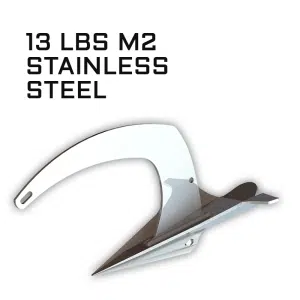
Mantus M2
Best all-steel second anchor for maximum holding in a genuine blow
If your second anchor's job is to actually hold the boat when the primary has dragged or when you're riding out a genuine blow, a full steel modern scoop anchor like the M2 is the safer bet over an aluminium anchor — it shrugs off the shock loading of a boat sailing around on its rode in gusty conditions. The trade-off is entirely about stowage: this is real steel weight that needs a home, whether that's a stern rail mount, a spare bow roller, or a padded spot in a cockpit locker with the fluke wrapped so it doesn't chew through gelcoat.
- Type
- Roll-bar style modern scoop anchor, galvanized or stainless steel
- Design
- Concave fluke and roll bar aimed at fast setting and resetting after a wind shift
- Sizing
- Available across a wide weight range to match boats from small cruisers to bluewater yachts
- Shank
- Solid steel shank designed to resist bending under storm loads
Pros
- Modern scoop-anchor geometry sets quickly and resets reliably when the wind clocks around in a squall
- Solid steel construction tolerates the kind of shock loading a second anchor sees when it's the one actually holding in the blow
- Widely stocked with a fairly standard bolt pattern, so spares and roll-bar replacements are easy to source
Cons
- Full steel weight means it needs a real second bow roller, a dedicated stern mount, or careful below-decks stowage — it won't flat-pack like an aluminium anchor
- At the larger sizes it is genuinely heavy to manhandle into a dinghy for a kedge-off deployment
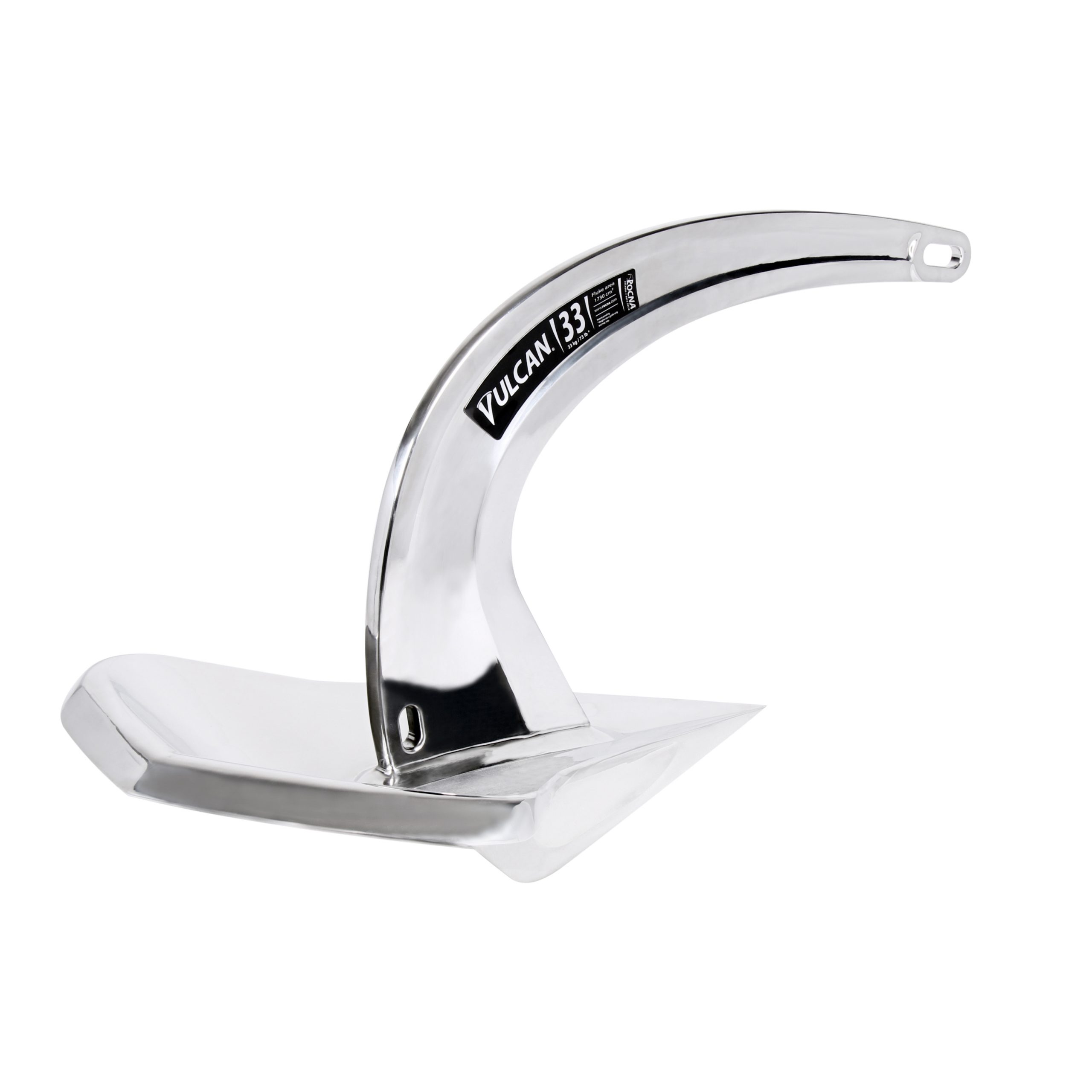
Rocna Vulcan
Best roll-bar-free scoop anchor for a windlass gypsy or bow roller with limited clearance
The Vulcan earns its place as a second anchor specifically for boats whose primary bow roller has no spare room for a second bulky roll-bar anchor. Its lower, tighter profile lets it sit on a second roller or nest against the pulpit without fouling the pushpit rail or the primary anchor's shank. It sets fast, which matters if you're deploying it under time pressure with the wind already piping up, and the steel build tolerates the sustained shock loading of tandem or Bahamian-moor anchoring far better than an aluminium anchor would.
- Type
- Concave scoop anchor without a roll bar, lower profile than the original Rocna
- Material
- High-tensile steel, galvanized
- Fit
- Designed to sit lower and tighter on many bow rollers than roll-bar designs
- Sizing
- Available across a wide range of weights for different boat sizes
Pros
- Sets quickly in a wide range of bottoms thanks to its concave fluke, a useful trait when you're deploying a second anchor in a hurry
- No roll bar means it fits bow rollers and anchor lockers that a bulkier design won't clear
- Robust steel build handles storm shock loads without the bending risk of a lighter alloy anchor
Cons
- Heavier than an aluminium equivalent, so it's a genuine stowage and handling commitment for a second anchor
- Without a roll bar it can take slightly longer to right itself on some very soft or slick bottoms compared with roll-bar designs
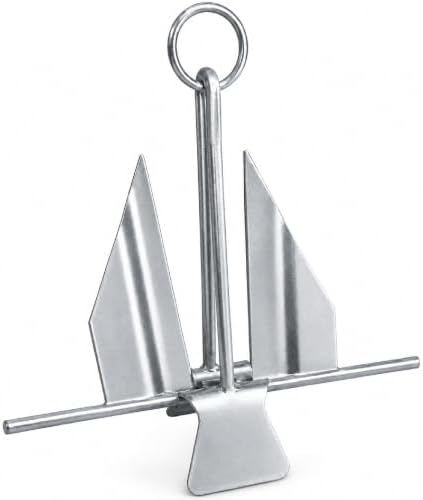
Danforth-Style Fluke Anchor
Best lightweight kedge for soft mud and sand, and for dinghy deployment
This shape has been the default lightweight kedge for generations for a simple reason: nothing folds flatter or handles more easily off the back of a dinghy. Use it as the anchor you row out to windward in a Bahamian moor, or the one you kedge off a falling tide with when the primary is still doing its job up front. It is not the anchor to trust in weed or rubble, and it is a poor primary bower on a boat over about 35 feet in serious weather — but as a purpose-built, easily deployed second anchor for mud and sand anchorages, it remains hard to beat for the money.
- Type
- Flat, folding fluke design, hot-dip galvanized steel
- Weight range
- Available in a wide range of sizes, from dinghy-sized to boats in the 30s of feet
- Stowage
- Folds flat, easy to lash on deck or carry in a dinghy
- Best bottoms
- Excellent holding-to-weight ratio in soft mud and sand
Pros
- Folds flat and is light for its holding power, making it the easiest anchor on the boat to carry out in a dinghy for a kedge-off
- Inexpensive enough to keep a dedicated one aboard purely for stern-anchoring or kedging duty
- Excellent, well-proven holding in soft mud and sand, the bottoms where you're most likely to need a quick second anchor
Cons
- Weak in weed, coral rubble, or hard-packed sand, where the flat flukes struggle to dig in or simply skate across the bottom
- Can foul on its own rode or roll out if the boat swings hard, needing more attentive scope management than a modern scoop design
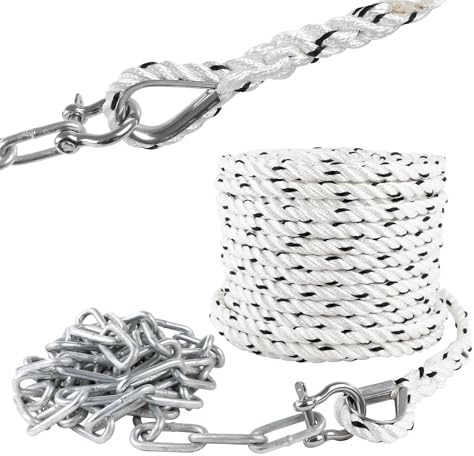
Three-Strand Nylon Rode with Chain Leader
Best rode for a second anchor that needs stretch, not stowage compactness
A second anchor rarely gets a windlass of its own, so its rode is usually paid out and recovered by hand — which is precisely where a nylon-and-chain combination earns its keep over all-chain. The stretch in the nylon does real mechanical work, cushioning the shock loads of a boat sailing around on two rodes in gusty conditions, and the whole rode coils into a fraction of the volume and weight of chain long enough to reach the same scope. Inspect the splice and the leader shackle every season, and never let the nylon run over an unguarded chock or a barnacle-crusted bow roller without chafe gear.
- Construction
- Nylon three-strand rope spliced to a short galvanized chain leader
- Typical leader length
- Commonly 10-20ft of chain before the nylon begins
- Stretch
- Nylon three-strand stretches significantly under load, absorbing shock
- Stowage
- Coils and bags far more compactly than an all-chain rode of the same length
Pros
- Nylon's elasticity is exactly what a second anchor riding out a squall needs — it absorbs snap loads that an all-chain rode transmits straight to the anchor and the boat
- Much lighter and more compact to stow than an equivalent length of all-chain rode, which matters for a rode that lives coiled in a locker rather than on a windlass
- The short chain leader adds abrasion resistance and catenary right at the anchor, where the rode drags across the bottom
Cons
- Nylon rope chafes badly against rock, coral, or a rough bow roller and needs real chafe protection at every contact point
- Handling and stowing a long nylon-and-chain rode by hand is more physical work than paying out chain on a windlass gypsy
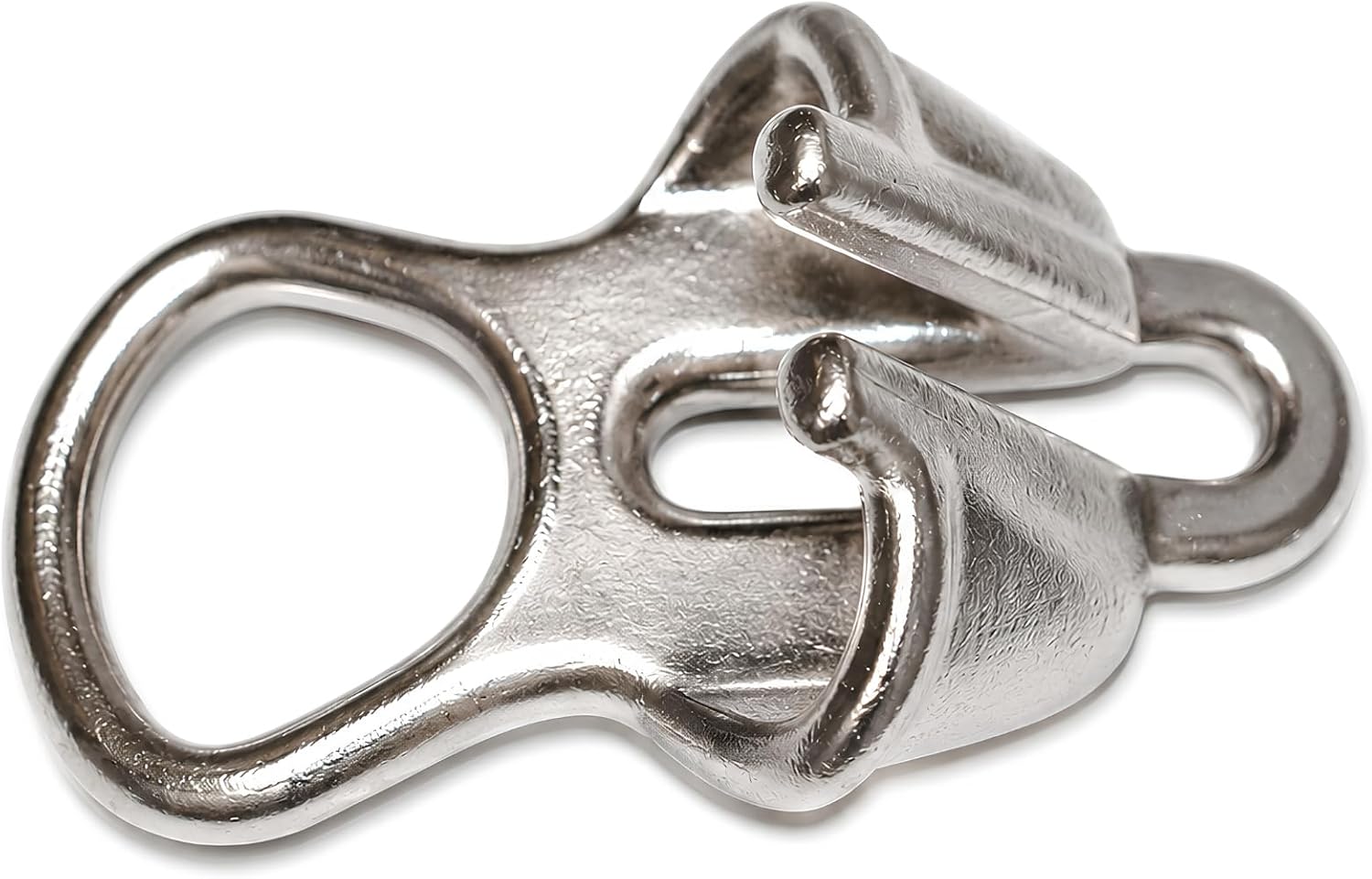
Chain Hook and Snubber Bridle
Best way to take shock loading off a windlass and cleat for either anchor
Whichever anchor is doing the holding, the chain itself should never be the thing cleated to the boat in a blow — that job belongs to a stretchy nylon snubber or bridle, with the chain hook simply transferring load onto it. A bridle is worth the extra rigging on a second anchor especially, since tandem and Bahamian-moor setups already tend to reduce yaw; adding a snubber on top calms the ride further and takes sustained shock loading off deck hardware that isn't built for it. Choose a positive-latching hook over a simple claw hook, since a claw can shake free when the chain goes momentarily slack in a gust.
- Type
- Stainless or galvanized chain hook attached to a nylon snubber line or bridle
- Configuration
- Single-leg snubber to one cleat, or a Y-shaped bridle to both bow cleats
- Material
- Marine-grade stainless steel hook, three-strand or plaited nylon leg(s)
- Function
- Transfers load from the chain to a stretchy line cleated on deck, not the windlass
Pros
- Protects the windlass gearbox and gypsy from shock loads they were never designed to absorb continuously
- A bridle configuration spreads the load across both bow cleats and reduces the yawing that drives a boat to sail around at anchor
- Cheap insurance relative to the cost of a stripped windlass or a torn-out deck cleat
Cons
- A hook that isn't a positive-latching design can shake loose off slack chain in confused conditions, exactly when you need it most
- Adds one more connection point in the ground tackle chain that needs regular inspection for wear and corrosion
How to choose
There's no single "best" second anchor — the right choice depends on what you're protecting against and what your boat can physically stow. The comparison below is a starting point, not a substitute for the manufacturer's own sizing chart for your specific boat's length, beam, and windage.
| Anchor type | Best bottoms | Stowage demand | Best role |
|---|---|---|---|
| Aluminium (Fortress-style) | Mud, sand | Low — flat-packs | Locker-stowed storm backup |
| Modern steel scoop (Rocna, Mantus) | Sand, mud, mixed | High — full weight, needs roller or mount | Tandem/Bahamian moor, sustained heavy weather |
| Danforth/fluke | Soft mud, sand | Low — folds flat | Kedging, dinghy deployment |
Budget tiers
Entry level (roughly $80-$250): a galvanized Danforth-style fluke anchor sized for kedging or light second-anchor duty, plus a basic chain hook. Adequate for mud and sand anchorages and occasional kedging, not a substitute for a properly sized storm anchor on a boat over about 35 feet.
Mid-range (roughly $300-$700): an aluminium Fortress-style anchor or a mid-sized modern steel scoop anchor, a nylon-and-chain rode built for hand deployment, and a real snubber or bridle. This is where most cruising boats land for a genuinely usable second-anchor setup.
Committed bluewater setup (roughly $700-$1,500+): a full-size steel scoop anchor matched to or exceeding the primary's rating, a dedicated stern mount or second bow roller, a purpose-built bridle, and a spare rode long enough for genuine storm scope. Sized for a boat that expects to anchor out in serious, sustained weather rather than mostly marinas and settled coastal stops.
Frequently asked questions
Do I really need a second anchor if I already have a good primary?
For coastal weekending, a single well-sized primary and a spare rode is often enough. For serious cruising — anywhere you might drag in a squall, need to kedge off a grounding, or want the reduced swing of a Bahamian moor or tandem set — a second anchor stops being optional. It's cheap insurance relative to the cost of dragging onto a reef or another boat.
Should my second anchor be the same type as my primary?
Not necessarily. Many cruisers deliberately choose a different design — a lightweight aluminium or fluke anchor as the second, paired with a modern scoop-style primary — because the goal is redundancy across bottom types and failure modes, not a matched pair. If your primary struggles in weed, a second anchor optimized for mud and sand adds real versatility rather than duplicating a weakness.
How much scope do I need for a second anchor in 40+ knots?
The usual coastal rule of thumb — roughly 5:1 for chain, 7:1 or more for a rope-chain combination — is a starting point, not a storm number. In genuine heavy weather, cruisers commonly go to 8:1 or 10:1 if swing room allows, because extra scope lowers the angle of pull on the anchor and lets catenary and rode stretch absorb shock loads before they reach the anchor itself. Swing room, not the chart, is usually the limiting factor.
Where do I stow a heavy second anchor on a small boat?
Common options are a stern rail mount, a second (smaller) bow roller offset from the primary, or bagged/lashed stowage in a cockpit locker or lazarette for anchors like the Fortress that disassemble. Whatever you choose, the anchor needs to be secured against shifting in a knockdown or heavy seaway, and it needs to be reachable and deployable without unpacking half the boat first.
Can I deploy a second anchor without a dinghy?
Yes, by motoring it out directly — reversing away from the primary anchor's position at the angle you want before dropping the second — but a dinghy gives you far more control over exact placement, which matters for tandem anchoring or a tight Bahamian moor. In building wind and sea, launching a dinghy gets progressively harder and more dangerous, so if a blow is forecast, set the second anchor early rather than waiting.
What's the difference between tandem anchoring and a Bahamian moor?
Tandem anchoring runs two anchors in line on the same rode axis, with the second anchor typically shackled ahead of the primary to add holding power in the same direction — useful when you expect sustained strong wind from one quarter. A Bahamian moor sets two anchors roughly 180 degrees apart, one upwind and one downwind, so the boat swings on a short radius around a fixed point rather than sailing around a single hook — the classic answer to tight anchorages with reversing current or forecast wind shifts.
Will a snubber on the second anchor really make a difference?
Yes, disproportionately so. A boat surging against an all-chain second rode in a gust can generate shock loads several times its steady-state pull, transmitted straight to the anchor, the chain, and whatever it's cleated to. A few feet of nylon snubber absorbs that surge through stretch, which both protects the gear and noticeably calms the boat's motion at anchor.
Looking for more gear guides? Browse all our gear recommendations or the full guides index.