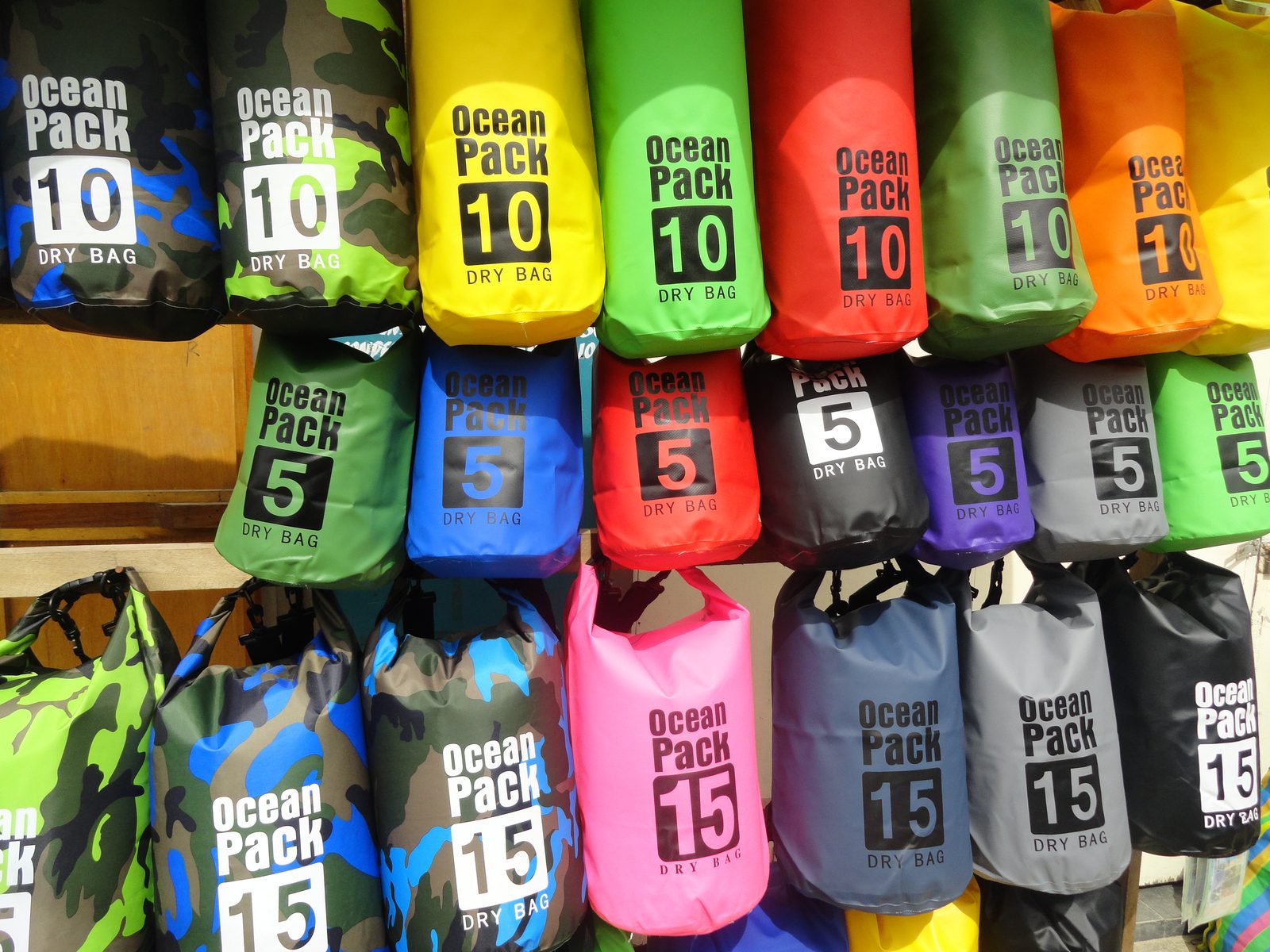
Waterproof Bags, Cases, and Dry Storage for Life Aboard
Buy three or four good roll-top dry bags before you buy anything expensive. A $35 welded-seam roll-top handles the realistic threat on a cruising boat — spray, a wet dinghy ride, a locker that never fully dries — and owning several beats owning one excellent bag. Add one zippered duffle for the kit you open daily, and one hard case only if you carry camera gear or a drone.
The rest of dry storage is not about bags at all. It is about ventilation, where you stow what, and accepting that a boat's interior lives at 70-90% relative humidity for most of its life. This guide covers the gear, the ratings that actually mean something, and the locker habits that keep things dry without buying anything.
Sailboat Atlas may earn a commission from qualifying purchases made through links on this page, at no extra cost to you.
Why things get wet: the four routes water takes
Spray and boarding water is the obvious one and the least damaging, because it is visible and you react to it. Dinghy transfers cause more actual losses than anything else — phones, cameras, laptops and provisions all go over the side or get soaked in the bottom of a tender during a beach landing.
Condensation is the quiet one. Warm moist cabin air meeting a hull that is at sea temperature condenses on the inside of lockers against the topsides, which is exactly where most boats stow clothing and bedding. Nothing has leaked, and everything is damp. Deck leaks are the fourth route, and they always find the locker containing something you care about.
Each route needs a different answer. Bags solve spray and dinghy transfers. Ventilation, spacing and dehumidification solve condensation. Only rebedding hardware solves deck leaks, and a dry bag over the top of that problem just means you find the leak later, when the core is already wet — a scenario our deck guide covers in detail.
Reading IP ratings without being misled
The two-digit IP code describes solids first and liquids second. IP67 means dust-tight and protected against immersion in one metre of water for thirty minutes. IPX8 means the manufacturer has tested immersion beyond a metre under conditions they define, and has not rated dust at all — the X is a genuine blank, not a pass.
What the ratings do not tell you is the thing that matters most on a boat: they are laboratory tests on a correctly closed product, in still, fresh water. A roll-top rolled twice instead of three times is not rated at all. A TIZIP zipper that has not been lubricated in two seasons is not rated either. Salt water and repeated flexing age coatings faster than any test cycle.
Treat the rating as evidence the design is serious rather than a guarantee of outcome, then test your actual bag: fill it with a couple of dry paper towels, close it as you normally would, and hold it under in a bucket for a minute. You will learn more in that minute than from any specification sheet, and it is worth repeating annually on anything protecting expensive kit.
A stowage system that survives a season
Colour-code by function rather than by contents. One colour for electronics, one for clothing, one for ship's papers and documents, one that lives permanently in the dinghy. In a dark locker at two in the morning, colour is the only thing anyone reads, and a system that works when you are tired is the only one that survives a season.
Get gear off the hull. Plastic grid matting or slatted locker bottoms cost very little and stop the single most common cause of mildew, which is fabric sitting in direct contact with a cold hull surface. Leave air gaps at the ends of lockers rather than packing them solid, and rotate the contents of deep lockers a couple of times a season so nothing spends six months forgotten against the topsides.
Keep a dedicated documents pouch and treat it as untouchable — passports, registration, insurance, clearance papers, vaccination records — with photographs of all of it backed up to cloud storage and to an offline copy on a phone. Replacing a soaked passport in a foreign port is measured in weeks.
Protecting electronics specifically
Salt air corrodes electronics through connectors and vents long before any visible water gets involved, which is why a laptop that lived aboard for two years fails at the charging port rather than the screen. Store devices in a sealed bag with a silica gel pack when not in use, and take the packs home to dry in an oven occasionally — a saturated desiccant is just a damp sachet.
Handheld VHFs, chartplotters and satellite messengers carry their own ratings and do not need bagging in normal use; the things needing protection are phones, tablets, laptops, cameras and spare batteries. A phone pouch with a lanyard in the dinghy and a hard case for a camera cover the two scenarios where the loss is both likely and expensive.
Spare lithium batteries deserve a separate mention: store them at partial charge, in a fireproof pouch, somewhere ventilated, and never in a sealed bag with damp gear. Our insurance guide notes how underwriters look at battery and electrical practice when assessing a claim.
The grab bag, which is dry storage with a deadline
Every offshore boat should have one bag whose entire purpose is to leave the boat with you. It must float, it must be obvious — bright orange or yellow, not another grey duffle — and it must live where a person can grab it from the companionway without opening a locker.
Contents are contested but a workable core list is: documents and cash in a sealed pouch, a handheld VHF, a personal locator beacon, water, a torch with spare batteries, spare prescription glasses, essential medication, a signalling mirror and a backup phone battery. Anything you would need in the first 48 hours, and nothing that requires the boat's electrical system.
Check it when you service the rest of the safety equipment, because batteries expire, water goes stale and medication passes its date. A grab bag last inspected four years ago is a bag of expired items in an emergency. Our guide to life rafts covers how to schedule that inspection alongside the raft service.
Our picks
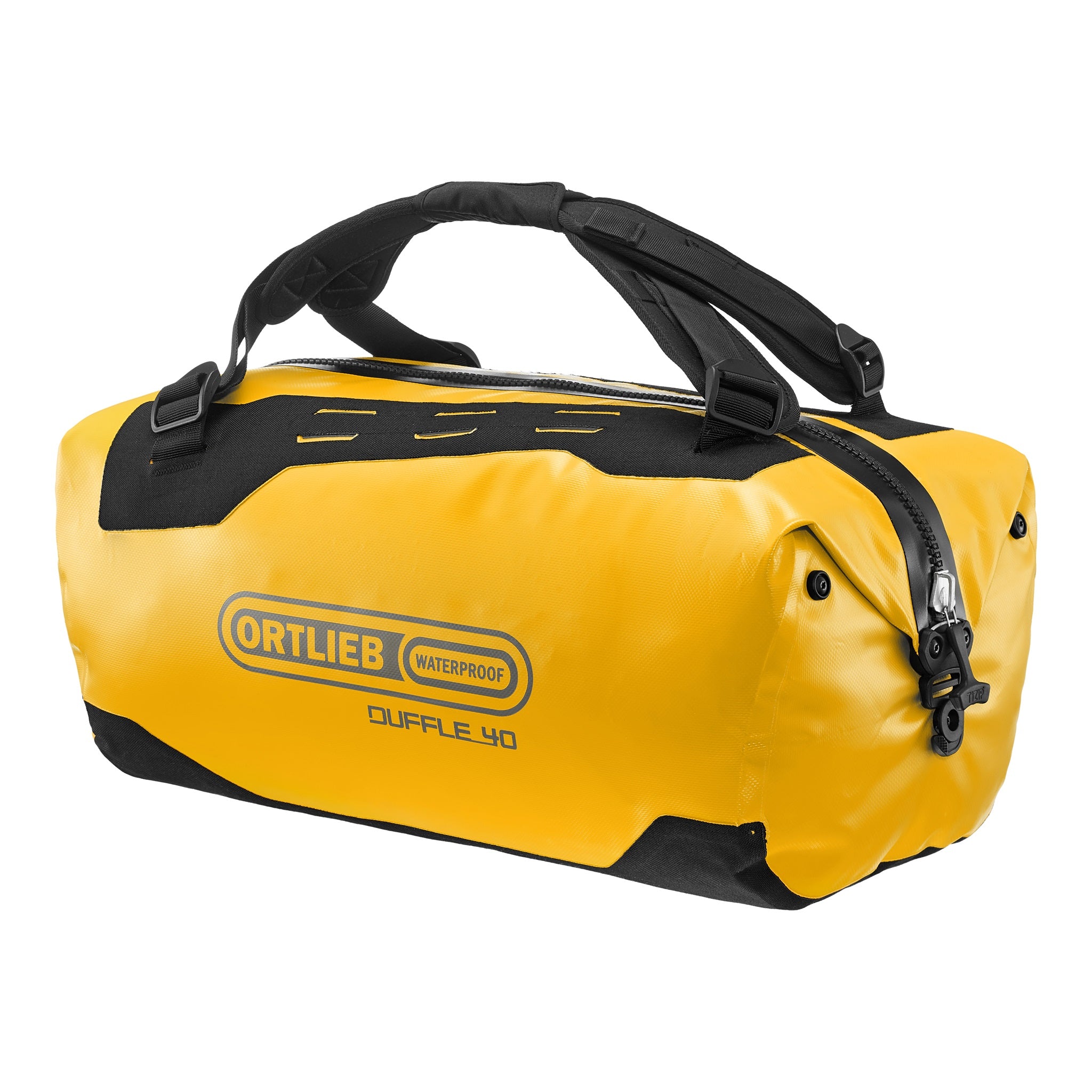
Ortlieb Duffle 60L
Best crew bag for getting gear aboard dry in a wet dinghy
The case for a zippered duffle over a roll-top is access. A roll-top with 60 litres of gear in it has to be fully unrolled and mostly emptied to reach anything at the bottom, which is why so many cruisers end up with a cockpit full of unpacked clothing. The Ortlieb opens like a normal bag and closes like a dry bag. Buy it if you regularly ferry crew kit, laundry or provisions across an anchorage in a wet dinghy. Skip it if your gear only travels from car to boat on a pontoon, where a $40 roll-top does the same job.
- Volume
- 60 litres (also sold in 40L, 85L and 110L)
- Rating
- IP67 — protected against temporary immersion
- Closure
- TIZIP waterproof zipper
- Weight
- About 2.6 lb (1,180 g)
Pros
- A genuine waterproof zipper means you can open it halfway for one item instead of unrolling the whole bag
- IP67 rating covers the realistic failure case — the bag going over the side of the dinghy for a few seconds
- Backpack straps stow away, so it carries a mile up a dock and then packs flat in a locker
Cons
- About $235 is several times the price of an ordinary roll-top dry bag of the same volume
- The TIZIP zipper needs regular silicone lubrication or it stiffens and eventually fails — that maintenance is not optional
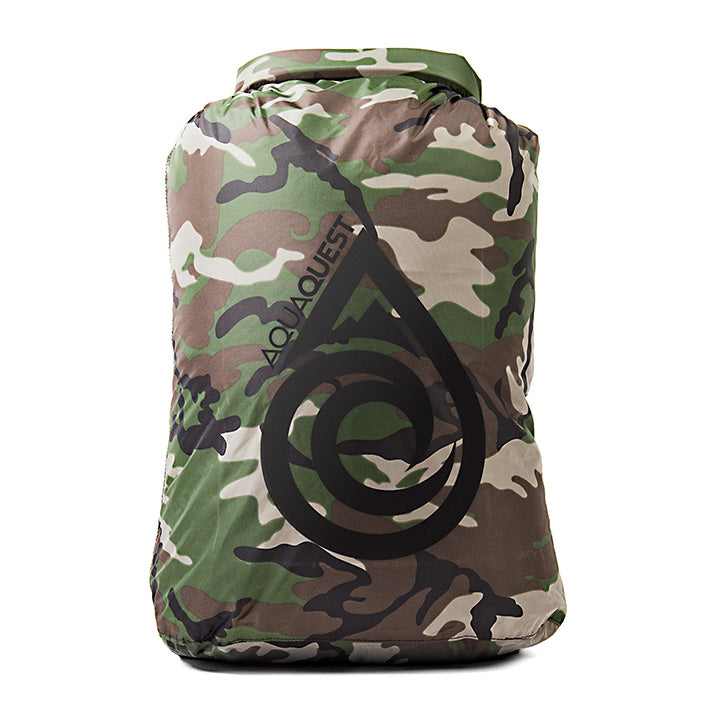
AquaQuest Rogue Dry Bag 30L
Best value roll-top dry bag for everyday boat use
This is the bag to buy in quantity. The honest system on most cruising boats is not one expensive bag but four or five moderate ones: one for electronics, one for spare clothing, one for documents and ship's papers, one that lives in the dinghy. AquaQuest's construction is a clear step above supermarket dry bags without the specialist price, and at $35 losing one over the side is annoying rather than painful. Label them, because they all look identical in a dark locker.
- Material
- 70D ripstop nylon with dual TPU coating
- Seams
- Welded rather than stitched
- Carry
- Includes a detachable shoulder strap
- Typical price
- Around $35
Pros
- Welded seams and TPU coating put it well above the thin PVC bags sold at the same price
- 30 litres is the useful size — big enough for a change of clothes and a laptop, small enough to hand up a companionway
- Cheap enough to own several and colour-code them by contents
Cons
- No window or internal organisation, so finding one small item means emptying the bag
- A roll-top is only waterproof if rolled three or more times and clipped — casual closing defeats it
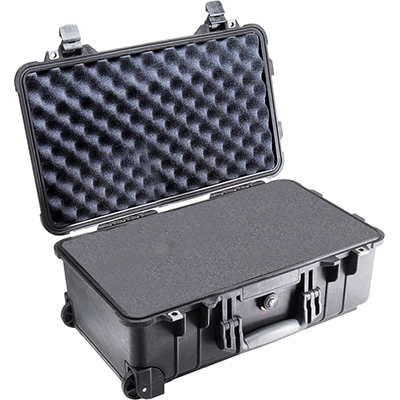
Pelican 1510 Protector Case
Best hard case for cameras, drones and anything with a lens
Hard cases earn their place for exactly one category: expensive gear that impact damages, not just water. Cameras, drones, a sextant, a handheld satellite terminal, spare instrument displays. For everything else they are the wrong tool, because a rigid box wastes the irregular space that boat lockers are made of. Buy one, size it to your most valuable kit, and resist the urge to buy three — the weight and the wasted stowage volume add up quickly on a small boat.
- Rating
- IP67, with an automatic pressure purge valve
- Exterior
- 22.0" x 13.8" x 9.0" — sized as airline carry-on
- Weight
- About 13.6 lb with foam
- Typical price
- $230-$270
Pros
- Crush protection as well as water protection, which soft bags cannot offer at any price
- The purge valve equalises pressure so the lid opens normally after a flight or a temperature swing
- Carry-on dimensions mean the same case protects gear on the boat and on the plane home
Cons
- Extremely heavy and completely rigid — it does not compress into an awkward locker the way a soft bag does
- Heavy enough that lifting it into a dinghy in a chop is a genuine two-hand job
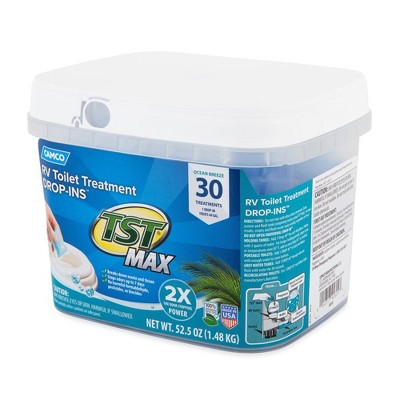
Camco TST MAX Toilet Treatment Drop-Ins
Best example of the dry-stowage discipline that actually matters — keeping consumables sealed
Included here because consumables are where damp storage actually costs you money. Cardboard packaging collapses, labels fall off, and paper-wrapped tablets fuse into a single mass in a locker that never quite dries out. Tablets like these, kept in a sealed container inside a dry bag, are a small example of the general rule: on a boat, anything you buy in quantity needs a waterproof home before it needs a shelf.
- Format
- Drop-in tablets, 15 per pack
- Dose
- One tablet per 40-gallon tank
- Chemistry
- No formaldehyde or bronopol; RV and marine approved
- Typical price
- About $10 for 15
Pros
- Tablets survive a damp locker far better than liquid treatments in bottles that weep and corrode neighbours
- Individually wrapped, so a burst bag does not ruin the whole supply
- Cheap enough to carry a season's worth without thinking about it
Cons
- Heavier use often needs two tablets per tank, so the pack goes faster than the label suggests
- Not as strong as a liquid enzyme treatment in genuinely hot climates

Hiearcool Universal Waterproof Phone Pouch
Best cheap protection for a phone in the cockpit or dinghy
Buy two and keep one in the dinghy permanently. Phones go overboard in dinghies more than anywhere else on a boat, usually during a landing in surf or a transfer in a chop, and a $15 pouch with a lanyard eliminates the problem entirely. Test it empty first — submerge it with a tissue inside for a minute — because the one genuine failure mode of cheap pouches is a bad seal out of the packet. We could not source a licensed product photo for this item, so the card uses our placeholder image.
- Rating
- IPX8, rated to about 100 ft
- Fits
- Phones up to about 8.9"
- Usable
- Touchscreen works through the window; lanyard included
- Typical price
- $10-$20 for a two-pack
Pros
- Costs less than a phone screen protector and prevents the single most common expensive loss on a boat
- Touchscreen works through the film, so charts and messages stay usable
- The lanyard means a dropped phone floats at the end of a string rather than sinking
Cons
- Fingerprint and face unlock do not work reliably through the plastic — set a PIN before you need it
- Photo quality through the window is noticeably degraded, so it is protection rather than a camera housing
How to choose
Buy in this order rather than all at once — most boats are well served by the first two rows of the table.
| Item | Typical price | Best for | Key spec |
|---|---|---|---|
| Phone pouch | $10-$20 a pair | Dinghy and cockpit | IPX8, lanyard fitted |
| Roll-top dry bags (x3-4) | $35 each | Everyday stowage | Welded seams, TPU coating |
| Zippered duffle | $235 | Crew kit, laundry runs | IP67, TIZIP closure |
| Hard case | $230-$270 | Cameras, drones, instruments | IP67 plus crush protection |
Budget tiers. Under $150 gets a pair of phone pouches and three good roll-tops, which covers the realistic risks on a coastal cruising boat. Around $400 adds a zippered duffle for daily access and locker matting throughout. Above $700 you are into a hard case for camera or drone gear plus a dedicated grab bag properly provisioned — worth it offshore, over-specified for weekend sailing. Spend the difference on fixing the deck leak instead; no bag compensates for water arriving from above.
Frequently asked questions
What does IPX8 or IP67 actually mean for a dry bag?
IP67 means dust-tight and protected against immersion in one metre of water for 30 minutes. IPX8 means immersion beyond one metre under conditions set by the manufacturer, with no dust rating claimed. Neither rating covers prolonged submersion, water pressure at depth, or a bag that has been closed carelessly — most real failures are closure errors rather than material failures.
Roll-top or waterproof zipper?
Roll-tops are cheaper, more reliable and more forgiving of abuse, but require unpacking from the top. Zippered bags give you normal access and cost several times as much, and the zipper is a maintenance item needing periodic silicone lubrication. Use roll-tops for bulk storage and one zippered bag for the kit you open daily.
How do I stop lockers being damp in the first place?
Ventilation and separation. Slatted locker bottoms or plastic grid matting lets air circulate under stored gear instead of trapping condensation against the hull. Add a dehumidifier or moisture absorbers in a closed boat, and never stow damp gear in a sealed locker — it will still be damp, and mouldy, in a fortnight.
What should live in a grab bag?
Documents in a waterproof pouch, a handheld VHF, a PLB, water, a torch, spare glasses, medication, and a backup phone battery. Keep it in a brightly coloured waterproof bag that floats, stowed where anyone can reach it from the companionway, and check the contents when you service the rest of your safety gear.
Are vacuum bags useful on a boat?
Yes, for off-season storage of bedding, spare sails and winter clothing, where they save real volume and keep contents dry. They are less useful for everyday gear because resealing them needs a pump, and a bag you cannot casually reopen stops being used within a month.
Where should the ship's papers live?
In a waterproof document pouch, in a known location, with photographs of everything backed up to cloud storage and to an offline copy on a phone. Registration, insurance, clearance documents and passports are the hardest items to replace abroad, and the only ones where a soaking turns into weeks of bureaucracy.
Looking for more gear guides? Browse all our gear recommendations or the full guides index.