Best Life Rafts for Offshore Sailing
A life raft is the piece of gear you buy hoping never to use — and one where the difference between a cheap coastal model and a proper offshore raft can decide whether you survive a bad night. Here's how to choose.
Sailboat Atlas may earn a commission from qualifying purchases made through links on this page, at no extra cost to you.
How to choose a life raft
Match certification to actual use
The single most important spec is certification level. ISO 9650-1 Type I Group A is the offshore standard: insulated twin tubes, proper canopy, ballast bags, and equipment for extended deployment in cold water and storm conditions. Coastal-only rafts (single tube, thinner canopy, minimal kit) are appropriate for daysailing and coastal work but wildly inadequate for a passage. Buy the raft that matches the worst passage you'll actually make, not your average day.
Container vs. valise
Container-packed rafts mount on deck or a stern arch where they can be launched fast — the right choice for offshore boats. Valise-packed rafts stow in a locker; they're lighter and cheaper but you have to drag them to the rail before deploying, which in a real emergency may not happen. For any serious offshore raft, budget for deck mounting or a hydraulic cradle if the raft is heavier than one person can move in 30 seconds.
Capacity and equipment pack
Size the raft to the largest crew you'll carry, not the average. The equipment pack matters as much as the raft itself: SOLAS-B rations, water pouches, thermal protective aids (TPAs) for every occupant, signaling equipment, and a dedicated pocket for a GPS EPIRB. The premium rafts on this list include these; budget rafts may require you to build your own grab bag to supplement.
Servicing is not optional
Life rafts require professional repacking every 3 years (some brands specify shorter cycles). Skipping this is a false economy — rubber ages, batteries die, flares expire, and the hydrostatic release units that trigger automatic deployment have a finite life. Before buying, check where the nearest authorized service center is; recertifying a raft can require shipping across a continent if you buy an obscure brand.
Our picks
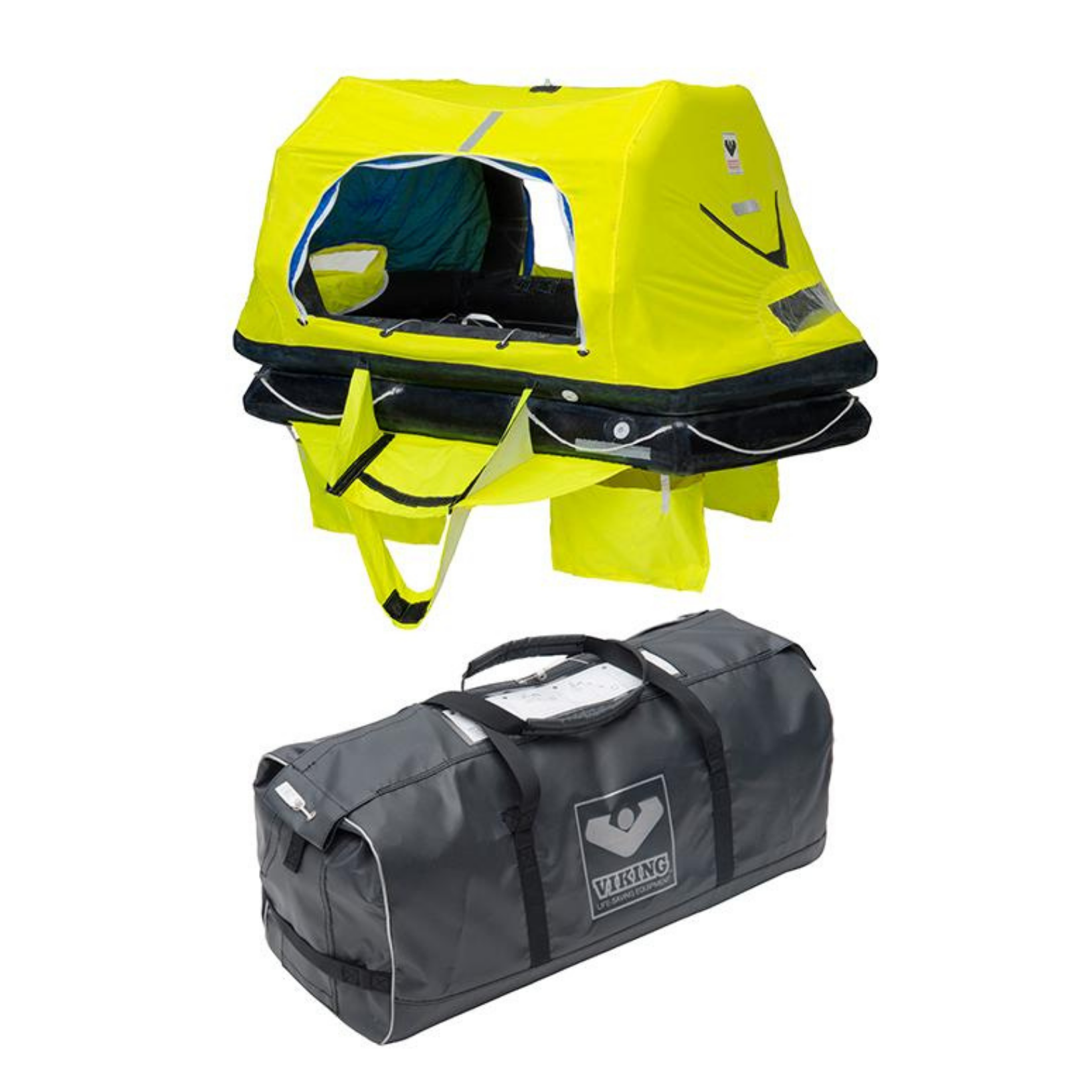
Viking RescYou Pro (6-person, ISO 9650-1)
Best overall offshore life raft
The RescYou Pro is the life raft you want on a bluewater cruising boat. ISO 9650-1 Group A certification means it's rated for the worst of what oceans throw at you: cold water, storm seas, and long deployment before rescue. The insulated twin tubes, boarding aids, and full SOLAS-grade equipment pack aren't marketing — they're the difference between surviving 48 hours in the North Atlantic and not. If you're actually going offshore, this is the standard against which every other raft should be measured.
- Capacity
- 6 persons
- Pack
- Container (deck-mounted) or valise (locker-stowed)
- Certification
- ISO 9650-1 Type I Group A — for extended offshore/ocean use
- Typical price
- $3,800–$5,200 depending on pack and options
Pros
- Full offshore-grade equipment pack: SOLAS-B rations, water, flares, EPIRB-ready pocket, and thermal protective aids for every occupant
- Twin insulated buoyancy tubes handle cold-water immersion far better than single-tube designs
- Viking has one of the widest global servicing networks — you can get it re-certified in most cruising hubs
- Boarding ramp and stability-improving ballast bags make re-boarding realistic for tired, cold, wet crew
Cons
- Full offshore pack pushes weight to 90+ lbs — deck mounting or a hydraulic launcher is realistic; hand-launching is punishing
- Repack service every 3 years typically costs $500–$800, plus shipping if you're remote
- Not the cheapest raft — but the wrong place to save money on a real offshore boat
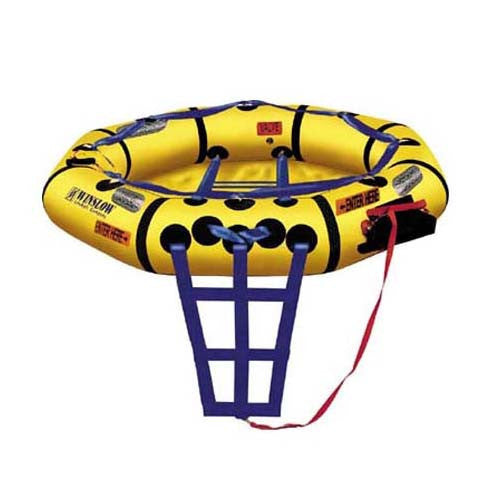
Winslow Super-Light SAR
Best premium U.S.-market raft
Winslow is what U.S.-based bluewater sailors buy when budget is a secondary consideration. The build quality is unmatched — Kevlar-reinforced canopy, marine hardware everywhere, and the whole package is genuinely lighter than the offshore-rated competition. If you're outfitting a serious voyaging boat and you value American-made gear with domestic service, this is the top-tier pick.
- Capacity
- 4 or 6 person configurations
- Pack
- Valise or hard container
- Certification
- USCG-approved, meets or exceeds ISO 9650-1
- Typical price
- $5,500–$7,500
Pros
- Renowned build quality and materials — Kevlar-reinforced canopy, hypalon tubes, marine-grade fittings throughout
- Genuinely lighter than most offshore rafts in its class — matters when it's you and one crewmate deploying it
- Excellent factory service network in the U.S.
- Customizable equipment packs — you can specify beyond the default kit
Cons
- Most expensive raft on this list, and it's not close
- U.S.-focused service network means recertification is harder outside North America
- Long lead times for special orders
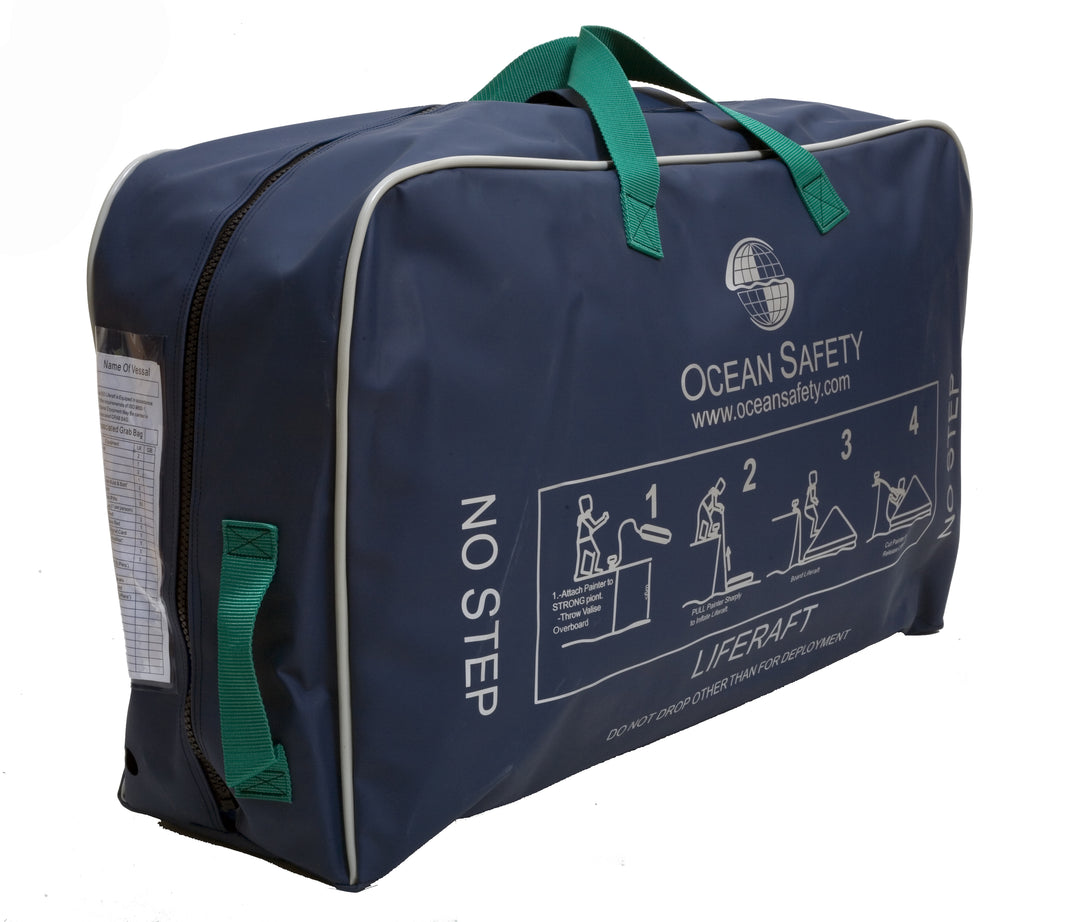
Ocean Safety Ocean ISO (6-person)
Best value offshore raft
The Ocean ISO is the raft ARC skippers buy when they need real offshore certification but can't or don't want to spend Viking money. It hits the same ISO 9650-1 Group A standard, uses twin tubes and a proper offshore canopy, and has been through enough Atlantic crossings that its reliability is established. For a cruising couple heading offshore for the first time on a modest budget, this is the smart pick — you're not compromising the certification, only the trim level.
- Capacity
- 6 persons
- Pack
- Container or valise
- Certification
- ISO 9650-1 Type I Group A
- Typical price
- $2,800–$3,600
Pros
- Full ISO 9650-1 Group A certification at a genuinely lower price point than Viking or Winslow
- Twin buoyancy tubes and canopy meet the same offshore standard as premium competitors
- Widely used in ARC and offshore rally fleets — proven in real ocean crossings
- Global service network via Ocean Safety's parent company
Cons
- Equipment pack is offshore-standard but less generous than Viking's SOLAS-B options
- Fewer configuration options than premium brands
- Some owners report canopy fabric feels lighter than the Viking equivalent

Revere Coastal Compact (4-person)
Best coastal-only raft
The Coastal Compact is the raft for boats that never go more than a few miles offshore. If you daysail, race locally, or do coastal weekends, a full offshore raft is overkill and the money is better spent on a solid grab bag, EPIRB, and jacklines. But be honest about your usage: if you ever plan to cross the Gulf Stream, deliver the boat down the coast, or do a passage longer than 24 hours, buy the offshore raft instead. This is not that raft.
- Capacity
- 4 persons
- Pack
- Valise (soft pack)
- Certification
- USCG-approved coastal; NOT rated for offshore/ocean use
- Typical price
- $1,600–$2,200
Pros
- Small, light, and stowable in a cockpit locker on smaller cruisers
- Meaningfully cheaper than offshore-rated rafts
- Adequate for daysailing, coastal cruising, and rally-controlled events under 12 miles offshore
- Simple design means fewer moving parts to inspect and service
Cons
- Single-tube design and thinner canopy — not appropriate for offshore passages or cold water
- Minimal equipment pack; you'll want to supplement with a proper grab bag
- Some models omit boarding ramp/aids — re-boarding from the water is significantly harder
Frequently asked questions
Should I rent instead of buying?
For a single one-way delivery or a single rally, renting a certified raft is cheaper and gets you an in-service, freshly-inspected unit. For any cruiser sailing regularly offshore, ownership makes sense within 2–3 years.
Do I need an EPIRB too?
Absolutely, and it should live in your grab bag or on your PFD, not in the raft. A GPS-equipped 406 MHz EPIRB is what triggers a real rescue response; the raft keeps you alive until rescue arrives.
Can I put the raft below decks?
Only if it's a valise-packed raft you can genuinely move to the rail in seconds. Container rafts should live on deck where they can be released with a single lanyard pull or by hydrostatic release as the boat sinks.
More gear guides
Related guides
 Safety
Marine Fire Extinguishers: Ratings and Best Picks
USCG requirements by boat length, 5-B vs 20-B, the 12-year rule, and the best marine extinguishers.
 Safety
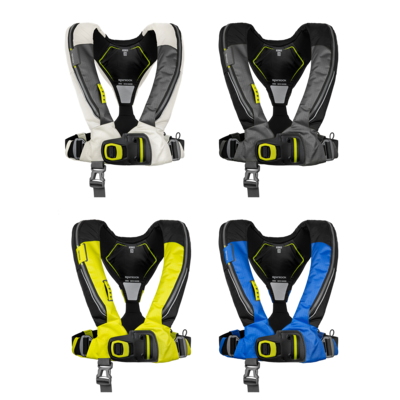
Best Inflatable Life Jackets for Sailing
Automatic vs hydrostatic inflation, harness life jackets, ratings and rearming — plus the best picks for sailors.
 Safety
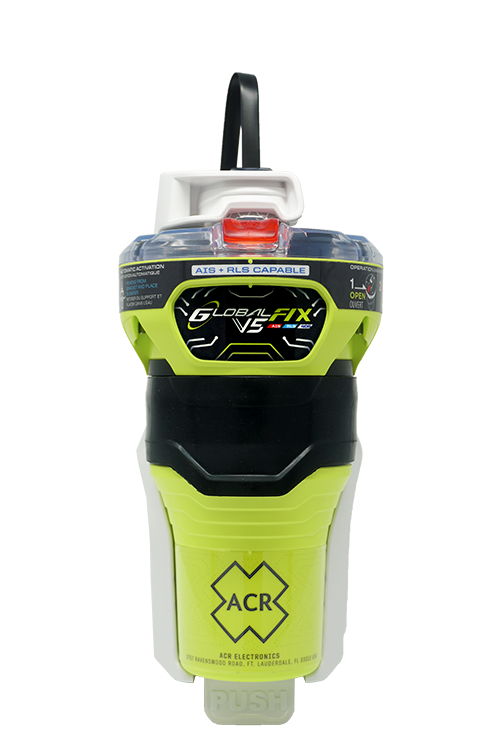
EPIRBs vs PLBs: Emergency Beacons for Sailors
How to choose an EPIRB or PLB for your sailboat — Category I vs II, return-link, and why offshore crews carry both.
 Safety
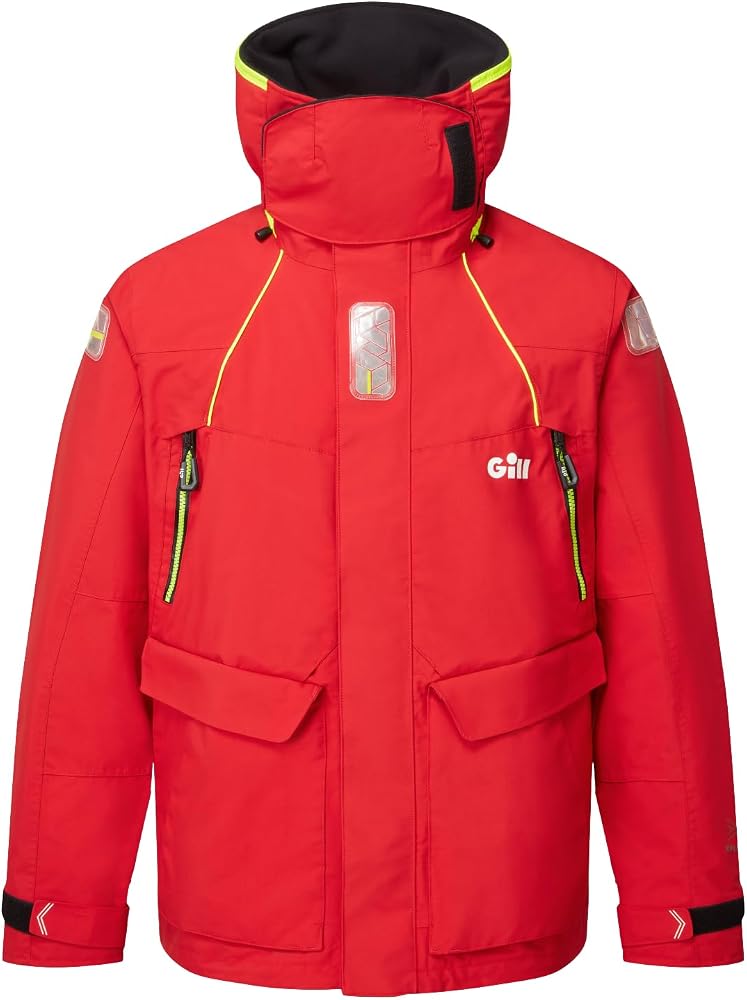
Foul Weather Gear for Sailing: Coastal vs Offshore
Choose sailing foul-weather gear by exposure, fit and layering. Compare coastal and offshore jackets, bibs, waterproofing and real trade-offs.