
Foul Weather Gear for Sailing: Coastal vs Offshore
The best foul-weather gear is the least bulky jacket-and-bib combination that keeps you protected for the exposure you actually face. For day sailing and coastal passages, start with a well-fitted coastal sailing system; for repeated overnight watches offshore, prioritize protective collar and hood coverage, durable closures, and bibs that keep water out when you sit. More expensive clothing is not automatically warmer, and no waterproof shell replaces appropriate insulation.
The four systems below are alternatives for different sailing routines, not a laboratory waterproofness ranking. Try the outfit over your real layers and beneath your life jacket before buying. A technically impressive jacket that restricts reefing, hides your view, or cannot close comfortably over insulation is the wrong size or design for you.
Sailboat Atlas may earn a commission from qualifying purchases made through links on this page, at no extra cost to you.
Do you need coastal or offshore foul-weather gear?
The distinction is exposure rather than distance from the nearest land on a chart. A wet overnight coastal delivery can be more demanding than a warm, sheltered day offshore. Ask how many consecutive hours you may be on deck, whether green water reaches the cockpit, how often you sit on wet surfaces, and whether there is a dry berth where you can recover. Those details determine the coverage you need.
Coastal gear usually favors mobility and manageable bulk for shorter trips. Offshore-oriented designs often add taller collars, more hood adjustment, reinforced contact areas, and better protection around wrists and the front closure. Those features can be worthwhile during long watches, but can also feel restrictive or excessively warm during summer harbor work. Check the actual design rather than relying solely on a category printed on the hangtag.
A jacket by itself is an incomplete system when spray or rain runs onto your lap. Bib trousers rise above the waist and reduce the gap that opens when you bend, sit, or reach. They are often a better first upgrade than buying the most expensive jacket and retaining ordinary hiking trousers. For cold conditions, allow space for insulation below without making the shoulders or crotch bind.
What do waterproof ratings, breathability and DWR actually mean?
A waterproof shell combines fabric, seams, and closures. A membrane or coating may resist water, yet an unsealed seam or poorly adjusted cuff can still admit it. Laboratory fabric figures are not a guarantee that a complete garment will keep a particular sailor dry in every posture. Compare ratings only when manufacturers describe comparable test methods; leave missing values unknown rather than treating them as zero.
DWR, or durable water repellent, is the treatment that encourages water to bead on the outer fabric. It is not the same thing as the underlying waterproof barrier. When the face fabric wets out, the garment may feel colder and less comfortable even without a punctured membrane. Cleaning and reproofing can restore performance when done exactly as the garment care label permits; they cannot repair a torn seam or worn-through fabric.
Breathability describes how water vapor escapes through the material, not active cooling. High exertion, humid air, a warm cabin, and too much insulation can overwhelm any shell. Sweat trapped inside may resemble a leak. Adjust layers before deck work, use permitted ventilation when conditions allow, and distinguish moisture at a collar opening from widespread internal condensation before concluding that the fabric has failed.
How should sailing jackets and bibs fit with a life jacket?
Try the complete combination with your normal base layer, warm midlayer, footwear, and properly fitted life jacket. Reach overhead as if attaching a halyard, squat to a deck fitting, sit on a cockpit seat, and turn your head with the hood raised. The hem should not ride into an uncomfortable gap, and the bib straps should not pull hard on your shoulders. A showroom pose cannot reveal these problems.
A collar must close without pushing your chin painfully upward or interfering with the life jacket. Adjust the hood so it turns with your head and preserves peripheral vision; looking aft for traffic should not require rotating your whole body. Test the interaction between a jacket's pockets, the life-jacket belt, and a safety-harness attachment. The equipment must remain accessible without loosening the life jacket.
Check cuff adjustment with the gloves you use, and try the trouser legs over the chosen sailing footwear. Decide whether you can put the trousers on and remove them safely in a cramped cabin. Bibs that are easy to wear on deck may be awkward for a bathroom break, which matters during long watches. Treat women's and men's cuts as actual fit choices, not simply color variants, and check exchange terms before ordering online.
How do you layer foul-weather gear for warm and cold sailing?
Think in three functions: a base layer manages moisture next to the skin, a midlayer traps warmth, and an outer shell limits wind and water exposure. Many sailing jackets provide little insulation on their own. Choose the warmth beneath for the temperature, wind, watch length, and your activity. A person steering at night produces less body heat than someone repeatedly grinding a winch.
Avoid relying on ordinary cotton clothing for a cold wet watch; it holds moisture and is slow to dry. Suitable synthetic or wool layers can make changes easier between deck and cabin, but their warmth still depends on thickness, fit, and whether they are wet. Keep a dry change protected below. The aim is not to wear every layer from departure but to adapt before sweating heavily or becoming chilled.
In warm weather, a high-protection suit can become uncomfortable quickly. A lighter coastal shell may be the right everyday choice, with a separate plan for unexpected cold or a longer passage. During strenuous sail handling, reduce insulation early if safe, then add warmth before returning to a stationary watch. Waterproof clothes do not prevent hypothermia after immersion and must not be treated as a substitute for suitable survival equipment.
Which features matter on long watches, and what should you skip?
Prioritize adjustable cuffs, a hood that stays useful in wind, a front closure you can operate with cold hands, and protective overlap when sitting. Reinforcement at knees and seat can matter when you work on deck, while smooth internal surfaces help when putting gear on over damp layers. Look at how water drains from pockets and whether they remain accessible under your life jacket.
Reflective details and a conspicuous hood can aid visibility, but they do not make an outfit a life-saving appliance or meet every safety-equipment requirement. Keep your life jacket, tether arrangement, and emergency signaling plan separate. A pocket described as water-resistant should not be assumed to keep a phone or distress device dry during immersion. Protect critical electronics appropriately.
Skip features that interfere with your own sailing routine. Huge pockets are of limited value if the life-jacket belt covers them; a very tall collar can be uncomfortable on a short neck; extra fabric can snag or bunch around a harness. Do not buy a heavy expedition-style system merely because the advertised voyage sounds impressive. The practical question is whether its extra protection is worth its daily fit and mobility costs.
How do you wash, reproof and decide when to replace sailing waterproofs?
Salt, body oils, sunscreen, and grime accumulate around cuffs, collar, and seat. Read the care label before laundering: temperatures, detergents, drying methods, and reactivation instructions differ. Avoid generic advice to tumble-dry or iron every waterproof garment. Rinse or clean as instructed, dry completely before storage, and do not leave the suit packed wet for a week after the passage.
If water no longer beads on the outer surface, start with the manufacturer's cleaning and DWR-care process. If localized water entry persists, examine seams, abrasion points, zippers, and closures. Mark the area and contact the maker about repair options. A worn seat panel or separated seam tape cannot be restored by adding more spray-on repellent, and repeated treatment can waste money without correcting the failure.
Keep a realistic replacement standard. Clothing that remains comfortable for sunny day sails may no longer be dependable for consecutive wet nights. Inspect before a long trip, not while packing the night before. Include washing, authorized repairs, and replacement bibs or jackets in the ownership budget. Buying a complete outfit with a good return policy often beats collecting discounted pieces that never work comfortably together.
Our picks
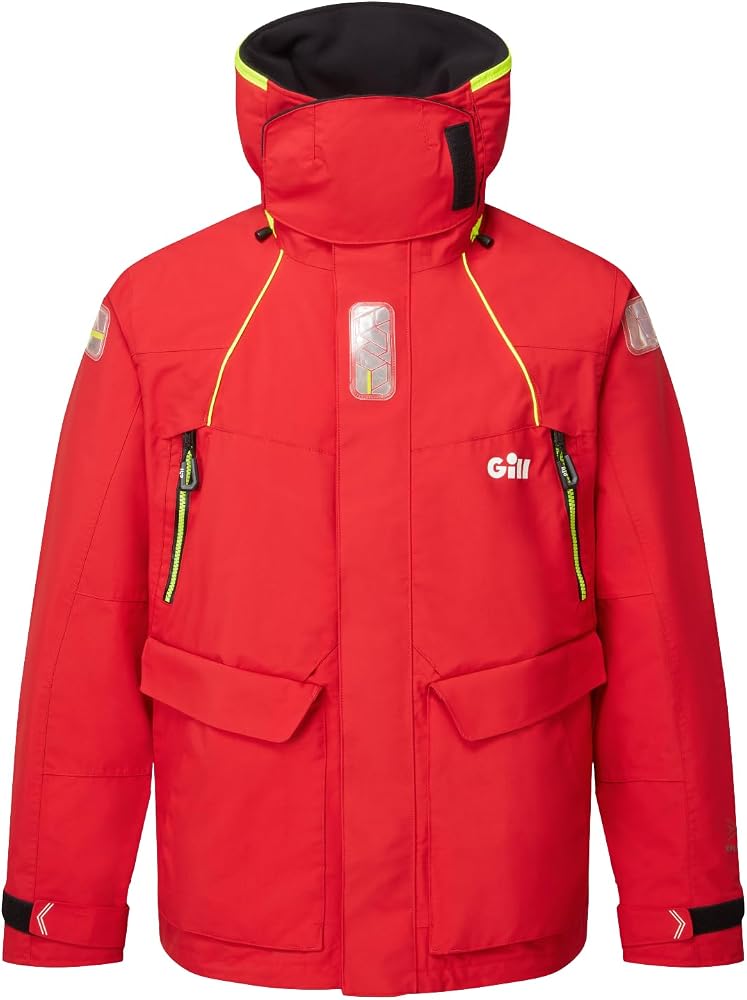
Gill OS2 Offshore Jacket, OS25J
Protective collar and cuff coverage for sustained wet watches
Start with the OS2 if your routine includes sustained wet watches and you value a high collar and inner cuff seals. Try it with your full insulation and life jacket: the protection is only useful when you can turn your head and reach comfortably. Skip it if the collar feels restrictive or most of your sailing is warm and sheltered. The pictured OS25J red listing is a jacket, not a complete outfit, and the sale sizes are limited. Match bibs separately and confirm the actual size, generation, and return conditions rather than assuming a headline discount applies to everyone.
- Fabric
- XPLORE two-layer waterproof/breathable construction
- Collar
- High-cut thermal collar
- Hood
- Fully lined high-visibility hood
- Wrist protection
- Adjustable PU inner cuff seals
Pros
- Tall collar adds face and neck shelter
- Inner cuff seals address wrist water entry
- Relaxed fit intended to accommodate layers
Cons
- Verified discounted red listing has restricted sizing
- Protective collar adds bulk for warm sheltered outings
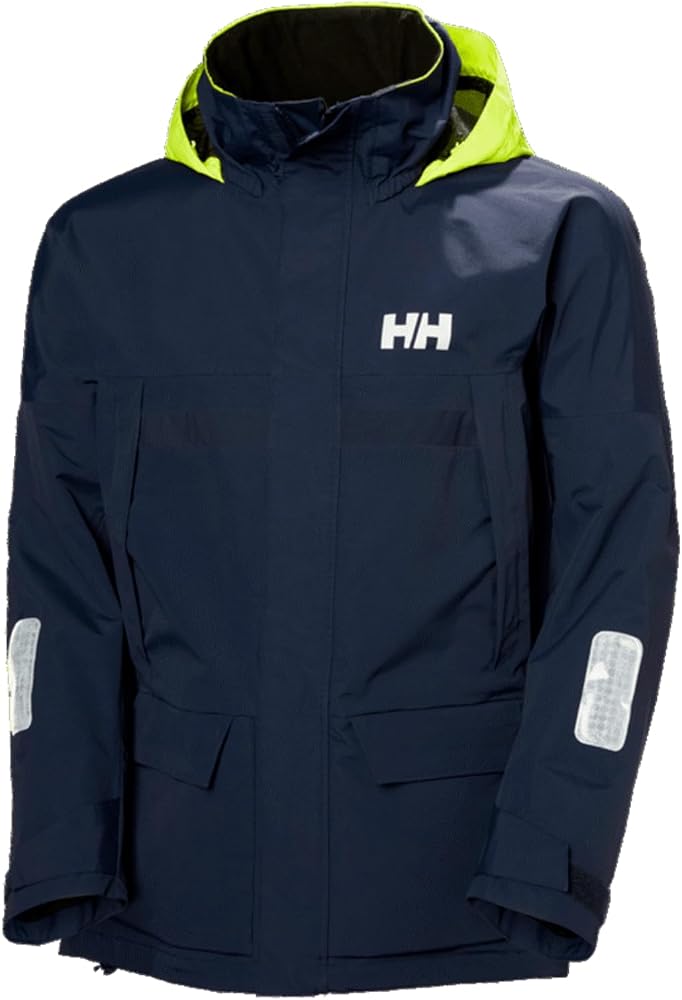
Helly Hansen Pier 4.0 Jacket, 34484
Coastal sailing with articulated sleeves and manageable coverage
Choose the Pier 4.0 when a coastal-oriented design and movement under a life jacket fit your normal sailing. Its reinforced lower back is relevant when sitting in a wet cockpit, but buy compatible bibs rather than expecting the jacket to protect your lap by itself. Skip it if long exposed watches call for more face coverage or you need a very light packable rain layer. These specifications are for the current 34484, not older Pier generations. The verified manufacturer source is regional; US stock was not confirmed, so check the seller’s exact model and size availability before ordering.
- Construction
- HELLY TECH Performance waterproof/breathable shell
- Manufacturer-listed weight
- 970 g
- Sleeves
- Articulated construction
- Hood
- Packable high-visibility hood
Pros
- Sleeve articulation designed for movement with a life jacket
- Brushed-tricot collar improves contact comfort
- Reinforced lower back addresses a seated abrasion area
Cons
- Coastal positioning is not an ocean-expedition guarantee
- Not an ultralight emergency shell at its listed weight
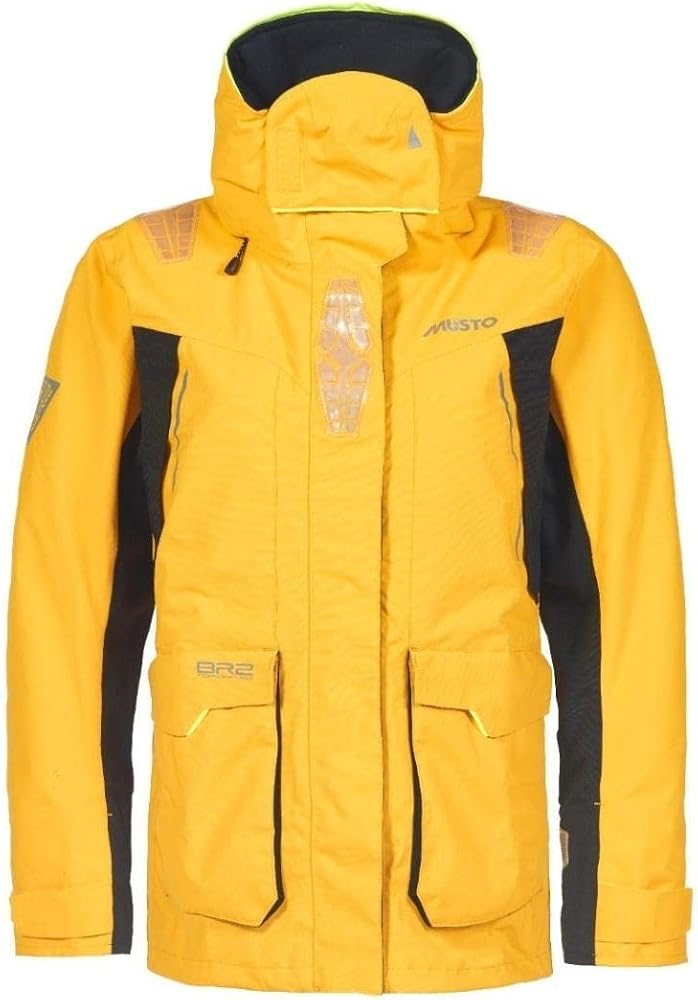
Musto BR2 Offshore Jacket 2.0, 82084
Additional spray coverage on long exposed watches
The BR2 Offshore 2.0 makes sense when repeated long watches justify a spume guard—the protective panel that shelters the lower face from spray—and substantial hood and collar coverage. Check that those parts work with your own life jacket and do not obstruct vision. Skip it if the extra closures and bulk make ordinary summer sailing uncomfortable. The waterproof and breathability figures are Musto’s claims, not our laboratory results, and they do not establish insulation. This is a jacket-only recommendation based on a regional manufacturer page; verify local stock and matching bibs rather than assuming worldwide availability.
- Waterproof rating
- Manufacturer states above 30,000 mm
- Breathability claim
- 15,000 g/m² per 24 hours; do not compare unlike methods
- Seams
- Fully seam-taped construction
- Face protection
- Stowable spume guard
Pros
- Spume guard adds a barrier against spray near the face
- Chest and hip handwarmer pockets provide access options
- Articulated sleeves and adjustable hood support working movement
Cons
- Offshore features add complexity for occasional sheltered sailing
- Published breathability is not a fair cross-brand ranking without test methods
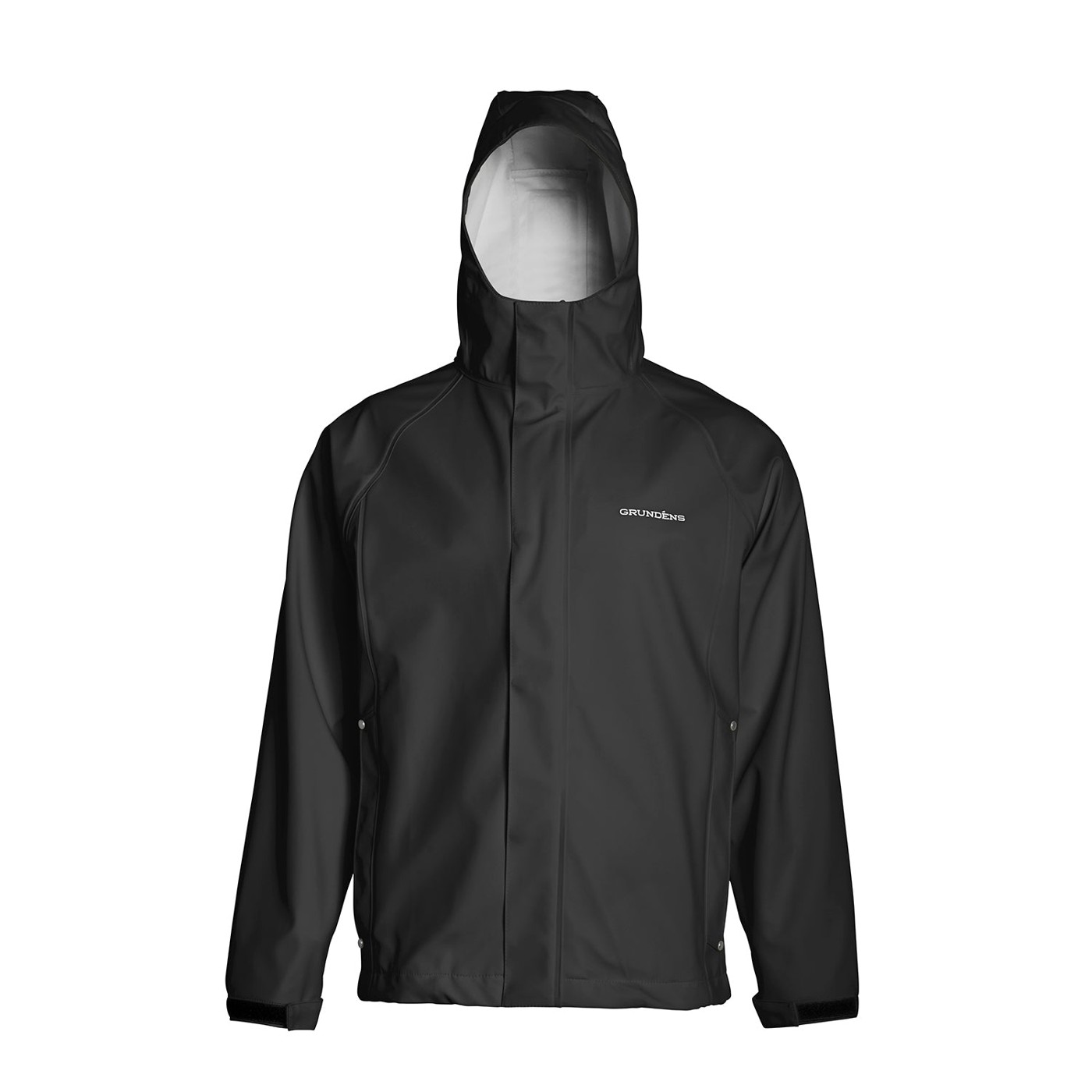
Grundéns Neptune 319 Jacket
Coated workwear for fishing and messy deck tasks
Consider the Neptune 319 for fishing, cleaning, and short wet deck jobs where a straightforward coated jacket is more useful than a complex sailing shell. Its underarm gussets address working movement, but assess condensation and layering during hard effort rather than expecting offshore-membrane performance. Skip it as your sole answer to consecutive exposed ocean watches if you need a high collar and face protection. Grundéns does not publish a breathability figure on the verified specification list, so the honest comparison leaves that unknown. Match the actual fit and any trousers to your task, and keep a dry spare layer below.
- Fabric
- Polyurethane-coated polyester
- Closure
- Full-zip hooded design
- Movement
- Underarm gussets
- Pockets
- Two hand pockets and two internal mesh pockets
Pros
- Stain-resistant construction suits working tasks
- Underarm gussets allow movement
- Adjustable hem helps control the fit
Cons
- No published breathability rating to compare with membrane shells
- No documented offshore-style spume guard or tall protective collar
How to choose
| Product | Price / purchase check | Best for | Key detail |
|---|---|---|---|
| Gill OS2 Offshore Jacket, OS25J | $375 regular listing; restricted-size sale varies | Protective collar and cuff coverage for sustained wet watches | XPLORE two-layer shell |
| Helly Hansen Pier 4.0 Jacket, 34484 | Confirm regional seller and stock | Coastal sailing with articulated sleeves and manageable coverage | HELLY TECH Performance shell |
| Musto BR2 Offshore Jacket 2.0, 82084 | Confirm local jacket and bib pricing | Additional spray coverage on long exposed watches | Stowable spume guard |
| Grundéns Neptune 319 Jacket | $109.99 manufacturer listing; size stock varies | Coated workwear for fishing and messy deck tasks | PU-coated polyester |
Prices and stock vary by region, size, configuration, and seller. Amazon links open searches rather than a verified individual listing: confirm the exact model, seller, approval label, and included accessories before buying. Where a price was not reliably confirmed, the table deliberately leaves a purchase check instead of inventing a range.
Budget tiers: what is worth paying for?
Entry-level: buy a complete, correctly fitting coastal jacket-and-bib system before paying for premium fabric in only one garment. Retain room in the budget for warm layers and footwear that works with the trousers.
Midrange: pay for better protective coverage and reinforcement if you regularly sail in persistent rain or overnight. Compare the total outfit cost and service support, not a jacket-only sale price.
Premium: choose an offshore-oriented system when long watches justify its extra bulk. A good return policy, repair service, and fit with your life jacket are more useful than a technical fabric number you cannot compare fairly.
Related planning decisions
- Choose a life jacket that fits over your layers
- Plan heavy-weather sail handling
- Keep spare clothing and electronics dry
Manufacturer references and review notes
- Gill OS2 Offshore Jacket, OS25J: manufacturer specifications
- Helly Hansen Pier 4.0 Jacket, 34484: manufacturer specifications
- Musto BR2 Offshore Jacket 2.0, 82084: manufacturer specifications
- Grundéns Neptune 319 Jacket: manufacturer specifications
Specification-led editorial shortlist, not a claim of hands-on testing. Reviewed 2026-10-20; recheck regional documentation, product generations, stock, and prices before purchase.
Frequently asked questions
Is foul-weather gear insulated?
Not necessarily. Many sailing jackets and bibs are waterproof outer shells rather than warm winter clothing. Check the exact garment and add suitable base and midlayers for your conditions.
Do I need bib trousers for coastal sailing?
They are useful whenever spray, rain, or a wet cockpit seat can soak ordinary trousers. The higher waist reduces the gap when bending or sitting. For brief settled day sailing you may use a simpler arrangement, but do not judge only by distance offshore.
Can I use hiking waterproofs for sailing?
They may suit occasional sheltered use if their fit and coverage work. Check seated water exposure, cuffs, hood behavior, reinforcement, and compatibility with your life jacket. A lightweight hiking design may not hold up to repeated abrasive deck work.
Why am I wet inside a waterproof sailing jacket?
Sweat condensation, water entering an opening, or fabric and seam damage can all be responsible. Look for the pattern and conditions before assuming membrane failure. Adjust layers and follow the manufacturer's inspection and care instructions.
Should a life jacket go over or under foul-weather gear?
Wear your life jacket as its manufacturer instructs, normally over the outer clothing for inflatable sailing models. Confirm the complete fit with all layers and keep the inflation mechanism and harness arrangement unobstructed. Do not hide it under a tight jacket.
How often should I reproof sailing clothing?
Use the garment maker's guidance and the condition of the outer fabric rather than a universal calendar. Clean first when instructed, and reproof only with a compatible treatment. Repairs are needed for physical damage or failing seams; reproofing alone will not fix them.
Related guides
 Safety
Best Life Rafts for Offshore Sailing
Offshore-certified life raft picks and buying guidance for cruising sailors — Viking, Winslow, Ocean Safety, Revere.
 Safety
Best Boat Ladders for Sailboats: Boarding and Recovery
Transom, telescoping and dive ladders compared, and how deep the bottom step must be for crew recovery.
 Safety
Marine Fire Extinguishers: Ratings and Best Picks
USCG requirements by boat length, 5-B vs 20-B, the 12-year rule, and the best marine extinguishers.
 Safety
Best Inflatable Life Jackets for Sailing
Automatic vs hydrostatic inflation, harness life jackets, ratings and rearming — plus the best picks for sailors.
Looking for more gear guides? Browse all our gear recommendations or the full guides index.