Marine Fire Extinguishers: Ratings and Best Picks
For most sailboats under 26 feet, one US Coast Guard approved 5-B extinguisher such as the Kidde Mariner 5 or Mariner 10 meets the federal minimum. Boats from 26 to under 40 feet need two 5-B units or one 20-B, and boats from 40 to 65 feet need three 5-B or one 20-B plus one 5-B. Many sailors carry more than the minimum, and a rechargeable ABC unit like the Amerex B402 is a strong choice when you also want to fight cushion and wood fires.
Below, we explain what the ratings mean, the 12-year expiry rule for disposable extinguishers, where to mount them aboard, and the genuine trade-offs between the four extinguishers we recommend. Always check the label on the exact unit you buy: approval is tied to the bracket listed on it.
Sailboat Atlas may earn a commission from qualifying purchases made through links on this page, at no extra cost to you.
US Coast Guard fire extinguisher requirements by boat length
Under US federal rules (46 CFR 25.30), recreational boats need extinguishers if they have features such as an inboard engine, closed compartments where portable fuel tanks are stored, enclosed living spaces, or permanently installed fuel tanks. Almost every cruising sailboat with an auxiliary engine falls into that group.
The minimum is: under 26 ft, one 5-B; 26 ft to under 40 ft, two 5-B or one 20-B; 40 ft to 65 ft, three 5-B or one 20-B and one 5-B. An approved fixed system in the engine compartment can reduce the number of portable units required by one 5-B. State rules and racing or offshore regulations can require more, so check them as well.
What 5-B, 20-B and ABC ratings mean
The letter shows the type of fire: A is ordinary combustibles such as wood, cloth and cushions; B is flammable liquids such as fuel and oil; C is energized electrical equipment. The number gives a relative size of fire the unit is rated to put out. Coast Guard marine requirements are written in terms of B ratings, which is why marine labels highlight 5-B or 20-B.
An ABC dry chemical extinguisher can handle all three classes, which matters on a sailboat full of fabric, wood and wiring. A B:C unit, like many purpose-made marine extinguishers, is aimed at fuel and electrical fires. Dry chemical leaves a corrosive powder that is hard to clean from electronics and engines, a real cost to weigh against its versatility.
The 12-year rule for disposable extinguishers
Since 2022, US federal rules require disposable (non-rechargeable) extinguishers on recreational boats to be removed from service 12 years after their manufacture date, which is usually stamped on the bottom of the cylinder. Boats built from model year 2018 onward must carry extinguishers marked 5-B, 10-B or 20-B; older units marked B-I or B-II are acceptable only on older boats and only while they remain in good condition.
Check each extinguisher monthly: the gauge needle should be in the green, the pin and tamper seal intact, the nozzle clear, and the cylinder free of rust or dents. Turning dry chemical units over and tapping them occasionally helps prevent the powder from compacting, although manufacturers vary on this advice.
Where to mount fire extinguishers on a sailboat
Mount extinguishers where you can reach them while moving away from a fire, not beside its likely source. Common locations are just inside the companionway, near the galley but not over the stove, in the cockpit, and near the forward berth so someone sleeping forward can fight their way out.
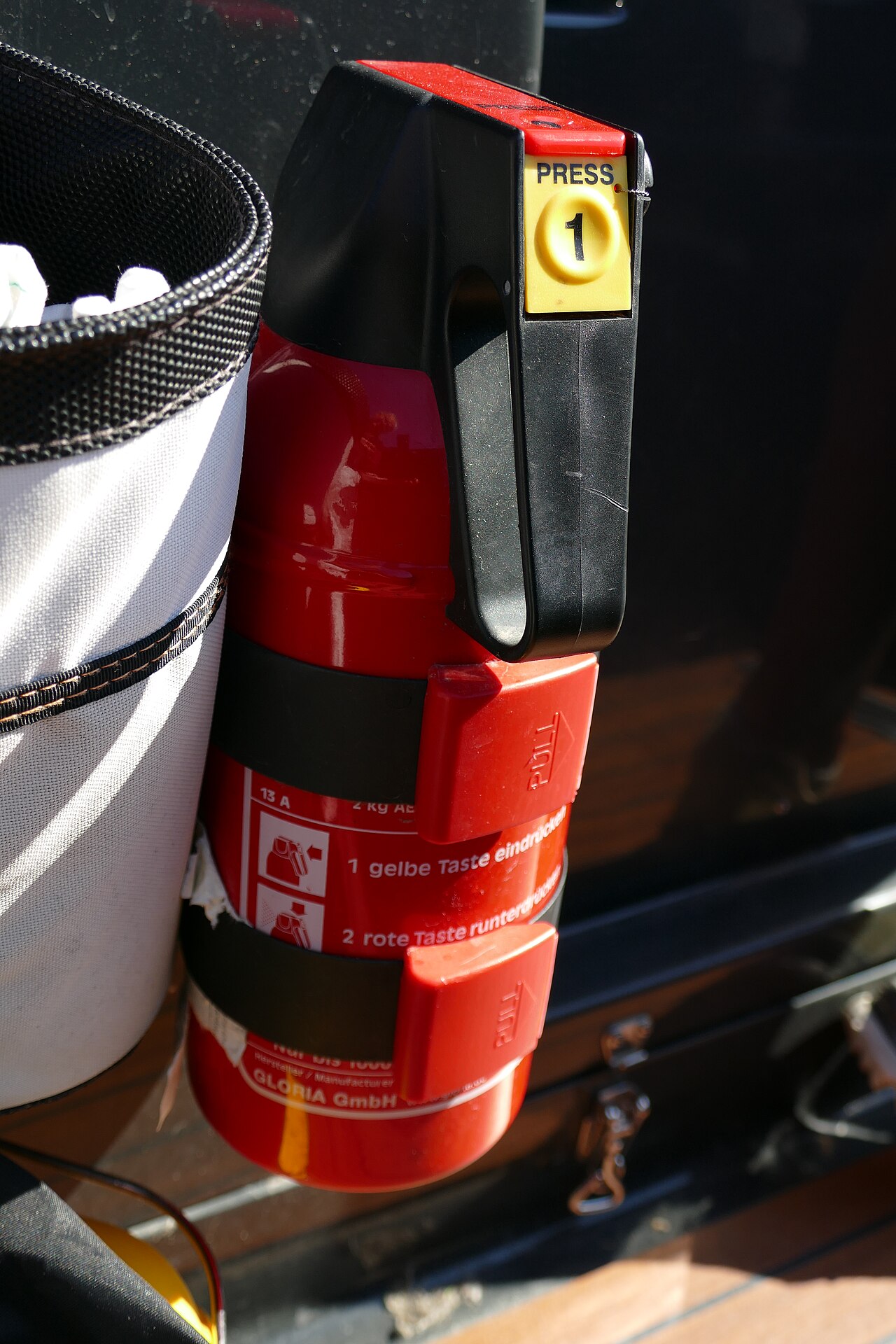
Use the bracket listed on the label, through-bolted or screwed securely to a bulkhead, so the extinguisher stays put when the boat heels or slams. A loose cylinder becomes a missile in a knockdown.
Engine room fires and automatic systems
Engine compartment fires are dangerous because opening the hatch feeds the fire with air. Many owners fit a small fire port (a hole with a cover) so an extinguisher nozzle can be discharged into the compartment without opening it, or install an automatic engine room system. Shut down the engine and fuel supply before discharging into the space.
Our picks
Kidde Mariner 5 (MAR5)
Meeting the minimum on small boats
The Mariner 5 is an easy, low-cost way to meet the 5-B requirement on a small boat, and Kidde says its aluminium and stainless construction resists salt exposure better than a household unit. It is a B:C extinguisher, so it is aimed at fuel and electrical fires rather than burning upholstery. Skip it as your only extinguisher on a boat with lots of fabric and wood. Remember it is disposable: once used, even briefly, or once it reaches 12 years from manufacture, it must be replaced.
- UL rating
- 5-B:C
- USCG
- Meets 5-B with strap bracket
- Construction
- Aluminium and stainless steel
- Service
- 12-year service-free design
Pros
- Purpose-made for boats with corrosion-resistant materials
- Strap bracket included
- Inexpensive way to meet the rule
Cons
- No A rating for cushion or wood fires
- Disposable; replace after 12 years or any use
Kidde Mariner 10 (MAR10)
More fuel-fire capacity in a marine unit
Choose the Mariner 10 when you want a bit more extinguishing capacity for fuel and electrical fires while keeping the marine-specific build. It is a good fit near the engine or galley. Note that Kidde lists it as meeting the 5-B Coast Guard requirement, so two are still needed on a 26–40 ft boat if you rely on 5-B units. Skip it if your priority is fighting fabric and wood fires, where an ABC unit is more useful.
- UL rating
- 10-B:C
- USCG
- Meets 5-B with strap bracket
- Construction
- Aluminium and stainless steel
- Service
- 12-year service-free design
Pros
- Higher UL rating than the Mariner 5
- Same corrosion-resistant build
- QR code for registration and product information
Cons
- Still counts as a single 5-B unit for USCG purposes
- No A rating; disposable
Amerex B402TC 5 lb ABC Dry Chemical
Versatile, rechargeable main extinguisher
This is the extinguisher many sailors pick as their main unit. The 3A:40B:C rating covers the full range of fires on a boat, and as a rechargeable unit it can be serviced rather than thrown away. Confirm the exact variant: Amerex lists the TC version with a vehicle/marine bracket and says its dry chemical models are Coast Guard approved, but approval depends on using the bracket shown on the label. Skip it next to sensitive electronics if you can choose a cleaner agent there; the powder is very hard to remove.
- UL rating
- 3A:40B:C
- Agent
- 5 lb ABC dry chemical
- Bracket
- Vehicle/marine bracket
- Warranty
- 6 years (Amerex)
Pros
- Handles wood, fabric, fuel and electrical fires
- Rechargeable and serviceable
- Much higher B rating than the minimum
Cons
- Dry powder is corrosive and messy on electronics
- Heavier and larger than compact marine units
Amerex B417TC 2.5 lb ABC Dry Chemical
Compact backup in berths and cockpit
Use this as an extra extinguisher in places a larger unit will not fit, such as the forward cabin or a cockpit locker. Its ABC rating suits fabric and bedding fires, which are a real risk near reading lights and chargers. Skip it as your primary extinguisher: a 2.5 lb unit empties in about 10 seconds, according to Amerex data. Check the label for the Coast Guard marking that applies before counting it toward your required number.
- UL rating
- 1A:10B:C
- Agent
- 2.5 lb ABC dry chemical
- Bracket
- Vehicle/marine bracket
- Discharge time
- About 10 seconds (Amerex data)
Pros
- Small enough for a forward cabin or cockpit locker
- ABC rating handles bedding and cushion fires
- Rechargeable
Cons
- Short discharge time
- Small capacity; a supplement, not a main unit
How to choose
| Product | Price check | Best for | Key detail |
|---|---|---|---|
| Kidde Mariner 5 (MAR5) | Budget; check seller | Meeting the minimum on small boats | UL 5-B:C; USCG 5-B with strap bracket |
| Kidde Mariner 10 (MAR10) | Moderate; check seller | More fuel-fire capacity in a marine unit | UL 10-B:C; USCG 5-B with strap bracket |
| Amerex B402TC 5 lb ABC Dry Chemical | Mid-range; check seller | Versatile, rechargeable main extinguisher | UL 3A:40B:C; 5 lb; vehicle/marine bracket |
| Amerex B417TC 2.5 lb ABC Dry Chemical | Budget; check seller | Compact backup in berths and cockpit | UL 1A:10B:C; 2.5 lb |
Amazon links open model searches, not verified individual listings. Availability and seller identity have not been independently confirmed; compare the exact model with its maker's documentation before buying. No unverified live price is quoted.
Budget tiers and the decision that matters
Start with the legal minimum for your boat length, then add units so that every cabin and the cockpit has one within a few steps.
Mix agents sensibly: marine B:C units near fuel and engines, ABC units where fabric and wood fires are likely. A fire blanket in the galley is a useful addition for small stove fires.
Write the manufacture date on a list with your safety gear, and replace disposable units at 12 years. Rechargeable units need professional servicing on the schedule in their manual.
Related planning decisions
Sources and photograph credits
- Kidde Mariner 5 (MAR5): manufacturer documentation
- Kidde Mariner 10 (MAR10): manufacturer documentation
- Amerex B402TC 5 lb ABC Dry Chemical: manufacturer documentation
- Amerex B417TC 2.5 lb ABC Dry Chemical: manufacturer documentation
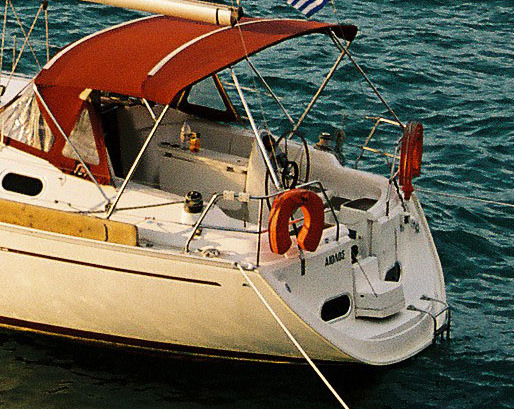
- Fire extinguisher on a boat by Kritzolina, CC BY-SA 4.0. Display crops and JPEG recompression may apply; image adaptations retain the indicated license. Photo licensing does not imply endorsement.
Reviewed 20 October 2026. Specification-led editorial guidance, not a claim of hands-on testing. Recheck models, manuals, availability and prices before purchase.
Frequently asked questions
How many fire extinguishers does a 30-foot sailboat need?
Under US federal rules, a boat from 26 to under 40 feet needs two 5-B extinguishers or one 20-B. Many owners carry more for coverage in each cabin.
Do marine fire extinguishers expire?
Disposable extinguishers on recreational boats must be removed from service 12 years after the manufacture date stamped on the cylinder. Any extinguisher that has been used, lost pressure or is damaged should be replaced or serviced.
Can I use a household extinguisher on a boat?
Only if its label shows Coast Guard approval with the listed bracket. Many household units lack that marking and corrode faster in salt air.
What does B-I mean on an old extinguisher?
B-I and B-II are older Coast Guard markings. They are acceptable only on boats built before model year 2018 and only while in good working condition.
Is dry chemical bad for boat electronics?
The powder is corrosive and difficult to clean. That is a reasonable trade-off in an emergency, but clean affected equipment promptly afterwards.
Related guides
 Safety
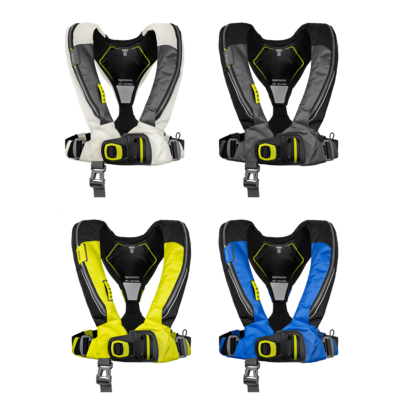
Best Inflatable Life Jackets for Sailing
Automatic vs hydrostatic inflation, harness life jackets, ratings and rearming — plus the best picks for sailors.
 Safety
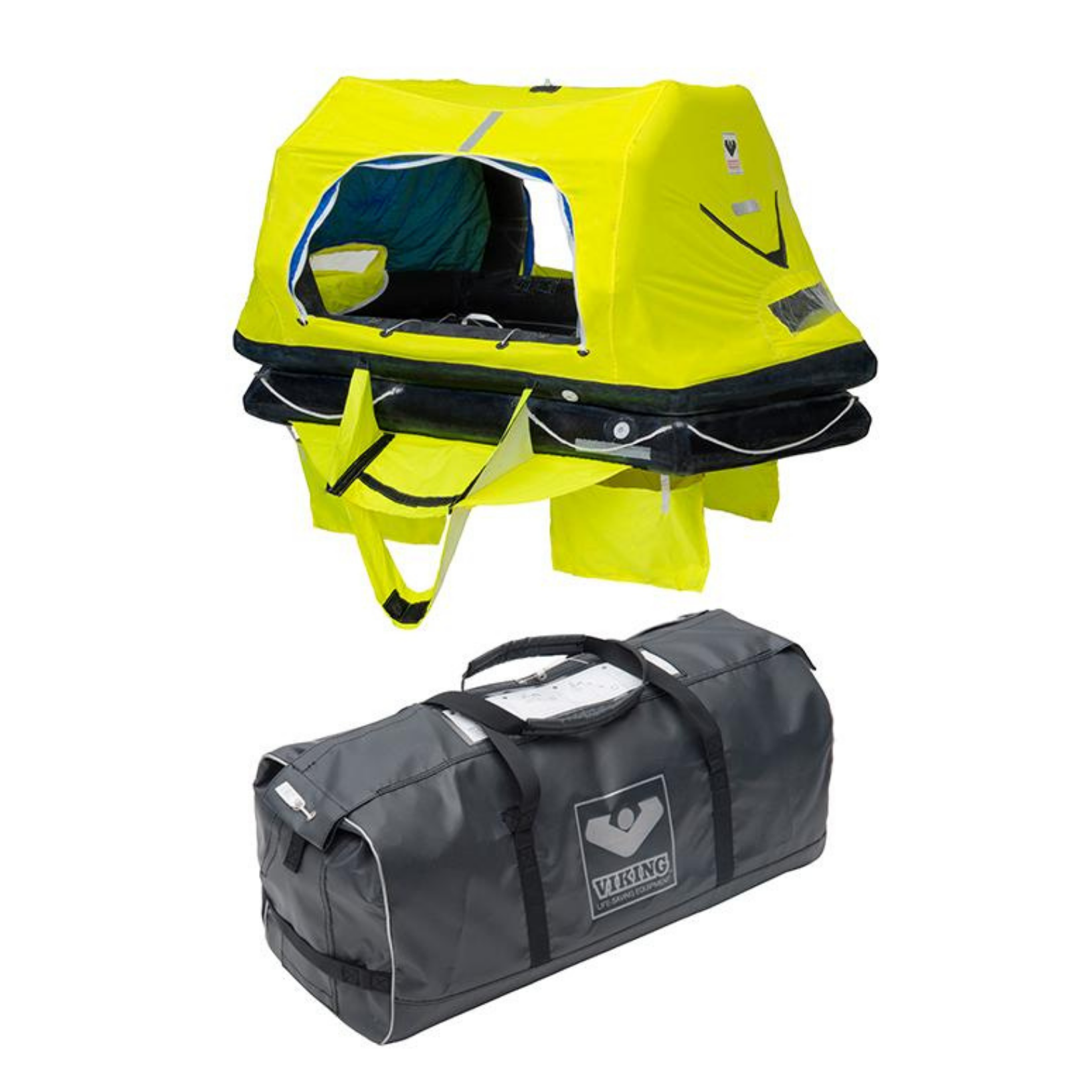
Best Life Rafts for Offshore Sailing
Offshore-certified life raft picks and buying guidance for cruising sailors — Viking, Winslow, Ocean Safety, Revere.
 Safety
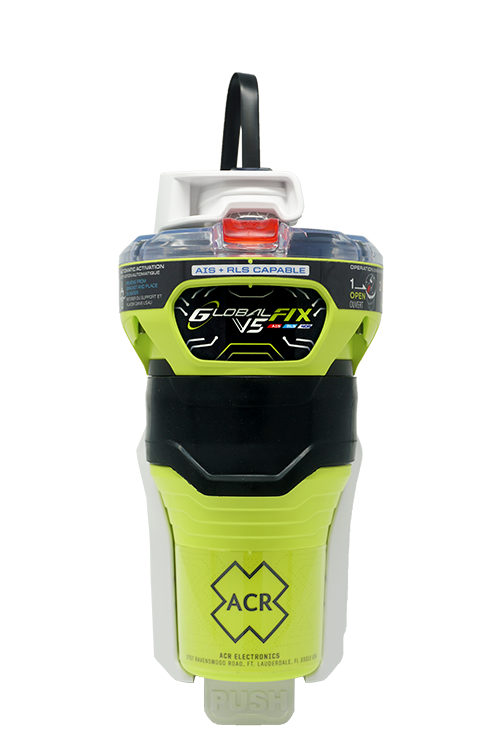
EPIRBs vs PLBs: Emergency Beacons for Sailors
How to choose an EPIRB or PLB for your sailboat — Category I vs II, return-link, and why offshore crews carry both.
 Safety
Best Boat Ladders for Sailboats: Boarding and Recovery
Transom, telescoping and dive ladders compared, and how deep the bottom step must be for crew recovery.
Looking for more gear guides? Browse all our gear recommendations or the full guides index.