EPIRBs and PLBs for Sailors
An EPIRB is the last piece of safety gear you touch — activated only when everything else has failed. Getting the choice right, keeping registration current, and knowing when a PLB complements it are the three things that determine whether a distress call brings rescue in hours or days. Here's the honest guide.
Sailboat Atlas may earn a commission from qualifying purchases made through links on this page, at no extra cost to you.
EPIRB vs PLB — different tools, both worth having
An EPIRB is registered to a vessel, operates for 48 hours, and lives on the boat (or in the ditch bag). A PLB is registered to a person, operates for 24–28 hours, and lives on the crew's foul-weather gear. If you go overboard, the ship's EPIRB doesn't help you — only your PLB does. Serious offshore boats carry an EPIRB in the ditch bag plus a PLB per crew.
Category I vs Category II EPIRBs
Category I EPIRBs have a hydrostatic release — they auto-deploy from a bracket when submerged beyond about 4 meters. Category II are manually deployed. For offshore boats where a rapid sinking is possible (racing, high-latitude, catamarans in extreme conditions), spec Category I. For cruising monohulls where you'll always have time to grab the ditch bag, Category II is cheaper and simpler.
Registration is not optional
An unregistered EPIRB triggers a search-and-rescue response, but rescue coordinators can't call your emergency contacts, they don't know your vessel size or last known route, and response is slower. Registration is free (NOAA in the US, your national authority elsewhere), takes 10 minutes online, and needs to be renewed every 2 years. Do it the day you buy the beacon.
Our picks
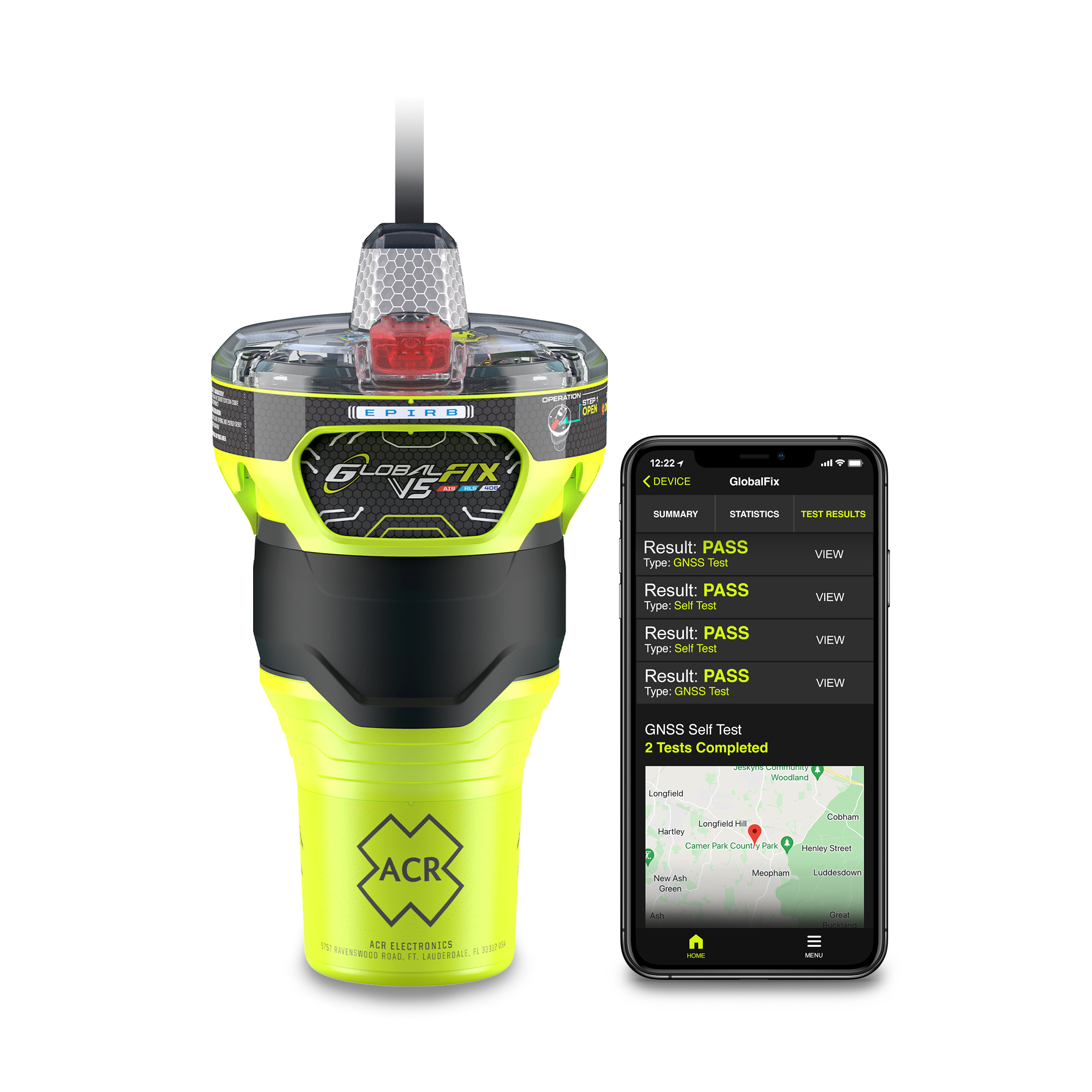
ACR GlobalFix V5 EPIRB
Best Cat II EPIRB for cruising sailboats
The GlobalFix V5 is what most cruising sailboats install: manually deployed from the ditch bag or a bracket in the companionway, activated by pulling the antenna and pressing the button. Return-link is a genuine improvement over older EPIRBs — instead of activating and hoping, you get a confirmation LED that the satellite received your distress. Register at NOAA (US) or your national registration authority — an unregistered EPIRB is significantly slower to respond to.
- Type
- Category II manually deployed EPIRB with internal GPS
- Battery life
- 10-year replacement interval, 48-hour operating
- Signal
- 406 MHz Cospas-Sarsat + 121.5 MHz homing + return-link service
- Typical price
- $450–$550
Pros
- Return-link service confirms your distress signal was received — you know rescue is coming
- 10-year battery interval reduces long-term ownership cost significantly
- US-manufactured with the largest EPIRB service network in North America
Cons
- Manual (Cat II) means you have to grab it and activate — Cat I hydrostatic release is a separate spend if you want automatic
- Registration required and must be kept current — a lapsed registration slows rescue coordination
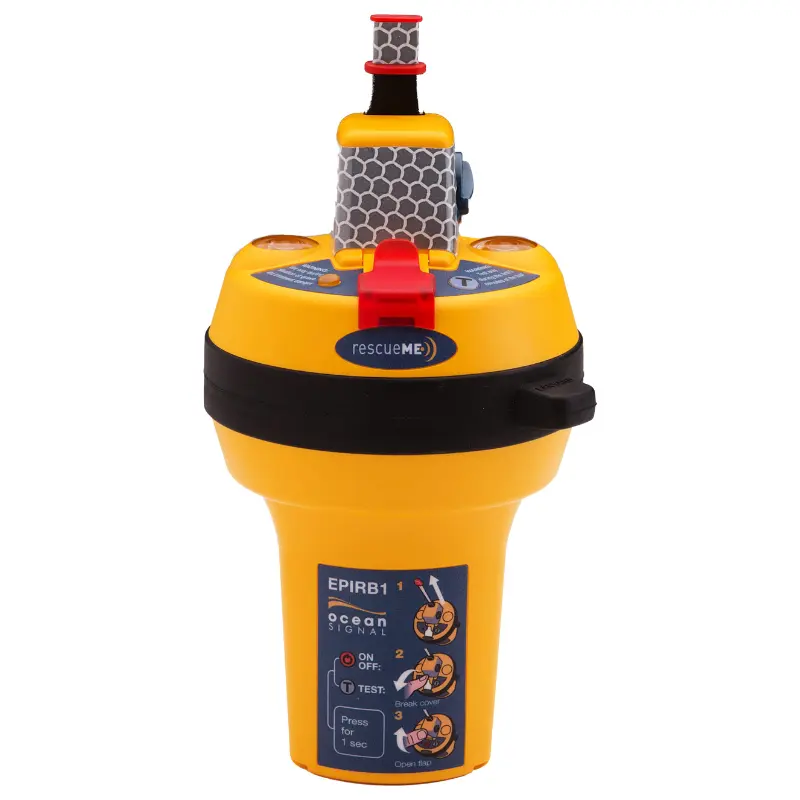
Ocean Signal rescueME EPIRB1
Best compact Cat II EPIRB
Ocean Signal is what serious offshore racers specify because it's compact, well-built, and reliable. For a cruising sailor, the size and weight advantage matters mostly for the ditch bag — you can grab it easily along with everything else. The tradeoff versus the GlobalFix V5 is return-link service; if that's important to you, buy the ACR. If size and simplicity matter more, buy this.
- Type
- Category II manually deployed EPIRB, integrated GPS
- Battery life
- 10 years, 48-hour operating
- Signal
- 406 MHz + 121.5 MHz homing
- Typical price
- $400–$500
Pros
- Smallest and lightest EPIRB in production — fits easily in a ditch bag or on a small boat
- Excellent build quality; UK engineering with a strong offshore racing pedigree
- Simple one-hand activation with locking cover
Cons
- No return-link service on this model — you activate and trust the system
- Slightly harder to source replacement batteries in remote cruising grounds vs. ACR
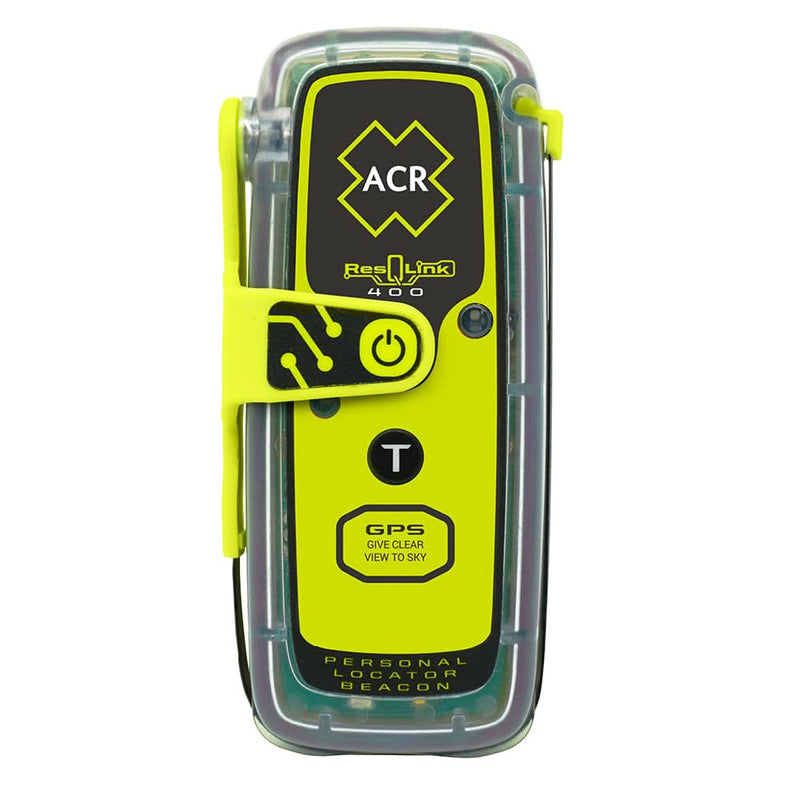
ACR ResQLink 400 PLB
Best personal locator beacon
A PLB is what every offshore crew member should carry on their person during watches — separate from the ship's EPIRB. If you're washed overboard from a boat that doesn't circle back in time, the ship's EPIRB stays with the ship, and only your PLB brings rescue to you. On serious offshore boats, a PLB per crew is not optional.
- Type
- Personal Locator Beacon (PLB), buoyant
- Battery life
- 5-year replacement, 28-hour operating
- Signal
- 406 MHz + 121.5 MHz homing
- Typical price
- $300–$375
Pros
- Pocket-sized — clip to a lifejacket, PFD, or foul-weather gear
- Cheaper than a full EPIRB and correctly used as personal safety gear
- No subscription — buy it, register it, done
Cons
- Registered to a person, not a vessel — coordination in rescue may be slower than an EPIRB in some scenarios
- Only 28-hour operating life vs. 48 hours on most EPIRBs — enough for retrieval but not extended survival
How to choose
Coastal cruiser: ACR ResQLink 400 PLB registered to the captain. Bluewater cruiser or offshore passage-maker: ACR GlobalFix V5 EPIRB (Cat II) in the ditch bag, plus a ResQLink PLB per crew. Serious offshore racer or high-latitude cruiser: upgrade to Cat I EPIRB with hydrostatic release bracket, plus PLB per crew, plus consider an AIS MOB beacon (Ocean Signal MOB1) on each crew's PFD for immediate crew-overboard alerting.
Frequently asked questions
Do I need both an EPIRB and a PLB?
For coastal daysailing, a PLB per crew is enough. For any offshore work, carry both. The EPIRB gets rescue to the boat; a PLB gets rescue to the person in the water. Different problems, different tools.
How often do EPIRBs need service?
Batteries: 5-year replacement for older units, 10-year on modern ACR and Ocean Signal designs (a real cost-of-ownership advantage). Self-test monthly (a button press that verifies electronics and battery). No other maintenance required.
Related guides
 Safety
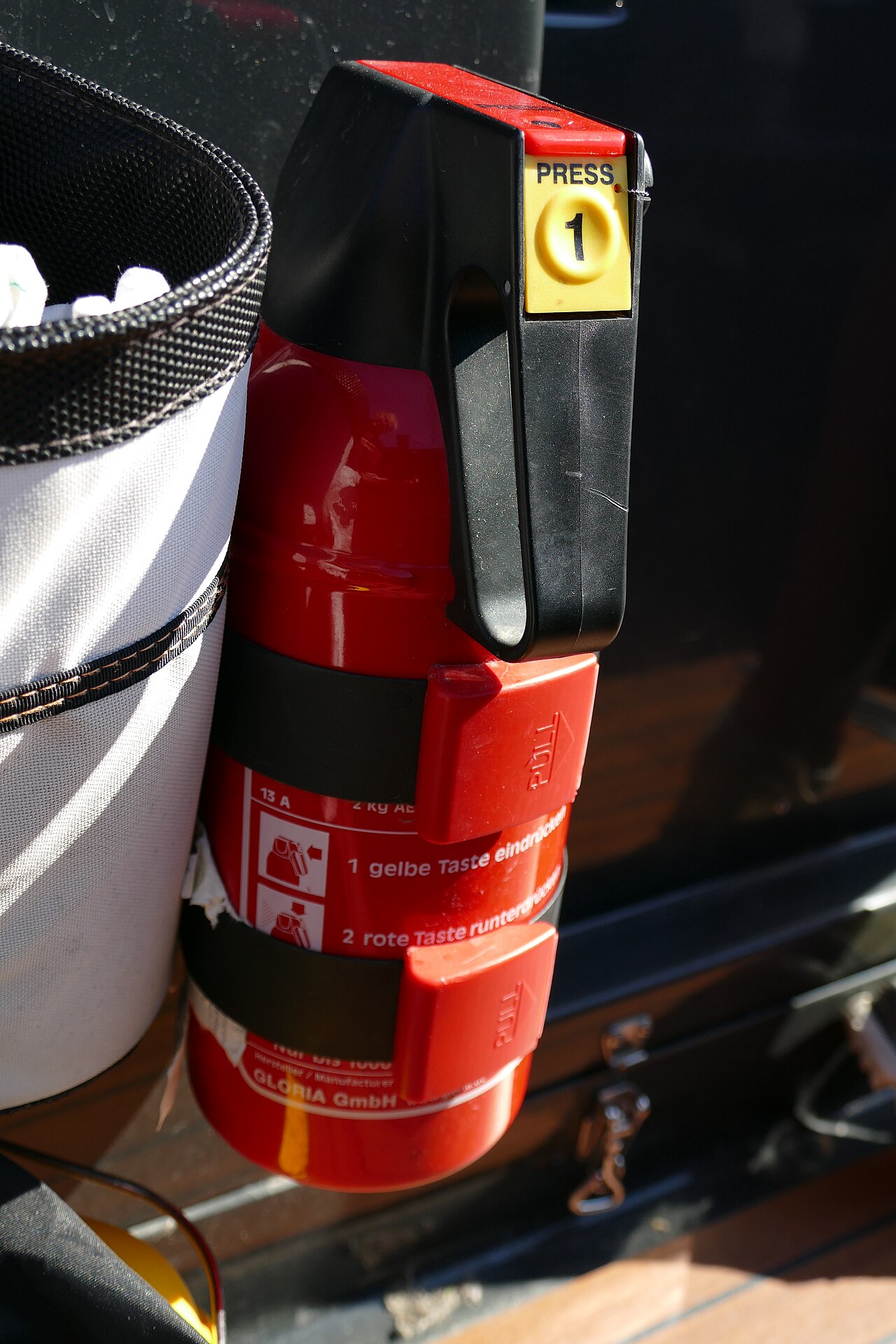
Marine Fire Extinguishers: Ratings and Best Picks
USCG requirements by boat length, 5-B vs 20-B, the 12-year rule, and the best marine extinguishers.
 Safety
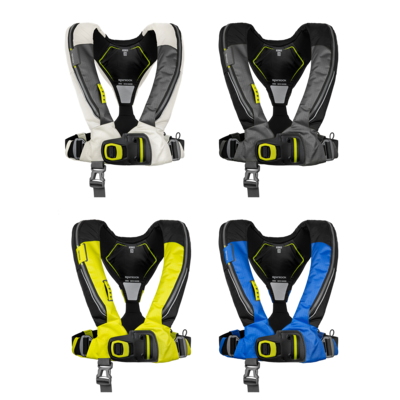
Best Inflatable Life Jackets for Sailing
Automatic vs hydrostatic inflation, harness life jackets, ratings and rearming — plus the best picks for sailors.
 Safety
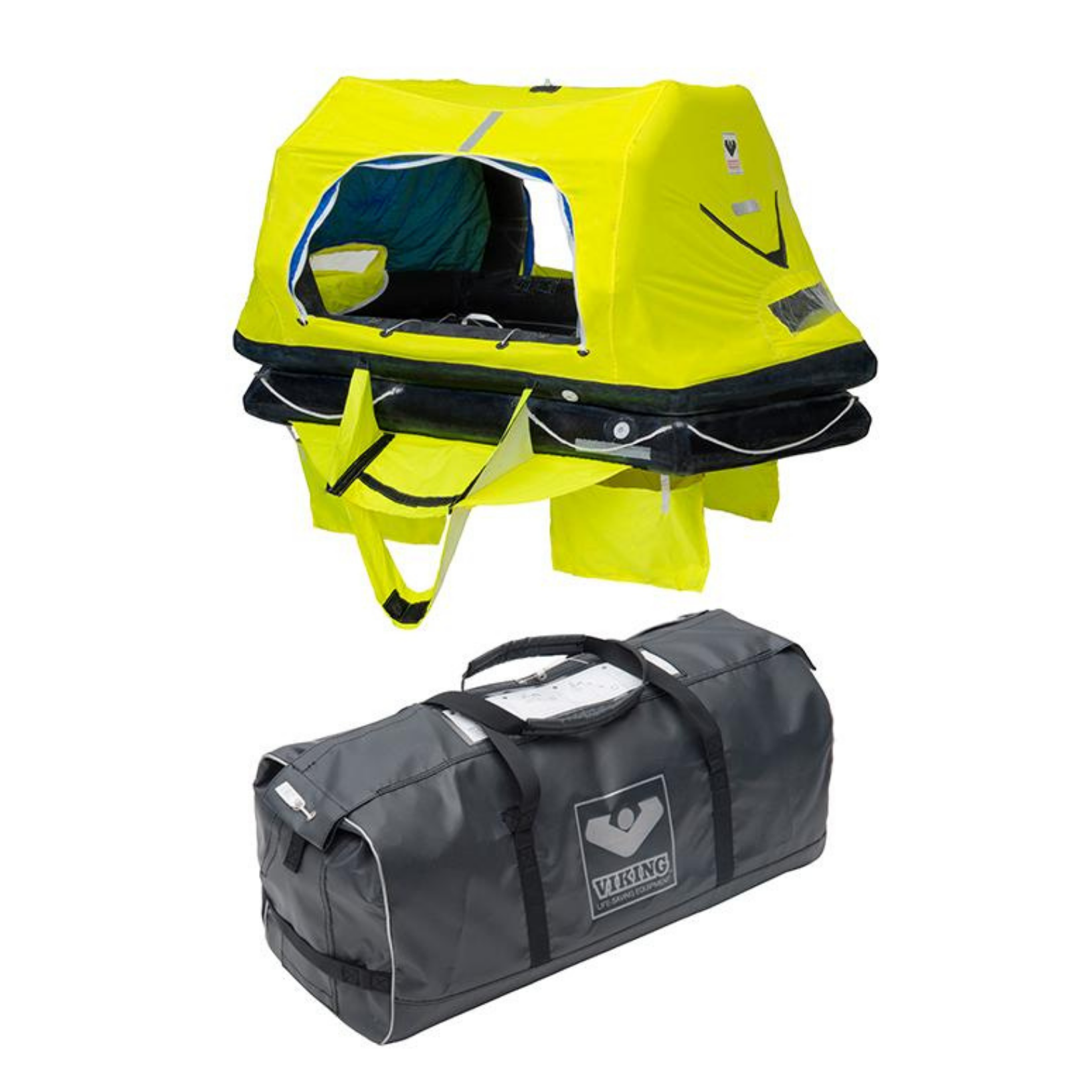
Best Life Rafts for Offshore Sailing
Offshore-certified life raft picks and buying guidance for cruising sailors — Viking, Winslow, Ocean Safety, Revere.
 Safety
Best Boat Ladders for Sailboats: Boarding and Recovery
Transom, telescoping and dive ladders compared, and how deep the bottom step must be for crew recovery.
Looking for more gear guides? Browse all our gear recommendations or the full guides index.