
Electric Winch Conversion for Sailboats
For most shorthanded cruisers, the best value in this upgrade is a below-deck conversion kit fitted to a winch you already own — typically $3,500 to $6,000 installed per winch, against $5,000 to $9,000 for a complete new electric winch. The exception is the primary sheet winch on a 40-foot-plus boat, where Harken's Rewind powered-ease design solves the genuinely difficult problem: easing a heavily loaded sheet under control.
Electrifying a winch is only half a deck project. The other half is electrical: heavy cable sized for a motor that draws hundreds of amps, a properly rated breaker, a solenoid, a sealed deck switch positioned so the operator can watch the drum, and a house bank that can deliver the surge. This guide covers the whole job — which winch to power first, what the conversion actually involves, and how to do it safely.
Sailboat Atlas may earn a commission from qualifying purchases made through links on this page, at no extra cost to you.
Why sailors electrify winches — and what it actually solves
The honest motivation is rarely laziness. It is that shorthanded crews reach a point where the physical demands of the boat exceed what one person can safely deliver at three in the morning, on a wet deck, while the other person is helming. Powered winches extend the size of boat a couple can handle, and they extend the number of years a couple can keep handling it.
They also change the decision-making. Reefing that requires ten minutes of hard grinding gets postponed; reefing that takes a button press and a look at the leech happens when it should. That is a real safety improvement, and it is the argument that persuades most sceptics.
What powered winches do not solve is bad deck layout, undersized winches, or lines with too much friction in the system. If a halyard is hard to raise because it turns through five badly aligned deck organisers and a sticky clutch, adding a motor just applies brute force to a problem you could have fixed properly for a tenth of the cost. Fix the friction first, then decide whether you still need the power.
Conversion kit or complete new winch?
A conversion kit adds a below-deck motor and gearbox to a compatible existing winch. You keep the drum, the self-tailing jaws, the bolt pattern and the deck penetration. It is the cheaper route by a wide margin, and it makes obvious sense when your current winches are sound and the right size.
A complete electric winch makes sense in three situations: your existing winches are worn, undersized, or of a model no kit fits; you want a capability the old winch cannot provide, most notably powered ease; or the deck layout is changing anyway and the winch is moving.
Compatibility is the trap. Manufacturers changed internals across production years, and a kit is matched to a specific winch model and often a specific serial range, not just a size. Find the model number on the winch itself — usually stamped on the base or under the drum — and verify with the manufacturer or a rigger before ordering anything. A conversion kit is not a component you can improvise around.
The below-deck reality: clearance, backing and access
On deck, this job looks trivial. Below, it is a carpentry, structural and electrical project. The motor and gearbox hang beneath the winch and need vertical clearance measured with the actual unit dimensions in hand, plus room around it for cooling air and for a hand to reach the wiring.
On a cabin-top winch, that space is often occupied by a headliner, a light fitting, or a locker you have been using for a decade. Coachroof winches on production boats frequently have a decorative headliner panel that must come down permanently, or a box built around the motor inside the cabin — plan the cosmetic outcome before you start, because it is the part owners regret.
The winch pad itself must be structurally adequate for the higher, more sustained loads a motor can generate. A human tires and stops; a motor pulls until something gives. Inspect the backing plate, and upgrade it if it is a thin washer arrangement or if the deck core around the fasteners shows any softness. Rebedding through a properly sealed, epoxy-potted core is standard practice here, not an optional extra.
Wiring an electric winch properly
An electric winch motor is one of the largest DC loads on a sailboat, comparable to a windlass or a bow thruster. Running current is in the tens to low hundreds of amps depending on size and load; stall current is much higher. Everything about the electrical design follows from that.
Use the manufacturer's cable sizing table for your actual round-trip run length, including the return path. Long runs from a battery bank amidships to a cockpit winch add up quickly, and undersized cable produces voltage drop that makes the winch feel weak and the cable feel warm — both symptoms of the same mistake.
Fit a dedicated circuit breaker sized to the cable and motor, in an accessible dry location near the battery end. The heavy motor current runs through a solenoid; the deck switch carries only the low-current control signal. Use marine-grade tinned cable, properly crimped and heat-shrunk lugs, and support the run so it cannot chafe against a bulkhead edge in a seaway.
Finally, check the bank can actually deliver the surge. A tired lead-acid house bank will sag under a winch motor's inrush, and the winch will feel sluggish for reasons that have nothing to do with the winch. If you are already considering lithium batteries, doing both projects together is efficient — and check the charging system can keep up.
Operating an electric winch safely
A powered winch has no sense of what it is pulling. It will grind a riding turn into a fused lump, tear a clutch out of the deck, or take a finger — and none of those events give it pause. Every safe installation and every safe habit follows from that single fact.
Use momentary switches only, so the drum stops the instant pressure is released. Site them so the operator can watch the drum and handle the tail from the same position. Never operate a powered winch from where you cannot see the load. Brief guests explicitly, especially children, before they are anywhere near a deck button.
Isolate the circuit at the breaker before clearing an override or working on the winch. Watch the drum, not the sail, while grinding — the sail will still be there in two seconds, and a riding turn forms in less. And keep listening: a motor labouring against something that should not be there sounds different long before anything breaks.
Service the winch normally — strip, clean and grease it on the same schedule as any manual winch. Powered winches see higher average loads, so if anything they need it more.
Alternatives worth considering first
Before spending several thousand dollars per winch, check the cheaper interventions. Re-leading halyards through better-aligned organisers and low-friction rings can cut the load at the winch dramatically. Upgrading tired, furry running rigging to modern low-stretch line reduces both effort and travel. A properly sized winch handle — many boats still use an eight-inch handle where a ten-inch would change everything — costs almost nothing.
For headsails specifically, a well-set-up furling system addresses the same shorthanded problem from a different direction: reducing sail without ever loading a winch heavily. In-mast or in-boom mainsail furling does the same for the main, at its own cost and complexity.
If, after all that, the boat still demands more than the crew can comfortably give, electrifying one or two winches is a sound, well-proven upgrade. Just do it in that order — the friction fixes make the powered winch work better too.
Our picks
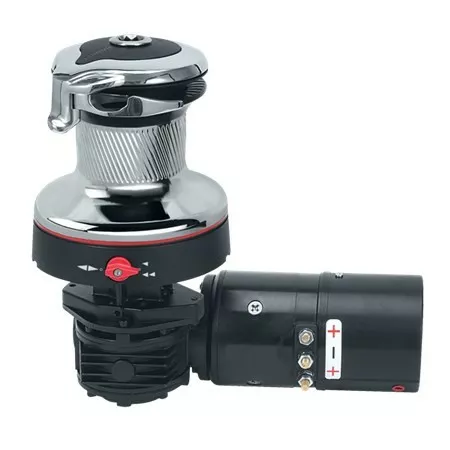
Harken Rewind 46 Electric
Best electric winch for shorthanded crews who want controlled easing
For a cruising couple, the moment that hurts is not grinding a sheet in — it is easing 1,500kg of loaded genoa sheet in a gust with one person on the helm. Harken's Rewind winches drive the drum in both directions, so easing under load becomes a button press with the line still under full control. That capability is worth the premium specifically on the primary sheet winches of a 40-foot-plus shorthanded cruiser. On a halyard winch, where you rarely need controlled ease under load, a conventional electric costs less and does the job.
- Size
- Size 46 self-tailing, aluminium or chrome drum options
- Unique feature
- Powered ease — the drum can be driven in reverse under load, not just wound in
- Drive
- Below-deck motor and gearbox with deck-mounted control switches
- Typical loads
- Suits primary sheet or halyard duty on roughly 40-50ft cruisers depending on rig loads
Pros
- Powered ease is the genuinely differentiating feature: reefing and easing a loaded sheet becomes a controlled push-button operation rather than a rope-burn exercise
- Removes the classic shorthanded problem of needing one hand on the tail and one on the button while the boat rounds up
- Harken build quality and parts support are excellent, and the winch services like any other Harken
Cons
- Considerably more expensive than a conventional electric winch of the same size
- Adds complexity below deck — a second motor direction and control logic to fault-find if something misbehaves
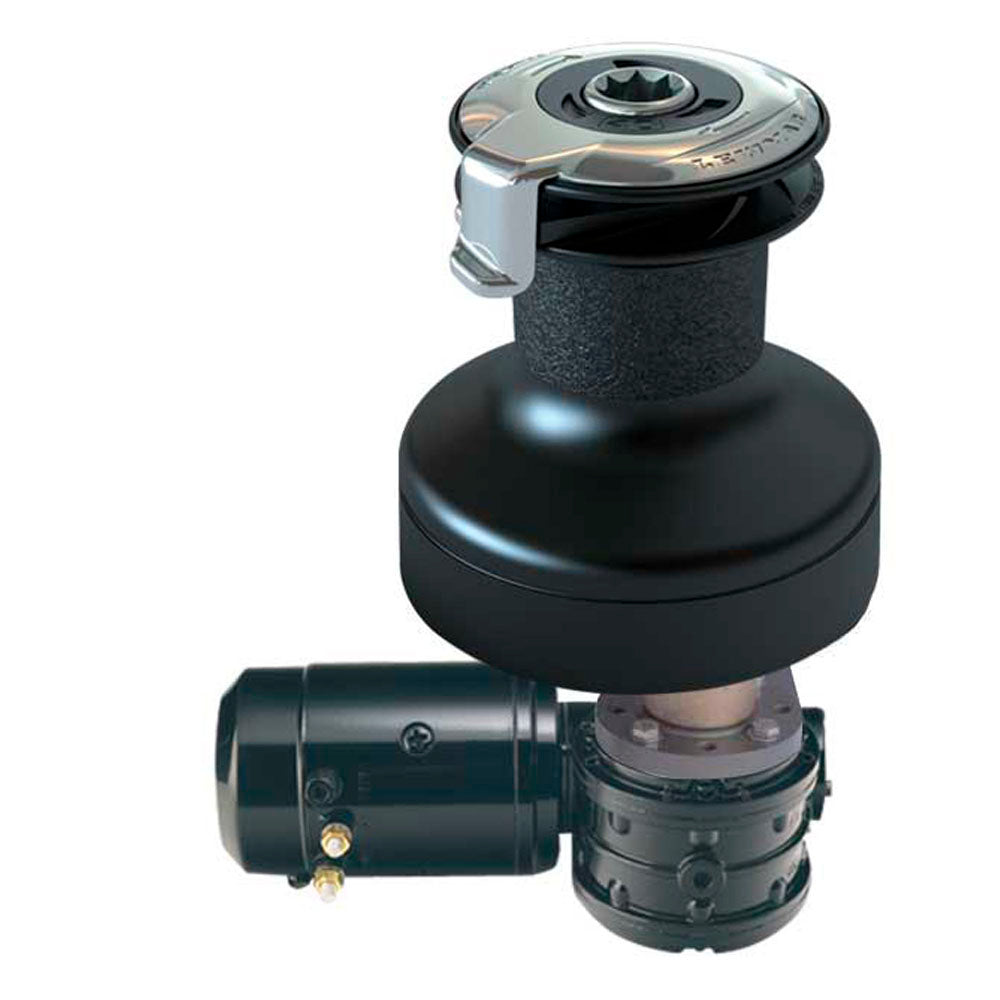
Lewmar EVO 45 Electric
Best mainstream electric winch upgrade for production cruisers
The EVO 45 is the default answer for a 38 to 45 foot production cruiser converting one or two winches to power. It is well supported, the self-tailing jaws are genuinely improved over older designs, and on many Lewmar-equipped boats the bolt pattern makes the deck side of the job straightforward. What you are buying is one-directional power: it grinds beautifully and eases not at all. Check the space below the winch pad early — the motor and gearbox need clearance and a dry, ventilated home, and a headliner-filled coachroof is where these projects stall.
- Size
- Size 45 self-tailing, part of the EVO range
- Drive
- Below-deck electric motor, 12V or 24V options
- Jaws
- EVO self-tailing jaws designed to handle a wider range of line diameters than earlier Lewmar designs
- Fitment
- Designed with the existing Lewmar bolt pattern in mind for many upgrade paths
Pros
- Very widely fitted, so a rigger anywhere has seen one and parts move quickly
- Frequently the simplest physical upgrade path on a production boat that already has Lewmar winches
- Self-tailing jaws tolerate a broad range of line sizes, useful as running rigging diameters change over a boat's life
Cons
- No powered ease — it winds in only, so easing under load is still a manual, careful operation
- Below-deck motor needs real clearance and a dry location, which is not always available under a coachroof winch pad
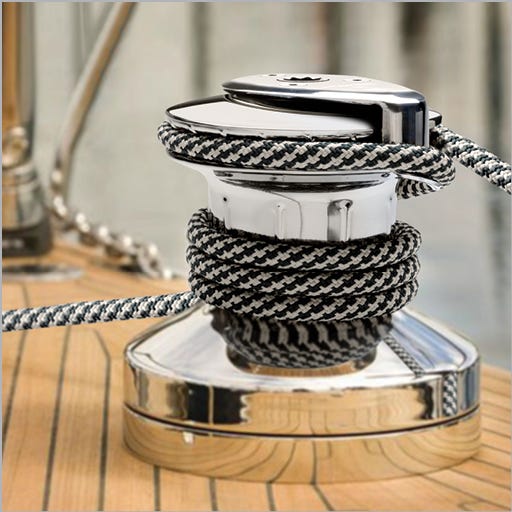
Andersen 46ST Electric
Best stainless-drum electric winch for bluewater durability
Andersen's stainless ribbed drums are the reason long-distance cruisers keep specifying them: they hold wet, tired line better than a smooth anodised drum and they do not wear soft after a decade of chafe. Add a below-deck motor and you get a powered primary that will outlast most of the boat around it. The trade-offs are weight and price. If you sail coastally and haul out every winter, the durability argument is weaker; if you are crossing oceans and servicing your own gear in remote anchorages, it is compelling.
- Drum
- Ribbed stainless steel drum — hard-wearing and grippy when wet
- Self-tailing
- Andersen's stainless self-tailing arrangement, tolerant of varying line diameters
- Drive
- Below-deck motor options in 12V and 24V
- Maintenance
- Designed for straightforward field stripping and greasing
Pros
- Stainless drums resist the wear that eventually pits and roughens aluminium drums on high-mileage boats
- Excellent grip with wet, aged line — a real difference offshore in the rain rather than a marketing claim
- Servicing is genuinely owner-friendly, which matters when the nearest rigger is a thousand miles away
Cons
- Heavier than an equivalent aluminium winch, and weight high and aft on deck is not free
- Premium pricing, and a full electric conversion is not the cheapest way into the Andersen range
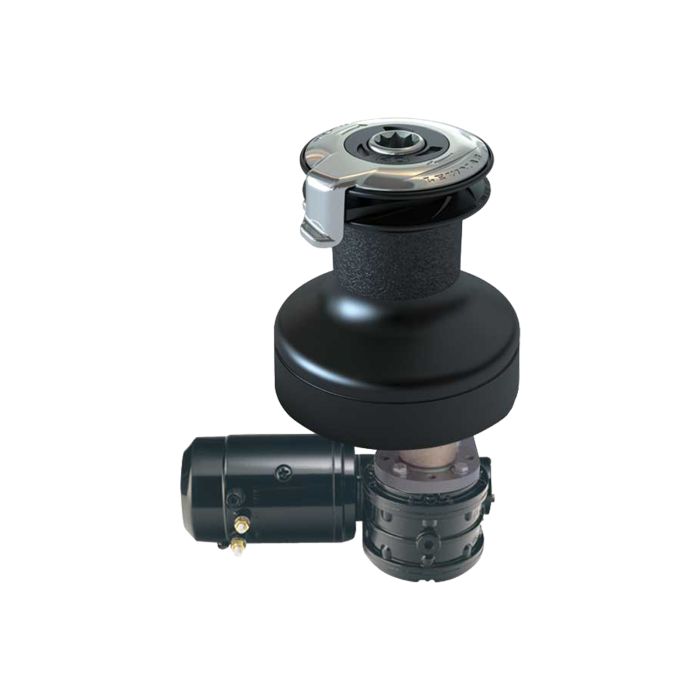
Lewmar EVO Electric Winch Conversion Kit
Best way to electrify winches you already own
If your existing winches are sound, a conversion kit is by far the most economical route to powered sheeting. You keep the drum, the jaws and the deck penetration, and add a motor and gearbox underneath. Verify compatibility against the exact winch model number stamped on your unit, not the size printed on the drum, because manufacturers changed internals across production years. Then go below with a tape measure before you buy anything: the motor needs clearance, dry air, and a structurally sound mounting, and most abandoned conversions die on that measurement.
- What it is
- Below-deck motor, gearbox and mounting hardware to convert a compatible manual winch to electric
- Voltage
- 12V and 24V motor options depending on winch size and system voltage
- Required clearance
- Needs vertical and lateral space below the winch pad plus a route for heavy DC cable
- Compatibility
- Only fits specific winch families and sizes — verify the exact model before ordering
Pros
- Substantially cheaper than replacing a serviceable winch with a complete new electric unit
- Keeps the deck hardware, bolt pattern and appearance you already have
- The winch continues to work manually with a handle if power fails, which is the whole safety case for conversion
Cons
- Compatibility is narrow and unforgiving — a kit that does not match your exact winch model is a returned box, not a workaround
- The hard part of the job is below deck: clearance, structural backing, cable runs and the breaker, none of which the kit solves for you
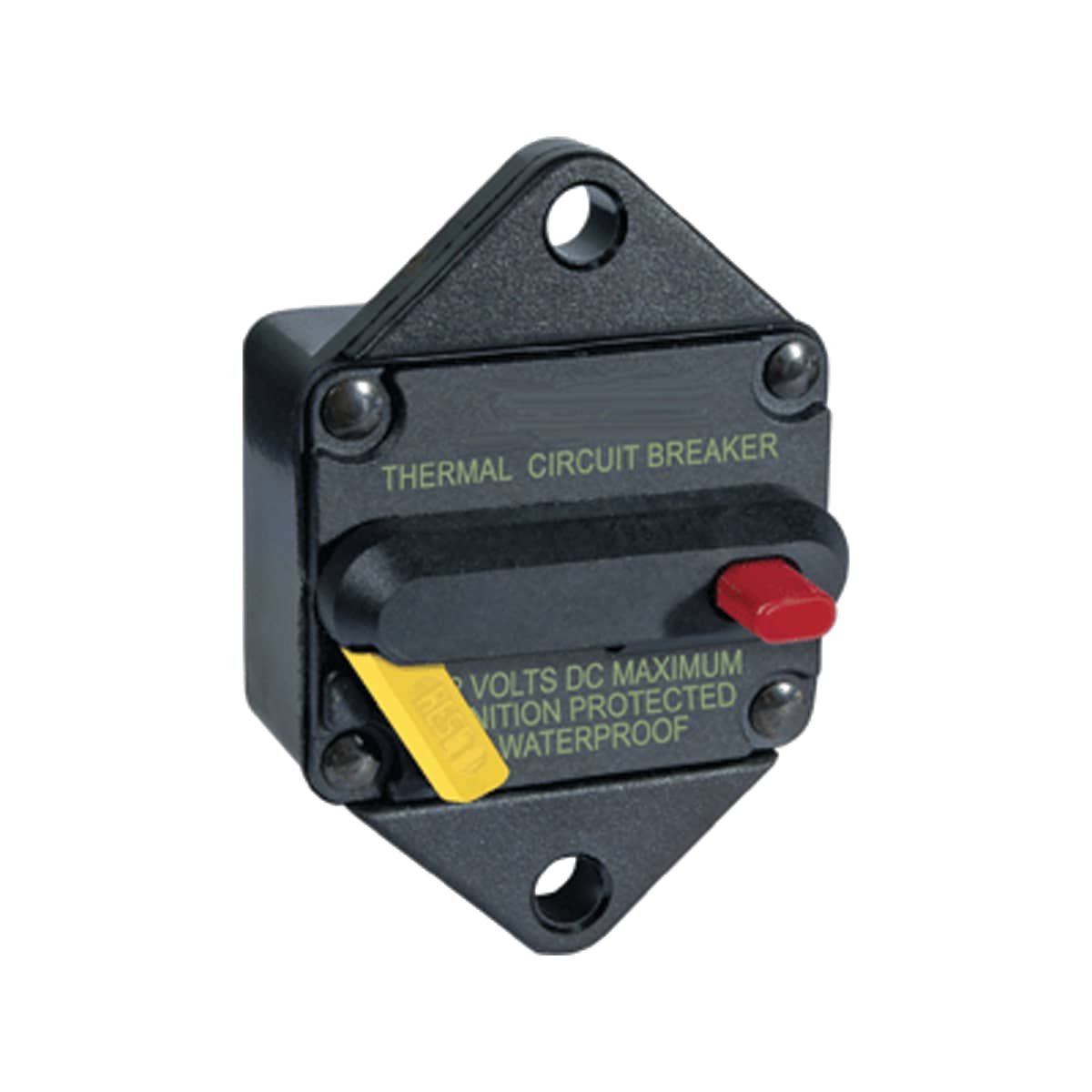
Blue Sea Systems 285-Series Circuit Breaker
Best circuit protection for a winch motor circuit
Every electric winch installation needs dedicated overcurrent protection and a way to isolate the circuit, and this is the least glamorous, most necessary purchase in the whole project. Winch motors draw very heavy current — hundreds of amps under stall conditions — so the cable is sized for that and the breaker must be sized for the cable. It also gives you an isolation switch, which matters every time someone reaches into a winch to clear an override with a child near the deck button. Fit it close to the battery end of the run, in a dry accessible location.
- Type
- Thermal magnetic circuit breaker, panel or surface mount
- Ratings
- Available across a wide amperage range — size to the motor's specified draw and cable
- Function
- Doubles as a manual isolation switch for the winch circuit
- Build
- Ignition-protected marine construction, designed for DC loads
Pros
- Gives you a place to physically isolate the winch before anyone puts a hand near the drum — a genuine safety requirement, not a nicety
- Trip-free thermal protection sized to the cable prevents a stalled motor turning a wiring run into a fire
- Widely stocked and inexpensive relative to everything else in the project
Cons
- Must be sized correctly to both the motor and the cable — an oversized breaker protects nothing
- Adds another connection point that needs proper crimped, sealed terminals in a wet locker
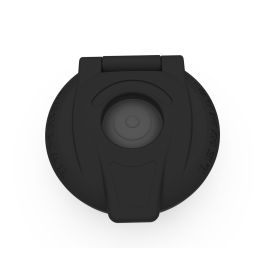
Lewmar CHSX Deck Switch
Best sealed deck control button for an electric winch
Switch placement is a safety decision more than a convenience one. The operator must be able to see the drum, reach the tail, and remove their hand from the button instantly if a riding turn starts to build. Put the switch where someone standing in the normal working position naturally falls, not where the drilling was easiest. Use a proper sealed marine deck switch, bed the base thoroughly with a sealant appropriate to a cored deck, and wire the control circuit through the solenoid so the heavy motor current never runs to the switch itself.
- Type
- Sealed, foot- or hand-operated deck-mounted momentary switch
- Sealing
- Designed for continuous exposure on a wet deck
- Placement
- Mounted where the operator can see the drum and reach the tail simultaneously
- Circuit
- Low-current control switch that operates the motor solenoid, not the motor current itself
Pros
- Purpose-built for permanent deck exposure — a generic switch in a marine location fails within a season or two
- Momentary action means the winch stops the instant the operator lets go, which is the primary safety behaviour you want
- Cheap relative to the consequences of a switch that sticks on
Cons
- Deck-mounted switches are trip and snag hazards if positioned carelessly in a working cockpit
- Requires a properly bedded deck penetration; a badly sealed switch base is a slow deck-core leak
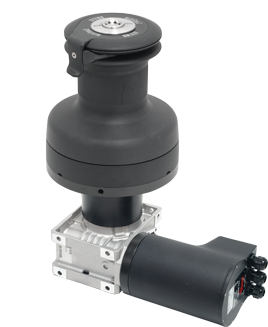
Antal XT52 Electric Self-Tailing Winch
Best high-load electric winch for performance cruisers
When the loads are genuinely high — a big overlapping genoa on a 50-foot performance cruiser, or a fully battened main with a lot of luff length — a size 52 electric winch is the honest answer rather than trying to make a 46 do the work. Antal's gear suits that context, especially if you are also rethinking the deck layout with matching clutches and organisers. Weigh availability of service where you sail: this is excellent hardware, but the support network outside Europe is not as dense as the bigger two brands.
- Size
- Size 52 class, two-speed self-tailing
- Voltage
- 12V and 24V motor options
- Construction
- Aluminium and stainless components aimed at high-load performance sailing
- Application
- Primary winch duty on larger performance cruisers and cruiser-racers
Pros
- Sized and geared for genuinely high sheet loads found on larger, powered-up rigs
- Antal's hardware ecosystem — organisers, clutches, blocks — integrates cleanly if you are reworking the whole deck layout
- Two-speed operation retains sensible manual fallback ratios when the power is off
Cons
- Less common than Harken or Lewmar outside Europe, so parts and service knowledge are thinner in some cruising grounds
- A size 52 electric winch is a serious current draw and demands correspondingly heavy cable and battery capacity
How to choose
Decide first whether you are converting an existing winch or replacing it, then choose whether powered ease is worth the premium for that specific position on the boat. Budget for the electrical half of the job from the beginning — cable, breaker, solenoid and switch are a meaningful fraction of the total, and skimping there is where installations become unsafe.
| Product | Typical price | Best for | Key spec |
|---|---|---|---|
| Harken Rewind 46 Electric | $7,000–$10,000 | Shorthanded primary sheet winch | Size 46, powered ease both directions |
| Lewmar EVO 45 Electric | $5,000–$7,500 | Mainstream production cruiser | Size 45, below-deck 12V/24V motor |
| Andersen 46ST Electric | $6,500–$9,000 | Bluewater durability | Size 46, ribbed stainless drum |
| Lewmar EVO conversion kit | $2,000–$4,000 (kit only) | Electrifying an existing winch | Below-deck motor and gearbox, model specific |
| Blue Sea 285-Series breaker | $40–$120 | Circuit protection and isolation | Thermal breaker, size to motor and cable |
| Lewmar CHSX deck switch | $60–$150 | Deck control | Sealed momentary switch, solenoid circuit |
| Antal XT52 Electric | $8,000–$12,000 | Large performance cruisers | Size 52, two-speed, 12V/24V |
Budget tiers
Under $1,000: not a conversion — the friction-reduction route. New low-stretch halyards, better-aligned organisers, low-friction rings and a longer winch handle. Do this first regardless of what you decide next.
$3,500–$6,000 per winch: a below-deck conversion kit on a compatible existing winch, professionally wired with proper cable, breaker, solenoid and deck switch. The best value in the category for most cruisers.
$7,000–$12,000 per winch: a complete new electric winch, and the only route to powered ease. Justified on the primary sheet winches of a shorthanded 40-foot-plus cruiser, where easing under load is the job that actually hurts.
Frequently asked questions
How much does it cost to convert a winch to electric?
A below-deck motor conversion kit for an existing compatible winch typically runs $2,000 to $4,000 for the kit itself, plus cable, breaker, solenoid, deck switch and labour — realistically $3,500 to $6,000 installed per winch for a straightforward job. Replacing a winch outright with a new electric unit is more, commonly $5,000 to $9,000 per winch installed, and powered-ease models like Harken's Rewind sit at the top of that range.
Can I still use an electric winch by hand if the power fails?
Yes — every properly designed electric self-tailing winch retains normal manual handle operation. That is the fundamental safety case for electrifying winches rather than fitting some other powered system: when the battery is flat or the breaker is open, you are back to a conventional winch with the same gearing you always had. Keep handles in the cockpit and make sure crew know the winch still works without power.
Which winch should I electrify first?
For most shorthanded cruisers it is the primary sheet winch on the side you tack least often, or a cabin-top winch that handles the main halyard and reefing lines. Halyard and reefing duty is where the physical effort is most punishing and the safety benefit greatest, because it lets one person reef without leaving the helm unattended for long. Sheet winches benefit most from powered-ease models, since easing a loaded sheet is the harder half of the job.
What size battery and cable does an electric winch need?
Winch motors are among the heaviest intermittent DC loads on a sailboat, drawing hundreds of amps under load and more at stall. Follow the manufacturer's cable sizing table for the actual round-trip run length — not a guess — and make sure the house bank can deliver that current without collapsing the voltage. Many boats that add electric winches also upgrade to lithium at the same time, because lead-acid banks sag badly under this kind of surge.
Are electric winches dangerous?
They deserve genuine respect. A powered winch will not stop when a hand, a finger or a jacket cuff reaches the drum, and it will happily destroy a line, a sail or a clutch if a riding turn forms. Use momentary switches only, place them where the operator can watch the drum, isolate the circuit at the breaker before clearing an override, and brief every guest before they touch the button. Most injuries come from operating the winch without a clear view of the drum.
Will an electric winch drain my batteries?
Not meaningfully in energy terms — the load is huge but brief, so the amp-hours consumed by trimming and reefing over a day are modest compared with a fridge or an autopilot. The real constraint is instantaneous current delivery, not capacity: a tired lead-acid bank may sag enough to trip protection or slow the motor. If you find the winch struggling, look at battery health, cable size and terminal connections before blaming the motor.
Looking for more gear guides? Browse all our gear recommendations or the full guides index.