Marine Refrigeration for Sailboats
Refrigeration is the biggest daily electrical load on most cruising sailboats — typically 40–80 Ah/day at 12V, or a quarter of a lithium house bank on a hot day. Getting it right is the difference between running the engine to charge every afternoon and staying at anchor for weeks on solar alone. Here's how to size, choose, and install.
Sailboat Atlas may earn a commission from qualifying purchases made through links on this page, at no extra cost to you.
Top-loading vs front-loading
Cold air is heavier than warm air. Open a front-loading fridge and the cold air pours out; open a top-loading fridge and it mostly stays put. This isn't a small effect — top-loading fridges typically use 20–30% less energy than equivalent front-loading units in real cruising conditions. If you're specifying a fridge for a new galley, top-load. For retrofits, front- load is usually the only thing that fits.
Insulation is doing half the work
A well-built marine fridge with 3 inches of vacuum-panel or 4+ inches of foam insulation will consume dramatically less energy than the same compressor in a poorly-insulated box. If you're converting an existing icebox, check the insulation before you spend on a fancy compressor — sometimes the right answer is tearing out the box and rebuilding it with modern polyurethane foam.
Air-cooled vs water-cooled (keel cooler)
Standard marine fridges have a small fan on the condenser to dissipate heat. This works but is noisy, adds a service part, and struggles in hot enclosed compartments. A keel-cooler conversion (Frigoboat) uses a through-hull heat exchanger — silent, cool, more efficient. The tradeoff is installation complexity (a through-hull is a real project). For live-aboards in hot climates, keel cooler is the clear answer.
Our picks
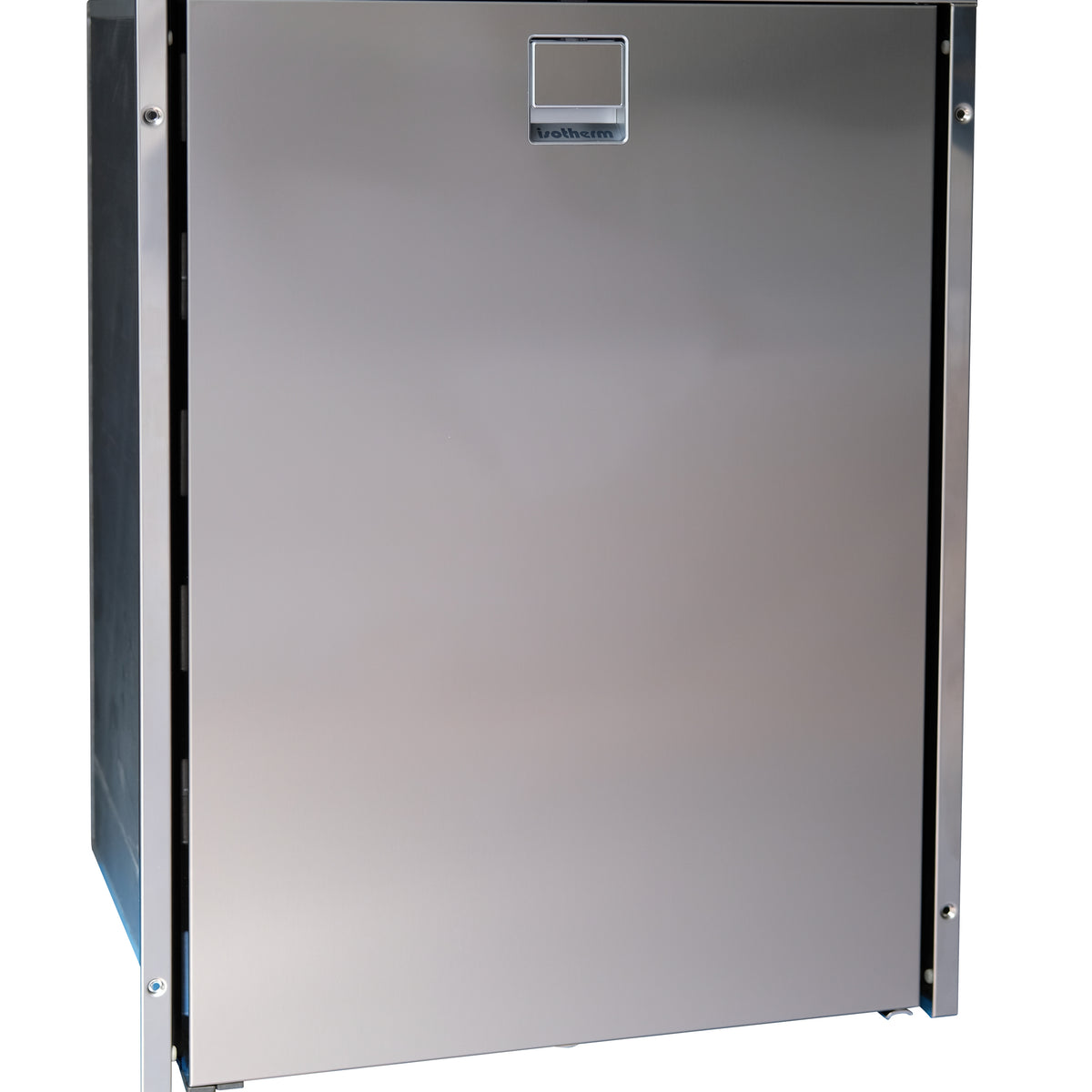
Isotherm CR130 Drink Cruise Cool 12/24V
Best top-loading fridge/freezer for cruisers
Isotherm is the reference marine fridge brand for a reason. The BD35F compressor is quiet enough that you don't notice it running, and the variable-speed control means it cycles less often and uses meaningfully less power than fixed-speed competitors. Top-loading is genuinely more efficient than front-loading — 20–30% less daily amp-hour consumption in real cruising conditions. Worth every dollar over cheaper alternatives.
- Capacity
- 130 liters, dual-zone fridge + freezer
- Compressor
- Danfoss/Secop BD35F variable-speed
- Power draw
- ~35–55 Ah/day at 25°C ambient
- Typical price
- $1,400–$1,700
Pros
- Top-loading design keeps cold air in when the lid opens — measurably lower energy use vs front-loading
- Variable-speed Danfoss compressor is the industry reference for reliability and quiet operation
- Dual-zone means real freezer temperatures (-18°C) alongside fridge — genuinely useful for provisioned cruising
Cons
- Top-loading is harder to organize; things get lost at the bottom
- Installation depth requires proper counter cutout — not a retrofit for every boat
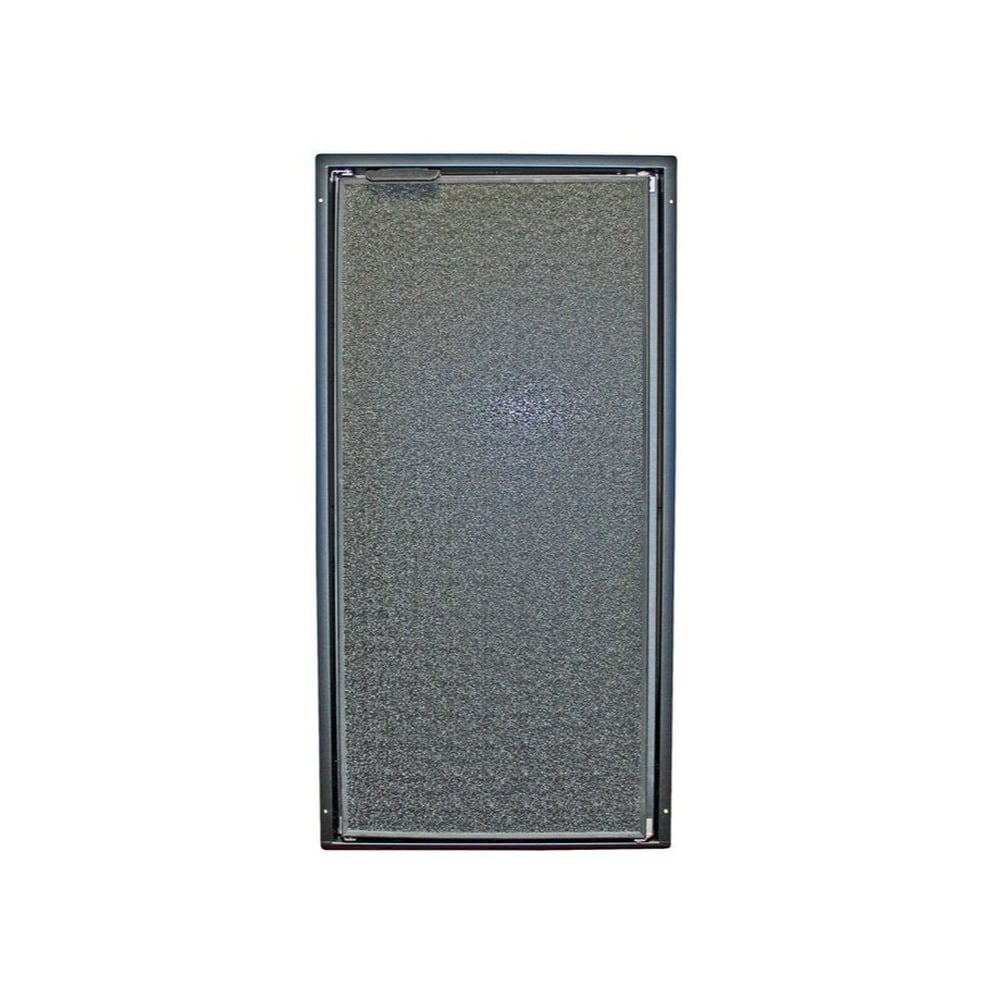
Nova Kool R4200 Front-Loading 12V Marine Refrigerator
Best front-loading option for retrofits
For most cruisers replacing an existing dead fridge, Nova Kool is the answer — it fits the hole. Front-loading is less efficient than top-loading, but the retrofit simplicity is worth the compromise on a boat where re-designing the galley isn't an option. Same Danfoss compressor as Isotherm means the mechanical reliability is comparable; the efficiency difference is purely down to the front-vs-top loading physics.
- Capacity
- 4.4 cu ft (~125 L)
- Compressor
- Danfoss/Secop BD35F
- Power draw
- ~45–65 Ah/day depending on ambient
- Typical price
- $1,600–$1,900
Pros
- Front-loading fits into existing galley cabinet cutouts — the practical answer for retrofits
- Same BD35F compressor as premium options, so reliability is not a compromise
- Canadian company with strong parts support and reasonable service network
Cons
- Front-loading loses cold air every time you open it — plan on higher energy consumption than top-loading
- Door hinges and seals need annual inspection; a bad seal can double the energy use
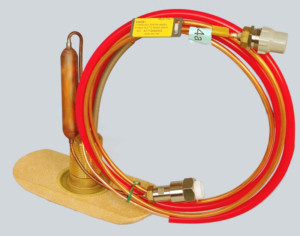
Frigoboat W35F Keel Cooler System
Best DIY / custom-icebox conversion
For serious cruisers with a well-insulated original icebox, converting to a Frigoboat keel-cooler system is often the best refrigeration decision available — quieter and lower energy use than any pre-built cabinet fridge. The 20–40 Ah/day figures are real, provided the icebox has proper 4+ inch foam insulation. Not for weekenders; genuinely worth the install effort for live-aboard cruisers.
- System
- Danfoss BD35F compressor + evaporator plate + through-hull keel cooler
- Power draw
- 20–40 Ah/day in a well-insulated icebox
- Cooling
- No fan — pure water-cooled condenser
- Typical price
- $1,200–$1,700 for the kit
Pros
- Converts an existing well-insulated icebox into a top-tier fridge/freezer — often the lowest energy option available
- Keel cooler eliminates the compressor fan — dramatically quieter than air-cooled units
- Most efficient design available when paired with 4+ inches of foam insulation
Cons
- Requires a through-hull for the keel cooler — real installation project
- You provide the box; box insulation quality drives efficiency more than the system itself
How to choose
Coastal weekender: any name-brand front-loading fridge that fits — Isotherm CR90 or Nova Kool equivalent. Cruising couple with existing icebox space and top-loading option: Isotherm CR130 with dual-zone freezer. Live-aboard cruiser in warm climate: rebuild the original icebox with modern insulation and install a Frigoboat keel-cooler system. All choices benefit from a proper 12V Danfoss BD35F compressor — accept no substitutes.
Frequently asked questions
How many amp-hours per day should I plan for?
Rule of thumb: 30–40 Ah/day for a well-insulated top-loader in temperate climates, 60–80 Ah/day for a front-loader or hot climate. Real-world variance is huge — a fridge in a hot engine room can use 2x what the same fridge uses in a well-ventilated galley.
Should I add an eutectic plate for high-current charging?
Eutectic plates were the answer before lithium — freeze the plate hard during a 30-minute engine run, then the fridge holds temperature for 24 hours. With lithium and solar, this is largely obsolete for cruisers who charge slowly and continuously. Skip it unless you're running a genset for short bursts.
Related guides
 Comfort
Best Marine Speakers and Stereos for Sailboats
Waterproof marine speakers and stereo head units compared — power draw, NMEA 2000, mounting and wiring.
 Comfort
Best Marine Watermakers for Sailboats
Spectra, Rainman, Katadyn and more — which watermakers match cruising energy budgets and boat sizes.
 Comfort
Marine Diesel Heaters: Webasto vs Espar vs Refleks
Forced-air and radiant diesel heaters for cruising sailboats — how to choose, install, and avoid the top failure modes.
 Comfort
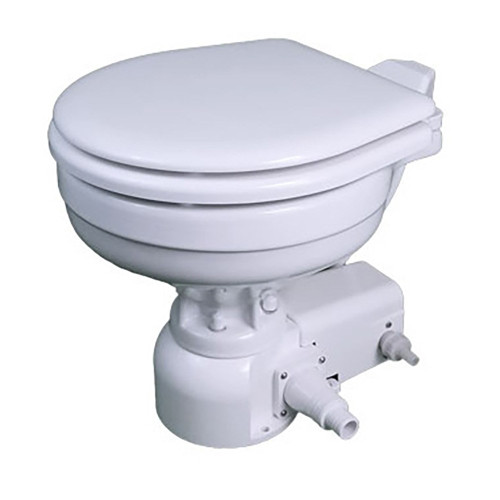
Marine Toilets: Composting, Electric, and Manual
Marine toilets for cruising sailboats — Nature's Head composting, Raritan electric, and manual heads compared.
Looking for more gear guides? Browse all our gear recommendations or the full guides index.