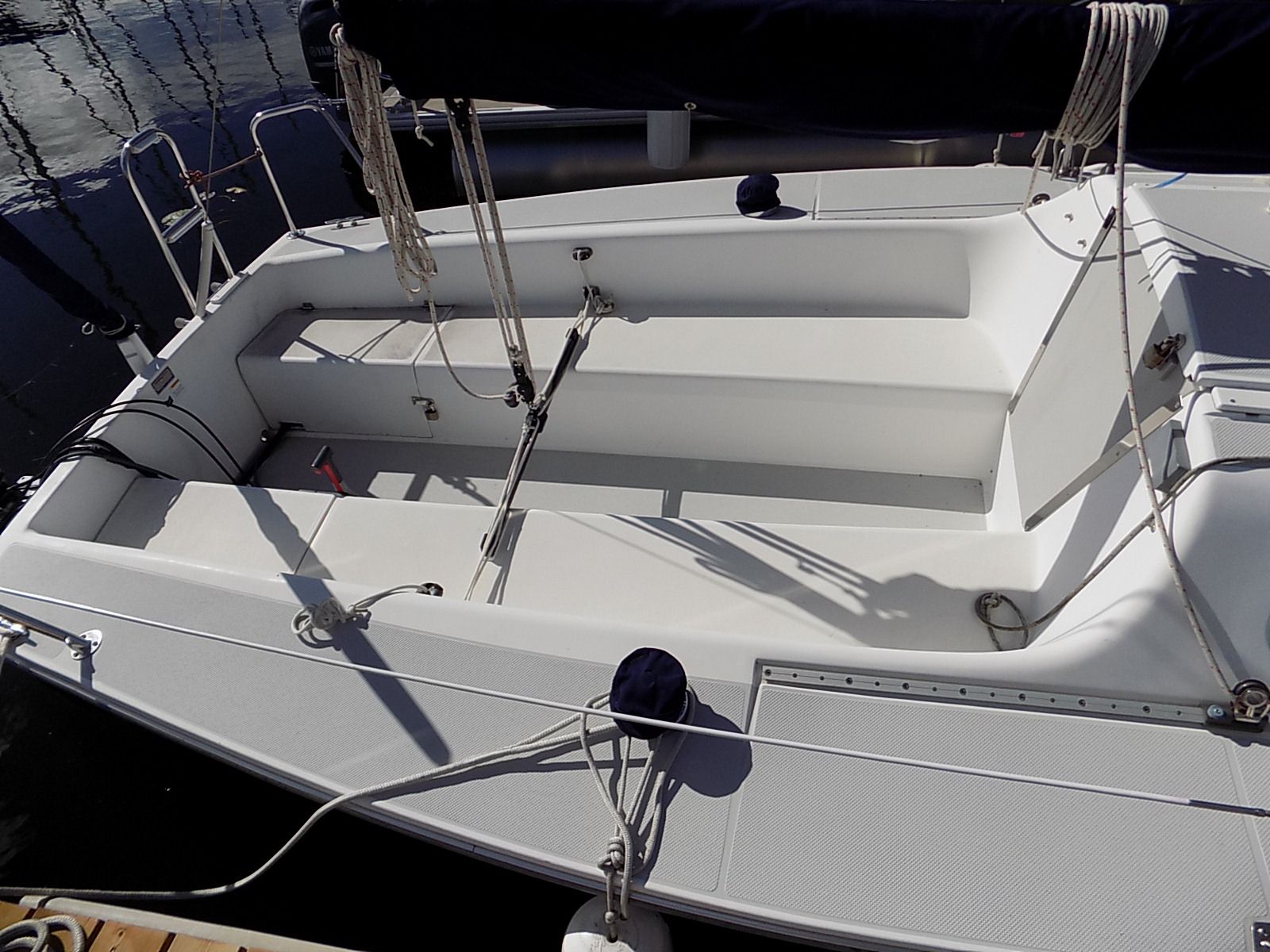
Best Marine Speakers and Stereos for Sailboats
The best marine speakers for a sailboat are not necessarily the loudest. They fit the existing joinery, tolerate spray and sunlight, and make music clear without overwhelming conversation, a VHF call, or the boat next door. The best marine stereo adds reliable physical controls and independent cabin and cockpit volume without becoming an expensive electrical project.
This is a specification-led shortlist, not a claim of onboard listening tests. We compare three speaker pairs and one complementary head unit, so these are not four interchangeable purchases. For most cruising boats, start with a modest two-zone system, then upgrade amplification only after listening under sail. Measure openings and available depth before buying anything; installation errors can outweigh the difference between premium brands.
Sailboat Atlas may earn a commission from qualifying purchases made through links on this page, at no extra cost to you.
What IPX ratings and UV protection do marine speakers need?
Read the complete rating, including which surface it covers. IP65 addresses dust and water jets; IP67 includes dust protection and a defined temporary immersion test. In IPX6 or IPX7, the X means a dust rating is not declared, not that dust protection failed. Different water tests are not interchangeable: an immersion rating alone does not establish resistance to powerful jets. None is permission to pressure-wash a grille.
Salt fog, UV exposure, vibration, and temperature cycling are separate durability issues. Look for explicit marine testing and UV-stabilized cones, surrounds, and grilles rather than trusting the word waterproof. A cockpit speaker can survive front-facing spray while its rear terminals corrode inside a wet locker. Keep the back protected, provide cable drip loops, and avoid locations that collect water. Follow the manufacturer's cleaning instructions and use gentle freshwater cleaning rather than forcing water through the assembly.
How much power will marine audio draw from the house bank?
Speaker watts describe power handling, not a constant load on your batteries. Actual DC demand depends on amplifier efficiency, listening level, bass content, speaker impedance, and accessories. Fuse values and maximum-current specifications describe limits, not average consumption. For example, the RA670 manual specifies a 15 A maximum, but that is not a reasonable assumption for every hour of quiet listening.
Use your battery monitor to compare system-off current with normal playback, including every amplifier and lighting controller. An illustrative 2 A average for five hours is 10 Ah; a louder system averaging 6 A for the same period consumes 30 Ah. Those are calculations, not measured claims for these picks. Check standby draw too: a remote-wake feature can remain active when the front panel appears off.
Keep entertainment behind refrigeration, instruments, and anchor lighting in your daily energy budget. A 12 V stereo should normally run directly from the appropriately protected DC system, not through an inverter and AC adapter. Our marine inverter-charger guide explains the wider power architecture; the lithium battery guide helps with usable capacity and charging compatibility, not justification for unlimited audio loads.
Which marine head units work with NMEA 2000?
Choose a stereo for its controls and zones before chasing network features. A physical volume knob is useful with wet hands; independently controlled cabin and cockpit zones let one crew member read below while another listens outside. The Apollo MS-RA670 supports three zones, but its third zone needs external amplification. Count amplifier channels and line outputs rather than assuming three zones means six powered speaker outputs.
NMEA 2000 can expose Fusion-Link controls on compatible chartplotters and remotes. It does not distribute music, replace speaker cables, or supply the stereo's main power. Verify your exact plotter model, software version, and supported controls before buying. Give the stereo its own fused supply and connect its network drop according to the installation manual; do not feed amplifier current through an instrument backbone.
The RA670 uses Ethernet for PartyBus and lacks built-in Wi-Fi. Wireless streaming functions need a suitable router or compatible Wi-Fi-enabled Apollo network arrangement. Bluetooth playback is a different feature. Map the two networks separately with our NMEA 2000 networking guide, and retain a simple local control method if the plotter is off at anchor.
What size speakers fit a sailboat cockpit or cabin?
A 6.5-inch label describes a nominal driver class, not the hole diameter, outer grille, screw pattern, or depth. Measure each existing opening, the flat sealing land around it, and clearance behind it with the locker loaded. Allow room for terminals and cable bends. Check compass-safe distances in the relevant manuals, and keep magnets away from a steering compass even when the speaker fits beautifully.
Cabin locations usually favor modest output, short runs, and a position unobstructed by cushions. Cockpit locations need protection from feet, sheets, winch handles, and direct spray. Aim for useful coverage at the helm rather than pointing two speakers into somebody's ankles. Avoid structural bulkheads, cockpit drains, and areas where a new opening could compromise watertight separation; seek professional advice before cutting uncertain structure.
Infinite-baffle drivers need separation between front and rear sound waves and enough rear air volume. A tiny enclosure may reduce bass and change loading. Follow the speaker's enclosure guidance instead of assuming any waterproof pod works. Seal exposed laminate or core around approved openings, bed the mounting flange appropriately, and tighten fasteners evenly without distorting the basket. Always use the supplied full-size template.
How should marine speakers be wired with tinned cable?
Use flexible marine-grade tinned copper, not copper-clad aluminum. Size the stereo and amplifier supply for current, circuit length, allowable voltage drop, and the manufacturer's instructions. Size speaker cable separately for run length and impedance; a single universal gauge recommendation would hide important differences. The longer cabin-to-cockpit run often deserves more attention than the short connection behind the radio.
Install circuit protection near the supply as required by the applicable marine standard and equipment manual, protecting the smallest conductor in the circuit. Use proper crimp tools, adhesive-lined heat-shrink where appropriate, strain relief, and supported runs away from chafe and moving steering parts. Keep signal cables separated from noisy power equipment where practical, crossing rather than running parallel when routes must meet.
Maintain consistent speaker polarity. Never combine stereo negative speaker outputs or connect them to DC negative unless the manufacturer explicitly permits it; many head units use bridged outputs. Do not parallel extra speakers without checking the resulting impedance. Finally, test VHF reception, instruments, and audio with chargers and the engine running. Investigate interference at its source rather than defeating protective grounds or improvising connections.
Our picks
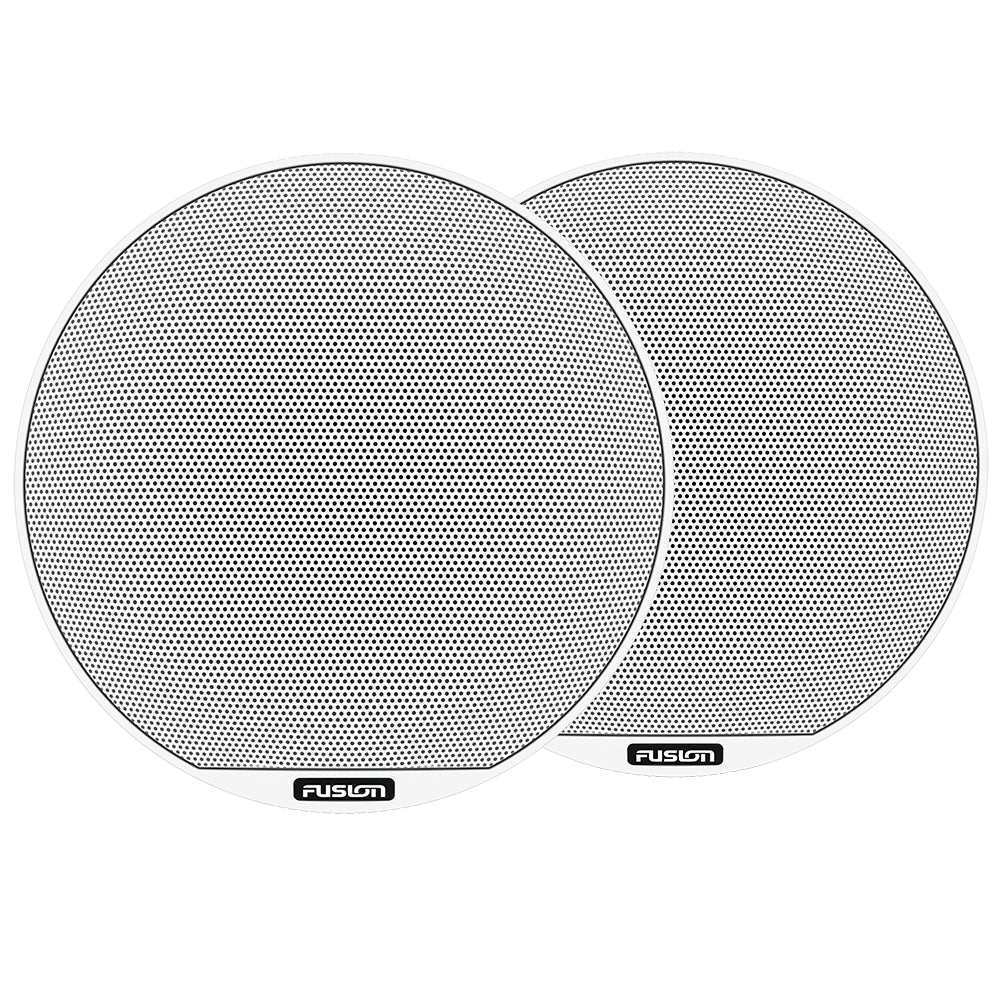
Fusion Signature Series 3i 6.5-inch Classic
Best marine speakers for a coordinated Fusion installation
Choose the Signature 3i when you want cockpit speakers that fit into a planned Fusion system rather than a collection of unrelated components. The non-lit Classic version is particularly sensible aboard a cruising sailboat: fewer lighting wires, understated grilles, and no need to buy a color controller. A compatible Fusion DSP profile is a useful starting point, not a substitute for checking polarity and mounting quality. Measure the unusually generous outer flange as well as the cutout before ordering; nominal 6.5-inch sizing does not guarantee a drop-in replacement. Stock and clearance pricing vary across this generation.
- Size / impedance
- 6.5-inch nominal; 4 ohms per speaker
- Continuous handling
- 75 W RMS per speaker; not electrical consumption
- Weather protection
- IP65 front when correctly installed; protect rear
- Mounting
- 136 mm cutout; 79 mm rear clearance
- Version
- White Classic pair, no LED lighting (010-02771-00)
Pros
- Fusion speaker profiles simplify compatible DSP setup
- Classic grille avoids unnecessary lighting circuitry
- Published mounting dimensions make retrofit planning straightforward
Cons
- 136 mm cutout may require enlarging an older opening
- Rear connections still need a dry, protected location
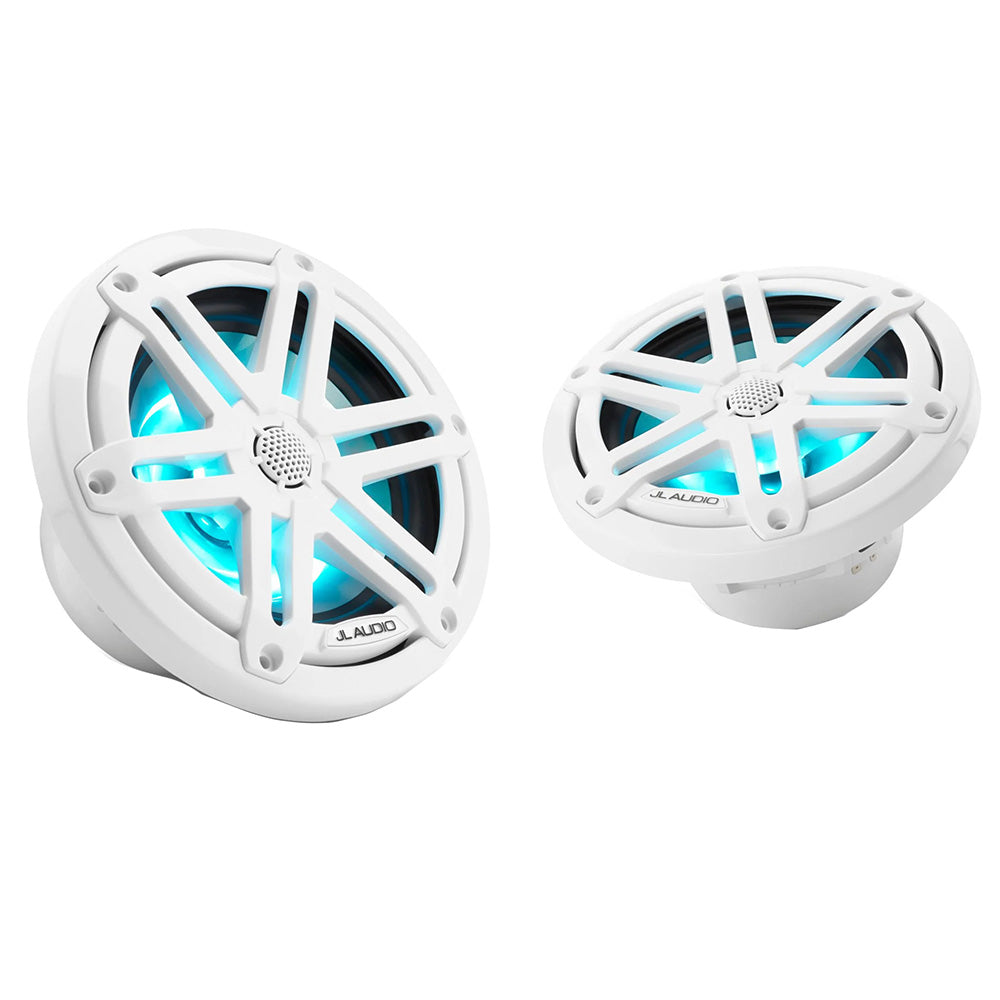
JL Audio M3-650X-S-Gw-i
Best marine speakers for moderate-power cabin and cockpit systems
The M3 is the conservative choice for sailors who want intelligible music without building an amplifier-heavy entertainment system. JL specifies a large air space behind these infinite-baffle speakers; stuffing them into tiny improvised boxes can disappoint even when the installation looks tidy. Start with clean head-unit power, then consider an amplifier only if normal sailing noise genuinely demands it. The photographed Sport RGB version has the same basic 60-watt continuous handling class as the M3-650X family; verify the exact grille, lighting harness, and mounting template in your selected package rather than ordering by family name alone.
- Size / impedance
- 6.5-inch coaxial; 4 ohms
- Continuous handling
- 60 W RMS per speaker
- Mounting
- 127–133 mm opening; approximately 71 mm depth
- Sensitivity
- 89.5 dB at 1 W / 1 m
- Version pictured
- Gloss-white Sport grille with RGB lighting; sold as a pair
Pros
- Useful with head-unit power before adding an amplifier
- Relatively shallow basket helps in tight interior joinery
- Infinite-baffle design suits a large protected locker cavity
Cons
- Small sealed pods compromise the intended bass response
- Pictured illuminated version adds wiring if lighting is used
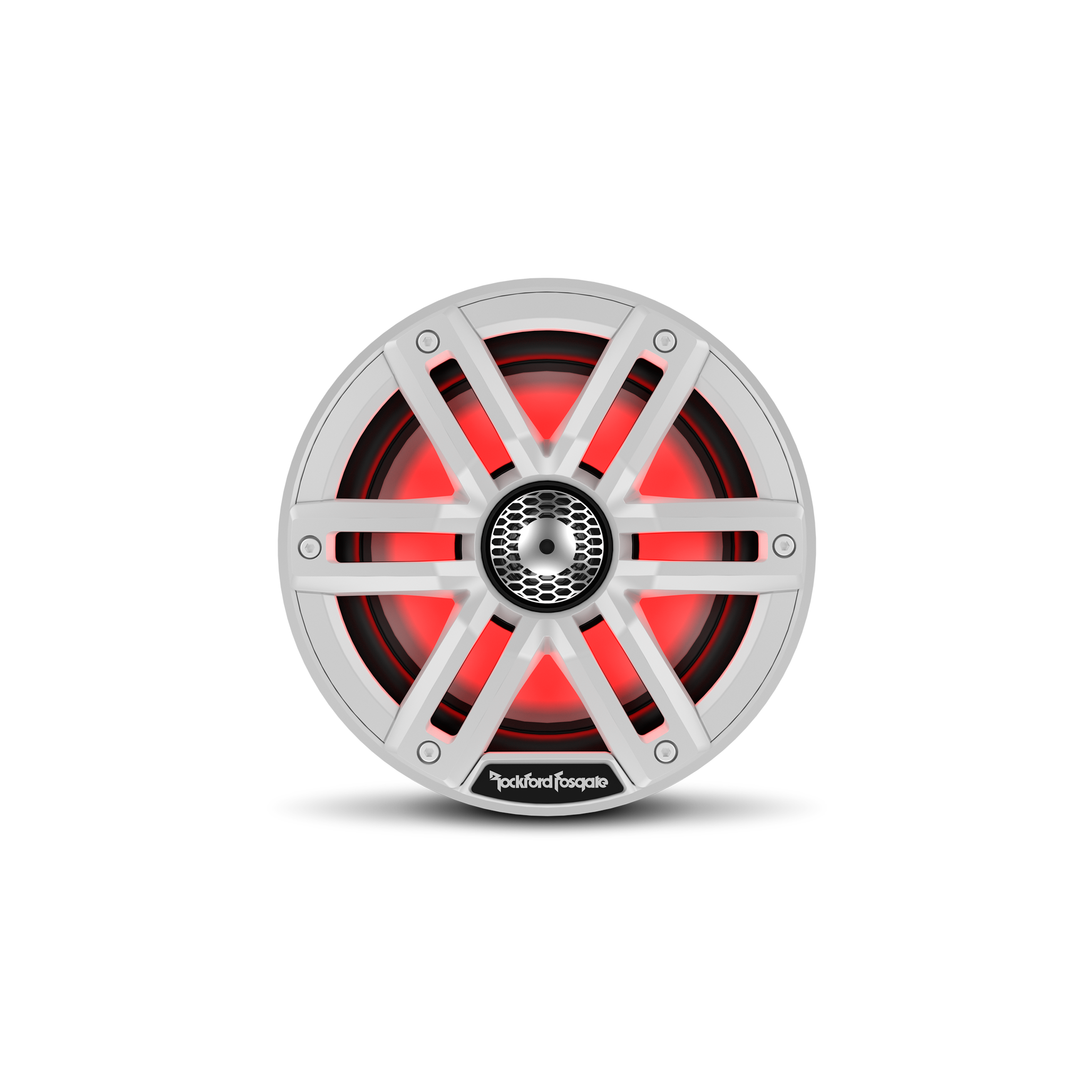
Rockford Fosgate M2-65
Best weather-rated option for an amplifier-led cockpit system
The M2-65 makes sense when your cockpit installation is exposed and you already intend to fit a properly sized marine amplifier. Its shallow basket is attractive, but check the connector bend radius behind it before declaring it a fit. Rockford's published power figure is not a promise of volume from a small stereo, and it does not describe battery consumption. Treat the lighting as optional: on a sailboat it can add installation work without improving listening. Even with IP67 certification, keep terminals out of standing water and follow the installation instructions rather than treating the speaker as a permanently submerged fitting.
- Size / impedance
- 6.5-inch two-way; 4 ohms
- Published power handling
- 150 W RMS; confirm rating basis for your package
- Protection
- Manufacturer lists IP67 certification
- Mounting depth
- 2.49 inches / 63.2 mm
- Lighting
- Color Optix; compatible controller sold separately
Pros
- Explicit IP67 certification rather than vague waterproof branding
- Shallow published depth can help in cockpit side panels
- Marine connectors and UV-resistant materials address exposed installations
Cons
- Lighting control costs extra and requires additional wiring
- Higher-output system ambitions increase amplifier cost and bank draw
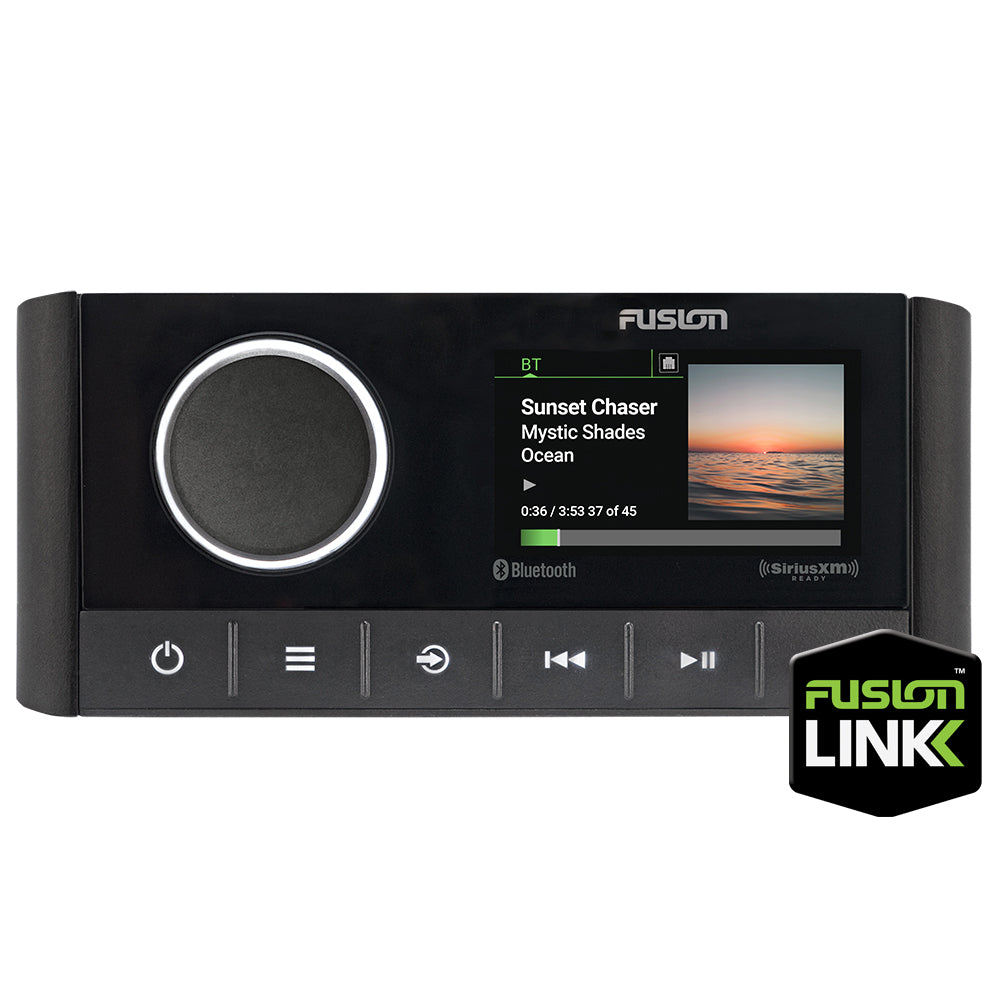
Fusion Apollo MS-RA670
Best marine stereo here for cabin/cockpit zone control
The RA670 is a system controller as much as a radio. For a typical cruiser, its strongest feature is independent cabin and cockpit listening levels, with a possible third amplified zone later. Its published 280-watt peak total is not a sensible basis for speaker or battery selection; the continuous output conditions are much more informative. NMEA 2000 enables control from compatible equipment, while Ethernet handles PartyBus networking. Do not assume every Apollo wireless feature works out of the box: this model needs a suitable network connection for Wi-Fi-based functions. Check current stock, warranty support, and exact accessories before buying older inventory.
- Supply
- 10.8–16 V DC; specified maximum current 15 A
- Water rating
- IPX6 / IPX7 front only, properly installed
- Zones
- Three controlled zones; third requires external amplification
- Networking
- NMEA 2000 control; Ethernet PartyBus networking
- Amplifier output
- 4 × 26 W RMS at 4 ohms, 14.4 V, 10% THD (manufacturer test)
Pros
- Separate cabin and cockpit volume avoids blasting the anchorage
- Compatible plotters can provide Fusion-Link control
- DSP and line outputs allow a staged upgrade
Cons
- No built-in Wi-Fi; wireless network features need additional equipment
- Third zone needs an amplifier and the rear chassis needs protection
How to choose
| Product | Role | Key distinction | Installation check |
|---|---|---|---|
| Fusion Signature 3i 6.5 | Cockpit speaker pair | 75 W RMS each; IP65 front | 136 mm opening, 79 mm depth |
| JL Audio M3-650X | Moderate-power speaker pair | 60 W RMS each; infinite baffle | Large protected rear air space |
| Rockford M2-65 | Amplifier-led speaker pair | IP67 certification | 63.2 mm depth plus connectors |
| Fusion Apollo RA670 | Head unit | Three-zone control, NMEA 2000 | Protected rear; separate DC supply |
Budget tiers: spend on the installation first
Lean retrofit: Keep a functioning head unit, replace only damaged speakers, and renew suspect terminals and cable. JL M3 is the moderate-power direction here, but confirm the exact package and quote. Do not assume any premium pair is automatically affordable because the drivers are small. Reusing sound wiring and correct existing openings can save more than chasing a discount.
Balanced cruising upgrade: Budget for a stereo, cabin and cockpit pairs, protected connections, and the materials needed to seal mounting openings. A Fusion-led system offers a coherent DSP path; it does not eliminate the need for careful installation. Request an itemized equipment-and-labor quote so you can compare like-for-like systems rather than bare receiver prices.
Premium amplified system: Add a marine amplifier only where clean head-unit output falls short, then account for heavier supply wiring, protection, ventilation, and energy use. JL M6 and Wet Sounds REVO are alternative premium families worth auditioning, but compare exact models and installation requirements rather than assuming they outperform a correctly installed modest pair. Lighting and subwoofers are optional, not requirements for good cockpit sound.
These tiers describe scope rather than invented live price bands: regional stock, grille variants, clearance inventory, and labor change totals substantially. Before ordering, obtain current pair pricing, verify an authorized warranty, and make sure the box includes the connectors shown in the installation manual. A clear return policy matters when retrofitting old holes.
Specification sources and buying checks
Cross-check the Fusion Classic specifications, JL M3 installation manual, Rockford M2 product sheet, and Garmin RA670 electrical specifications. Manufacturer power tests use defined supply voltage, load, and distortion conditions; results are not automatically comparable across brands. None of these published figures replaces checking your selected unit's current instructions.
Frequently asked questions
What are the best marine speakers for a cruising sailboat?
For moderate listening levels, start with a correctly mounted JL Audio M3 pair or Fusion Signature 3i pair. Fit, rear protection, and clean amplifier power matter more than peak-watt marketing. Rockford M2 suits an exposed, amplifier-led installation; choose the head unit separately.
Does IPX7 mean a marine stereo is completely waterproof?
No. IPX7 describes a defined temporary immersion test, not continuous submersion, pressure washing, UV life, or salt resistance. On the MS-RA670 the rating applies only to the properly installed front; the rear must remain protected.
How many amp-hours will a boat stereo use?
Measure the complete system at your usual listening volume. As an illustrative calculation, an average 2 A for five hours uses 10 Ah; 6 A for five hours uses 30 Ah. These are planning examples, not measured product figures, and amplifiers or lighting can change the result substantially.
Can NMEA 2000 carry music to my speakers?
No. It can carry stereo control information between compatible devices, but speaker audio needs speaker wiring and PartyBus networking uses a separate connection. The stereo also needs its own fused DC supply, not power from the backbone.
Do I need an amplifier for 6.5-inch marine speakers?
Not necessarily. Head-unit power can be adequate for cabin listening or a quiet cockpit. Add a suitable amplifier if clean output is insufficient under sail, matching impedance and gain carefully. Bigger continuous power ratings do not mean the speakers require that power at all times.
Can I reuse automotive speaker wire on a sailboat?
For a new marine installation, use flexible tinned-copper marine cable with appropriate insulation and sealed terminations. Inspect existing wire for corrosion and damaged insulation before considering reuse. Size power and speaker conductors separately for their loads, lengths, and equipment instructions.
Related guides
 Comfort
Best Marine Watermakers for Sailboats
Spectra, Rainman, Katadyn and more — which watermakers match cruising energy budgets and boat sizes.
 Comfort
Marine Diesel Heaters: Webasto vs Espar vs Refleks
Forced-air and radiant diesel heaters for cruising sailboats — how to choose, install, and avoid the top failure modes.
 Comfort
Marine Refrigeration for Sailboats
Marine refrigeration — Isotherm, Nova Kool, Frigoboat keel-cooler conversions, and how to minimize energy use.
 Comfort
Marine Toilets: Composting, Electric, and Manual
Marine toilets for cruising sailboats — Nature's Head composting, Raritan electric, and manual heads compared.
Looking for more gear guides? Browse all our gear recommendations or the full guides index.