Marine Toilets for Sailboats
The head is the single most complained-about system on a cruising sailboat — smells, clogs, and pump-outs are the everyday reality that separates a comfortable cruise from a miserable one. Composting toilets have quietly become the default choice for many long-term cruisers; here's how they compare to electric and manual options, and which is right for your boat.
Sailboat Atlas may earn a commission from qualifying purchases made through links on this page, at no extra cost to you.
The three categories
Composting: no plumbing, no holding tank, urine diverted from solids, minimal water use. Electric flush: modern convenience, freshwater or raw-water flush, holding tank required. Manual pump: cheapest, most reliable, but real physical labor. Almost every cruiser starts on a manual, upgrades to electric, and increasingly ends up on composting for anything beyond weekend use.
Why composting is winning
Composting toilets eliminate the entire wet-plumbing system that causes head problems — no raw-water intake, no macerator, no discharge hoses, no Y-valve, no holding tank vent, no overboard/holding switch. That's a huge maintenance and smell reduction. The tradeoff is a small weekly-plus routine: empty the urine jug daily, empty the solids bin every 3–4 weeks for a couple. Once you're used to it, you don't miss the flush toilet.
If you keep a conventional head, use freshwater flush
Raw-water flush is the number-one cause of holding-tank smell. Seawater is full of organic matter that bacteria digest into hydrogen sulfide — the classic rotten-egg smell. Freshwater flush eliminates that upstream. If you're upgrading a conventional head, spec the freshwater- flush option (Raritan, Groco, Tecma all offer it).
Our picks
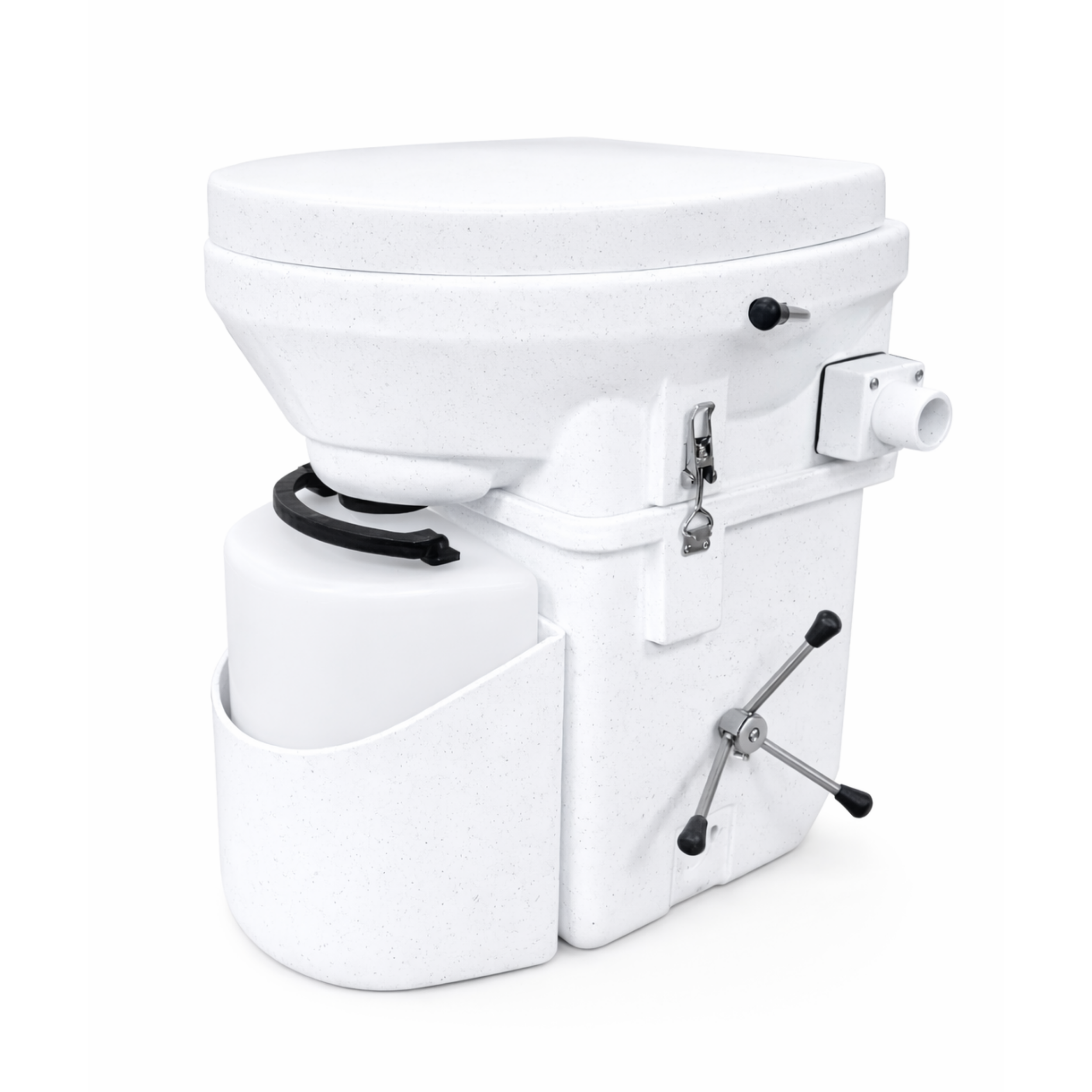
Nature's Head Composting Toilet
Best composting toilet for cruising
Composting toilets have moved from RV curiosity to mainstream cruising choice in the last five years. The Nature's Head is the reference product: robust, well-supported, and the design works. Cruisers who've converted rarely go back — no more head-plumbing repairs, no more holding-tank pump-outs, no more mystery smells. The tradeoff is a weekly-plus routine of emptying and adding fresh peat/coco coir. For most cruising couples, that trade is worth it.
- Type
- Urine-diverting dry composting, no plumbing
- Capacity
- ~60–80 uses between solids emptying
- Power draw
- 12V fan, ~0.1A continuous
- Typical price
- $1,000–$1,100
Pros
- Eliminates holding tank, macerator, hoses, and Y-valves — a huge maintenance-and-smell reduction
- Legal everywhere (no discharge to worry about) and genuinely odorless when properly used
- Massive water savings — no flushing at all
Cons
- Solid waste bin needs emptying every 3–4 weeks for a couple — plan a disposal routine
- Urine jug fills fast; needs daily attention on active cruises
- Adjustment curve — the first month is a learning process
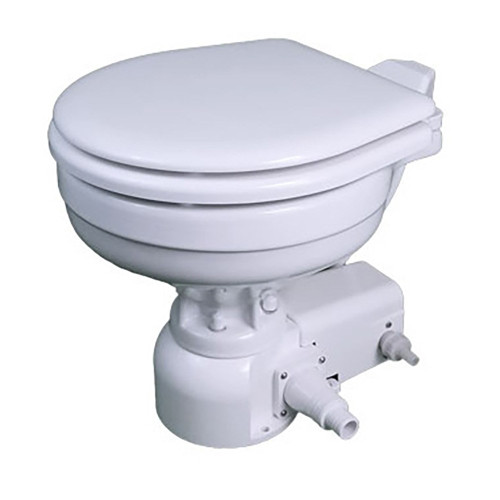
Raritan SeaEra Freshwater Electric Head
Best conventional electric marine toilet
For cruisers not ready to give up a conventional flush, the Raritan SeaEra with freshwater flush is the sensible modern choice. Freshwater is what actually kills holding-tank odor — raw seawater feeds bacteria that produce hydrogen sulfide. Cost is real fresh water consumption; a watermaker makes this trivial, tank-only sailors need to weigh it carefully.
- Type
- Electric flush with freshwater or raw-water option
- Power draw
- 12V or 24V, ~15A during flush (short duration)
- Flush rate
- ~0.5–1 gallon per flush
- Typical price
- $700–$900
Pros
- Freshwater flush eliminates the biggest source of holding-tank smell (organic material in raw seawater)
- Raritan's US manufacturing and service network is genuinely excellent
- Simple electric operation — no manual pumping fatigue on long cruises
Cons
- Freshwater flush consumes tank water — 1–2 gallons per person per day at typical usage
- Still requires a holding tank and pump-out infrastructure — nothing eliminates that reality on a plumbed toilet
- Electric-pump failure is a service item every 5–10 years
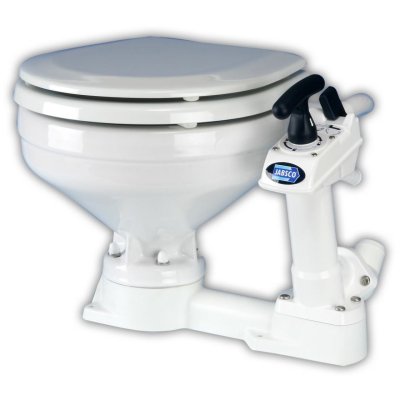
Jabsco 29090 Manual Marine Toilet
Best manual toilet as backup or budget install
The Jabsco 29090 is a workhorse — the same design has been on cruising boats for 40 years. It won't ever be the best toilet on your boat, but it will always work, and every marine mechanic on earth can service it. Keep one as a backup in your spares kit even if you upgrade to electric or composting; the day the electric flush dies at 3 AM, you'll be grateful.
- Type
- Manual dual-action pump, raw-water flush
- Power draw
- Zero — fully mechanical
- Flush rate
- 10–15 pump strokes per flush
- Typical price
- $180–$240
Pros
- Cheap, simple, and utterly reliable — no electricity required
- Parts kits are $20 and every marine store on earth stocks them
- Works when the batteries are dead and the water tank is empty
Cons
- Raw-water flush inevitably brings some smell over time
- Pumping is a real chore on long cruises — this is what makes electric flush worth the money
- The wet exhaust and inlet hoses are the number-one source of head smells on older boats
How to choose
Weekend coastal cruiser: manual Jabsco with raw-water flush is fine — you're rarely aboard long enough for smell to build. Cruising couple, week-plus trips, existing holding tank: Raritan SeaEra with freshwater flush. Live-aboard or serious long-term cruiser: Nature's Head composting toilet — eliminate the plumbing problem entirely. Keep a manual Jabsco pump kit aboard regardless as a backup.
Frequently asked questions
Does a composting toilet really not smell?
Correctly maintained, no — the fan draws air through the solids bin and vents outside, so no odor enters the cabin. Incorrectly maintained (urine leaking into solids, fan not running, wrong medium), yes, it will smell. This is a real learning curve for the first month.
Where do I dump the solids from a composting toilet?
Bagged (biodegradable liner) into a shore dumpster, buried ashore in remote cruising grounds, or into a proper composting facility. Not overboard — the solids need weeks to actually compost. Urine can be diluted 8:1 and dumped overboard offshore, or dumped ashore/shore facilities in port.
Related guides
 Comfort
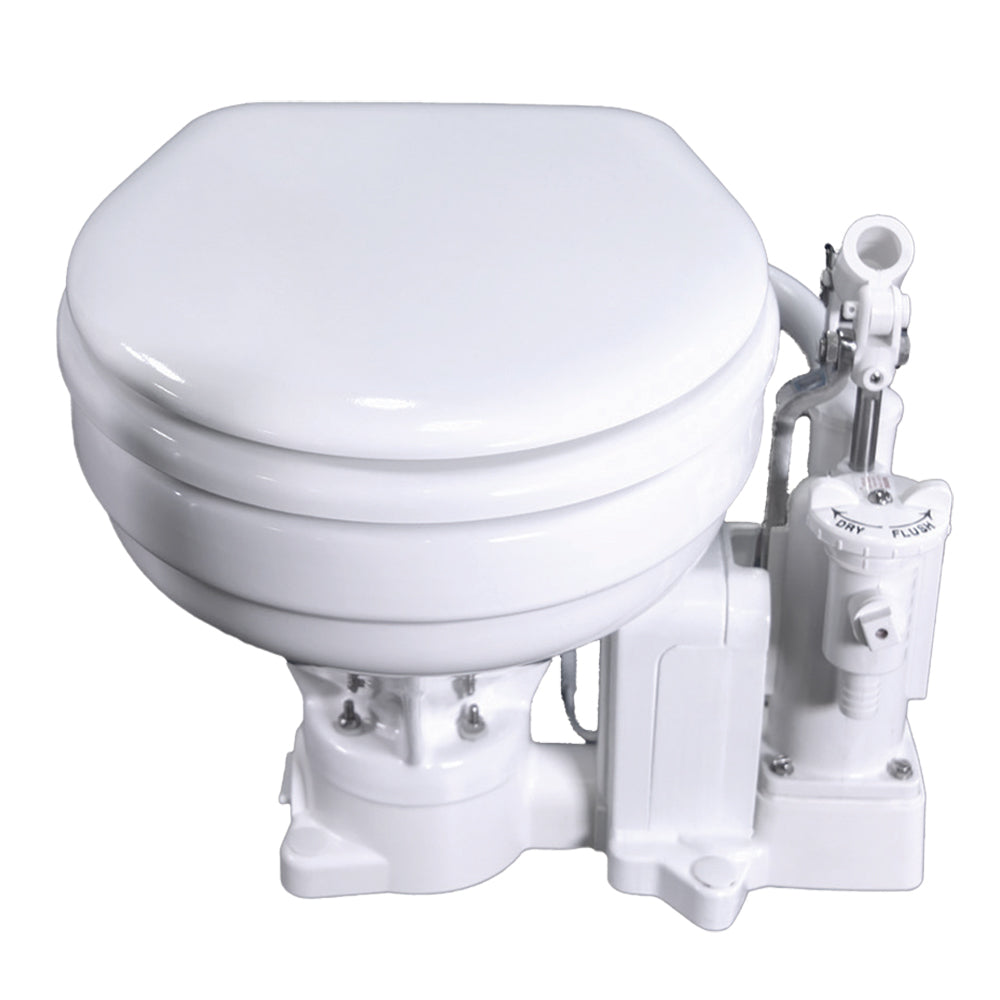
Marine Head Upgrades: Electric Toilets and Treatment
Electric, vacuum and composting marine heads compared — installation reality, power draw, odour causes and what a conversion costs.
 Comfort
Best Marine Speakers and Stereos for Sailboats
Waterproof marine speakers and stereo head units compared — power draw, NMEA 2000, mounting and wiring.
 Comfort
Best Marine Watermakers for Sailboats
Spectra, Rainman, Katadyn and more — which watermakers match cruising energy budgets and boat sizes.
 Comfort
Marine Diesel Heaters: Webasto vs Espar vs Refleks
Forced-air and radiant diesel heaters for cruising sailboats — how to choose, install, and avoid the top failure modes.
Looking for more gear guides? Browse all our gear recommendations or the full guides index.