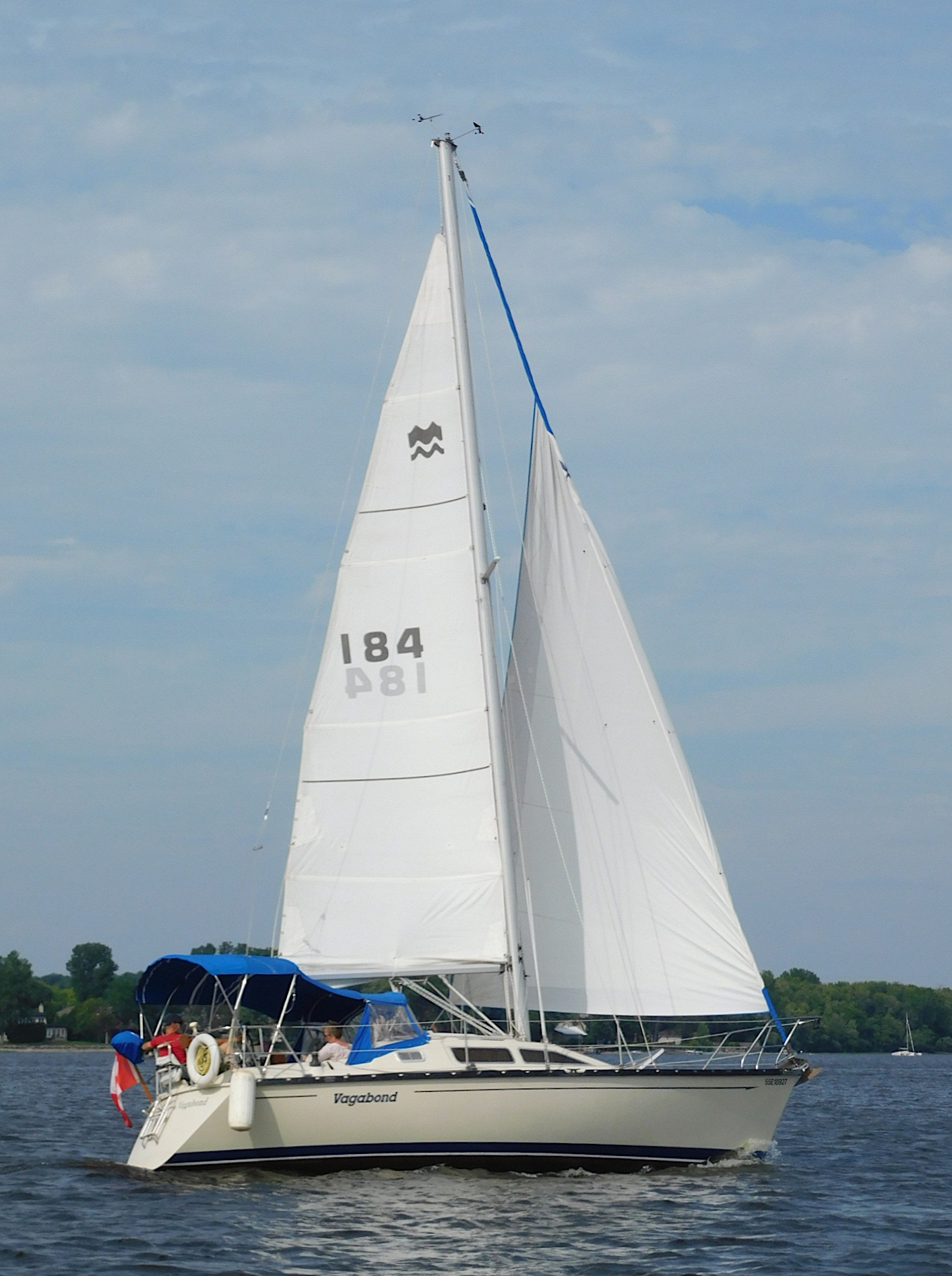
Sail Materials: Dacron vs Laminate vs Membrane
Sail material choice gets treated like a performance question, but for most cruisers it's really a durability and cost-per-season question. Woven Dacron, film laminates, and moulded membrane sails all do the same basic job — they just fail differently, age at different rates, and cost very different amounts up front. This guide walks through how sailcloth actually breaks down, what the major construction types mean in practice, and which one makes sense for how you actually sail. For the hardware that controls these sails, see our furling systems guide and winches guide; for the rig they're hung on, see our standing rigging guide.
Sailboat Atlas may earn a commission from qualifying purchases made through links on this page, at no extra cost to you.
How sailcloth actually fails: UV, flogging, stretch, and delamination
Sails don't fail all at once — they fail along four separate, overlapping paths, and knowing which one is at work tells you whether a sail needs recutting, restitching, or outright replacement. UV degradation breaks down fiber strength at a molecular level over time regardless of whether the sail is being used; a sail left uncovered on a boom or rolled up on a headstay in strong sun degrades measurably faster than one kept under a cover between uses.
Flogging — a sail luffing and slatting without load, whether during a slow reef or sitting unsheeted at the dock in a breeze — fatigues fiber and stitching independent of UV, and is one of the most avoidable causes of premature sail failure. Stretch is the gradual, permanent elongation of cloth under repeated load, which rounds off a sail's designed shape, pushes draft aft, and costs pointing ability long before the cloth actually tears. Delamination is specific to film-and-scrim laminate sails: the bond between the Mylar film and the taffeta or scrim layers fails, usually showing up as bubbling or a crinkled texture at high-load areas, and it can't be sewn back together the way a torn panel can.
Sail life in years vs. sail life in miles
Manufacturers and sailors both talk about sail life in seasons, but the more honest measure is a combination of UV exposure time and load cycles — which is why two sails of the same age and material can be in very different condition. A boat sailed hard offshore accumulates flex-fatigue and load-cycle wear quickly but may spend less total time with the sail exposed to direct sun uncovered; a boat that daysails occasionally but leaves its furled genoa baking on the headstay all summer can wear out a UV strip and degrade the cloth beneath it just as fast through sun exposure alone. When shopping for a used boat or a used sail, ask about both how many miles it's sailed and how it was stored, not just its age in years.
Woven Dacron: crosscut and radial, and why it's still the cruising default
Dacron is a brand name for woven polyester sailcloth that has been the cruising standard for decades because it's relatively cheap, easy to repair with a sewing machine and basic skills, and forgiving of imperfect trim and hard use. Crosscut construction runs panels parallel to each other, perpendicular to the leech — simple to build and repair, but the woven cloth stretches somewhat diagonally to the panel seams under load, which is why older Dacron sails develop that familiar baggy, rounded shape over time.
Radial cutting addresses that by cutting panels as wedges radiating from the sail's corners, aligning the cloth's stronger fiber direction with the actual load paths running from head to clew and tack to clew. It's still the same woven Dacron, just cut differently — a real but incremental improvement in shape retention, at a labor cost premium over crosscut. For most coastal cruisers who value low cost, easy field repair, and don't chase the last percentage of upwind performance, some form of Dacron remains the sensible default mainsail and genoa choice.
Laminate and panelled sails: Mylar film with polyester, aramid, carbon, or Dyneema scrim
Laminate sails sandwich a load-bearing layer — a woven or unidirectional scrim of polyester, aramid (Kevlar/Technora), carbon fiber, or Dyneema — between a Mylar film layer that resists stretch and a taffeta face fabric that protects the film from UV and abrasion and gives the finished sail a workable hand-feel. The scrim fiber choice drives both performance and price: polyester scrim laminates are the affordable, durable end of the laminate range; aramid and carbon scrims add stiffness and reduce stretch further but are more brittle and less UV tolerant unless well protected by the taffeta face; Dyneema scrim laminates offer a strong middle ground of low stretch, good UV tolerance in the fiber itself, and better flex fatigue resistance than aramid. All laminates share the same fundamental vulnerability — delamination — which doesn't exist in woven Dacron.
Moulded membrane sails: how 3Di, Membrane, D4, and Ultra differ from panelled construction
Membrane sails from North (3Di), Doyle (Stratis), Elvstrøm (Epex), and similar product lines from other lofts skip the cut-and-sew panel process entirely. Continuous filament tapes — chosen for the sail's intended use, from polyester through aramid to carbon — are laid up directly on a three-dimensional mould shaped to the sail's designed draft, then heat- and pressure-cured into one continuous membrane with no seams and no separate film-and-scrim layers to delaminate. Because the 3D shape is built into the mould rather than approximated by flat panels sewn together, these sails hold their designed shape longer and tend to outlast woven or laminate sails of comparable use, according to manufacturer-published service life data — at a purchase price and repair-logistics cost that puts them mainly in the offshore and performance-cruising segment rather than as a default replacement sail.
In-mast and in-boom furling sails: the compromises of vertical battens and foam luffs
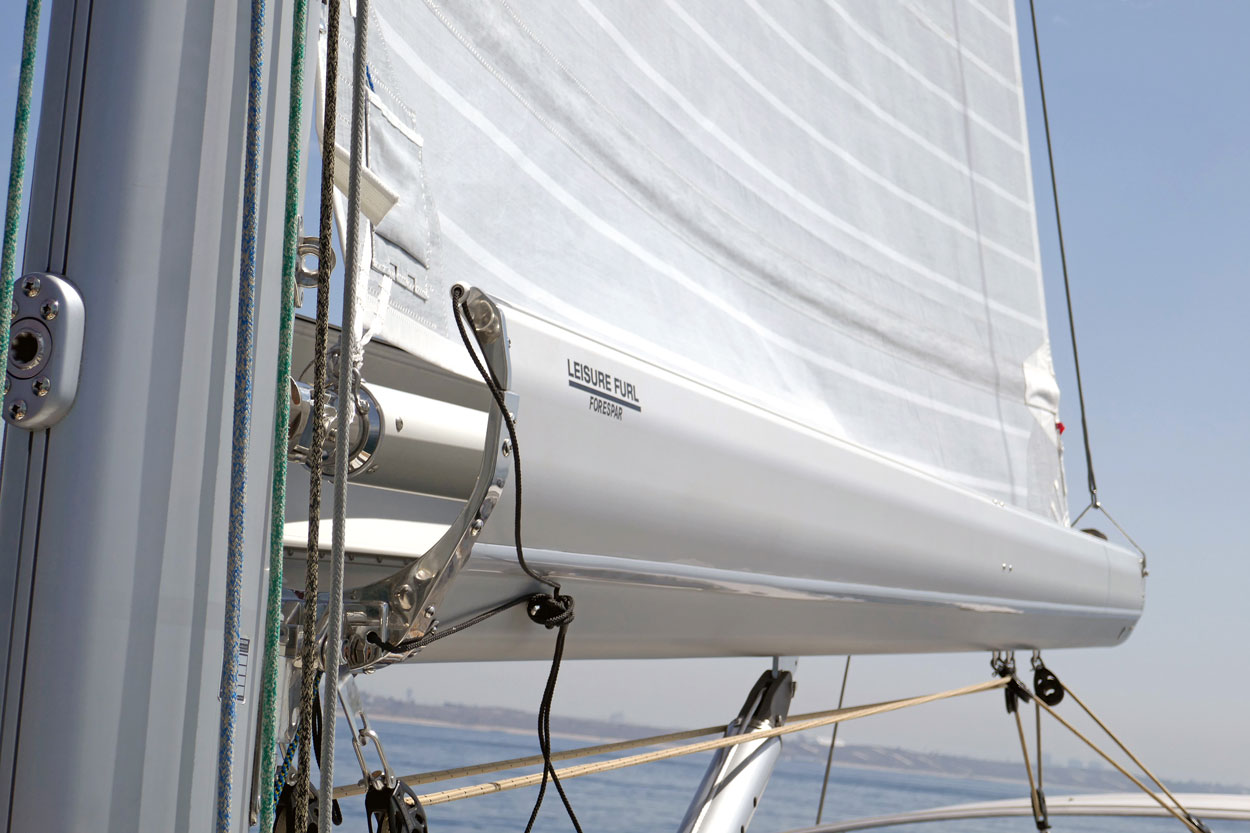
A mainsail built for in-mast furling has to roll up around a vertical foil, which usually means giving up a full-length-batten roach in favor of a straight or slightly hollow leech and, on many designs, only short vertical battens or none at all — a real reduction in sail area and shape compared to a conventional main of the same luff length. In-boom furling systems can retain full-length horizontal battens and more roach, which is a genuine advantage, but demand precise luff tension and a boom that stays close to level while furling, or the sail jams rolling up unevenly. Furling genoas carry their own compromise: a tapered foam luff pad that flattens the sail's draft as it's partially rolled in, so the sail performs reasonably at multiple reefed sizes instead of collapsing into a baggy sack — but a partially furled genoa never sets as well as a headsail purpose-cut for that smaller size. For more on how these systems work mechanically, see our furling systems guide.
Measuring, ordering, and why a loft visit beats an online form
Online sail-ordering forms ask for straightforward rig dimensions — luff, leech, foot, and a handful of standard measurements — and for a simple masthead sloop rig in good, unmodified condition, that's often enough to get a well-fitting sail. Where it breaks down is anything nonstandard: a masthead crane that's been shimmed, a boom that's been shortened, a rig with non-original geometry, or an owner who isn't sure how to take an accurate headstay length under tension. A local loft rep who measures the boat in person, or reviews photos and a video call in detail, catches those problems before the sail is cut rather than after — and can also have a real conversation about how you actually sail, which shapes decisions like roach size, reef point placement, and cloth weight in ways a measurement form alone can't.
Realistic lifespan and cost-per-season math
A cheap Dacron sail that costs half as much but lasts half as long isn't actually a bargain — it's a wash on cost per season, with the added hassle of buying and fitting a new sail twice as often. The more useful comparison is total cost divided by realistic years of service at your actual sailing pattern: a $3,000 Dacron main that lasts 8 seasons runs about $375 a season; a $6,000 laminate main that lasts 10 seasons runs $600 a season but may perform better throughout that life; a $10,000+ membrane sail that lasts 14–15 seasons can come out close to or even ahead of the Dacron sail on a strict cost-per-season basis for an owner who sails enough miles to actually reach that lifespan. The math only works in the membrane sail's favor if you sail enough to get there — a boat that does twenty days a year will likely retire a Dacron sail to age and UV long before it wears it out mechanically, making the cheaper material the more rational buy.
Caring for sails: covers, UV strips, washing, and annual service
The single highest-leverage thing an owner can do for any sail, regardless of material, is keep UV off it when it's not working: a proper sail cover on a boom-stowed main, and an intact UV strip on a furling genoa, both take the sun exposure that would otherwise degrade structural cloth. Rinse sails with fresh water periodically to remove salt crystals, which accelerate fiber and hardware wear, and have a loft do an annual or biennial inspection — checking stitching, batten pockets, corner reinforcement, and (for laminates) any sign of bubbling or delamination — before small problems become sail-ending ones. Storm sails and heavy-weather canvas have their own separate care and inspection needs; see our storm sails and drogues guide for that side of the inventory.
Our picks
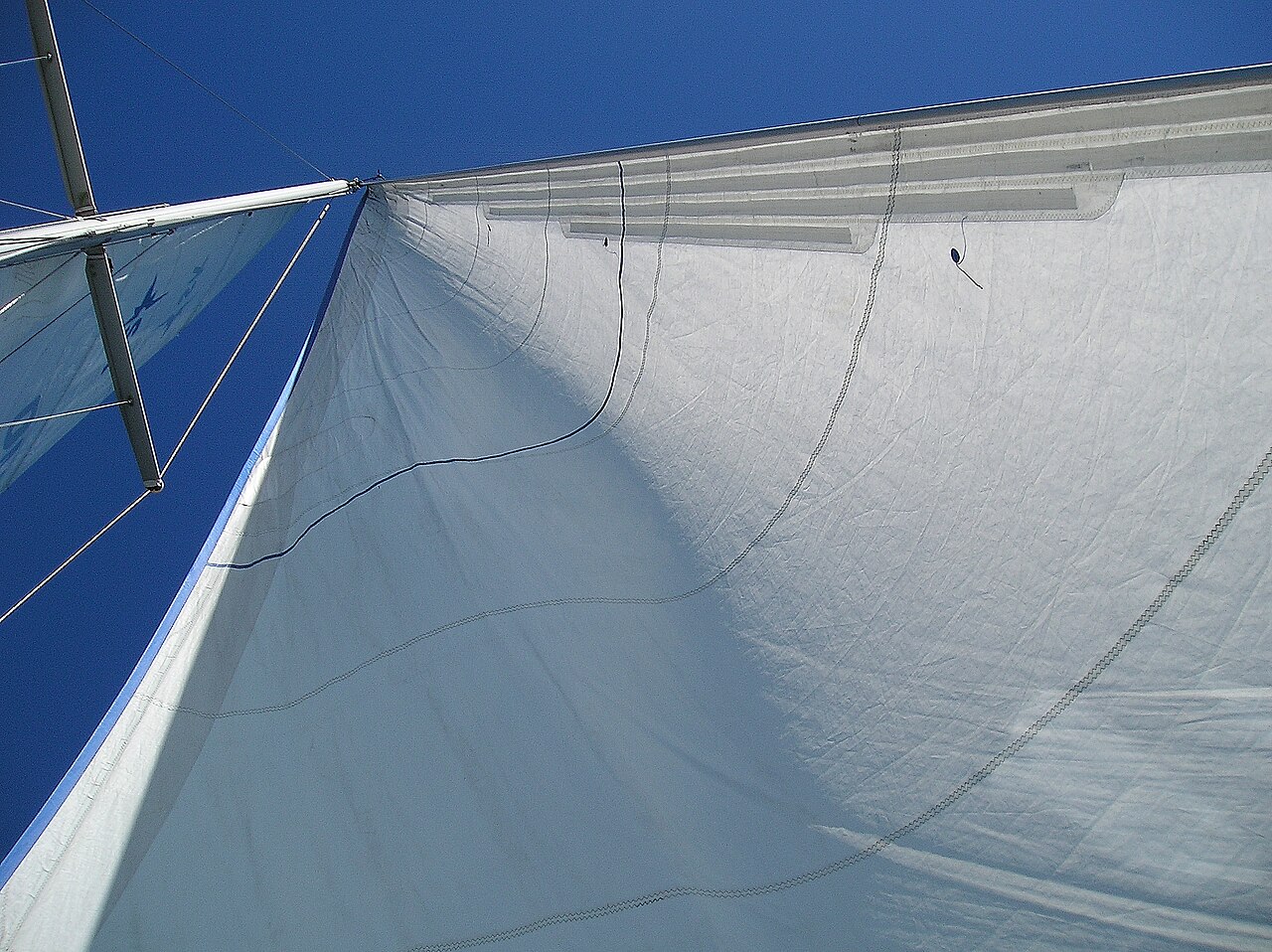
Value-loft Dacron cruising mainsail (Precision Sails / FX Sails / Rolly Tasker)
Best budget woven Dacron mainsail for coastal cruising
Direct-to-consumer lofts building crosscut Dacron sails from your boat's rig dimensions are the entry point for most cruisers replacing a blown-out sail on a budget. The cloth itself is ordinary woven polyester — nothing exotic — so the value is in cutting labor and no dealer markup, not a technology difference. They're a sound choice for a coastal boat sailed a few dozen days a year, but expect a plainer finish, fewer options for corner reinforcement or telltale windows, and a longer feedback loop if the sail doesn't set right the first time.
- Cloth weight
- 6.5–9 oz woven polyester (Dacron), crosscut panels
- Construction
- Machine-stitched panels, standard batten pockets, single-spreader reef points
- Lead time
- Typically 4–10 weeks, made to your measurements online
- Typical life
- 5–8 seasons of regular coastal use before UV and stretch retirement
Pros
- Lowest cost per square foot of any real cruising sail — often half the price of a name-brand equivalent
- Online measuring and ordering process is genuinely usable for a straightforward masthead sloop rig
- Good enough shape retention for a coastal cruiser that isn't racing or crossing oceans
Cons
- No local loft relationship — if the fit is off, you're shipping the sail back and forth by mail
- Cloth and stitching quality vary between batches more than with an established name-brand loft
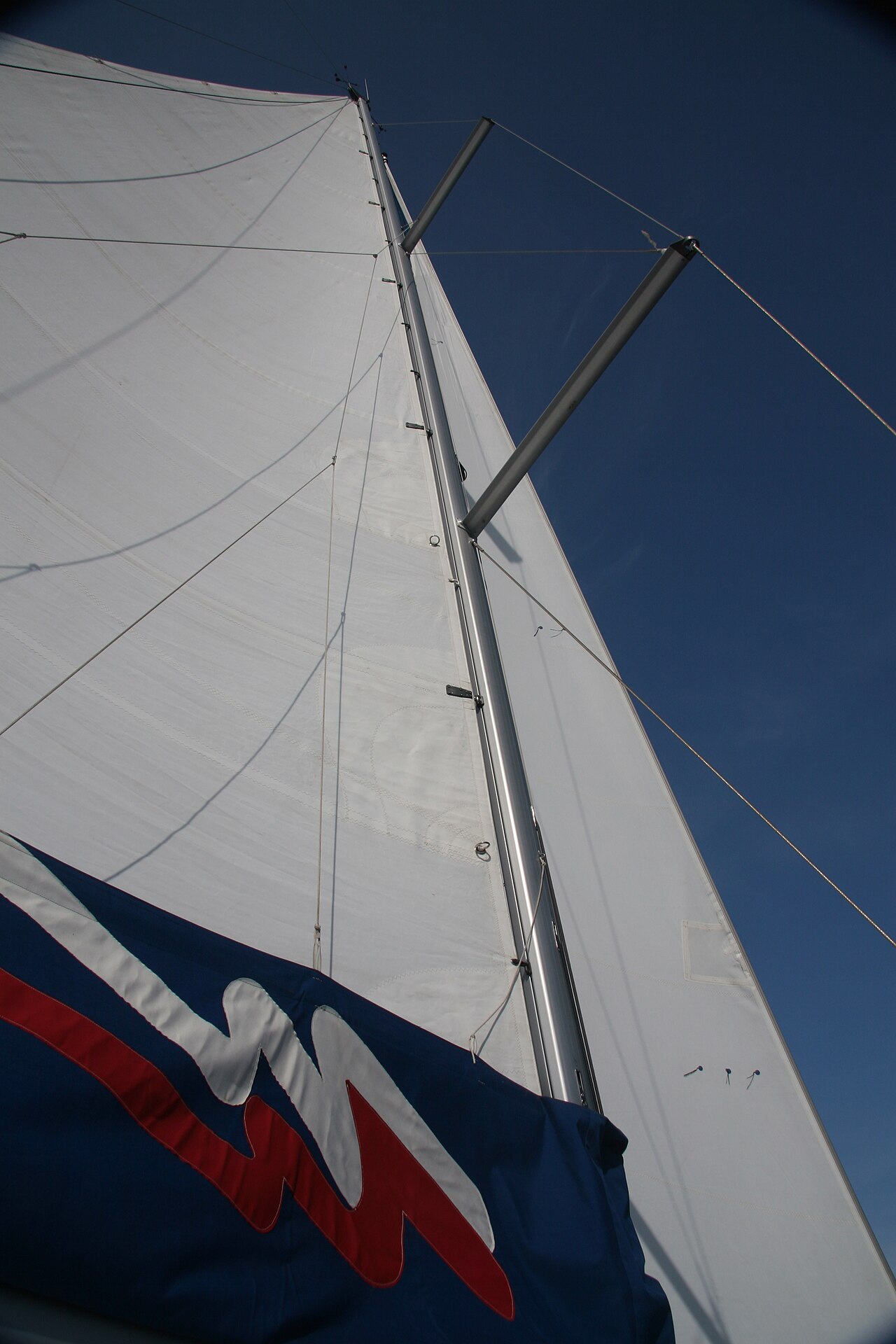
Premium Dacron mainsail (North Sails / Quantum Sails)
Best full-service Dacron sail for serious coastal and light offshore cruising
This is the sail most cruisers on a 30–45 ft boat actually buy: a name-brand loft's crosscut or radial Dacron main or genoa, fitted by a local rep who has seen your specific rig before. The cloth and stitching are a step up from a budget import, and — just as important — you have a person to call when a batten pocket rips at 2 a.m. on passage. It's not a performance upgrade over a well-built value sail; it's a service and longevity upgrade, which is worth the premium for most owners who use their boat hard.
- Cloth
- High-tenacity woven polyester, often a proprietary firm finish (e.g. Dimension-Polyant Dacron)
- Construction
- Hand-finished corners, reinforced batten pockets, loft-fitted at a local sail loft
- Design input
- In-person or video rig measurement and sail plan review with a loft rep
- Typical life
- 8–12 seasons with proper UV cover and care
Pros
- A real loft measures your boat, discusses your sailing style, and fits the sail in person or via video call
- Better cloth finish holds shape longer before the classic Dacron baggy-sail sag sets in
- Warranty and service network mean a local loft can handle repairs, not just the original manufacturer
Cons
- Costs meaningfully more than a value-loft equivalent for the same basic woven-polyester technology
- Still stretches and rounds off over time — premium Dacron is better Dacron, not a different material
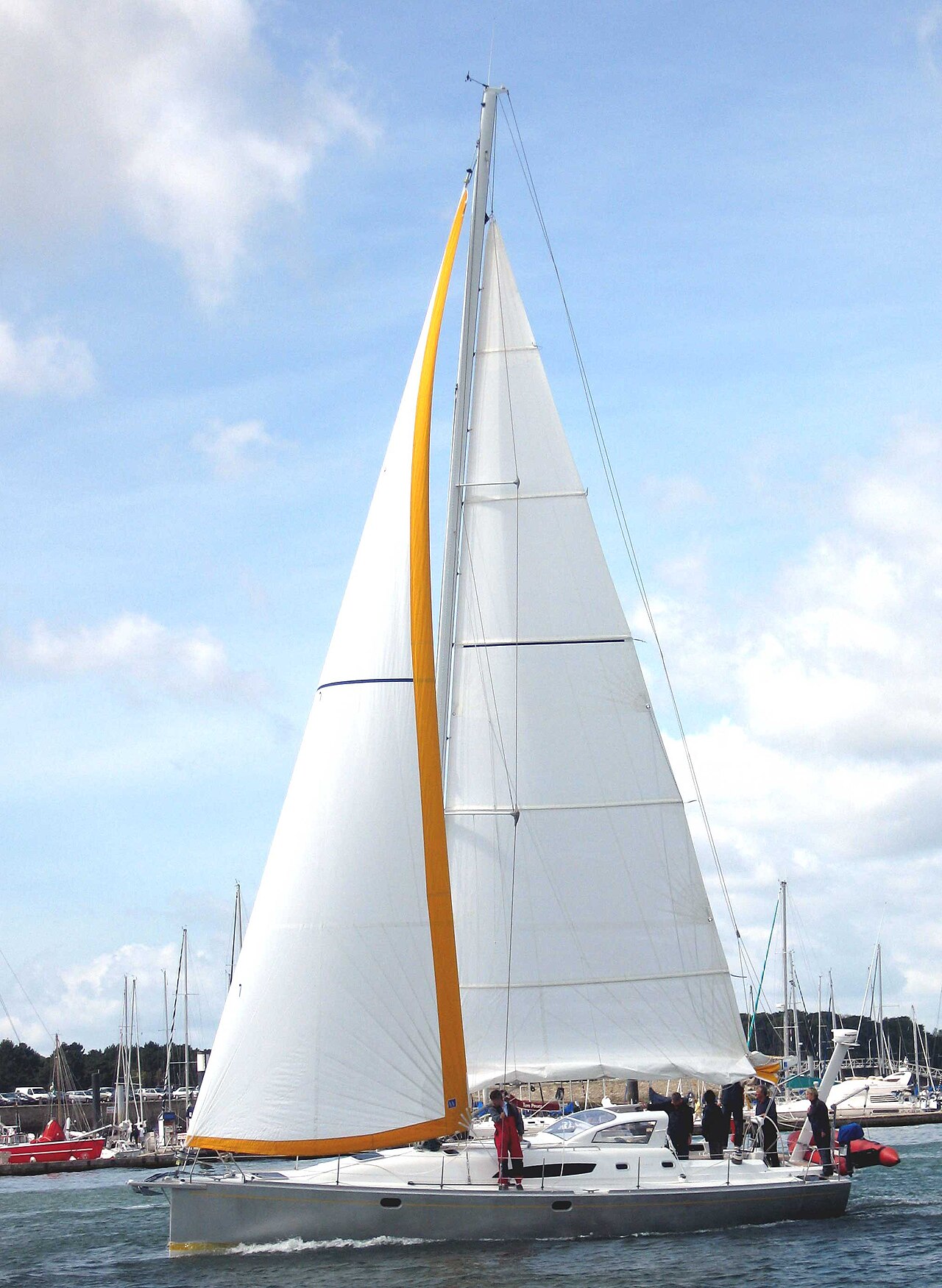
Radial-cut Dacron mainsail or genoa
Best panel layout for reducing stretch along the leech and foot
Radial cutting is a layout decision, not a material decision — the same Dacron cloth used in a crosscut sail can be cut in wedge-shaped radial panels that put fiber strength directly along the loaded lines running from clew to head and clew to tack. It's a reasonable middle step for a cruiser who wants better shape-holding than a basic crosscut main but isn't ready to pay laminate or membrane prices. The gain is real but incremental; don't expect radial Dacron to perform like a laminate sail.
- Panel orientation
- Panels radiate from the corners, aligning cloth fibers with load paths
- Cloth
- Same woven Dacron as crosscut, cut and sewn in a different pattern
- Best application
- Mainsails and genoas on boats that sail hard upwind or in a lot of chop
- Cost premium
- Roughly 10–20% more than an equivalent crosscut sail
Pros
- Fiber alignment along actual load paths reduces the classic diagonal stretch wrinkles crosscut sails develop
- Holds a flatter, more efficient shape longer than a crosscut sail of the same cloth weight
- Still fully repairable by any competent sailmaker — it's a cutting pattern, not an exotic material
Cons
- More panels and more complex seams mean more labor cost and a longer build time
- The stretch-resistance benefit is modest with woven Dacron compared to switching to a laminate cloth
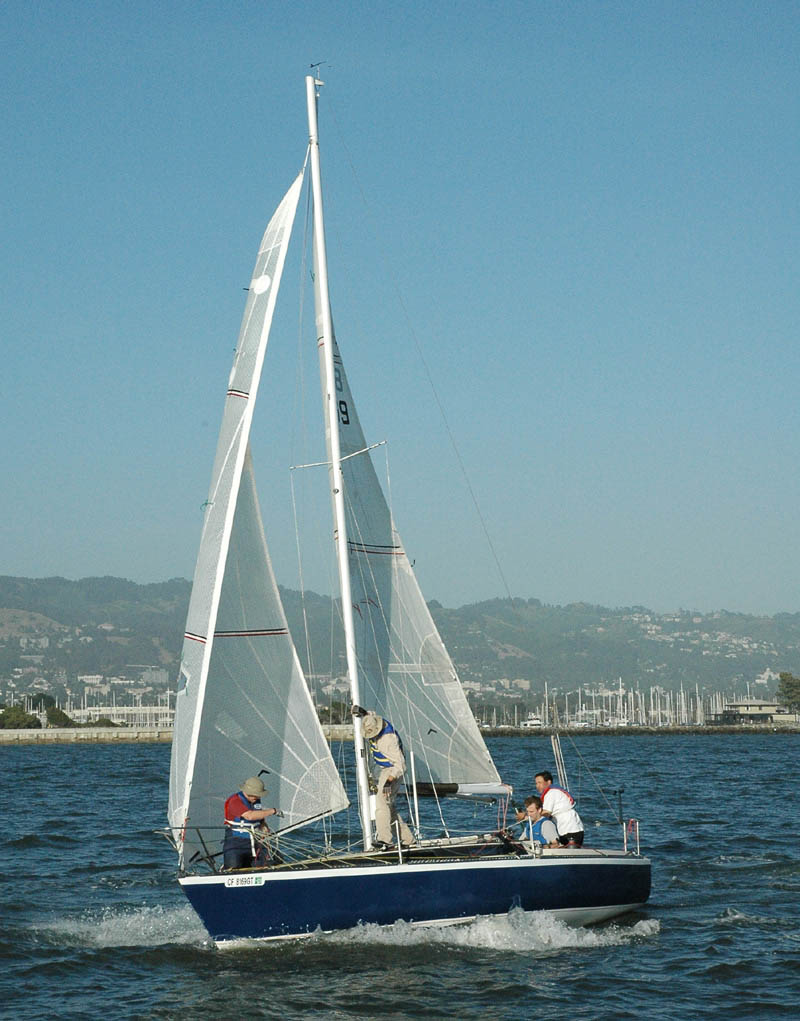
Dyneema-reinforced cruising laminate (Hydra Net / similar scrim laminates)
Best step up from Dacron without going to a full membrane sail
Cruising laminates sandwich a load-bearing scrim — often Dyneema for its excellent flex fatigue and UV tolerance — between a Mylar film layer and a woven taffeta face that protects the film from UV and chafe and gives the sail a hand-finish closer to Dacron. The result holds shape far better than woven cloth through a wider wind range, at a real cost premium and with a genuinely different failure mode: watch for bubbling or a crinkled, delaminating look at high-load areas, which cannot be repaired the way a torn Dacron panel can.
- Construction
- Woven or scrim reinforcing fibers (Dyneema, aramid, or polyester) laminated between film and taffeta
- Panel layout
- Usually radial or tri-radial to match the reinforcing fiber orientation
- Weight vs. Dacron
- 10–25% lighter for equivalent strength, better shape retention
- Typical life
- 6–10 seasons; delamination, not fiber failure, usually ends its life
Pros
- Noticeably less stretch than woven Dacron, so the sail holds its designed shape longer through a range of wind
- Dyneema scrim laminates resist UV degradation of the load-bearing fiber itself better than raw aramid laminates
- A genuine performance step for cruisers who want better pointing and less sag without a full racing sail budget
Cons
- Laminate sails delaminate — film separating from taffeta — as a distinct failure mode Dacron doesn't have
- Folding rather than rolling for storage is recommended, which is a habit change for many cruisers
- Costs more than premium Dacron and requires a taffeta-faced finish to survive UV and flogging
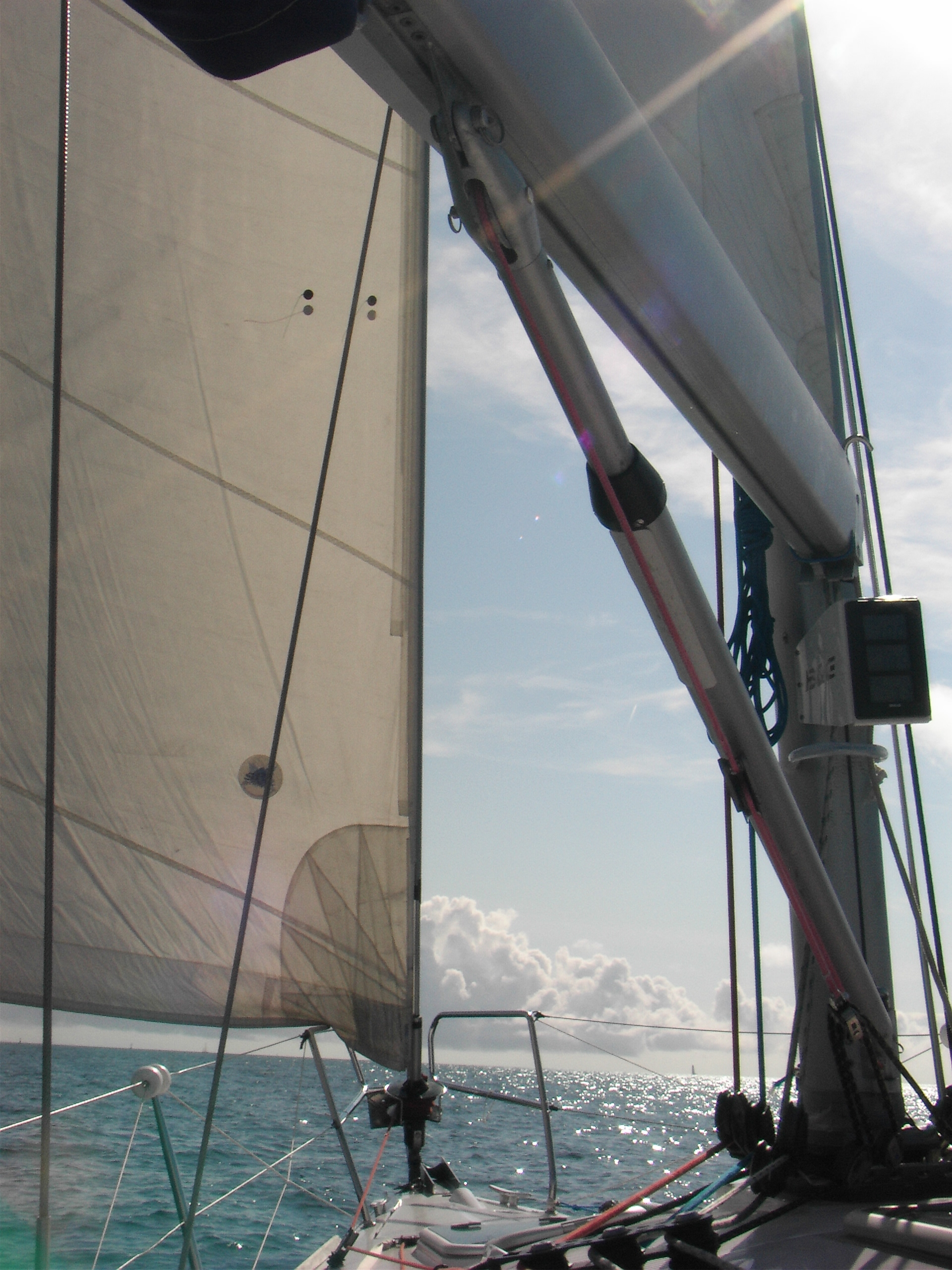
North 3Di moulded membrane sail
Best one-piece membrane construction for offshore and performance cruising
Membrane sails like 3Di do away with woven cloth entirely: continuous filament tapes are laid up and moulded under heat and pressure into the sail's three-dimensional shape in one piece, rather than cut flat and sewn into panels. That eliminates seam stretch and the delamination risk of film-based laminates, and North's own published figures put realistic service life well ahead of Dacron or laminate for boats that sail a lot of miles. It's a real investment aimed at owners doing serious passage-making or club racing, not a default replacement for a boat that daysails on weekends.
- Construction
- Uni-directional filament tapes moulded on a 3D shape, no woven scrim or separate panels
- Base fiber options
- Polyester (3Di NORDAC), aramid, or carbon depending on the product line
- Panels/seams
- None — the sail is moulded as one continuous membrane, eliminating seam stretch
- Typical life
- 10–15+ seasons for the polyester-based NORDAC line, per manufacturer figures
Pros
- No woven scrim and no Mylar film to delaminate — the failure modes that end most laminate sails don't apply the same way
- Moulded on a 3D shape means the designed sail shape is built in, not created by cutting and seaming flat panels
- Manufacturer-published lifespans are longer than any woven or laminate alternative at a comparable use level
Cons
- Highest purchase price of any option here, by a significant margin for aramid or carbon variants
- Repairs generally require sending the sail back to a North loft with the right moulding equipment, not a local generalist
- Overkill for a boat that sails a handful of weekends a year and isn't chasing performance or offshore mileage
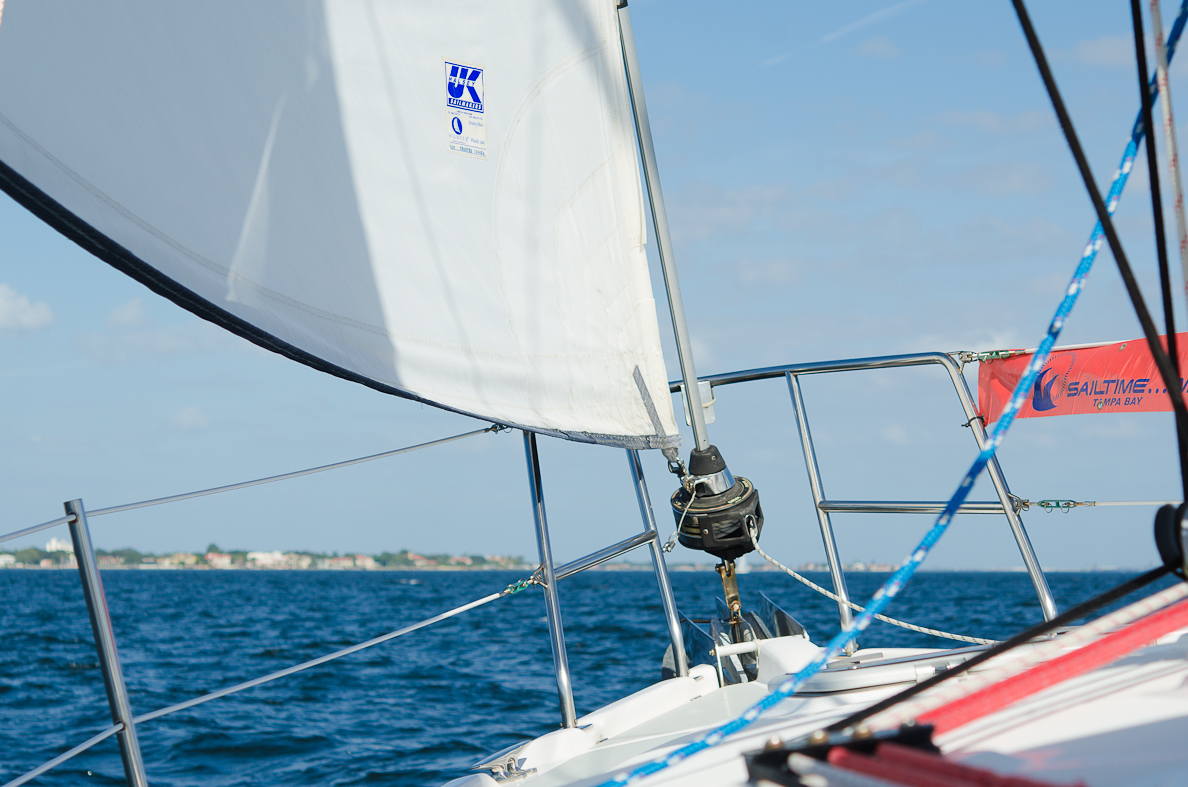
Furling genoa with foam luff and UV cover strip
Best headsail construction for a boat that leaves its jib rolled up between sails
Almost every cruising genoa on a boat with roller furling needs both features: a foam luff pad tapering the sail so it doesn't just bag out into a shapeless sack when reefed, and a UV-resistant cover strip sewn over the foot and leech that faces the sun when the sail is rolled away. Neither is optional if the sail is going to live outdoors on the headstay — a genoa without a UV strip will cook from sun exposure within a season or two of otherwise normal use, regardless of the base cloth underneath it.
- Luff foam
- Tapered foam pad sewn into the luff to flatten the sail's draft as it's partially furled
- UV protection
- Acrylic (Sunbrella-type) or woven polyester cover strip sewn along the leech and foot
- Batten support
- Vertical or short leech battens in some designs to fill the roach the cover strip covers
- Typical life
- UV strip usually needs replacing before the sailcloth underneath does, roughly 5–8 years
Pros
- Purpose-built for a sail that lives rolled up on the headstay in full sun between passages
- Foam luff genuinely improves shape when partially furled compared to a flat-cut genoa reefed on a furler
- UV strip is a wear item you can have replaced without recutting the whole sail
Cons
- The foam luff and cover strip add weight and a small amount of extra windage compared to a hank-on sail
- Partially furled shape is always a compromise — no foam luff makes a furled-in genoa point or drive like a purpose-cut smaller headsail
- UV strip degrades and needs monitoring; a cracked or missing strip lets UV straight into the sailcloth beneath it
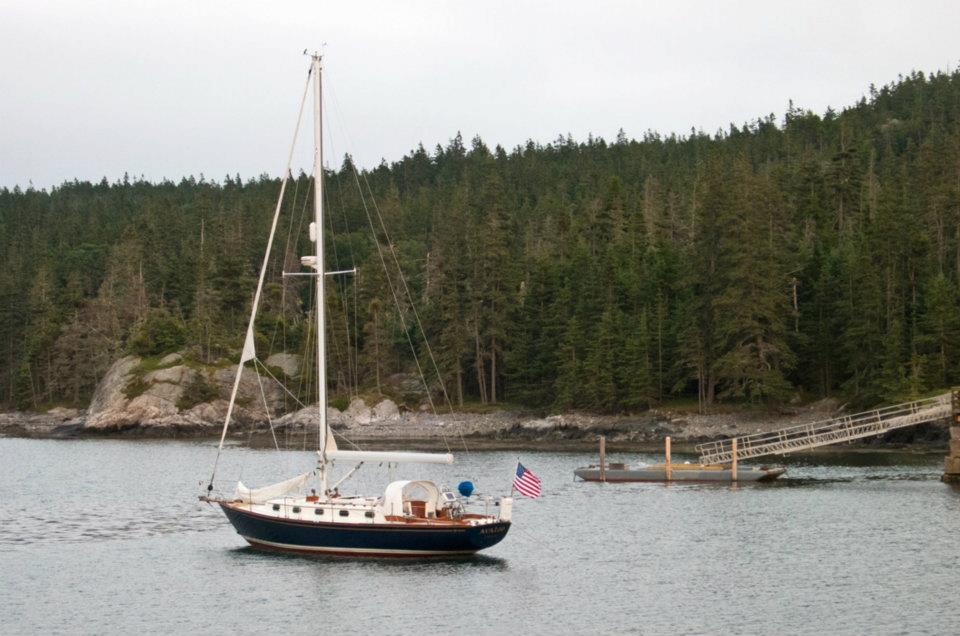
Sunbrella-type sail cover and adhesive UV/sacrificial strip
Best off-the-shelf accessory for extending any sail's working life
Whether it's a zippered boom cover for a mainsail flaked and stowed between sails, or the sewn-on UV strip along a furling genoa's foot and leech, sacrificial acrylic or coated-polyester fabric is doing one job: taking the UV hit so the structural sailcloth underneath doesn't have to. It's the single highest-value, lowest-cost item in this guide — cheaper than a sailmaker's hourly rate, and the difference between a Dacron main lasting six seasons or twelve often comes down entirely to whether it had a cover on it in the marina.
- Material
- Solution-dyed acrylic (Sunbrella) or coated polyester, UV-stabilized
- Application
- Sewn-on strip for furling sails, zippered or lace-up cover for a stowed mainsail
- Coverage
- Sized to the specific sail's leech/foot length or boom length, not universal
- Lifespan
- 5–10 years depending on sun exposure and fabric grade before recover is needed
Pros
- Single cheapest thing you can buy to extend the working life of any sail regardless of material
- Sacrificial by design — it's meant to fail from UV first so the actual sailcloth underneath doesn't have to
- Mainsail covers also keep flogging, bird mess, and chafe off the sail between uses, not just UV
Cons
- Needs a proper fit to the boom and mainsail leech, or it won't stay put and protect what it should
- Still a wear item that needs periodic inspection and eventual replacement, not a permanent fix
How to choose
| Option | Price range | Best for | Key spec |
|---|---|---|---|
| Value-loft Dacron mainsail | $1,500–$3,500 | Budget coastal cruising | 6.5–9 oz crosscut woven polyester |
| Premium Dacron mainsail (North/Quantum) | $2,500–$6,000 | Serious coastal/light offshore cruising | High-tenacity Dacron, loft-fitted |
| Radial-cut Dacron sail | 10–20% above crosscut equivalent | Better shape retention on a Dacron budget | Fiber-aligned radial panels |
| Dyneema-reinforced cruising laminate | $4,000–$9,000 | Cruisers wanting low stretch without full membrane cost | Scrim laminate, taffeta-faced, radial cut |
| North 3Di membrane sail | $8,000–$20,000+ | Offshore and performance cruising | Moulded filament tape, seamless construction |
| Furling genoa with foam luff/UV cover | $2,000–$6,000 | Any boat with roller furling | Tapered foam luff pad, sewn UV strip |
| Sail cover / adhesive UV strip | $150–$800 | Extending the life of any existing sail | Solution-dyed acrylic (Sunbrella-type) |
Budget tiers
Under $3,500 (replacement mainsail): value-loft crosscut Dacron — the practical choice for occasional coastal sailing where cost per season matters more than ultimate shape retention.
$4,000–$9,000: premium Dacron from a name-brand loft, or a Dyneema-reinforced cruising laminate — the sweet spot for owners sailing enough miles to value better shape and service support.
$8,000 and up: moulded membrane sails like 3Di — worth it once you're sailing enough offshore miles or racing enough days a year that the manufacturer's longer published service life actually gets used.
Related guides
 Sails & Rigging
Best Sailing Gloves for Line Handling and Racing
Short, long and full-finger sailing gloves compared for grip, durability and dexterity.
 Sails & Rigging
Sailboat Furling Systems: Headsail, In-Mast & In-Boom
Headsail furlers, in-mast, and in-boom furling systems compared — trade-offs, top picks, and what to install today.
 Sails & Rigging
Sailboat Standing Rigging: Wire, Rod, and Synthetic
Standing rigging replacement guide — 1x19 wire, rod, Dyneema, terminal types, and when to re-rig.
 Sails & Rigging
Sailboat Winches: Manual, Self-Tailing, and Electric
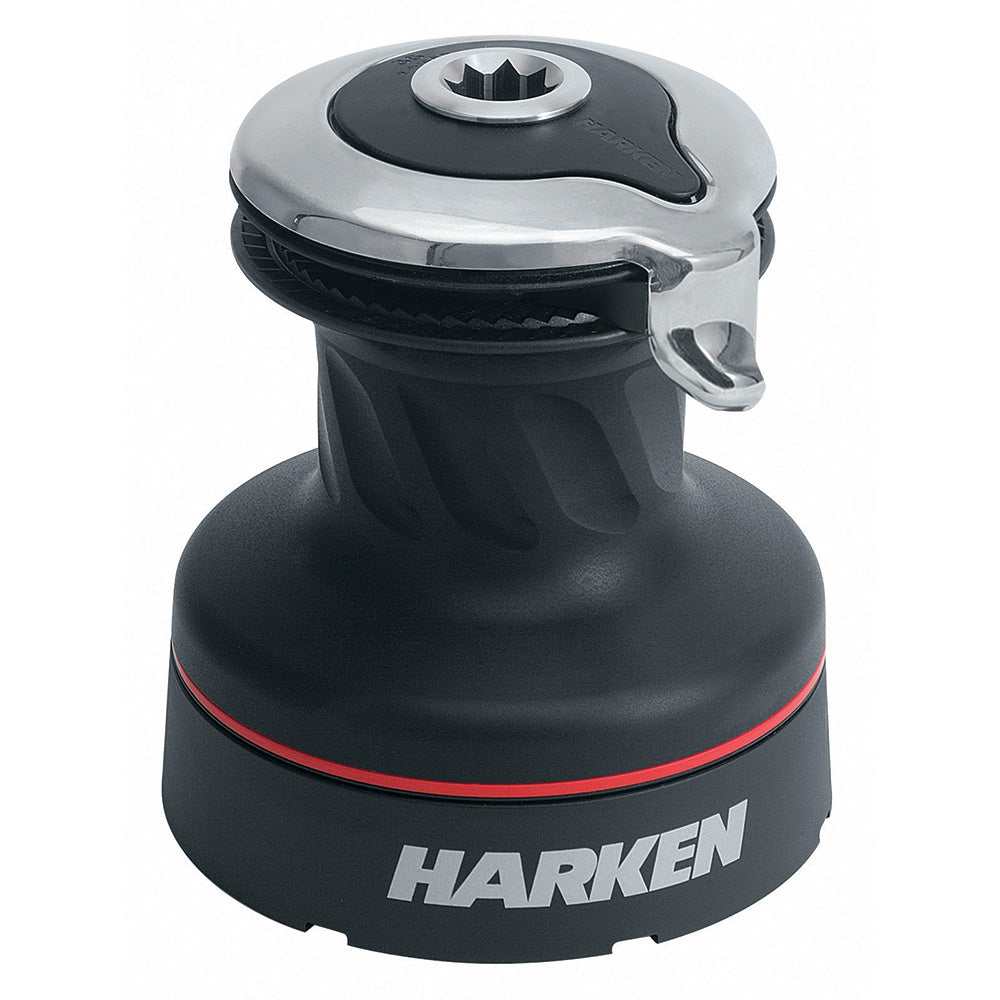
How to size and choose sailboat winches — Harken, Lewmar, Andersen, and electric winches.
Looking for more gear guides? Browse all our gear recommendations or the full guides index.