Best Marine Battery Chargers and DC-DC Chargers
A charger built for flooded or AGM lead-acid batteries can undercharge — or in some cases mis-charge — a lithium (LiFePO4) bank, because the two chemistries want different absorption voltages, different float behavior, and no float at all in lithium's case. This guide covers both shore-power battery chargers and DC-DC (battery-to-battery) chargers that convert alternator output into a lithium-safe charge, since most cruising boats with a lithium upgrade need both. If you're still choosing the battery bank itself, start with our best lithium batteries guide before sizing a charger around it.
Sailboat Atlas may earn a commission from qualifying purchases made through links on this page, at no extra cost to you.
Why lithium needs a different charge profile than AGM or flooded
Lead-acid batteries — flooded and AGM alike — are charged in stages: bulk, absorption at a slightly elevated voltage to finish filling the plates, then a long-term float stage that trickles in just enough current to offset self-discharge. Lithium iron phosphate (LiFePO4) batteries don't want a float stage at all; once fully charged, they should be left at rest or disconnected from the charger, not held at a sustained voltage indefinitely.
A charger without a genuine lithium profile will either apply an AGM-style float voltage that's mismatched to the lithium chemistry, or the battery's own BMS will simply disconnect the bank when it decides the charger's behavior is wrong — which shows up to the owner as a battery that mysteriously "stops charging." Buying a charger with a real, factory-tested lithium setting (not just a note in the manual that it's "compatible") avoids this entirely.
Shore-power chargers vs. DC-DC chargers vs. combined inverter/chargers
A shore-power (AC-input) charger converts marina or generator AC power into DC charge current — it only works when you're plugged in or running a generator. A DC-DC (battery-to-battery) charger sits between the alternator/starter battery circuit and the house bank, converting the alternator's variable voltage into a controlled charge while the engine runs. Most cruising boats with a lithium bank need both: a shore charger for dock time, and a DC-DC charger for motoring.
A combined inverter/charger folds a shore charger and an inverter (DC-to-AC power) into one chassis, which saves space and wiring on boats that also need AC power underway from the battery bank. See our marine inverter/charger guide if you're deciding between a standalone charger and a combined unit.
Sizing a charger to your battery bank
A commonly used rule of thumb is to size lithium charge current at roughly 25–50% of the bank's rated amp-hour capacity — a 300Ah lithium bank might reasonably be charged at 75–150A across all charge sources combined, though always confirm against the specific battery's documented maximum charge current. Flooded and AGM banks are more conservative, typically charged at 10–20% of capacity to limit heat and gassing. Undersizing a charger just means slower recharge times; oversizing one beyond what the battery or its BMS accepts risks nuisance disconnects or, in poorly protected systems, real damage.
Why the alternator needs help charging lithium
A stock alternator and its internal regulator are tuned for lead-acid charge behavior and have no way to communicate with a lithium BMS. Because a lithium bank's low internal resistance lets it accept high current for much longer than a lead-acid bank at the same state of charge, an unregulated alternator can be asked to sustain near-maximum output for extended periods, risking overheating. A DC-DC charger like the Victron Orion XS or Sterling A2B units above limits and controls that current, and an external regulator like a Balmar multi-stage unit does a similar job directly at the alternator. Either approach is preferable to feeding a lithium bank straight off a stock alternator connection.
Multi-bank outputs and starter-battery maintenance
Most cruising boats run at least two separate banks — house and engine-start — and often a third for a bow thruster or genset starting. A charger with multiple isolated outputs, each independently able to run its own charge profile, lets one unit maintain a lithium house bank and a flooded or AGM starter battery simultaneously without cross-contaminating charge voltages between them. Confirm the outputs are truly isolated rather than simply split from a single regulated output, since a shared, unisolated output can't apply different profiles to different battery chemistries at once.
Temperature compensation and sensors
A temperature sensor mounted on or near the battery lets the charger raise its voltage slightly in cold conditions and lower it in heat, protecting the battery from an out-of-spec charge voltage as ambient and battery temperature swing through a season. This matters most for flooded and AGM batteries; many lithium battery packs manage temperature protection internally through the BMS, but it's worth checking your specific battery's documentation rather than assuming one way or the other.
Wiring, fusing, and cable sizing reality
Charger output current only matters if the wiring feeding and leaving it can actually carry it safely. Undersized cable between a charger and the battery bank causes voltage drop that can fool the charger into thinking the battery is further from full than it actually is, extending charge time and generating unwanted heat in the wire itself. Follow the charger manufacturer's minimum cable gauge recommendations for the run length involved, and fuse both the positive output from the charger and the DC-DC charger's input from the starter battery circuit — not just one end.
If you're planning a broader electrical upgrade alongside a new charger, our NMEA 2000 networking guide and marine solar panel guide cover related wiring and charging-source decisions worth making at the same time rather than piecemeal.
Common installation mistakes
The most frequent issues are: mounting a non-waterproof charger somewhere it gets damp or splashed; running a DC-DC charger's input straight off the alternator without confirming the starter battery and its wiring can supply the input current; skipping a fuse on either end of a charger circuit; and assuming a "lithium compatible" label on a budget charger means the same thing as a factory-tested lithium charge profile. Reading the charger's manual for its actual lithium absorption and float voltages, and comparing them against your specific battery's or BMS's documented requirements, catches most of these before they cause a problem.
Our picks
Victron Blue Smart IP22 Charger
Best shore-power charger for mixed lead-acid/lithium banks
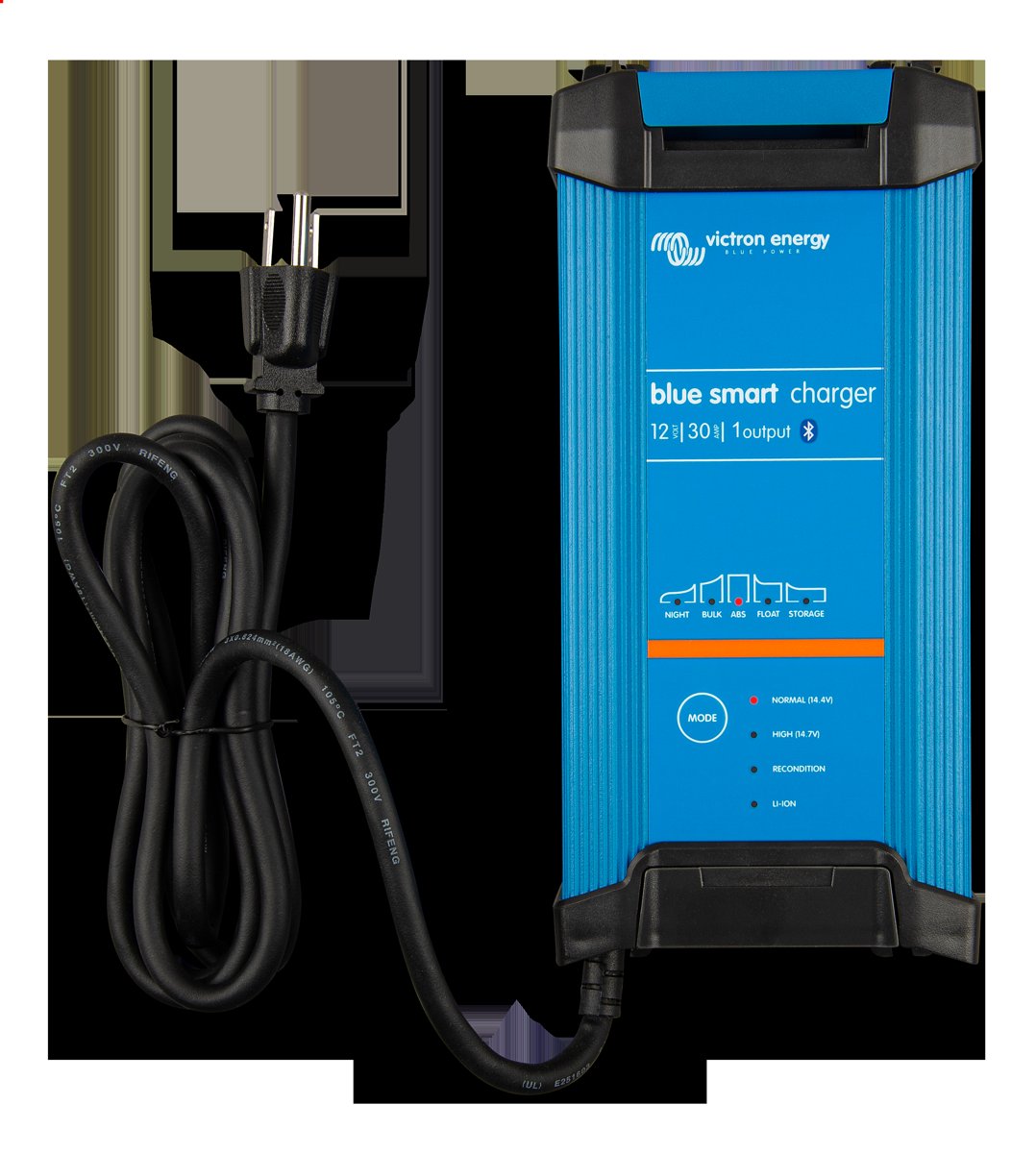
The Blue Smart IP22 is a straightforward multi-stage shore-power charger with a lithium-compatible charge curve, which matters because a charger built only for AGM or flooded batteries will often stop short of fully charging a LiFePO4 bank or, worse, apply a float voltage that's wrong for lithium chemistry. The three-output version is genuinely useful on a cruising boat: one output tops off the lithium house bank while a second maintains the engine starter battery, all from a single unit mounted at the panel.
- Outputs
- 1 or 3 output versions, 12V 15/20/30A or 24V 8/12/16A
- Charge profile
- Adaptive multi-stage; selectable battery-type presets including lithium
- Monitoring
- Built-in Bluetooth for VictronConnect app setup and history
- Enclosure
- IP22 rated; needs a dry, ventilated mounting location
Pros
- Bluetooth setup makes selecting a lithium, AGM, gel, or flooded profile straightforward from a phone
- Three-output models can independently maintain a starter battery alongside the house bank
- Efficient design runs cooler than many older transformer-based shore chargers
Cons
- IP22 rating means it isn't safe to mount somewhere it could get splashed or submerged in a wet bilge
- Only useful when connected to shore power or a generator — it does nothing while sailing off the grid
Victron Orion XS DC-DC Charger
Best DC-DC charger for topping off lithium from the alternator
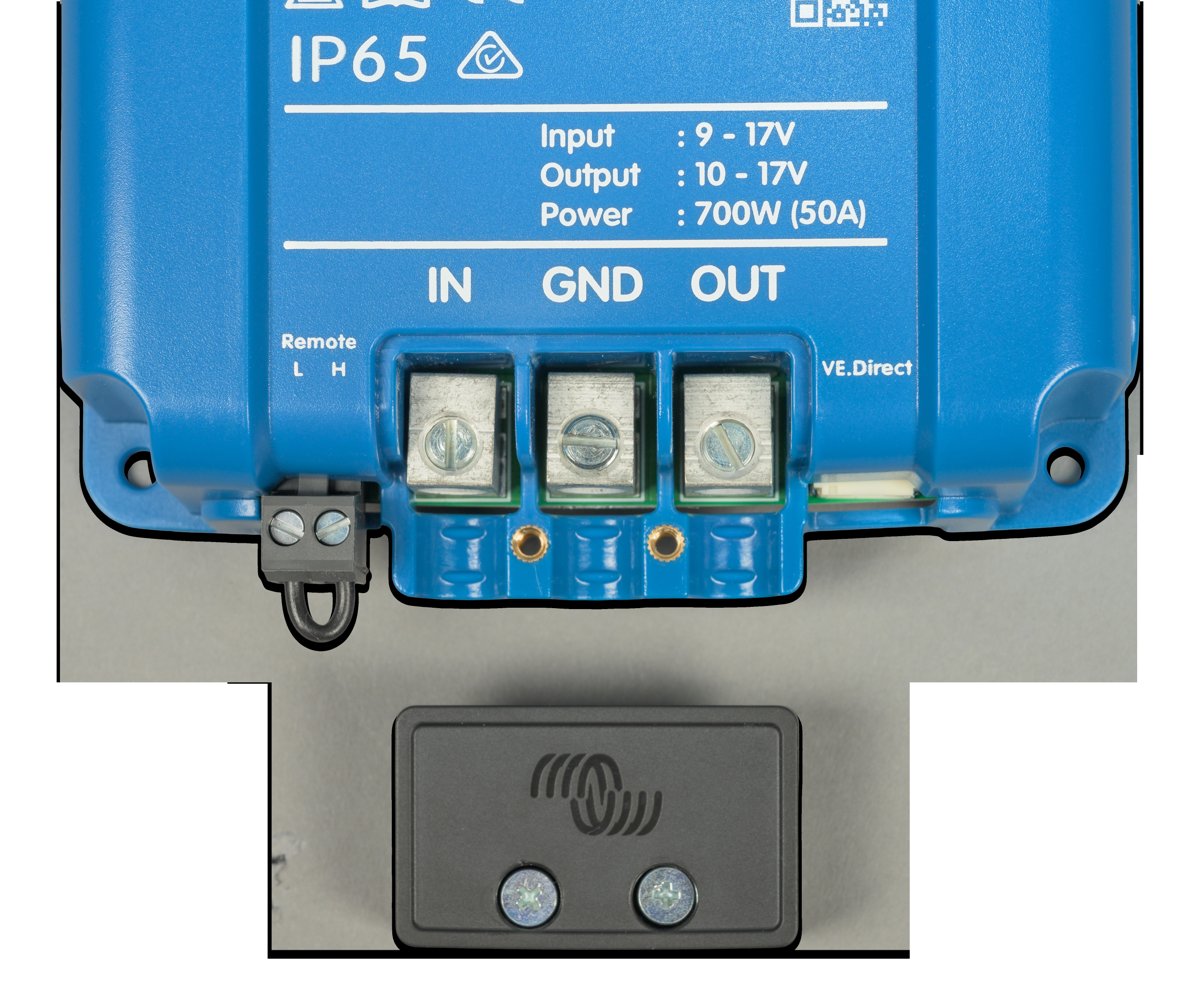
A DC-DC charger sits between the starter battery (or alternator output) and the lithium house bank, converting the alternator's voltage into a proper lithium charge profile rather than just passing through whatever voltage the engine's regulator happens to produce. The Orion XS is Victron's current generation of this device, and it pairs naturally with the Blue Smart IP22 above if you're standardizing on one app and one charge-profile philosophy across shore and engine charging.
- Output current
- Up to 50A or 70A depending on model, 12V
- Input range
- Wide input voltage window with engine-running detection
- Charge algorithm
- Fully configurable multi-stage profiles, including lithium presets
- Monitoring
- Bluetooth Smart with VictronConnect app; optional remote display
Pros
- Engine-running detection avoids draining the starter battery when the engine is off
- Compact heatsink design tucks into tight engine-room spaces better than older Orion models
- Configurable current limits let you protect an alternator that isn't rated for sustained high output
Cons
- 50A/70A output is modest for large lithium banks; multiple units or a higher-output alternative may be needed on bigger boats
- Doesn't replace the need for an external regulator if you're also trying to protect the alternator itself from overheating
Sterling Power ProCharge Ultra
Best high-output multi-bank shore charger
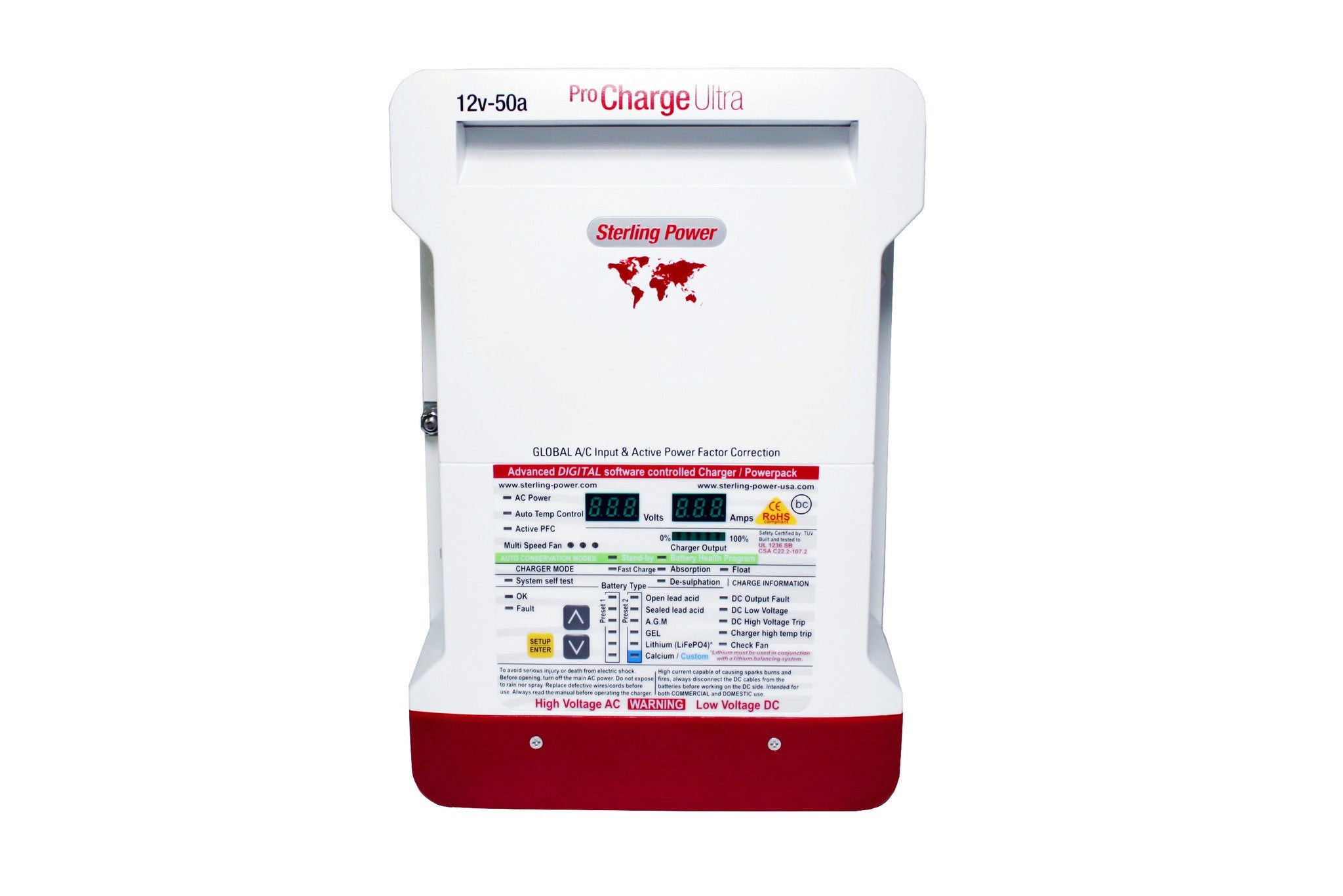
The ProCharge Ultra line is aimed at boats that need real amperage — bigger house banks, multiple charging sources, or an owner who wants full manual control over the charge curve. Its customizable profile is a strength for lithium banks with unusual BMS charge-voltage requirements, but it also puts more responsibility on the installer to get the numbers right rather than trusting a factory lithium button.
- Output current
- 10A to 60A models, 12V/24V/32V/36V/48V variants
- Profiles
- 11 pre-programmed profiles for AGM, gel, flooded, and calcium; user-customizable
- Input range
- Wide AC input 80–270VAC, 40–70Hz, useful on generators or shore power abroad
- Conditioning
- Automatic desulphation and anti-stratification cycling
Pros
- Wide global AC input tolerance is genuinely useful for boats that cruise between countries with different shore power standards
- Programmable custom profile lets an owner dial in a specific lithium BMS charge voltage rather than relying only on presets
- Available in high-current models for larger banks without stacking multiple smaller chargers
Cons
- No factory-dedicated lithium preset on all models — verify the exact charge voltage against your BMS's requirements before relying on a generic profile
- Larger case size than compact units like the Blue Smart IP22, so it needs more panel space
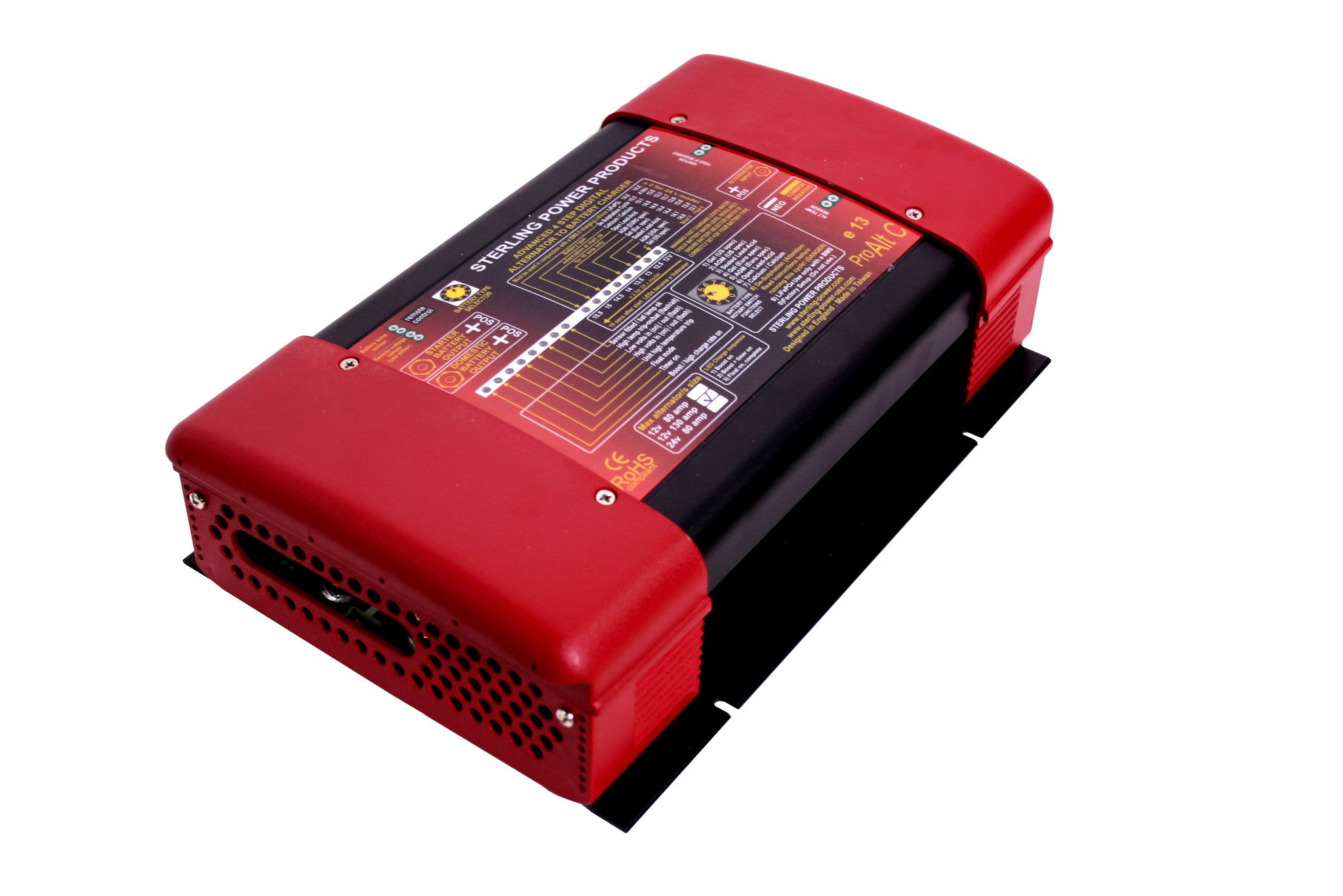
Sterling Power Alternator-to-Battery (A2B) DC-DC Charger
Best DC-DC charger for larger alternator-fed lithium banks
This is Sterling's alternator-focused DC-DC charger line, built specifically for the job of turning raw alternator output into a controlled lithium-safe charge without depending on the engine's factory regulator. It's a sensible step up from a compact unit like the Orion XS on boats with a larger lithium bank or an engine room exposed to damp conditions where a waterproof-rated case earns its keep.
- Output current
- Available in multiple current ratings up to 60A+ depending on model
- Waterproofing
- IP66-rated waterproof versions available for engine-room or wet locker mounting
- Charge profile
- Multi-stage profile with lithium-compatible charge voltage
- Isolation
- Fully isolates the starter battery circuit from the house bank
Pros
- IP66 waterproof variants tolerate engine-room heat, damp, and spray far better than a standard enclosure
- True isolation protects the starter battery from being drawn down by the house bank charging demand
- Higher-current models suit larger lithium banks than a single small DC-DC unit can handle
Cons
- Higher-current models draw meaningfully more from the alternator, so alternator capacity and wiring must be checked first
- More expensive than a basic non-waterproof DC-DC charger for boats that don't need the IP66 rating
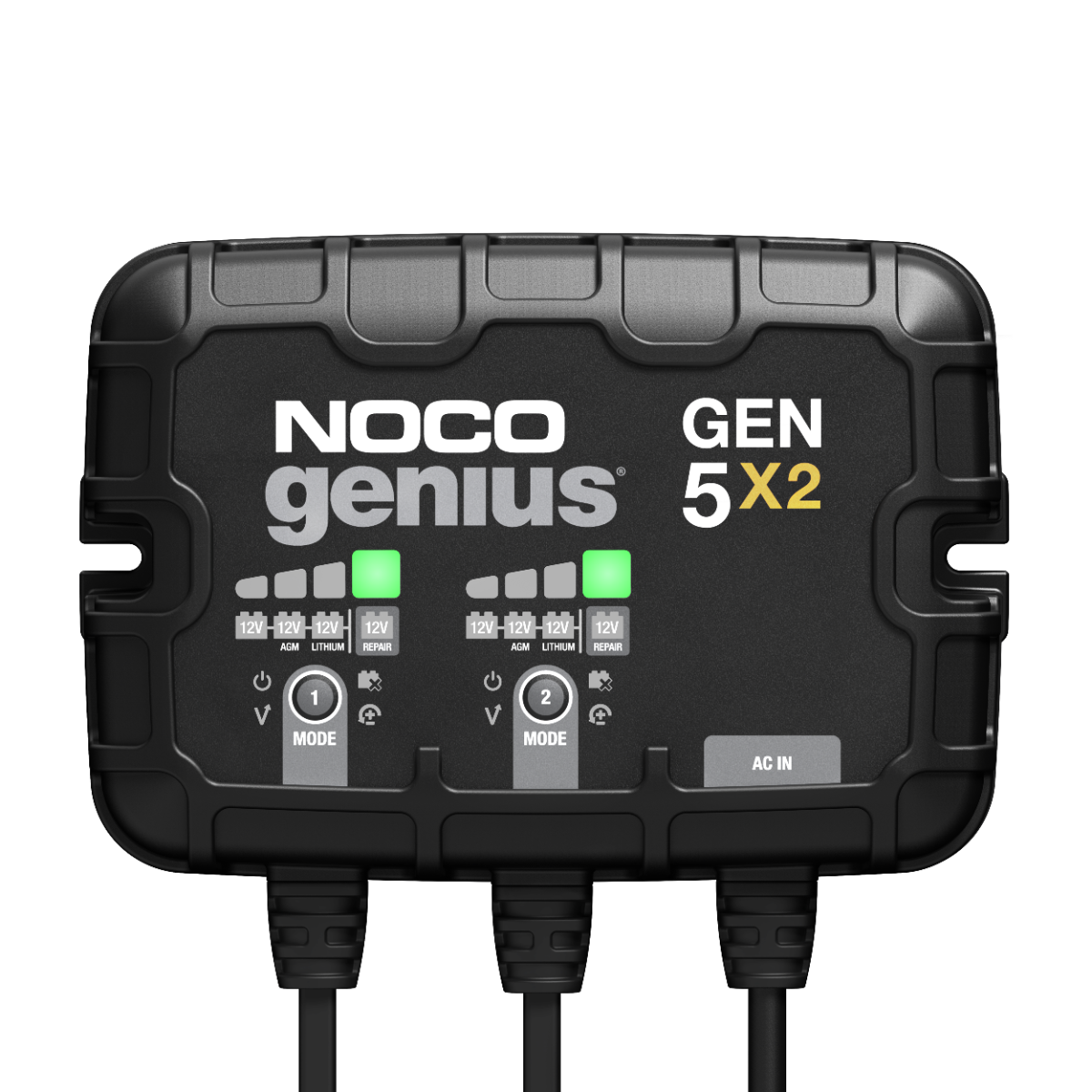
NOCO Genius GEN5X2
Best compact onboard maintenance charger for small boats
The GEN5X2 is a maintenance-and-topping-off charger, not a fast bulk charger — its 5A-per-bank output is meant for keeping batteries topped up between outings or overnight at the dock on a smaller boat, not recharging a deeply discharged large house bank in a hurry. For a small sailboat with a starter battery and a modest house battery, it's an inexpensive, genuinely marine-rated way to avoid chronic undercharging over a winter layup.
- Outputs
- 2-bank, 10A total (5A per bank)
- Compatibility
- Flooded, AGM, and lithium (LiFePO4) presets
- Rating
- Fully waterproof onboard design for permanent installation
- Extras
- Temperature compensation sensor included
Pros
- Genuinely waterproof housing makes it suitable for mounting in a damp lazarette or engine space
- Small footprint and low cost make it easy to justify on a small daysailer or trailer-sailor
- Includes a temperature sensor, which many budget chargers skip entirely
Cons
- 10A total output is too slow to be a primary charger for anything beyond a small house bank or starter battery
- Two banks only — not enough outputs for boats with three or more separate battery groups
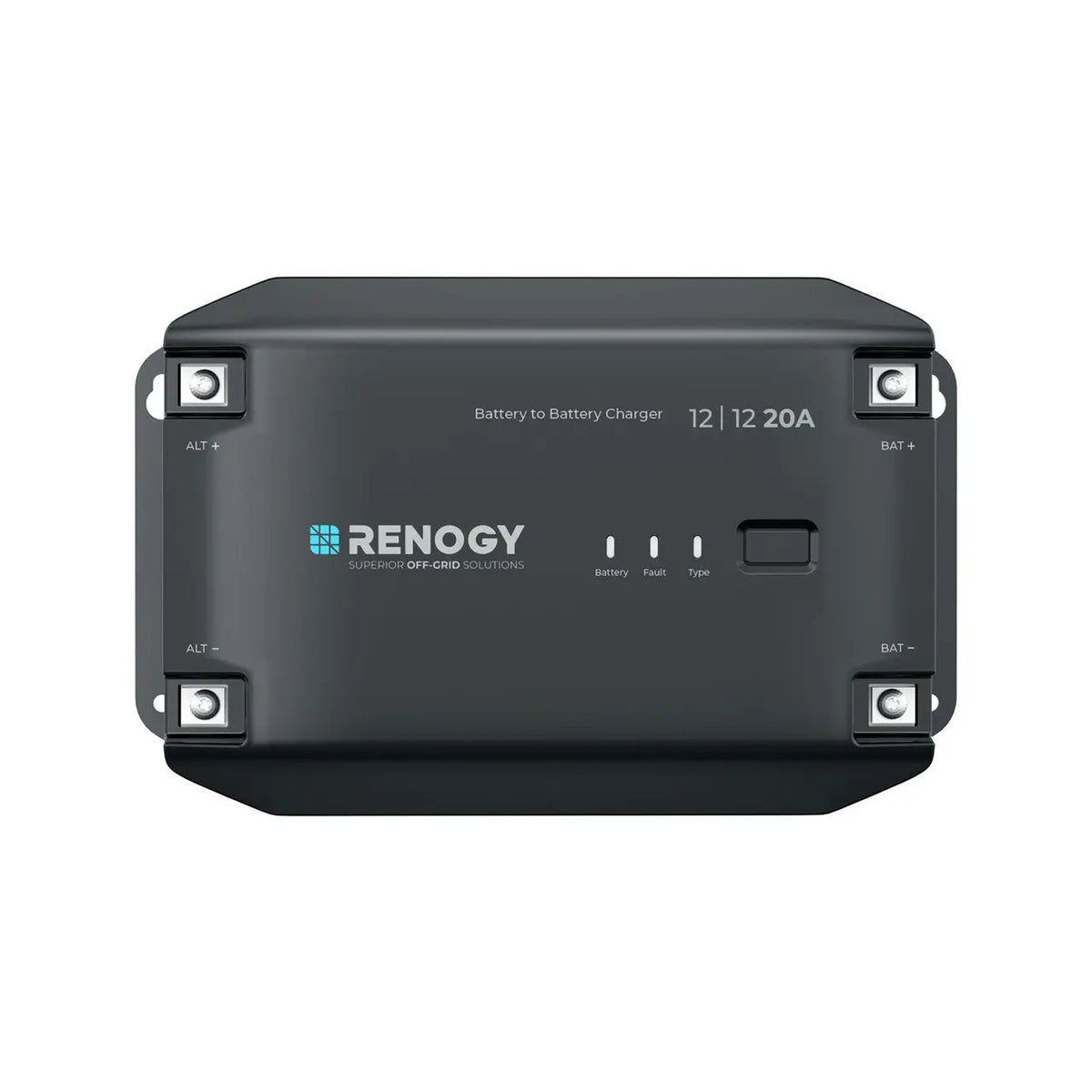
Renogy 12V 20A DC-DC On-Board Battery Charger
Best budget DC-DC charger for smaller lithium upgrades
Renogy's DC-DC charger line is aimed at the RV market, but the same job — converting variable alternator voltage into a safe, regulated lithium charge — applies equally to a small sailboat with a modest house bank. It's a reasonable way to add proper engine-charging support to a first lithium upgrade without the cost of a marine-branded unit, as long as the 20A limit fits the size of bank actually installed.
- Output current
- 20A continuous
- Compatibility
- Flooded, gel, AGM, and lithium battery presets
- Combined input
- Some models accept both alternator and solar input on one unit
- Mounting
- Compact metal case suitable for a lazarette or battery compartment
Pros
- Noticeably cheaper than Victron or Sterling equivalents at a similar output current
- Some Renogy models combine DC-DC and solar charge controller functions in a single box, simplifying wiring
- Straightforward DIP-switch or button battery-type selection with no app required
Cons
- 20A output is on the low side for anything beyond a modest lithium bank on a small-to-midsize boat
- Build quality and long-term reliability reporting is thinner than the more established marine-electronics brands
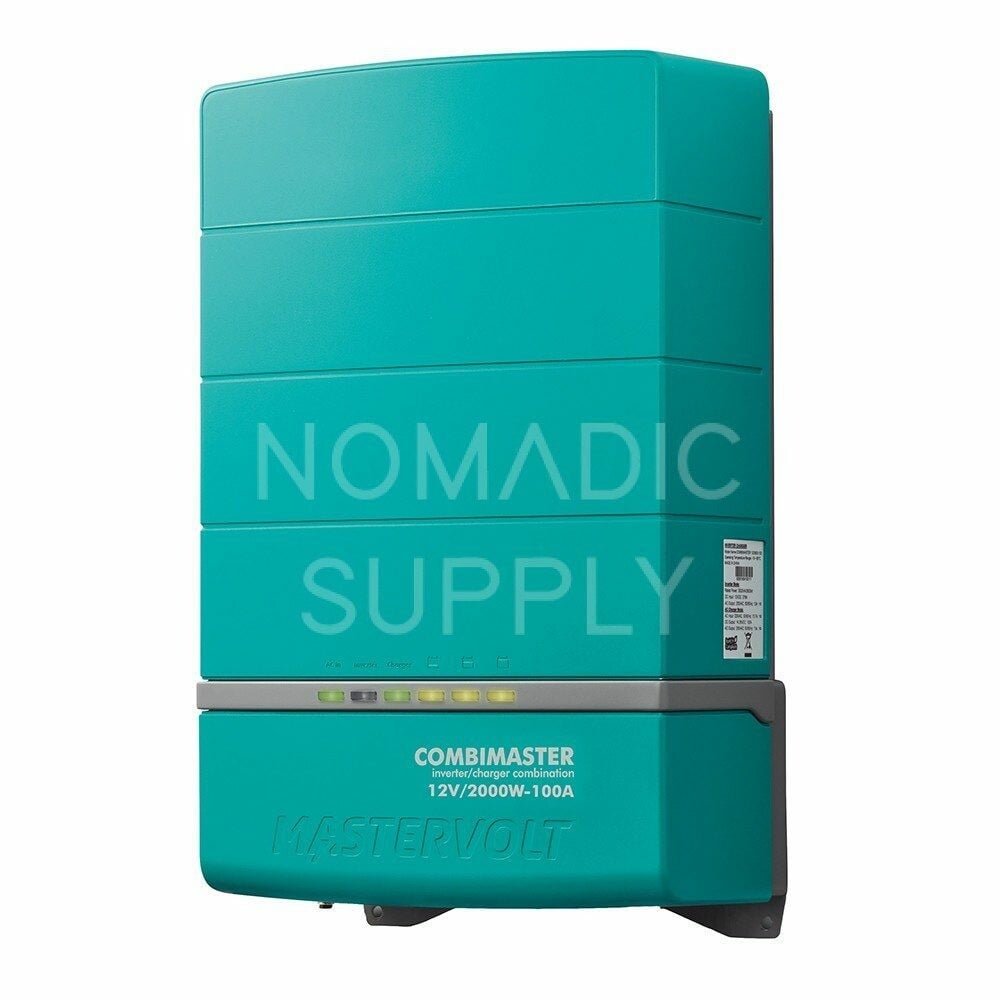
Mastervolt ChargeMaster
Best integrated multi-bank charger for larger cruising boats
Mastervolt's charger line is a common factory fit on larger production and semi-custom cruising boats that already run other Mastervolt gear. Its strength is running several isolated battery banks off one chassis with a real multi-stage curve per bank, which is harder to replicate cleanly with several small standalone chargers. It's overkill for a simple house-and-start two-bank boat, but a sensible fit once a boat has three or more banks to manage.
- Outputs
- Multiple isolated outputs for simultaneous house, start, and bow-thruster banks
- Charge curve
- Adaptive multi-stage charging with selectable battery-type settings
- Networking
- Integrates with Mastervolt's Masterbus monitoring on larger systems
- Build
- Marine-grade sealed enclosure designed for permanent engine-room installation
Pros
- Multiple fully isolated outputs suit boats running three or more separate battery banks
- Masterbus integration lets the charger report into a broader Mastervolt power-monitoring system
- Robust, purpose-built marine enclosure intended for long-term unattended service
Cons
- Higher price point than a single Victron or Sterling shore charger covering the same total amperage
- Full monitoring benefits require buying into the wider Mastervolt ecosystem rather than a standalone display
How to choose
| Product | Price range | Best for | Key spec |
|---|---|---|---|
| Victron Blue Smart IP22 | $150–$260 | Shore-power charging, mixed banks | 1 or 3 outputs, Bluetooth setup |
| Victron Orion XS | $300–$450 | Alternator charging for lithium | Up to 50A/70A, engine-run detection |
| Sterling Power ProCharge Ultra | $300–$700+ | High-output multi-bank shore charging | 10A–60A, wide global AC input |
| Sterling Power A2B DC-DC Charger | $250–$600 | Larger lithium banks off the alternator | IP66 waterproof options, up to 60A+ |
| NOCO Genius GEN5X2 | $130–$200 | Small-boat maintenance charging | 2-bank, 10A total, waterproof |
| Renogy 20A DC-DC Charger | $120–$200 | Budget lithium alternator charging | 20A, lithium/AGM/flooded presets |
| Mastervolt ChargeMaster | $700–$1,500+ | Larger boats with 3+ banks | Multiple isolated outputs, Masterbus |
Budget tiers
Under $250: compact single-purpose shore chargers or entry-level DC-DC units — fine for a small boat or a modest bank, but check output current against your bank size.
$250–$600: the range most cruising boats land in — a proper lithium-capable shore charger paired with a dedicated DC-DC charger for alternator charging.
$700 and up: multi-bank integrated chargers and higher-current DC-DC units for larger boats running three or more separate battery banks off one charging system.
Related guides
 Power
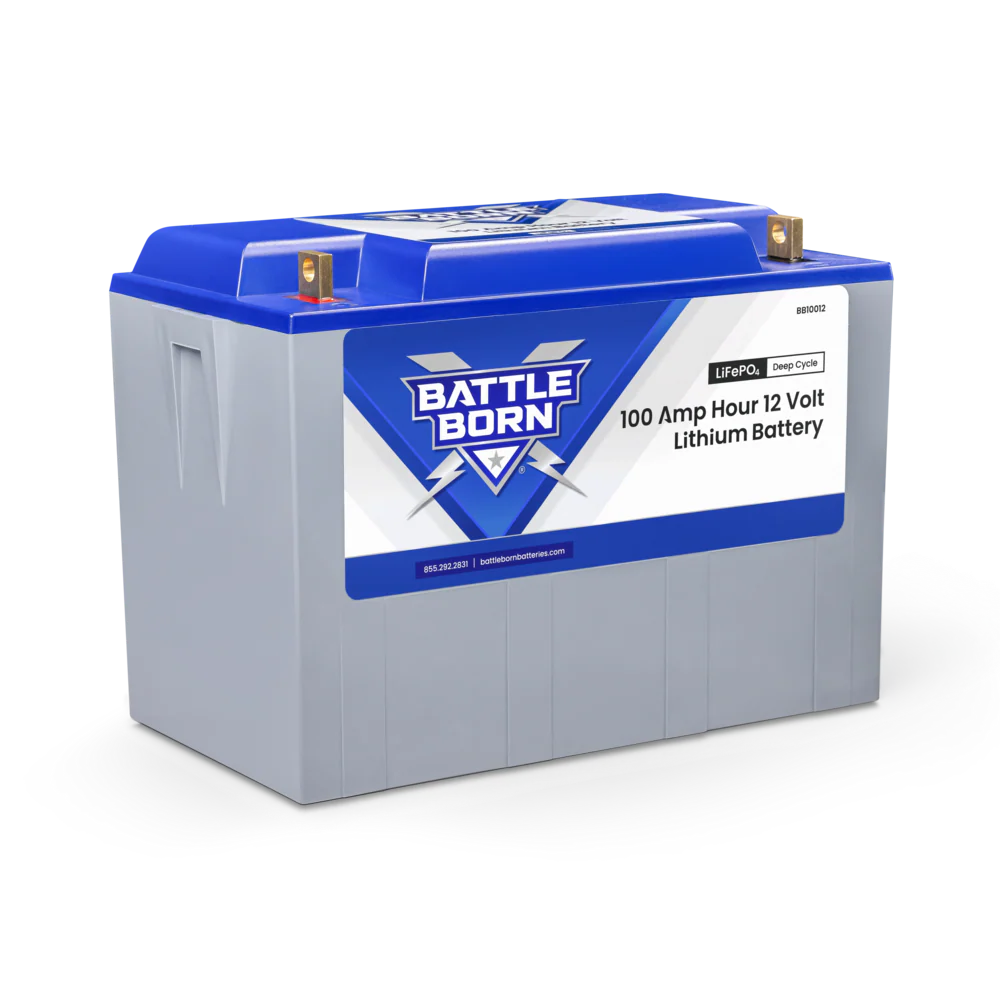
PowerBest Lithium Batteries for Sailboats
LiFePO4 house-bank picks and how to plan a lithium conversion — Battle Born, Victron, Renogy, Epoch, Dakota.
 Power
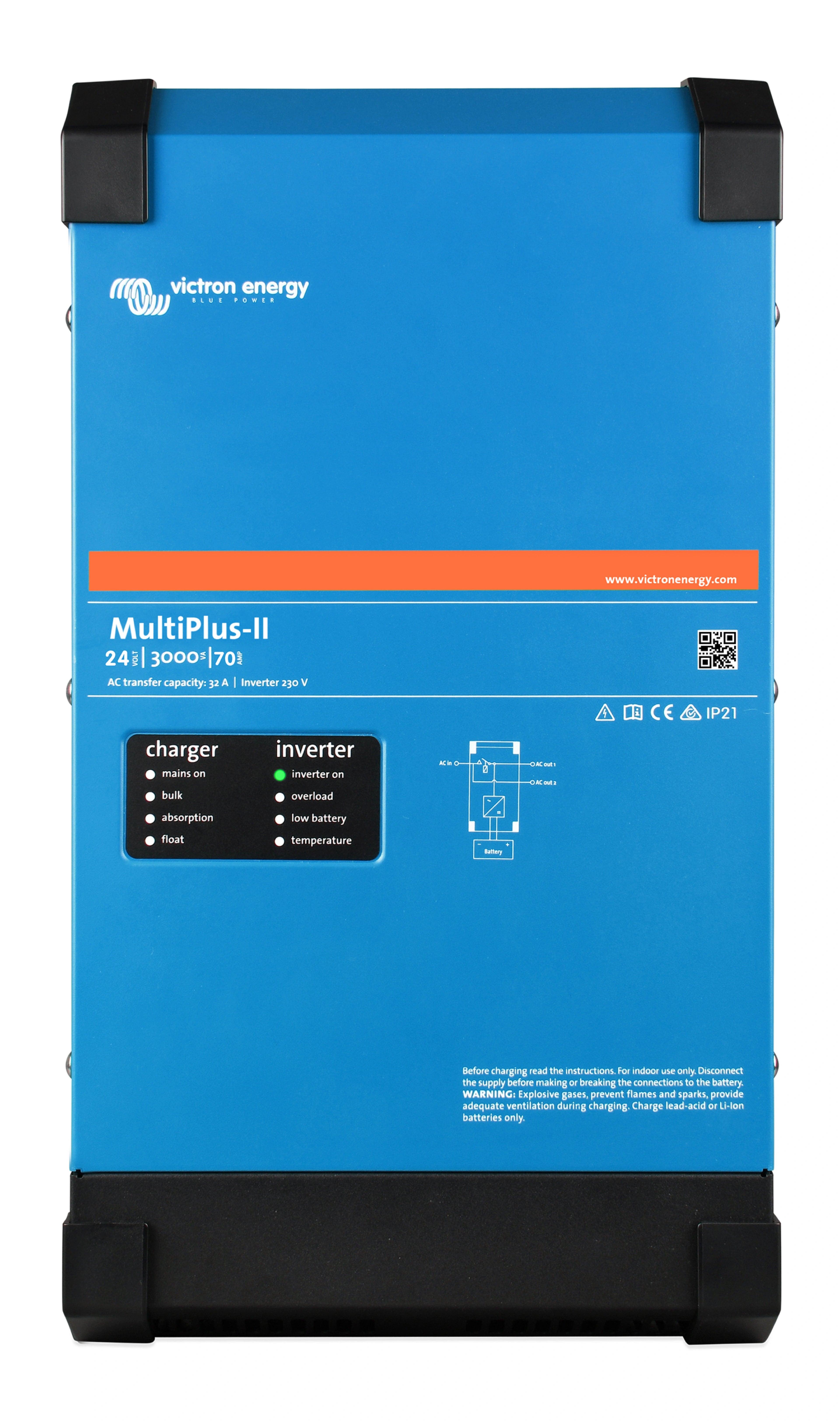
PowerMarine Inverter/Chargers: Victron vs Mastervolt vs Xantrex
How to choose a marine inverter/charger — sizing, LFP compatibility, integration, and the units we'd install today.
 Power
PowerMarine Solar Panels for Sailboats
Rigid vs flexible marine solar panels, how to size an array for your house bank, and top picks for cruising sailors.
 Power
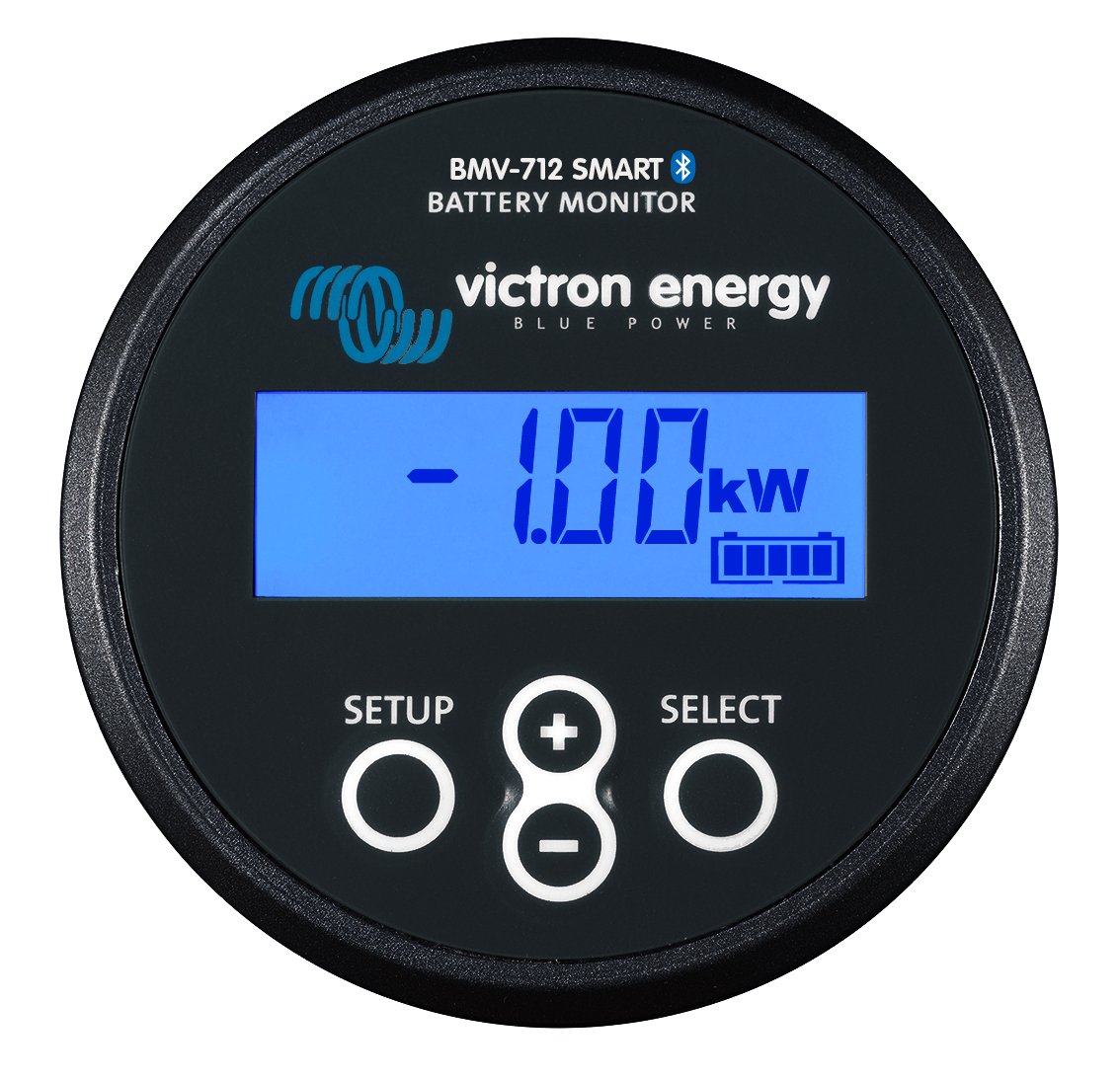
PowerMarine Battery Monitors and Shunts
Why voltage lies on lithium, how shunts measure state of charge, and which Victron, Balmar and Simarine monitors to fit.
Looking for more gear guides? Browse all our gear recommendations or the full guides index.