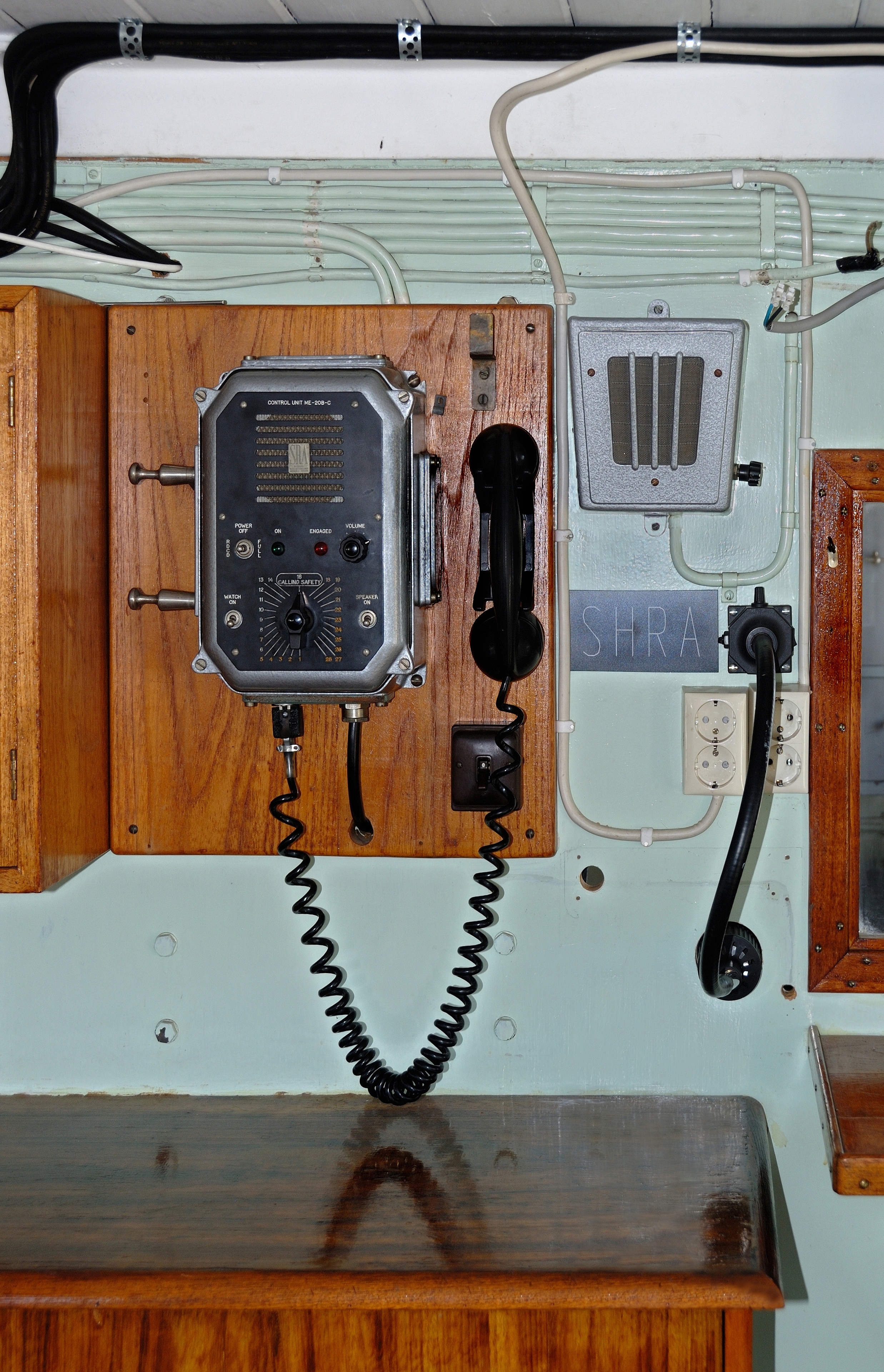
Best VHF Radios for Sailboats (2026)
A VHF radio is the one piece of communications gear every cruising sailboat needs, and it's also the piece most likely to have grown outdated hardware since your boat was built. Here's how to pick a fixed-mount and handheld combination that covers routine hailing, DSC distress calling, and situational awareness of nearby traffic — paired with the specific radios worth buying in 2026.
Sailboat Atlas may earn a commission from qualifying purchases made through links on this page, at no extra cost to you.
Fixed-mount vs. handheld
A fixed-mount VHF, wired to a masthead antenna and the boat's 12V system, transmits at up to 25 watts and benefits from an antenna typically 40-60 feet in the air — both of which translate directly into range. A handheld VHF transmits at 5-6 watts from an antenna at arm's height, which might get you 3-5 miles of reliable range versus 15-25+ miles for a good fixed-mount and masthead antenna setup.
The right answer for most cruising boats is both: a fixed-mount as the primary station for distress calling and long-range hailing, and a handheld as backup and for use away from the helm — in the dinghy, on deck, or in a ditch bag if you ever need to abandon ship.
DSC and MMSI registration
Digital Selective Calling turns channel 70 into a data channel that a VHF uses to send a digitally coded distress alert — your identity, and if GPS-connected, your exact position — to the Coast Guard and any DSC-equipped vessels in range, all with one button press held for a few seconds. Every VHF sold in the US for at least two decades has included DSC, but it only works if the radio is programmed with an MMSI number.
Recreational boaters who stay in US waters get an MMSI free through BoatUS or Sea Tow; if you'll cruise internationally or carry an SSB radio, you need an FCC ship station license and an MMSI issued through the FCC instead. Either way, program the MMSI into the radio during installation — it's frequently skipped, which renders the DSC distress button useless.
Built-in GPS and why it matters for DSC
A DSC distress call is far more useful with an accurate position attached to it. Radios with built-in GPS (like the GX2400, M510, and HX890) generate their own position fix independent of the boat's chartplotter, which matters if the boat's primary GPS or power system is what failed in the first place. Radios without internal GPS need to be wired to an external NMEA 0183 or NMEA 2000 GPS source — skipping this step means a distress call goes out with no position data at all, which is a common and avoidable rigging mistake.
AIS-receiving VHFs
Many mid-range and higher fixed-mount VHFs now include a built-in AIS receiver that displays nearby vessels broadcasting AIS position data, often overlaid on the radio's own screen with CPA/TCPA collision alarms. This is not the same as a standalone AIS transponder, which also broadcasts your own position to other vessels — an AIS-receive VHF only shows you what's out there. For coastal and offshore sailors crossing shipping lanes, an AIS-receive radio is a meaningful safety upgrade for a modest price increase over a DSC-only unit.
Antenna height and coax cable loss
VHF is a line-of-sight radio band, so antenna height above the water is the single biggest factor in real-world range — more so than the radio's wattage. A masthead-mounted antenna will always out-perform a stern-rail or handheld antenna at the same power level. The coax cable connecting radio to antenna matters too: signal loss increases with cable length and drops further with cheap, high-loss cable, so on boats with masthead runs longer than about 50 feet, upgrading to low-loss coax (RG-8X or better) preserves range that would otherwise be lost in the cable itself.
Hailer function, IPX ratings, and FCC rules
Some fixed-mount VHFs support an external hailer/horn speaker, letting the radio double as a loudhailer for anchorage communication or as a substitute fog signal — useful if you don't want to carry a separate air horn for restricted-visibility signaling requirements.
For handhelds, IPX ratings describe water resistance: IPX7 means survival after accidental immersion in about 1 meter of water for 30 minutes, while IPX8 (used on premium handhelds like the HX890) covers deeper and often longer submersion. Neither means the radio is meant for sustained underwater use, but both cover the realistic scenarios of a wave over the rail or a drop over the side.
On the regulatory side, recreational boaters in US waters generally don't need an FCC license to operate a VHF, but international cruising or carrying an SSB radio requires an FCC ship station license and a properly issued MMSI — worth sorting out well before you plan to leave US waters.
Our picks
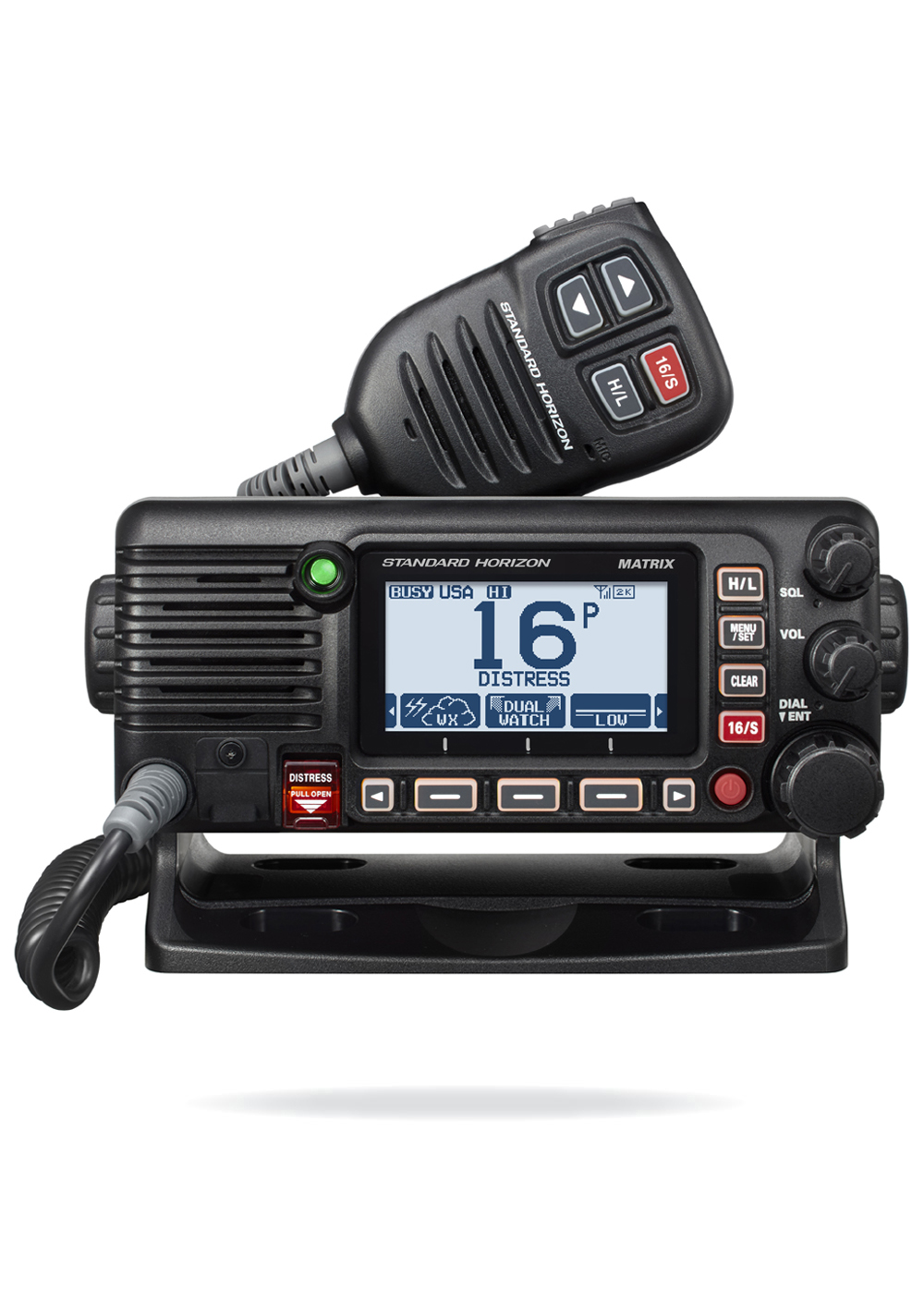
Standard Horizon GX2400 (Matrix AIS+)
Best all-around fixed-mount for a full-time cruiser
The GX2400 is the radio most refit-minded cruisers land on because it does three jobs at once: full DSC calling, GPS position fixing, and AIS target reception, all without needing a separate AIS engine wired into the boat. For anyone doing coastal or offshore passages where knowing ship traffic matters, having AIS built into the VHF (rather than as an afterthought accessory) is worth the premium. It also drives a hailer/foghorn speaker if you add one.
- Power output
- 25W / 1W selectable
- GPS
- Built-in 66-channel GPS receiver
- AIS
- Built-in dual-channel AIS receiver with CPA/TCPA alarms
- DSC
- Class D DSC with dedicated receiver, full RX/TX
Pros
- Integrated AIS receiver plots nearby vessel targets directly on the radio's own screen — no separate AIS box needed
- Built-in GPS means DSC distress calls transmit accurate position even if boat GPS fails
- NMEA 2000 and NMEA 0183 output lets it feed AIS targets to a chartplotter
Cons
- Among the priciest fixed-mount VHFs on the market
- Screen and menu system are dated compared to touchscreen marine electronics
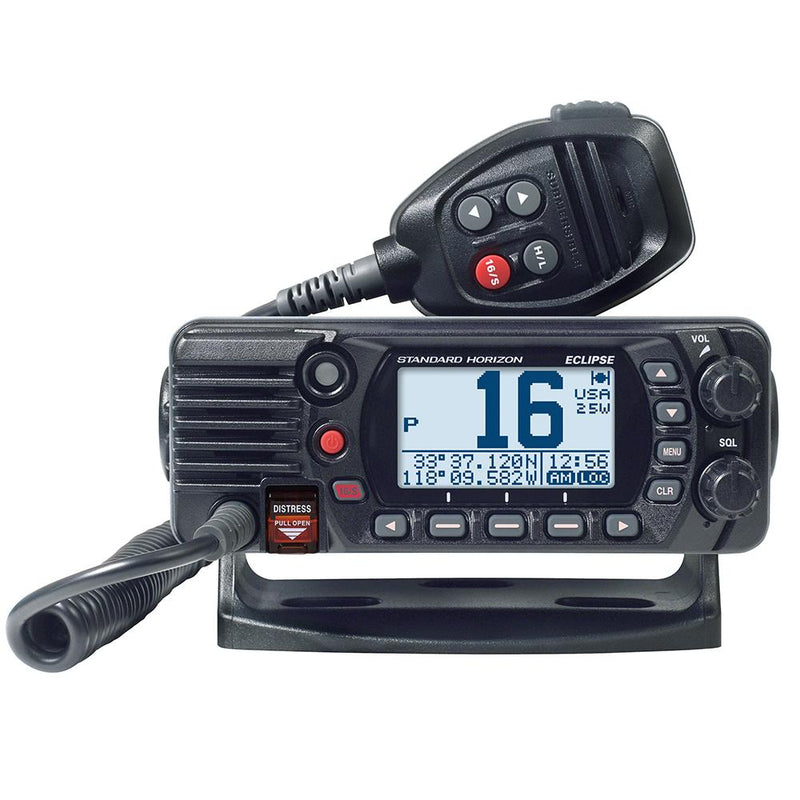
Standard Horizon GX1400
Best budget fixed-mount with full DSC
The GX1400 is the no-frills answer to 'I just need a real fixed-mount VHF with DSC.' It skips the GPS and AIS features of the GX2400 to hit a lower price point, which is fine as long as you wire it to an external GPS source (a chartplotter or dedicated GPS antenna) so DSC distress calls transmit a position. For a coastal daysailer or as a backup second station, it's a sensible, inexpensive choice.
- Power output
- 25W / 1W selectable
- GPS
- None built-in; requires external NMEA GPS input
- AIS
- Not included
- DSC
- Class D DSC, full RX/TX
Pros
- Inexpensive way to get compliant Class D DSC calling on a boat that doesn't have it yet
- Simple, reliable interface with large, easy-to-read buttons
- Compact housing fits nav stations where panel space is tight
Cons
- No internal GPS — DSC distress calls won't include position unless you wire in a GPS feed
- No AIS receive capability at all
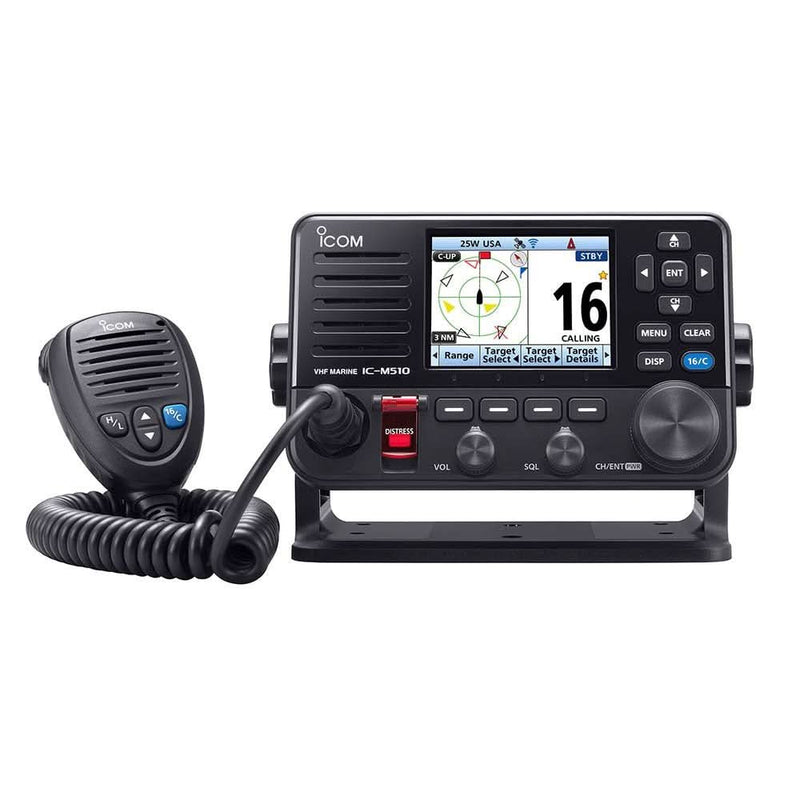
Icom M510
Best fixed-mount for Wi-Fi and smartphone integration
Icom built the M510 for sailors and powerboaters who want their VHF to behave a bit more like modern electronics. The Wi-Fi link to a phone app lets you monitor channels, see AIS targets, and even respond to calls without walking back to the nav station — genuinely handy on a short-handed boat. Combined with GPS and AIS receive, it's a strong alternative to the GX2400 if the smartphone integration appeals to you.
- Power output
- 25W / 1W selectable
- GPS
- Built-in GPS receiver
- AIS
- Built-in AIS receiver
- Extras
- Wi-Fi remote control via Icom smartphone app, active noise cancelling mic
Pros
- Control and monitor the radio from a phone over Wi-Fi — useful from the cockpit or down below
- Color display and clean UI feel more modern than most marine VHF interfaces
- Active noise-cancelling on the mic makes transmissions clearer in high wind and engine noise
Cons
- Wi-Fi remote features add complexity some sailors will never use
- Command mic accessory (for a true second station) is sold separately and adds cost
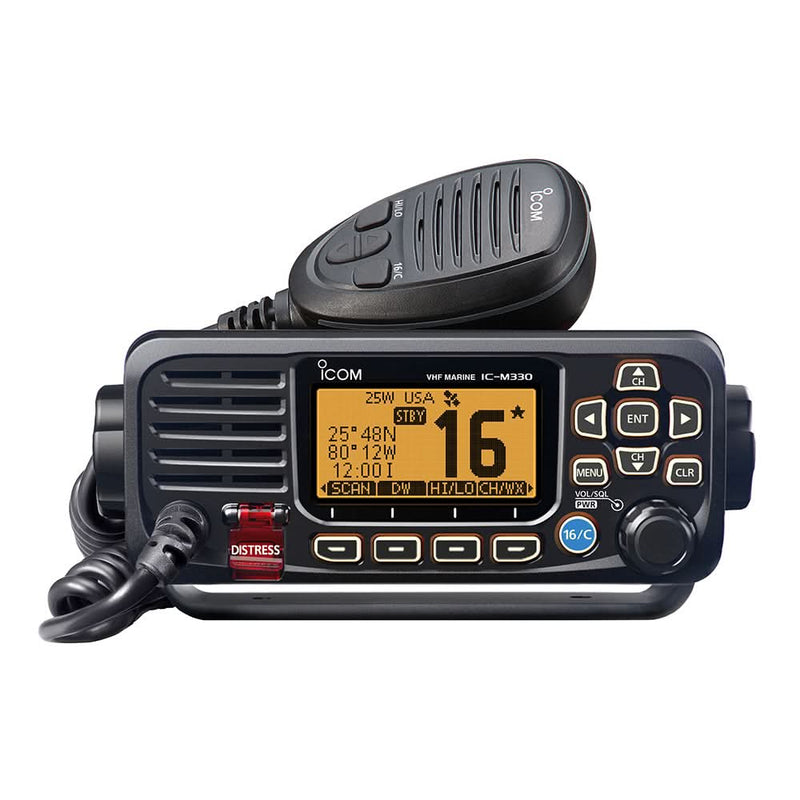
Icom M330
Best simple fixed-mount from a proven brand
The M330 is Icom's answer to the GX1400 — a straightforward, no-surprises fixed-mount VHF for the boat that just needs reliable DSC calling. It's a good pick if you already trust Icom's handheld or SSB gear and want to keep brands consistent, or if a chartplotter is already supplying GPS position over NMEA to feed the DSC function.
- Power output
- 25W / 1W selectable
- GPS
- None built-in; accepts external NMEA 0183 GPS input
- AIS
- Not included
- DSC
- Class D DSC, full RX/TX
Pros
- Rugged, submersible housing with a reputation for long service life
- Backlit buttons and display are easy to read at the helm at night
- Simple setup — no unnecessary menu depth for basic DSC use
Cons
- No AIS or internal GPS, so it's behind the GX2400/M510 tier on capability
- Speaker output is adequate but not as loud as dedicated hailer-capable models

Standard Horizon HX890
Best handheld VHF overall
The HX890 is the handheld that most liveaboards end up keeping in the cockpit or ditch bag regardless of what fixed-mount they run below. Floating, submersible, with its own GPS, it functions as a genuine backup radio if the boat loses power or the mast (and antenna) goes over the side — a real scenario worth planning for. It's also the radio most sailors grab to hail a marina or dinghy without walking to the nav station.
- Power output
- 6W / 3W / 1W selectable
- GPS
- Built-in 66-channel GPS with floating position display
- Waterproofing
- IPX8 submersible (1.5 m / 30 min); floats
- DSC
- Class H DSC (position sent, but no dedicated DSC receiver channel monitoring)
Pros
- Floats face-up if dropped overboard and survives full submersion — the standard to beat for handhelds
- Built-in GPS lets it double as a basic chartplotter and log man-overboard position instantly
- Large screen and intuitive menus compared to older handheld VHFs
Cons
- 6W output and small antenna mean much shorter range than any fixed-mount setup
- Battery life, while good, still requires charging discipline compared to a hardwired radio
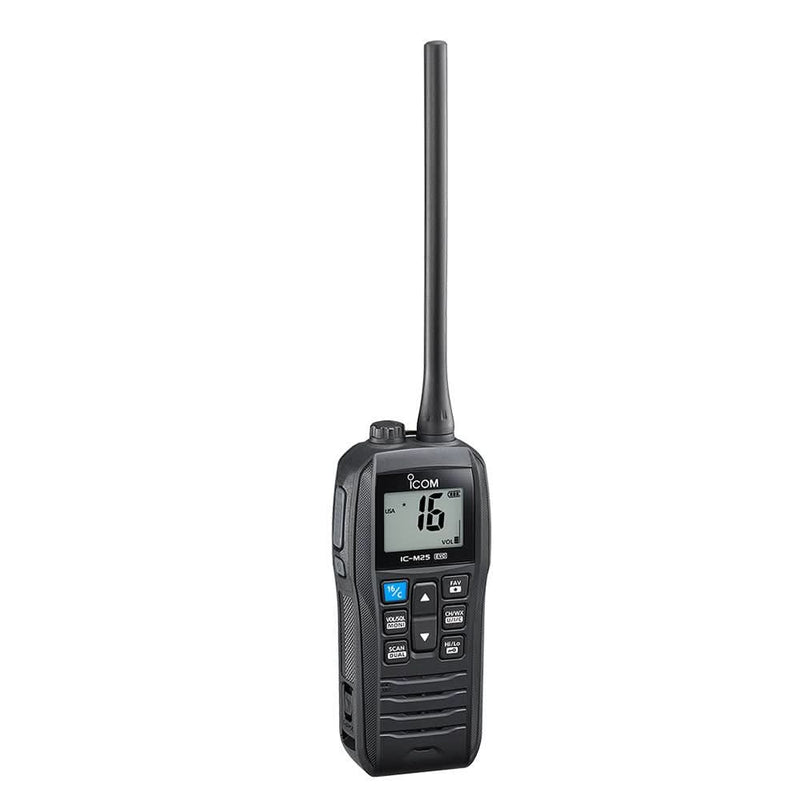
Icom M25
Best compact handheld for backup and dinghy use
The M25 isn't trying to be a full-featured backup radio — it's the cheap, tough handheld you keep in the dinghy, hand to a guest, or stash as a genuine spare that doesn't hurt to lose overboard. Skipping GPS and DSC keeps the price and size down, which is the right tradeoff for a boat that already has a properly equipped DSC/GPS fixed-mount and a more capable handheld like the HX890 for emergencies.
- Power output
- 5W / 2W / 0.5W selectable
- GPS
- None built-in
- Waterproofing
- IPX7 submersible (1 m / 30 min); floats, flashes on contact with water
- DSC
- Not included
Pros
- Small, light, and inexpensive enough to keep a spare on board or one in the dinghy
- Floats and lights up automatically if it goes in the water, making it easy to spot
- Long battery life relative to its compact size
Cons
- No GPS or DSC, so it can't send a position-tagged distress call the way the HX890 can
- Antenna and power ceiling limit range more than larger handhelds
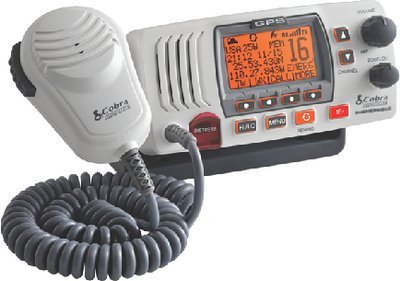
Cobra MR F77B
Best value fixed-mount with hailer support
The MR F77B is the budget option for sailors who want a properly functioning DSC VHF with hailer capability without paying Standard Horizon or Icom prices. It covers the legal and practical basics — DSC distress calling, 25W transmit, hailer output — and the Rewind-Say-Again feature is a small but genuinely useful touch. Pair it with a GPS feed from the chartplotter and it's a perfectly serviceable primary radio for a coastal cruiser.
- Power output
- 25W / 1W selectable
- GPS
- None built-in; accepts external NMEA GPS input
- Hailer
- Compatible with external hailer/horn speaker
- DSC
- Class D DSC, full RX/TX
Pros
- Consistently one of the lowest-priced full-DSC fixed-mount VHFs available
- Rewind-Say-Again feature replays the last 20 seconds of received audio — useful in noisy cockpits
- Supports an add-on hailer/foghorn speaker for anchorage announcements and fog signals
Cons
- Build quality and long-term durability reviews are more mixed than Standard Horizon or Icom
- No AIS receive and no internal GPS
How to choose
For most cruising sailboats, the winning combination is a DSC/GPS/AIS-capable fixed-mount as the primary station and a floating, submersible handheld as backup. Budget and feature priorities should drive which tier you land in:
| Tier | Pick | Why |
|---|---|---|
| Budget fixed-mount | Standard Horizon GX1400 / Cobra MR F77B | Full DSC calling at the lowest reasonable price; pair with a GPS feed from the chartplotter |
| Mid-range fixed-mount | Icom M330 | Proven build quality, straightforward operation, no unnecessary extras |
| Full-featured fixed-mount | Standard Horizon GX2400 / Icom M510 | Built-in GPS and AIS receive for offshore and shipping-lane sailing |
| Primary handheld/backup | Standard Horizon HX890 | Floats, submersible, built-in GPS — the serious backup-radio choice |
| Spare/dinghy handheld | Icom M25 | Cheap, compact, tough enough to not worry about losing |
Once you've settled on a radio, make sure the installation matches its capability: run a proper masthead antenna and low-loss coax for the fixed-mount, feed it GPS if it doesn't have its own, and register an MMSI before you ever need to press the distress button. See our guides on chartplotters and other cruising electronics for how a VHF fits into the rest of your nav station.
Frequently asked questions
Do I need both a fixed-mount and a handheld VHF?
Most experienced cruisers carry both. The fixed-mount, with its taller masthead antenna and 25W output, is your primary radio for range and DSC distress calling. A handheld is your backup if the boat loses power or the mast comes down, and it's what you grab for the dinghy or to hail another boat from the cockpit.
What is DSC and do I need to register an MMSI?
Digital Selective Calling (DSC) lets a VHF radio send a one-button distress alert with your position (if GPS-connected) and vessel identity to the Coast Guard and nearby boats. To use DSC you need a Maritime Mobile Service Identity (MMSI) number, which recreational boaters in the US get for free from BoatUS or the FCC (an FCC ship station license is required if you'll cruise internationally or use a marine SSB).
What does an AIS-receiving VHF actually do?
It has a built-in receiver that picks up AIS position broadcasts from nearby ships and displays them as targets, often with CPA (closest point of approach) and TCPA (time to closest approach) alarms. It only receives — it doesn't broadcast your own position like a standalone AIS transponder does, but it's a major safety upgrade for offshore or shipping-lane sailing at a fraction of the cost of a full transponder.
How much does antenna height and cable loss matter?
VHF range is fundamentally line-of-sight, so antenna height matters more than radio wattage — a masthead antenna on a 45-foot rig will out-range a taller-wattage radio on a low antenna. Coax quality and length matter too: cheap or excessively long coax runs bleed off signal before it ever reaches the antenna, so low-loss cable (RG-8X or better for long runs) is worth the extra cost on a tall rig.
What do the IPX ratings on handheld VHFs mean?
IPX7 means the radio survives accidental immersion in about 1 meter of water for 30 minutes; IPX8 (used on radios like the HX890) is rated for deeper, longer submersion, typically 1.5 meters for 30 minutes. Neither rating means the radio is meant to be used underwater continuously, but both are enough to survive a rain squall, a wave over the rail, or a drop over the side.
Is a VHF hailer/loudhailer feature worth having?
It's a nice-to-have rather than essential: a hailer lets the radio's speaker double as a loudhailer for anchorage announcements or a foghorn substitute in restricted visibility. If you already need a fog signal aboard and don't want to carry a separate air horn, a hailer-capable VHF and matching external speaker covers that requirement.
Can I legally use a handheld VHF as my only radio?
There's no rule against it for recreational boats, but it's not advisable beyond small boats or dinghies. Handheld radios transmit at a fraction of the power of a fixed-mount and their antennas sit much lower, so both range and reliability suffer — most cruisers treat a handheld as a backup, not a primary station.
Related guides
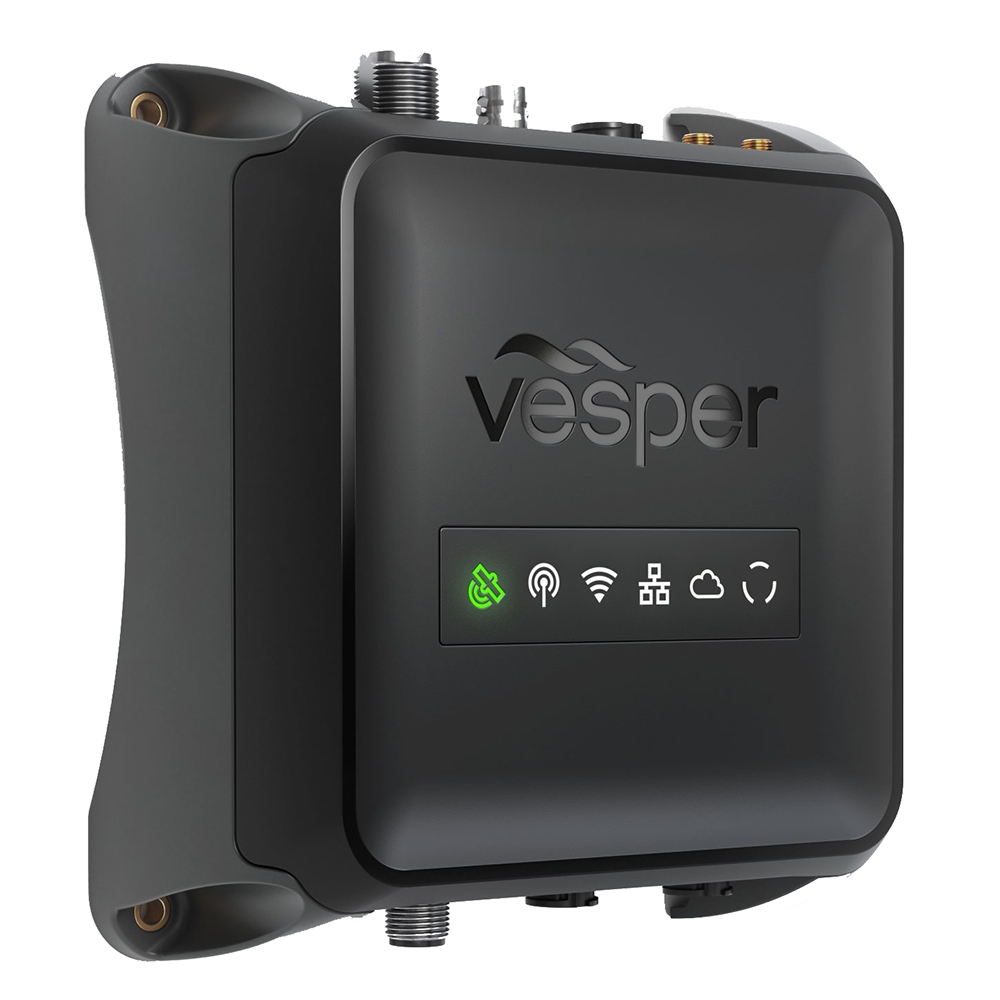 Navigation
AIS Transponders for Sailboats
AIS transponders for cruising sailboats — Vesper Cortex, em-trak, integrated VHF options, and why SOTDMA matters.
 Navigation
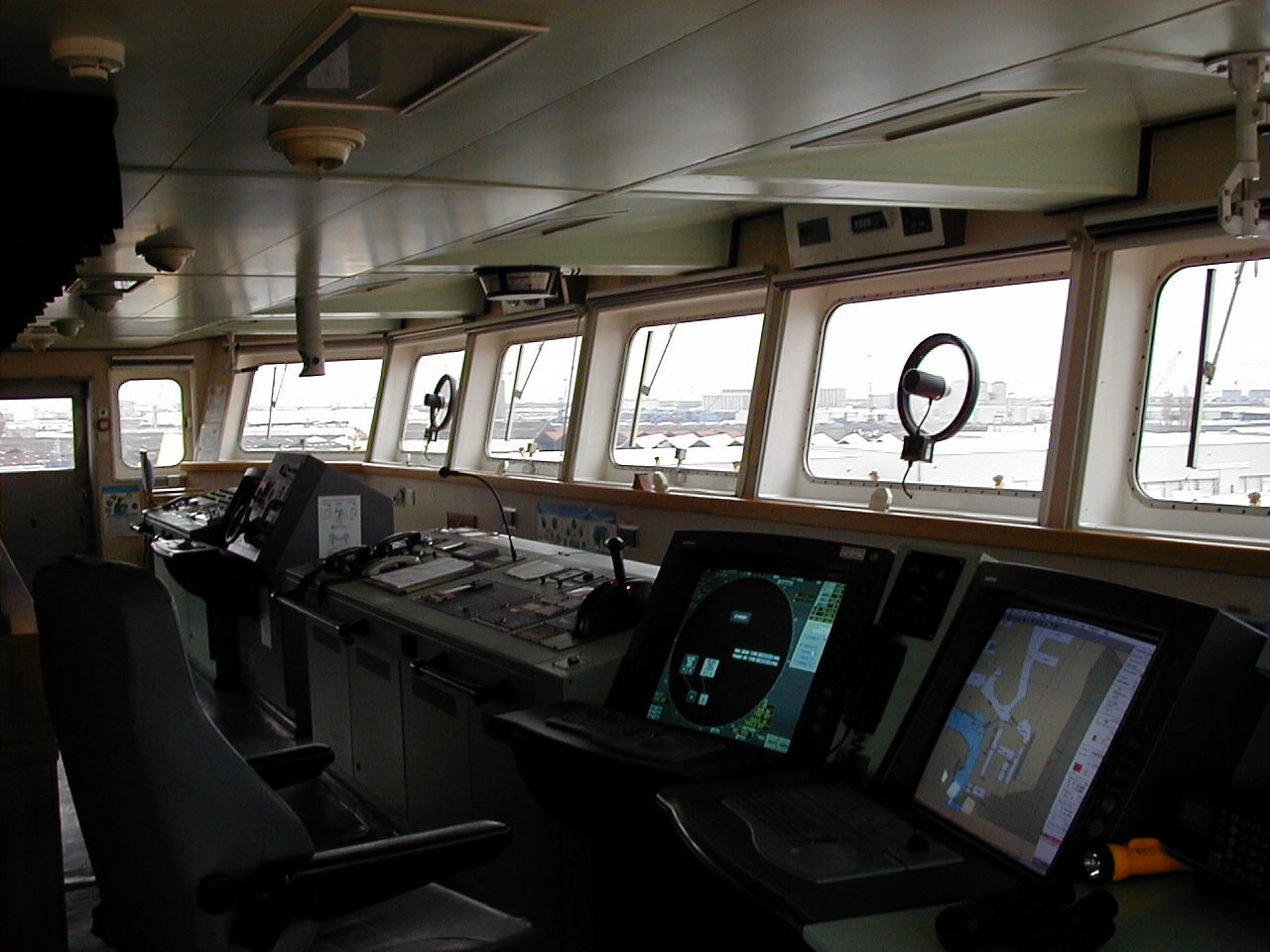
Radar vs AIS vs Thermal: Avoiding Collisions
What radar, AIS and thermal cameras each see and miss at sea, and how to combine them for a real watchkeeping system.
 Navigation
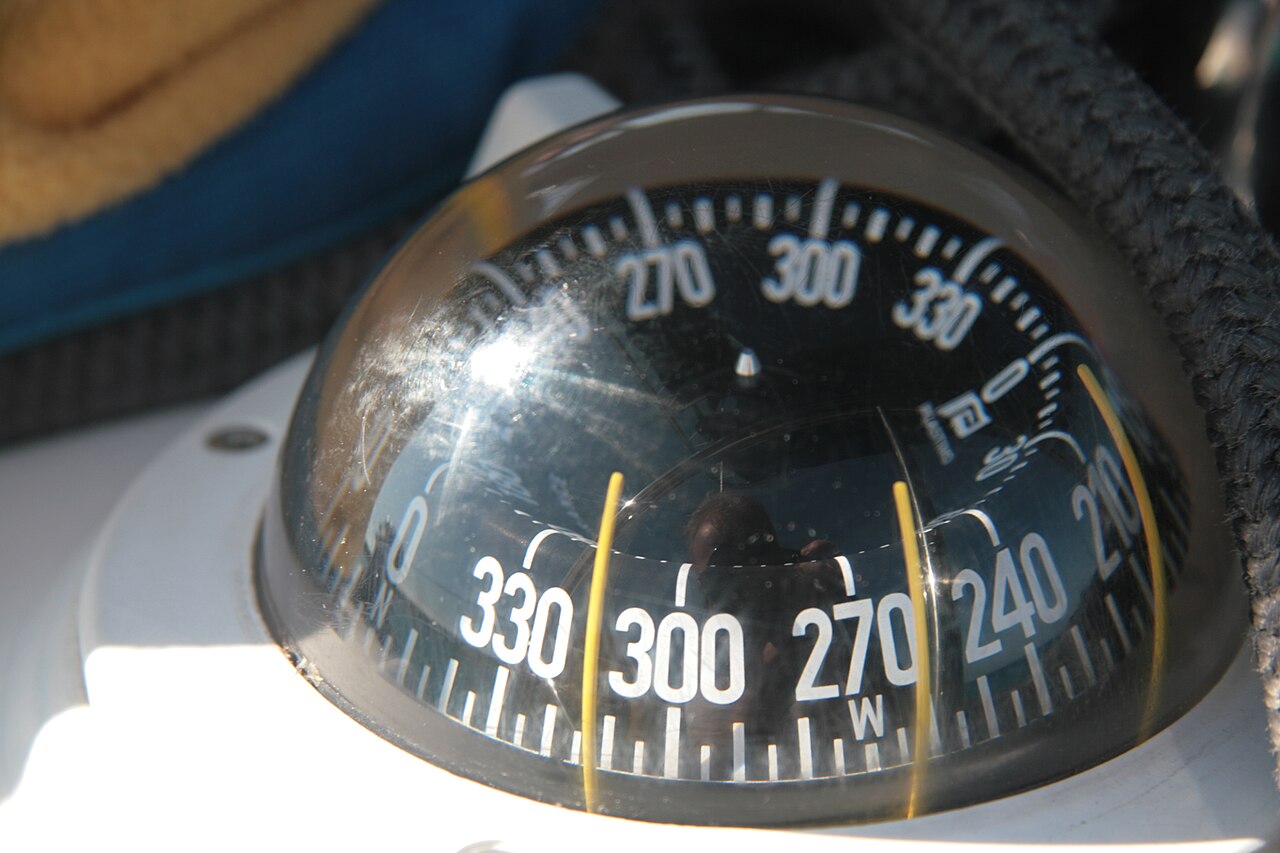
Best Boat Compasses: Steering and Handheld Picks
Card size, heel, mounting, lighting and deviation: choosing a magnetic compass for a sailboat.
 Navigation
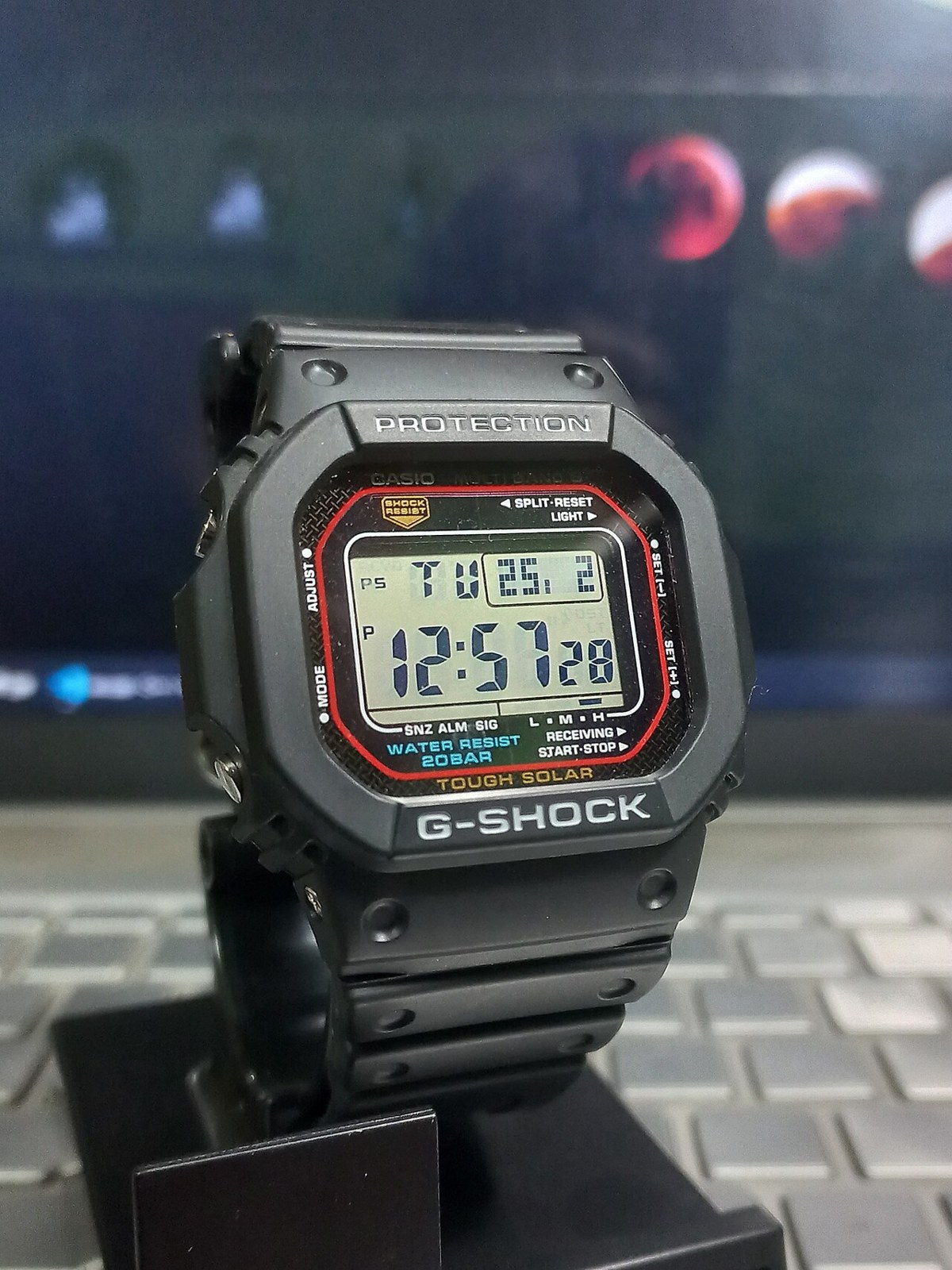
Sailing Watches: Race Timers and Cruising Choices
Countdown controls, water resistance, readability and battery care: choosing a practical watch for racing and cruising.
Looking for more gear guides? Browse all our gear recommendations or the full guides index.