Sailing Watches: Race Timers and Cruising Choices
Choose a sailing watch for the job: a Casio G-Shock GW-M5610U is worth considering for physical countdown controls and solar power. A Garmin Instinct 2 Solar adds GPS recording, but should not be bought as a replacement for marine charts or a dedicated regatta instrument.
For a cheap splash-tolerant clock, the Casio F-91W remains an option, not our swimming or rescue recommendation. The distinction matters: sailing watches span everything from basic digital timepieces to dedicated start-line tools, and paying more does not automatically buy the functions your crew needs.
Sailboat Atlas may earn a commission from qualifying purchases made through links on this page, at no extra cost to you.
What a sailing watch should do before you pay for extras
For most cruising sailors, the useful watch is the one you can read instantly, reset with wet fingers, and leave on while handling lines. A clear time display and a dependable alarm do more everyday work than a screen full of sailing numbers. A watch cannot replace a lookout, a chartplotter, or an independently planned passage; a flat battery should be inconvenient rather than a navigation emergency.
Racing adds a different requirement: a countdown that can be synchronized to the committee boat's starting signal. An ordinary countdown reaches zero, but a dedicated race timer may let you correct a missed signal without starting over. Do not assume that a watch advertised for sailing includes that correction. Read the manual and rehearse a five-minute sequence before you buy or before your first race.
Consider how the watch fits into your actual sailing day. A day sailor may only need elapsed time and an alarm for the tide. An offshore watchkeeper needs an easily checked night display and a way to wake for a change of watch. A racer who already has reliable instruments may want a simple large countdown instead of duplicating speed and heading on their wrist. Choose the job first, then the device.
How to read water-resistance ratings on a boat
Water resistance is not a promise that you can operate every button underwater or wear the watch for any activity at that depth. Manufacturers test products under defined conditions, and seals deteriorate with age, battery changes, knocks, and contamination. Use the maker's activity guidance for the exact model rather than converting a printed metre rating into a diving limit.
Spray, immersion during a dinghy landing, and swimming are different use cases. If swimming is routine, choose a watch whose documentation explicitly permits it. A budget watch marked only water resistant may tolerate splashes without being an appropriate swim watch. Salt crystals also collect around pushers and beneath straps: after exposure, rinse according to the maker's instructions and let the watch dry without cooking it on a hot dashboard.
The strap is part of water security. Inspect the buckle, spring bars, and attachment holes before a passage. A good seal is irrelevant if a worn strap drops the watch into the anchorage. After a replacement battery, ask whether the service includes the manufacturer's recommended seal inspection or pressure test; a working display does not prove that the case remains watertight.
Screen readability matters more than a long feature list
Check the time at arm's length, not only in a close-up photograph. Small secondary fields that look sharp at a desk can be difficult to read when the boat is pitching. Wear polarized sunglasses during the check and turn your wrist through the angles you use at the helm. Reflections and polarization can change legibility; no specification sheet proves the display will suit your eyes.
At night, assess both how you turn on illumination and how bright it becomes. A light that requires your other hand may be awkward when that hand is on the wheel. A glowing screen can distract your lookout and reduce dark adaptation. Test its timeout and any gesture setting before a night passage, and use the least intrusive level available rather than assuming the brightest setting is safest.
Physical controls often beat touch controls when hands are wet or gloved, but even pushers differ in size and resistance. Try starting, stopping, and resetting a timer without looking at the watch. Avoid experiments while steering through traffic. A simple sequence that you have practised ashore is more useful than sophisticated controls that require you to open a menu at the starting line.
Countdown timers, chronographs and alarms are not interchangeable
A chronograph is a stopwatch: it counts time upward. A countdown counts toward a preset zero. An alarm alerts at a clock time. These functions solve different problems, and a watch can have one without the others. For a race start you normally want a countdown; for timing a manoeuvre or logging an elapsed leg, a stopwatch may be enough.
Read the reset behaviour carefully. A timer that rolls straight into another interval can be useful for training but confusing at a start if the display has already moved on when you glance at it. Determine whether the alert is audible, vibrates, or both. Wind, an engine, and foul-weather sleeves can hide an alarm, so do not make a wrist alert your only reminder for a critical navigation decision.
For watchkeeping, consider a separate cabin alarm as backup. Fatigue is not solved by a device on your wrist. Set the correct local or ship's time, check daylight-saving changes where relevant, and agree on one convention for the crew. The most expensive watch still produces the wrong handover if half the crew uses another time zone.
Battery life offshore: separate a clock from a GPS receiver
Manufacturer battery figures describe specific modes and assumptions. A basic digital watch can run for years on a coin cell, while a rechargeable watch recording GPS continuously may need much more frequent charging. These are different tools, not evidence that one maker has a better battery. Compare the operating mode you will actually use and keep quoted estimates qualified.
GPS is the satellite positioning system; receiving a position does not mean a watch contains marine charts or can send an emergency message. A track recorder can be useful for reviewing a passage, but it is not a substitute for a marine navigator with appropriate charts. Satellite messaging is another capability entirely. Check the exact model rather than assuming a GPS logo includes communications.
Rechargeable watches add a cable, clean charging contacts, and another energy demand aboard. Keep the cable dry and accessible, and charge before leaving rather than discovering corroded contacts halfway through a watch. If you depend on a recording function, run a realistic day-long trial with your chosen settings. Retain an independent time source and navigation backup instead of building the passage plan around a best-case advertised runtime.
Straps, corrosion and snagging around sheets and winches
A sheet is a line used to adjust a sail; it can load suddenly as the boat changes course. Keep a watch strap close-fitting enough that loose ends do not catch on equipment, but not so tight that it restricts circulation. A bulky case or a metal bracelet may interfere with gloves or a jacket cuff. Try the whole clothing combination rather than judging wrist fit in a short-sleeved shop visit.
No strap makes it safe to put your wrist near a turning winch or a loaded loop of line. Keep hands and loose clothing clear, and remove accessories if the task makes snagging likely. Check underneath the watch after a wet day: retained salt and moisture can irritate skin even when the case itself is unaffected.
Clean and inspect rather than chasing a maintenance-free label. Replace cracked straps before a trip, check the buckle tongue engages fully, and follow the manufacturer's cleaning instructions. For a watch with sensors, accumulated sunscreen or dirt can affect contact. Comfort, simple maintenance and replaceable parts are reasonable buying priorities even when they are less exciting than a list of electronic features.
Our picks
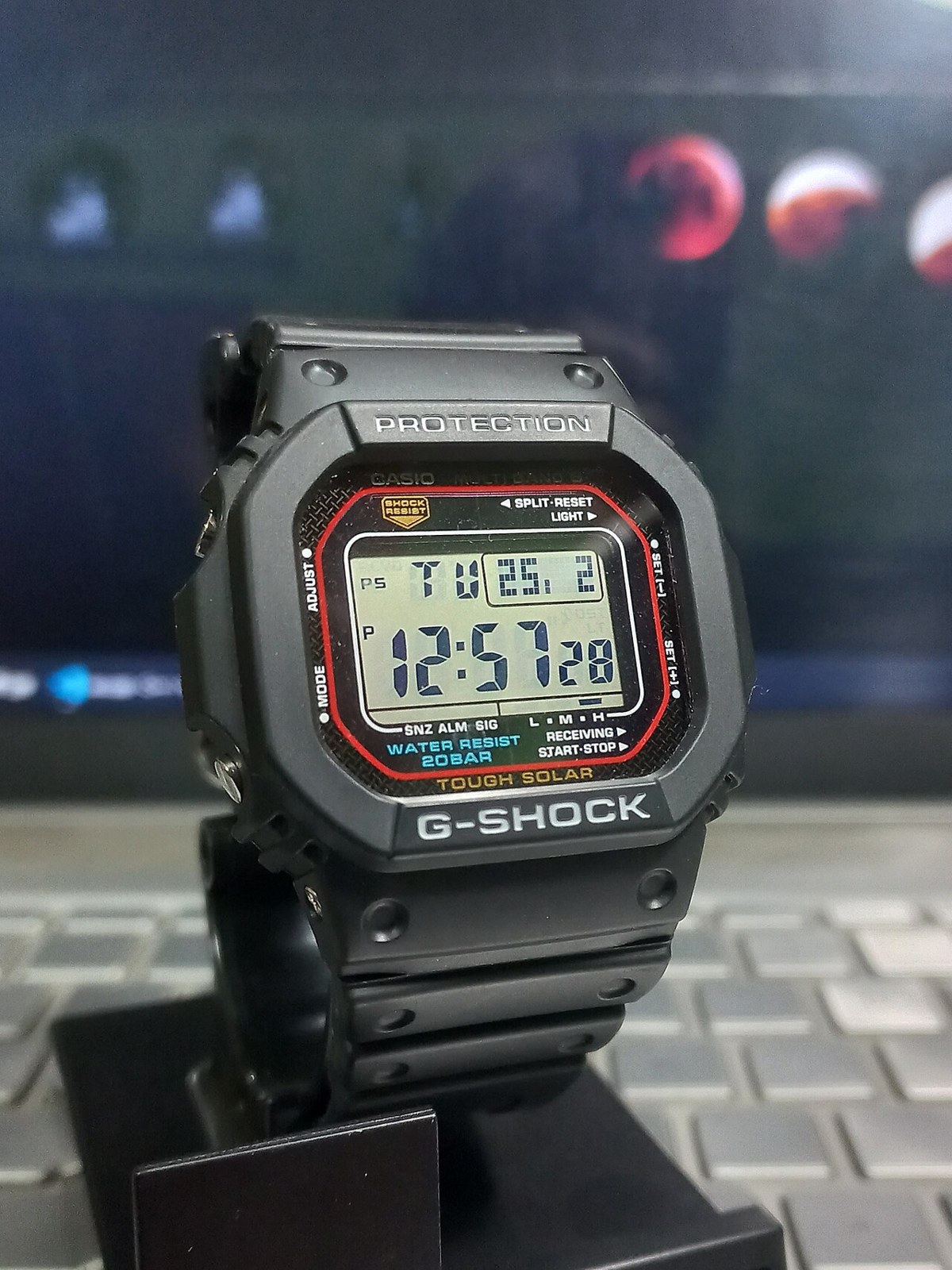
Casio G-Shock GW-M5610U-1
Physical countdown controls and solar-powered cruising
The GW-M5610U suits a cruiser or club racer who wants physical timing controls, a compact square display and a solar-powered watch rather than a smartwatch charging routine. Its countdown is useful, but do not assume specialized race-start correction or marine navigation. Skip it if you need a very large display or boat-instrument data. Practise the button sequence in your usual clothing, check the U-suffix model, and keep the face exposed to suitable light as Casio directs. Solar power reduces one maintenance task; it does not remove the need to inspect straps and seals.
- Water resistance
- 200 m; follow maker's operating guidance
- Power
- Tough Solar rechargeable system
- Timing
- Countdown and 1/100-second stopwatch
- Alarms
- Five daily alarms, including one snooze
Pros
- Countdown without running GPS
- Solar charging reduces cable dependence
- Manufacturer specifies shock resistance and 200 m rating
Cons
- Small secondary fields need a personal readability check
- Ordinary countdown is not proof of dedicated regatta synchronization
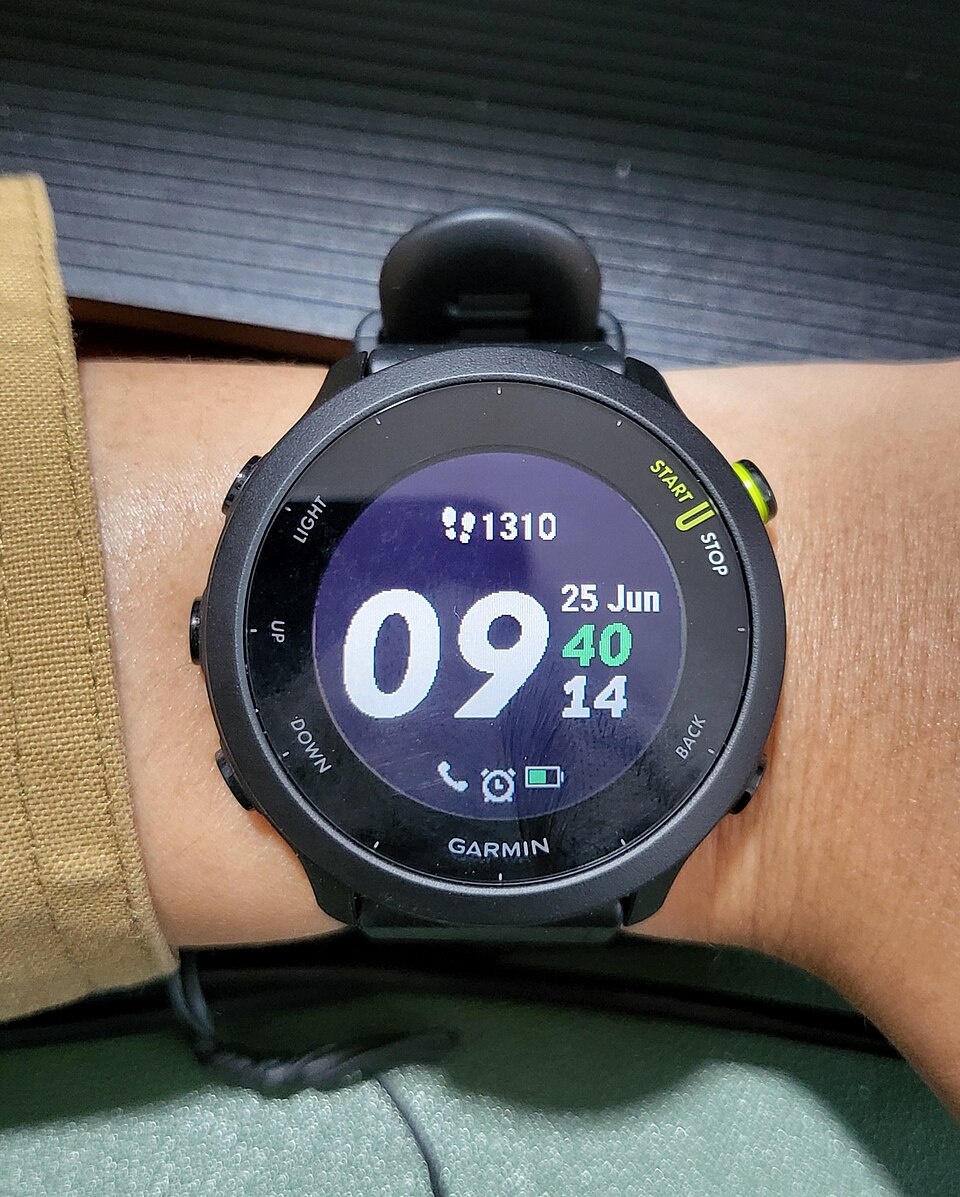
Garmin Forerunner 55
A running watch that also keeps time aboard
Consider the Forerunner 55 primarily because you also run and want one everyday watch, not because it is a dedicated marine device. Its GPS activity role can add a personal record alongside proper boat navigation, but does not justify using it as a chartplotter or rescue communicator. Skip it if sailing is the only activity you want to cover and physical countdown controls or low-maintenance power are your priorities. Verify the exact model's timer settings, permitted water activities and operating restrictions in its manual; this guide deliberately does not quote an unconfirmed immersion or battery figure.
- Model
- Forerunner 55
- Primary role
- Running and activity smartwatch
- Positioning
- GPS activity recording
- Power
- Rechargeable; verify runtime for chosen mode
Pros
- Useful if running is already part of your routine
- GPS activity recording alongside an independent navigator
- Wrist timekeeping without adding another dedicated device
Cons
- Not a marine chart or boat-network instrument
- Charging and mode choices require attention; water-use restrictions need a manual check
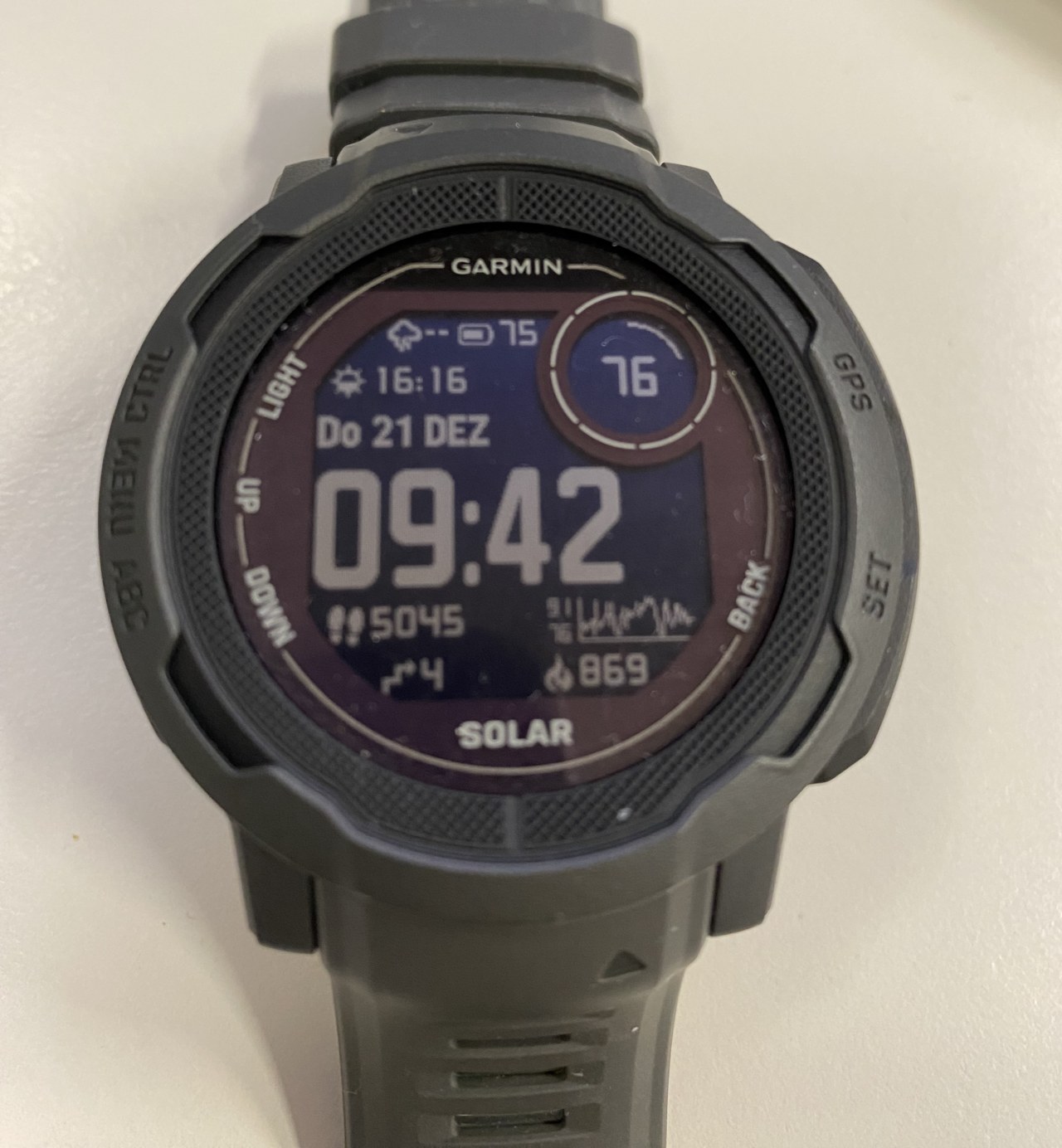
Garmin Instinct 2 Solar
GPS activity recording alongside independent navigation
Consider the Instinct 2 if you want an outdoor watch for sailing and other activities and already have separate marine navigation. Confirm which edition you are buying: the Surf, Solar and standard versions are not interchangeable feature lists. Skip it if the extra functions will mostly remain switched off or you want a coin-cell watch that can be forgotten between passages. Before departure, test your chosen recording mode for a full day and keep the charging connector clean. A recorded track is useful context, not an emergency messaging service or a charted passage plan.
- Water rating
- 10 ATM in manufacturer manual
- Positioning
- GPS smartwatch functionality
- Power
- Rechargeable; runtime depends on mode
- Variant check
- Standard, Solar and Surf features differ
Pros
- GPS recording for reviewing activities
- Published 10 ATM rating
- Broader outdoor use than a basic digital clock
Cons
- Needs charging discipline, especially with GPS enabled
- Base model must not be credited with Surf Edition tide features or marine chart capability
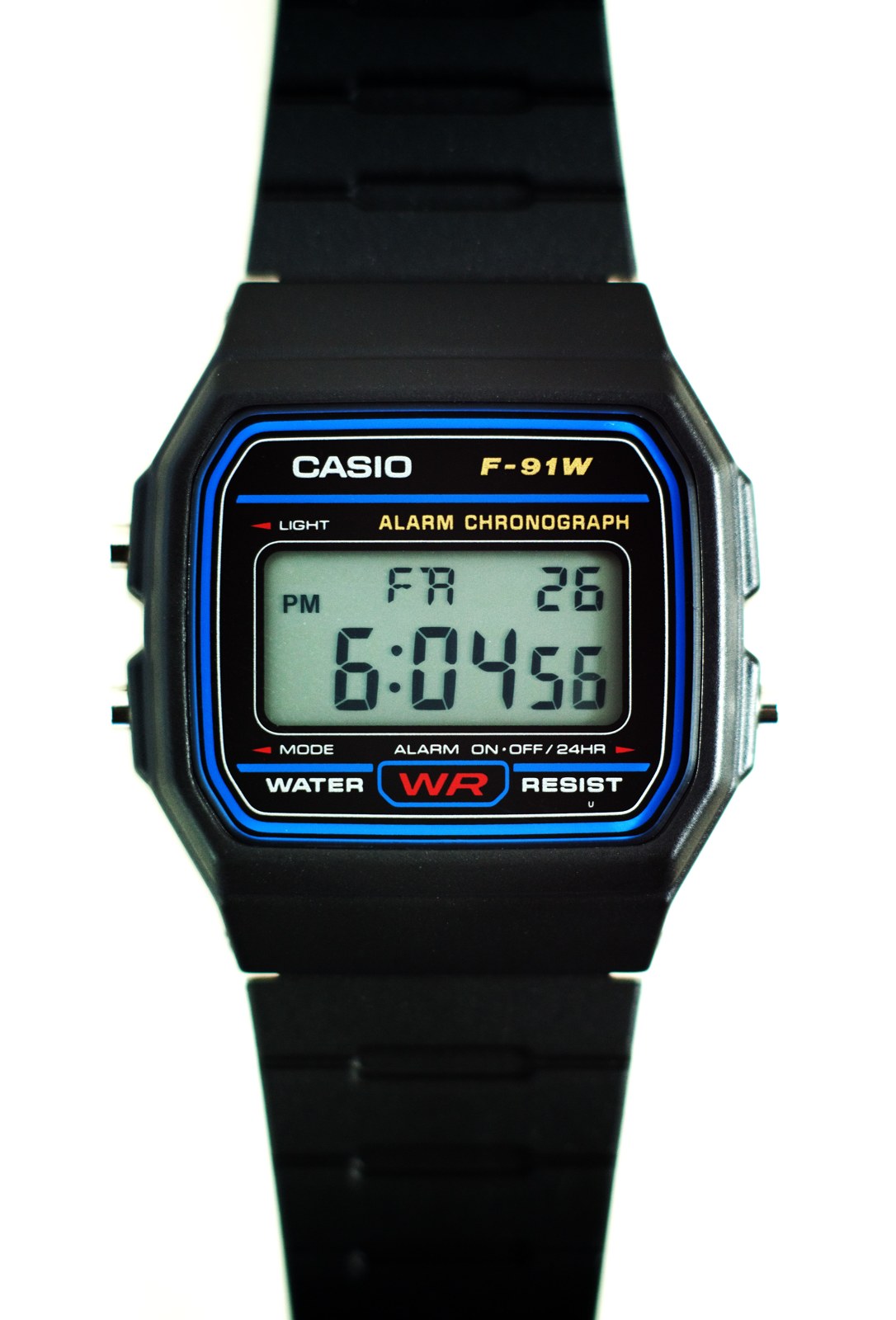
Casio F-91W-1
Budget splash-tolerant timekeeping ashore and aboard
Buy the F-91W only if you want a straightforward low-cost clock and accept its limitations. It is a reasonable dry-watch or splash-exposure choice, not our recommendation for regular swimming or for the only device you take into a capsize. Skip it if you need countdown timing, a strong backlight or more explicit immersion guidance. Its useful feature is simplicity: practise the stopwatch before using it aboard, verify the seller and exact model, and do not promote a familiar inexpensive watch into a rescue or navigation instrument just because it is widely recognized.
- Stopwatch
- 1/100-second measurement
- Lighting
- Micro-light
- Water label
- Water resistant; no numeric rating asserted here
- Role
- Basic digital clock, not GPS
Pros
- Simple time and elapsed-time functions
- Compact low-feature-count design
- No GPS mode or routine charging workflow
Cons
- Do not treat the basic water-resistant label as a swim rating
- Stopwatch is not a race-start countdown; micro-light needs a personal readability check
How to choose
| Product | Price check | Best for | Key detail |
|---|---|---|---|
| Casio G-Shock GW-M5610U-1 | Check exact U-suffix model and seller | Physical countdown controls and solar-powered cruising | Countdown; Tough Solar; 200 m rating |
| Garmin Forerunner 55 | Check current generation and seller | A running watch that also keeps time aboard | Running-focused GPS watch, not marine navigation |
| Garmin Instinct 2 Solar | Check edition and current generation | GPS activity recording alongside independent navigation | GPS smartwatch; 10 ATM |
| Casio F-91W-1 | Check genuine model and seller | Budget splash-tolerant timekeeping ashore and aboard | Stopwatch; not a regatta countdown |
Amazon links open model searches, not verified individual listings. Availability and seller identity have not been independently confirmed; compare the exact model with its maker's documentation before buying. No unverified live price is quoted.
Budget tiers and the decision that matters
Budget tier: put readability, fit and a trustworthy seller ahead of feature count. A simple clock is enough for many cruisers, but a stopwatch-only model is a false saving if your real requirement is countdown timing. Spend on the function you need rather than assuming every digital watch can do it.
Timing tier: pay for controls that you can confidently operate in your actual clothing. Rehearse the start sequence, verify alert behaviour, and decide whether synchronization to a missed signal is essential. A useful race watch is not defined by a large case or a sailing logo.
GPS tier: pay extra only if you will use recording or other outdoor functions, and include charging in the boat's routine. Edition-specific tide functions need an exact manual check. Your navigation budget should still prioritize suitable charts, an independent position source and good passage planning before wrist data.
Before buying, make a short checklist: required timer type, permitted water activities, night visibility, comfortable strap, and maintenance plan. Compare the exact manual with the seller's listing, then trial the watch ashore. Keep receipt and warranty information, and recheck the strap and seal condition before longer trips. None of the recommendations is based on our own timed endurance or immersion test.
Related planning decisions
- Independent handheld GPS backup
- Life jackets and wrist-access considerations
- VHF radios and emergency communications
Sources and photograph credits
- Casio G-Shock GW-M5610U-1: manufacturer documentation
- Garmin Forerunner 55: manufacturer documentation
- Garmin Instinct 2 Solar: manufacturer documentation
- Casio F-91W-1: manufacturer documentation
- Casio GW-M5610U by Md. Rifat Hasan Jihan, CC BY-SA 4.0. Display crops and JPEG recompression may apply; image adaptations retain the indicated license. Photo licensing does not imply endorsement.
- Garmin Forerunner 55 by Melyanac, CC0. Display crops and JPEG recompression may apply; image adaptations retain the indicated license. Photo licensing does not imply endorsement.
- Garmin Instinct 2 Solar by Mantelmoewe, CC BY-SA 4.0. Display crops and JPEG recompression may apply; image adaptations retain the indicated license. Photo licensing does not imply endorsement.
- Casio F-91W by Ashley Pomeroy, CC BY-SA 3.0. Display crops and JPEG recompression may apply; image adaptations retain the indicated license. Photo licensing does not imply endorsement.
Reviewed 20 October 2026. Specification-led editorial guidance, not a claim of hands-on testing. Recheck models, manuals, availability and prices before purchase.
Frequently asked questions
Do I need a dedicated sailing watch?
Most cruisers do not. A readable clock with suitable water guidance and a useful alarm can be enough; racers should check countdown and synchronization functions specifically.
Can a stopwatch be used for a sailing start?
You can track elapsed time, but it is not the same as counting down to zero. Decide whether doing that mental conversion under pressure is acceptable, and rehearse the committee's starting sequence ashore.
Does 100 m water resistance mean I can press buttons underwater?
No. Follow the exact manufacturer's operating instructions and activity guidance; a pressure rating is not blanket permission for underwater operation.
Can a GPS watch replace a marine chartplotter?
Not simply because it receives satellite positions. Marine charts, route planning, display size and emergency communications are separate capabilities; retain independent navigation suited to your waters.
Does every Garmin Instinct 2 have tide information?
Do not assume so. Garmin lists edition-specific features, including tide-related features for the Surf Edition, so check the exact model documentation before purchase.
What should I check after replacing a watch battery?
Ask about seals and the manufacturer's recommended water-resistance service. A running display proves the battery works, not that the resealed case has passed a pressure test.
Related guides
 Navigation
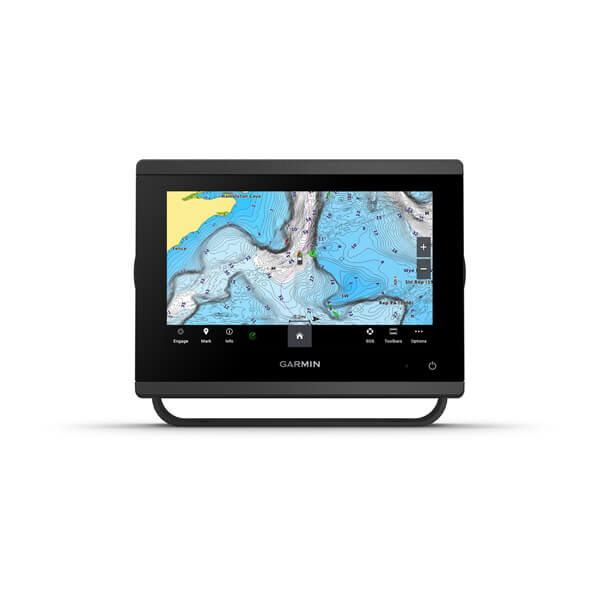
Best Chartplotters for Sailboats
How to choose a chartplotter for cruising — screen size, charts, networking, and top picks at each budget.
 Navigation
Best Sailboat Autopilots
Raymarine, B&G, Garmin, Simrad and Pelagic autopilots compared — drives, sailing modes, and integration.
 Navigation
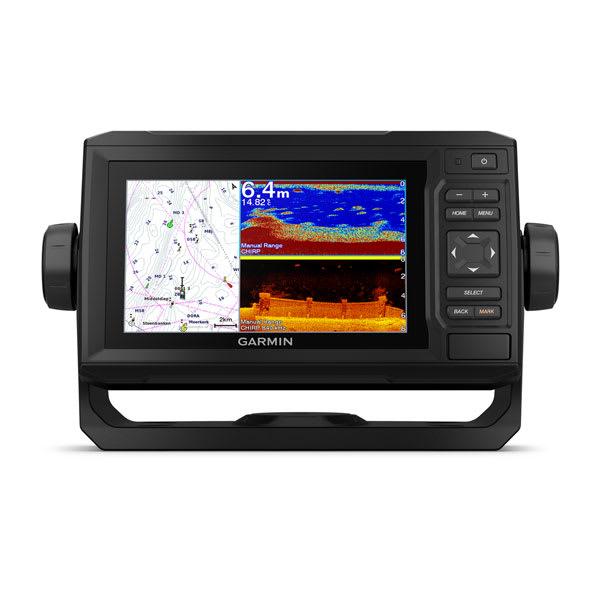
Best Marine GPS for Small Boats and Sailboats
Fixed-mount and handheld marine GPS units compared — screens, charts, power draw, and picks at every budget.
 Navigation
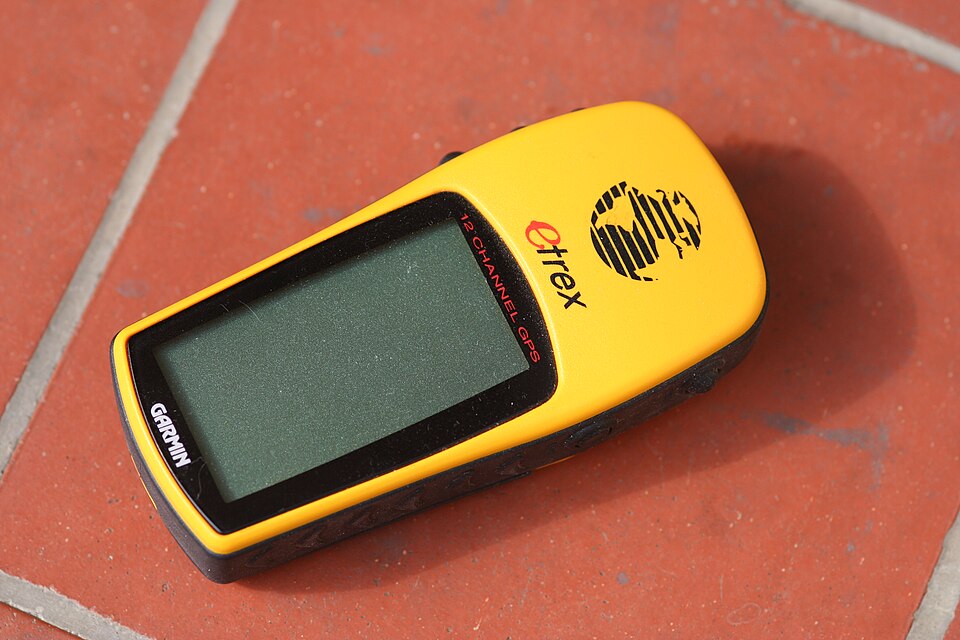
Best Handheld GPS for Sailors
Handheld GPS and satellite units as chartplotter backup — waterproofing, battery life, charts and ditch-bag picks.
Looking for more gear guides? Browse all our gear recommendations or the full guides index.