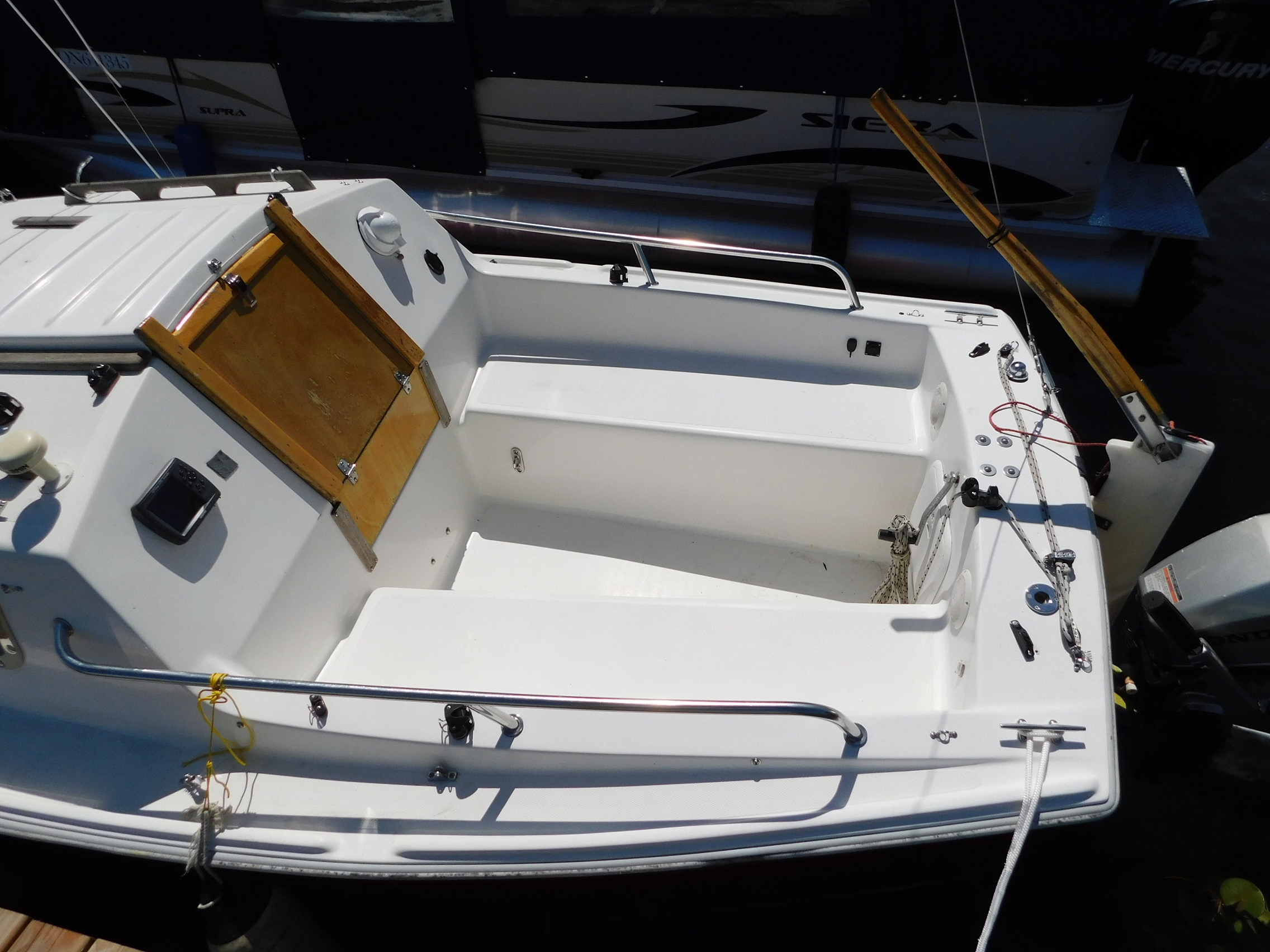
Sailboat Instrument Packages: Wind, Speed, Depth
A sailboat instrument package sounds like a single product, but it's really a small network of parts: sensors out on the hull and mast, one or more displays at the helm and nav station, and the wiring or wireless link that ties them together. Buying the right pieces — and understanding what each one actually measures — matters more than picking a brand. This guide walks through how the system fits together, then compares real packages across B&G, Raymarine, Garmin, Simrad, Airmar, and Nasa Marine. For the network backbone itself, see our NMEA 2000 networking guide.
Sailboat Atlas may earn a commission from qualifying purchases made through links on this page, at no extra cost to you.
What's actually in an instrument package
A basic sailing instrument package has four parts. A masthead wind transducer measures apparent wind speed and direction from a small spinning cup-and-vane unit (or, on newer ultrasonic wind sensors, a solid-state device with no moving parts) mounted at the top of the mast, clear of turbulence from the sails and rigging. A speed log — either a spinning paddlewheel or an ultrasonic sensor — reads boat speed through the water from a thru-hull fitting. A depth transducer, usually in the same or an adjacent thru-hull, reads water depth beneath the hull. And one or more displays at the helm and nav station show the numbers, usually fed by a processor unit that does the underlying math.
On most modern systems that processor isn't a separate box — it's built into the display itself or into the network, with each sensor putting its raw reading onto the backbone and any display pulling what it needs. Older systems used a dedicated black-box processor that every sensor and display wired into directly.
Apparent wind vs. true wind, and why heading data isn't optional
The masthead sensor only ever measures apparent wind — the wind you actually feel on a moving boat, which is the true wind combined with the wind created by the boat's own motion through the air. Apparent wind is what matters for trimming sails in the moment, but it shifts constantly with boat speed and heading changes in a way that makes it useless for understanding the actual weather or for comparing performance on different points of sail.
True wind speed and direction are calculated by subtracting the boat's motion vector from the apparent wind vector. That calculation needs boat speed through the water at minimum, and for true wind direction (rather than just true wind angle relative to the bow) it also needs heading — from a fluxgate compass or the boat's GPS course over ground as a rougher substitute. A wind-only system with no speed or heading input can show apparent wind accurately but cannot show a trustworthy true wind reading, which is why "wind-only" budget setups are usually just an apparent-wind repeater.
Why sailing-specific processing matters more to racers than cruisers
Once a system has true wind, boat speed, and heading, brands like B&G build further on top of it: laylines projected on a chartplotter showing where you'll cross the layline to a mark on the current tack, target boat speed for the current wind angle drawn from a boat's polar diagram, and start-line timing tools for racing starts. This is genuinely valuable for club or offshore racers trying to sail efficiently to a small percentage advantage, but it's mostly wasted on a cruising boat whose owner just wants to know wind angle, boat speed, and depth under the keel. If racing performance isn't a goal, that processing shouldn't be a deciding factor in which brand you buy — reliability, display legibility, and NMEA 2000 compatibility matter more.
Calibration: heel, upwash, speed log, and depth offset
A newly installed system reads plausible-looking but not necessarily accurate numbers until it's calibrated. Wind calibration corrects for two effects: heel, where a masthead sensor tilted by the boat heeling over reads a skewed angle unless the system corrects for it using heel angle input, and upwash, where the sails themselves bend the airflow reaching the masthead sensor, causing a consistent angle offset that's usually corrected with a percentage adjustment set during commissioning.
Speed log calibration is done by running a measured course, or simply comparing the paddlewheel or ultrasonic reading against GPS speed over ground on a reciprocal pair of runs (one direction, then the opposite) to average out current, then adjusting the calibration factor until the two agree. Depth offset needs to be set once, at installation, to reflect whether you want depth displayed from the transducer, from the waterline, or from the bottom of the keel — a decision worth making deliberately and labeling at the helm so no one misreads it under way.
Transducer types: paddlewheel vs. ultrasonic
Paddlewheel speed sensors are the traditional, least expensive option: a small wheel in a thru-hull fitting spins with water flow and a magnet triggers a speed reading. They work well when clean, but marine growth, weed, or a barnacle can jam or slow the wheel, quietly degrading accuracy between haul-outs — a known frustration for anyone who's cruised warm, growth-prone water for a season. Ultrasonic sensors like the Airmar DST800 have no moving parts at all; they time an acoustic pulse traveling between two faces on the sensor to derive speed, so there's nothing to foul or jam. They cost more up front but are increasingly the default choice for a new install specifically to avoid the paddlewheel maintenance cycle.
Display placement: mast-mount vs. cockpit-mount
A wind display mounted low on the mast, visible from the cockpit, keeps the crew looking forward and up rather than down at a cockpit panel — useful for the helmsman and trimmers on a boat sailed actively. Cockpit- or binnacle-mounted displays are easier to wire, protect from spray with a properly angled mount, and put speed and depth exactly where the person steering is already looking. Most cruising boats end up with a mix: a primary multifunction display at the helm, and sometimes a simple wind repeater partway up the mast or at the companionway for anyone on deck to check without going below.
NMEA 2000 backbone vs. proprietary networks — and mixing brands
NMEA 2000 is the open, standardized backbone that most modern marine electronics speak, and it's what lets a display from one brand generally read a sensor from another, since both sides use the same defined message formats (PGNs) for depth, wind, and speed data. B&G's FastNet, Raymarine's SeaTalkng, and Simrad's SimNet are each built on the same physical NMEA 2000 cabling standard but layer in brand-specific extensions for things like autopilot control and proprietary sailing calculations — which is why staying within one brand's ecosystem gets you more integrated features even though basic cross-brand data sharing works fine. See our NMEA 2000 networking guide for backbone planning, and our autopilot guide for how the same networking choice affects which autopilot integrates most cleanly.
Retrofit vs. full rewire: the real cost difference
Adding instruments to a boat that already has an NMEA 2000 backbone installed is genuinely simple — each new sensor or display is a drop cable off the existing trunk, often a DIY job in an afternoon. Retrofitting a boat with no existing network, or only an old proprietary analog system, is a bigger project: running a masthead wind cable down the mast (or switching to a wireless wind transducer to avoid it entirely), drilling and bedding new thru-hull fittings for a speed or depth sensor if none exist, and laying a new NMEA 2000 backbone cable around the boat. Budget for haul-out time if a new thru-hull is involved, and don't assume a quoted "instrument package" price includes that labor — most retailers price the hardware only.
Our picks
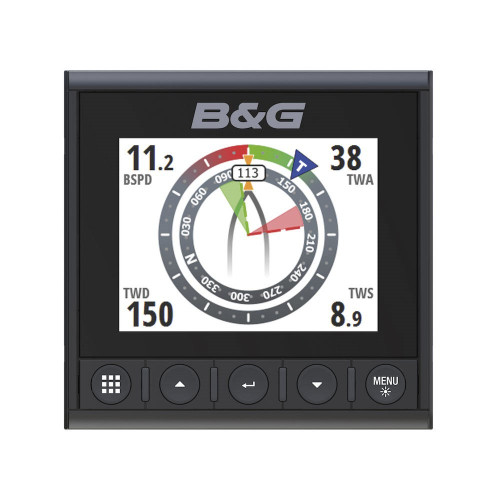
B&G Triton2 Instrument Pack
Best all-around package for cruisers and club racers
The Triton2 is B&G's mid-range instrument display and the core of most of its sailing packages — sold alone or bundled with a masthead wind transducer, paddlewheel speed log, and depth transducer. On its own it's simply a clear, sunlight-readable readout of speed, depth, and wind. Its real advantage shows up once it's networked with a B&G chartplotter: the same wind and speed data feeds laylines, target boat speed, and race-start timing that Raymarine and Garmin equivalents don't attempt. Casual daysailers won't use most of that, but racers and serious cruisers who plan to add a B&G MFD later get a smoother upgrade path buying into the ecosystem now.
- Screen
- 4.1" optically bonded transflective color LCD
- Network
- NMEA 2000 (SimNet-compatible), works with B&G FastNet too
- Data shown
- Speed, depth, wind, heading, AIS targets, autopilot control
- Sailing math
- True/apparent wind conversion, laylines, and polar performance with a B&G Zeus/Vulcan MFD
Pros
- Displays scale from a single Triton2 head to a full multi-station setup without changing sensors
- Transflective LCD stays legible in direct sun better than typical glossy touchscreens
- Doubles as an autopilot controller when paired with a Triton2 pilot keypad
Cons
- The processing that makes B&G worth the premium (laylines, target boat speed) only shows up once you add a compatible MFD, not on the display alone
- Meaningfully pricier than a Raymarine or Garmin equivalent for the same speed/depth/wind data set
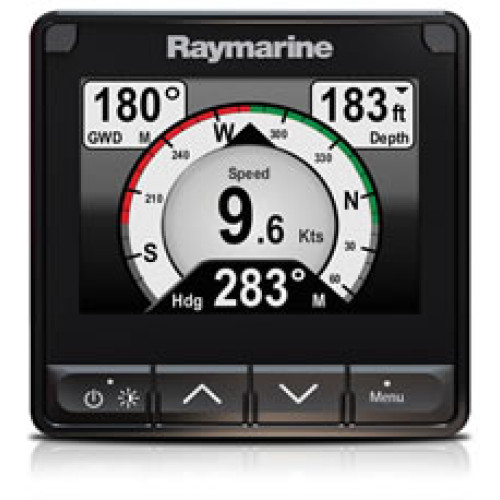
Raymarine i70s Multifunction Instrument
Best display for retrofitting into an existing Raymarine/SeaTalkng system
The i70s is Raymarine's equivalent to the Triton2 — a single 4.1" head that can be configured to show any combination of wind, speed, depth, and heading data pulled off the network. It's the natural choice on boats that already have Raymarine gear, since it shares the SeaTalkng backbone and configuration menus with Raymarine's autopilots and Axiom chartplotters. Buying it to start a brand-new system on a boat with no existing electronics doesn't have the same advantage — any of the major brands' equivalents would work as well.
- Screen
- 4.1" color LED-backlit display, digital/analog/graphical views
- Network
- SeaTalkng and NMEA 2000 compatible
- Data sources
- User-selectable — pulls from multiple sensors on a shared network
- Housing
- IPX6/IPX7-rated, in-dash or surface mount options
Pros
- Straightforward source selection makes it easy to add to a boat that already has Raymarine radar, autopilot, or a chartplotter
- Graphical wind and depth history views are genuinely useful for trend-spotting, not just gimmicks
- Widely available secondhand and new, so multi-station setups are cheaper to build out over time
Cons
- The interface leans on scroll-through menus with a rotary/soft-key control, slower to navigate under way than a touchscreen
- Needs a SeaTalkng backbone or a NMEA 2000-to-SeaTalkng adapter cable if the boat isn't already wired for Raymarine gear
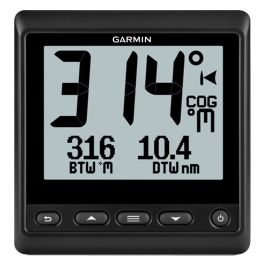
Garmin GNX 20 Marine Instrument
Best budget-friendly single-function display for a growing NMEA 2000 network
The GNX 20 is Garmin's no-frills instrument repeater: pick one data type per unit and mount it where you need it — a masthead wind readout at the helm, a second depth-only head at the nav station. It won't do laylines or polar performance like B&G's ecosystem, but for a cruising boat that just needs clear, reliable numbers fed by a Garmin GPSMAP plotter and gWind transducer, it's an efficient way to add several repeaters without paying full multifunction-display prices for each one.
- Screen
- 4" glass-bonded monochrome LCD, high-contrast digits
- Network
- NMEA 2000 only
- Data shown
- Speed, depth, wind (with gWind transducer), or engine data — one function per head at a time
- Power draw
- Very low; suited to boats without a dedicated instrument breaker
Pros
- Meaningfully cheaper per display than a full-color multifunction unit, which matters when you need three or four heads around the boat
- Big, simple digits are genuinely easier to read at a glance from the helm than a cluttered multi-data screen
- Straightforward NMEA 2000 plug-and-play if the boat already has a Garmin GPSMAP chartplotter
Cons
- Monochrome display and single-purpose design mean you'll want multiple units for a full wind/speed/depth wheelhouse spread
- No built-in autopilot control or sailing-specific processing — it's a repeater, not a sailing computer
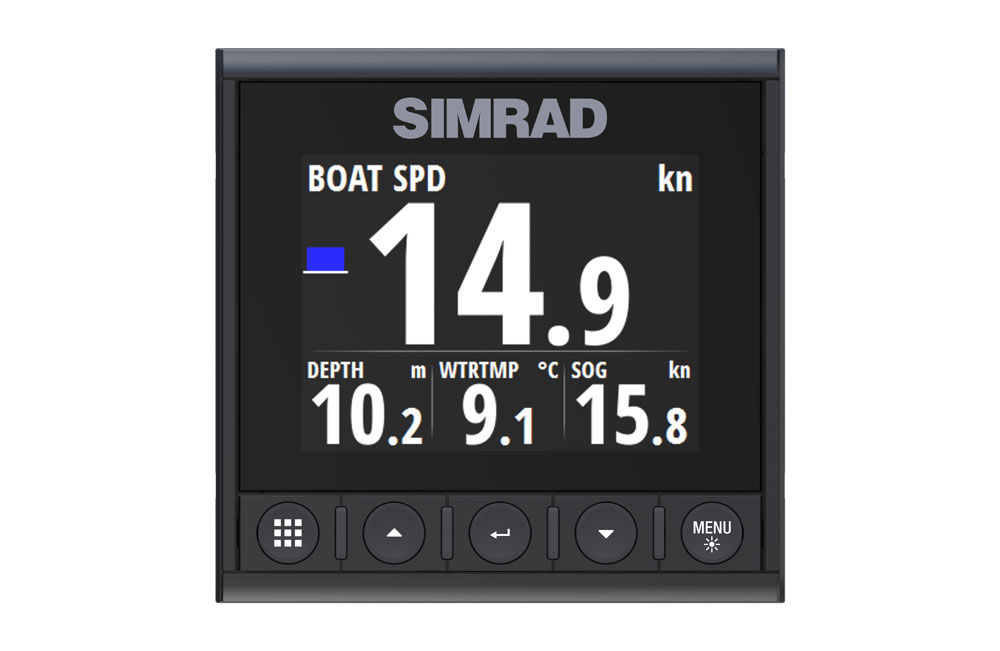
Simrad IS42 Digital Display
Best glass-helm-style display for boats with a Simrad autopilot
Simrad and B&G are both Navico brands and share hardware under the skin — the IS42 is functionally close to the Triton2, styled to match Simrad's glass-helm displays and chartplotters instead. It's a sensible pick for a boat already running Simrad's NSS or NSX MFDs and autopilot line, where matching styling and integrated autopilot control from one panel simplifies the helm. For a boat with no existing Navico gear, the choice between B&G and Simrad mostly comes down to which display style and MFD lineup you prefer.
- Screen
- 4.1" optically bonded color display
- Network
- NMEA 2000 / SimNet backbone
- Data shown
- Wind, speed, depth, engine data, AIS targets, autopilot status
- Autopilot control
- Full control of compatible Simrad autopilots with optional OP12 keypad
Pros
- Shares Simrad's glass-helm styling, so it looks and feels consistent alongside a NSS/NSX chartplotter
- One display can cover instrument data and autopilot control, reducing panel clutter
- Optically bonded screen resists internal fogging better than air-gapped LCDs in damp climates
Cons
- Best value is realized on a boat already committed to the Simrad/B&G/Lowrance (Navico) ecosystem — mixing brands works over NMEA 2000, but you lose the autopilot integration
- No sailing-specific polar or layline processing the way a B&G Zeus pairing offers
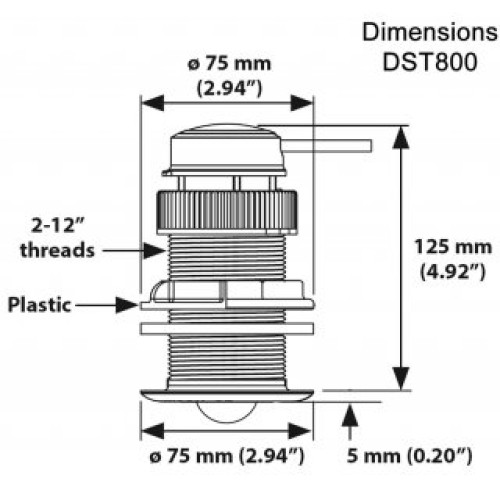
Airmar DST800 Ultrasonic Speed/Depth/Temp Sensor
Best no-moving-parts transducer to end paddlewheel fouling
Traditional paddlewheel speed logs are the single most fouling-prone sensor in a boat's instrument system — barnacles, weed, and marine growth on the wheel silently degrade or kill the reading between haul-outs. The DST800 replaces that mechanical wheel with an ultrasonic sensor that times a signal bounced between two transducer faces, giving a speed reading with nothing to jam. It also folds depth and water temperature into the same thru-hull fitting. It's a strong upgrade for any boat replacing a failed or unreliable paddlewheel log, and it works regardless of which brand of display you run it into.
- Measures
- Depth, boat speed through water, and water temperature in one housing
- Technology
- Ultrasonic time-of-flight speed sensing — no paddlewheel to jam or foul
- Output
- NMEA 0183 or NMEA 2000 versions available
- Housing
- Plastic, bronze, or stainless thru-hull options; retractable for hauling out
Pros
- No moving paddlewheel means no fouling from marine growth or debris, and nothing to seize up over a winter layup
- One thru-hull fitting covers depth, speed, and temperature instead of two or three separate holes in the hull
- Works with any NMEA 2000 or 0183 display regardless of brand, so it isn't locked to one instrument ecosystem
Cons
- Costs noticeably more than a basic paddlewheel speed sensor sold on its own
- Retractable thru-hull installation is still a proper haul-out job, not a bolt-in retrofit if the boat has no existing depth transducer hole
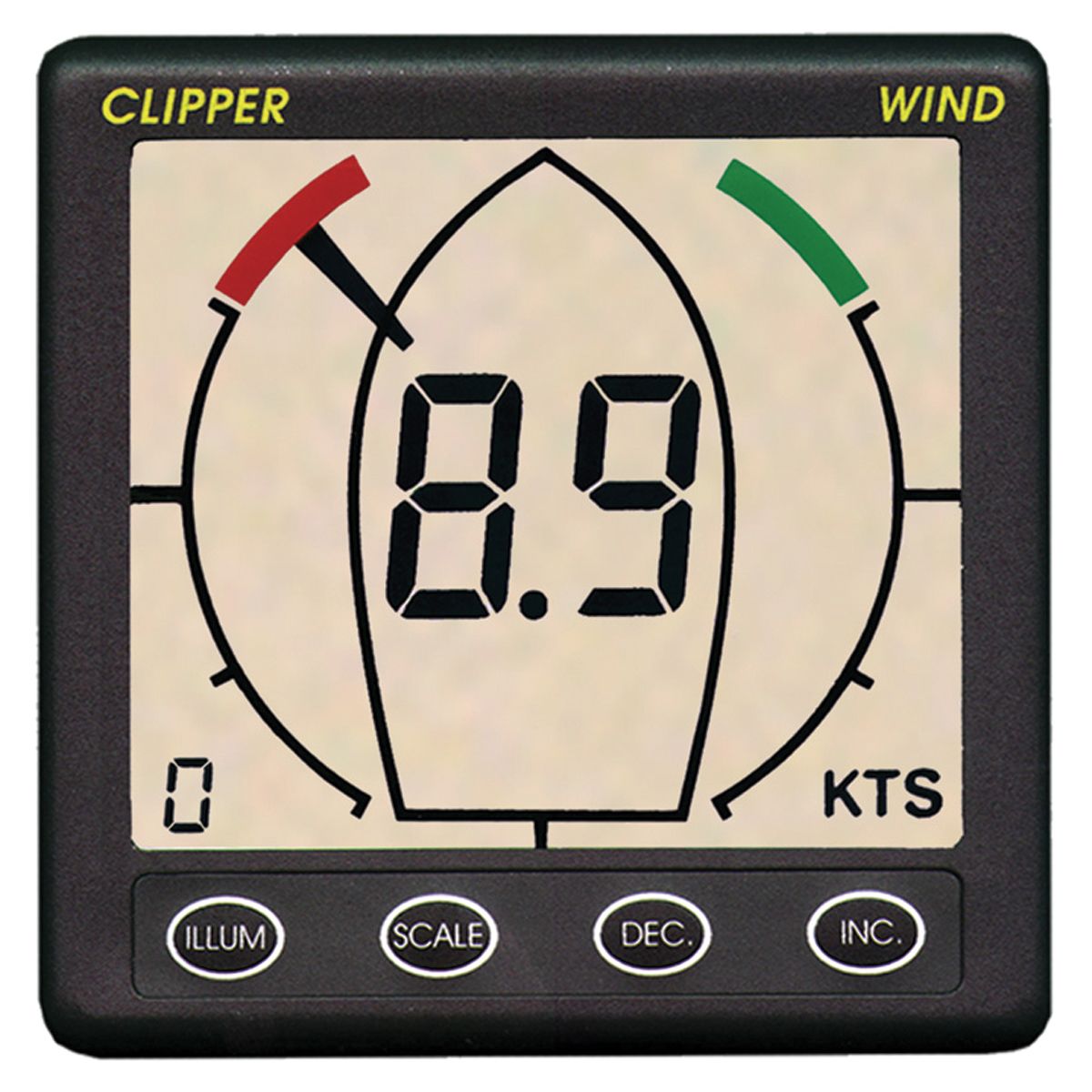
Nasa Marine Clipper Wind & Speed Log Pack
Best budget instrument package for a small cruiser on a tight refit budget
Nasa Marine's Clipper range is a long-running, no-nonsense line of instruments aimed at small cruising boats where a several-thousand-dollar B&G or Raymarine package isn't a realistic budget. The wind unit reads apparent wind speed and direction on a clear analog-style dial, and it pairs with Nasa's own paddlewheel or electromagnetic speed log displays in the same case size. It won't do true wind, laylines, or polar targets, but for a coastal cruiser that just wants reliable, affordable wind, speed, and depth information, it does the core job at a fraction of the big-brand price.
- Display
- 110mm square case, large analog-style wind display with 60-segment direction ring
- Speed sensing
- Paddlewheel or optional electromagnetic (no-moving-parts) log
- Network
- Standalone or NMEA 2000-compliant repeater versions
- Price tier
- Meaningfully below B&G, Raymarine, Garmin, and Simrad equivalents
Pros
- Among the least expensive ways to get real masthead wind data and a speed/depth readout on a small cruising boat
- Simple analog-style dial layout is easy to read at a glance without cycling through menu screens
- Individual units can be bought and installed one at a time as the budget allows, rather than as a locked bundle
Cons
- No true wind calculation, layline guidance, or polar performance processing — these are apparent-reading instruments at heart
- Smaller company and dealer network than the big four, so parts and support outside the UK/Europe can take longer to source
How to choose
| Product | Price range | Best for | Key spec |
|---|---|---|---|
| B&G Triton2 Instrument Pack | $600–$2,500+ depending on bundle | Cruisers and club racers wanting B&G's sailing tools | 4.1" transflective display, laylines with a B&G MFD |
| Raymarine i70s | $500–$600 per display | Existing Raymarine/SeaTalkng boats | User-selectable data sources, SeaTalkng backbone |
| Garmin GNX 20 | $400–$450 per display | Budget multi-repeater NMEA 2000 setups | 4" monochrome, single-function repeater |
| Simrad IS42 | $550–$650 per display | Boats with Simrad autopilots/MFDs | Glass-helm styling, SimNet/NMEA 2000 |
| Airmar DST800 | $250–$450 | Replacing a fouling-prone paddlewheel log | Ultrasonic speed, depth, and temp in one housing |
| Nasa Marine Clipper Range | $150–$350 per unit | Tight-budget small-boat refits | Analog-style dial, apparent wind and speed only |
Budget tiers
Under $500: a single Nasa Clipper wind or speed display, or one Garmin GNX 20 repeater — enough to add one data type to a boat with no existing system.
$500–$1,500: a single mid-range multifunction display (Triton2, i70s, or IS42) plus a masthead wind transducer and a paddlewheel speed/depth sensor — a complete basic system for a cruising boat.
$1,500 and up: multi-display packages, an ultrasonic Airmar speed/depth sensor, and integration with a matching-brand autopilot and chartplotter for laylines and polar performance — the setup racers and serious offshore cruisers land on.
Related guides
 Navigation
Best Chartplotters for Sailboats
How to choose a chartplotter for cruising — screen size, charts, networking, and top picks at each budget.
 Navigation
Best Sailboat Autopilots
Raymarine, B&G, Garmin, Simrad and Pelagic autopilots compared — drives, sailing modes, and integration.
 Navigation
Best Boat Compasses: Steering and Handheld Picks
Card size, heel, mounting, lighting and deviation: choosing a magnetic compass for a sailboat.
 Navigation
Sailing Watches: Race Timers and Cruising Choices
Countdown controls, water resistance, readability and battery care: choosing a practical watch for racing and cruising.
Looking for more gear guides? Browse all our gear recommendations or the full guides index.