Sailboat Autopilot Drives: Wheel vs Below-Deck
Choosing an autopilot brand is only half the decision — the drive that actually turns the rudder is what determines whether the system holds up offshore, fits your boat's steering geometry, and survives being asked to do real work in a seaway. This guide is the companion to our best autopilots roundup: instead of comparing brands, it walks through the four drive families, how to size one correctly, and where a mechanical or electric drive stops being the right tool and a wind-vane self-steering gear takes over.
Sailboat Atlas may earn a commission from qualifying purchases made through links on this page, at no extra cost to you.
The four autopilot drive families
Every sailboat autopilot, regardless of brand, boils down to a course computer telling a drive to turn the rudder. There are four common drive families, and each suits a different steering system and boat size:
Tiller ram — a small linear actuator pins between a cockpit bracket and the tiller, pushing and pulling it directly. Simple, cheap, and fully removable, but limited by tiller-arm leverage. Wheel drive — a belt clamps onto the wheel's rim or spokes and turns the wheel itself, mimicking a hand on the helm; it's the easiest wheel-boat retrofit but is a friction drive with real load limits. Below-deck linear ram — a mechanical actuator (ballscrew, cable, or hydraulic) bolts to a bracket below the cockpit sole and pushes directly on the rudder quadrant or a tiller-arm extension, bypassing the wheel or tiller mechanism entirely. Hydraulic/rotary drive — a pump feeds fluid to a ram or into the boat's existing hydraulic steering, the standard choice for heavier boats where mechanical drives run out of strength.
Wheel and tiller drives are cockpit-mounted, removable, and the easiest DIY installs. Below-deck and hydraulic drives require more installation work but deliver more usable thrust because they act on the rudder stock rather than through a wheel or tiller linkage that can flex, slip, or wear.
Calculating the peak thrust you actually need
Every drive's spec sheet lists a maximum thrust or cable-force figure and a maximum displacement rating. The displacement rating is a manufacturer's rule-of-thumb estimate that bakes in typical rudder size and hull form for boats of that weight — it is not a precise calculation for your specific boat, and it assumes moderate weather helm. A boat with an oversized rudder, a full keel with more wetted steering area, or a hull that habitually carries heavy weather helm needs more margin above the manufacturer's stated displacement ceiling, not less.
The number that matters is peak thrust, not average thrust. Average steering corrections in flat water take very little force; the worst-case moment — catching a boat rounding up in a gust, correcting after a wave slews the stern, or holding course broad-reaching in a building breeze — can demand several times that average load in a short burst. A drive sized only to the average will work fine on a calm afternoon sail and then stall, trip its clutch, or overheat exactly when sea conditions turn, which is the single most common real-world autopilot failure mode and almost always traces back to undersizing rather than a defective unit.
When in doubt, size up rather than down. A drive rated comfortably above your boat's actual loaded displacement — not light-ship weight — with margin for weather helm will last longer and steer better in the conditions where you actually need it working.
Hard-over-to-hard-over time targets
Manufacturers publish a hard-over-to-hard-over time — how long the drive takes to swing the rudder from full lock one way to full lock the other. For small-to-midsize sailboat drives, published figures commonly fall in roughly the 10–20 second range depending on drive type and rudder size; mechanical cable and ballscrew drives tend to be faster than hydraulic rams at a given size, though hydraulic drives make up for it in raw force on larger boats. A drive on the slow end of that range may not correct quickly enough in confused seas, an accidental gybe, or close-quarters maneuvering under power — check the published figure for your exact drive and boat size before assuming a bigger, more expensive unit is automatically faster.
Steering geometry: tiller-arm radius and quadrant mounting
A drive's actual steering force at the rudder depends on more than the actuator's raw thrust — it depends on the lever arm it's pushing against. A tiller pilot pinned near the tiller's outboard end has a longer lever arm and needs less force to generate the same turning moment than one pinned close to the rudder head; check your drive's recommended pin location before installing, since manufacturers publish minimum tiller-arm lengths for each model.
Below-deck rams face the same geometry question at the quadrant: the ram's mounting bracket needs to intersect the quadrant's arc at roughly a right angle near mid-travel for even force delivery across the full rudder swing, and too shallow an angle at the end of travel can bind or lose mechanical advantage exactly when full lock is needed most. This is usually the trickiest part of a below-deck installation and is worth getting an installer's eyes on if you're not confident laying it out yourself.
Power draw and the passage energy budget
An autopilot is very often the single largest continuous electrical load on a passage-making sailboat, larger than the chartplotter, cabin lights, and refrigeration combined. Mechanical cable and ballscrew drives generally sip power between corrections and draw hard only during a correction; hydraulic pumps tend to run at a higher continuous baseline because of pump cycling, though modern variable-flow pumps like Garmin's SmartPump reduce that by throttling flow to the size of the correction needed rather than running flat-out every time. Before an offshore passage, check your drive's published average current draw against your battery bank and charging capacity — undersizing the house bank around an autopilot's real draw is a common way to arrive at your destination on generator power alone. This is also where a network conversation matters: see our NMEA 2000 networking guide for how the autopilot shares data with instruments without adding separate wiring runs.
Clutch behavior and manual override when the pilot fails
Every drive type needs a clean, practiced way to disengage and hand-steer, because autopilots do fail — a blown fuse, a stuck clutch, or a course computer fault should never leave you unable to steer. Wheel drives typically use a slipping clutch or a belt you can physically unclamp; tiller pilots unpin from both mounts in seconds and can simply be lifted away; below-deck mechanical and hydraulic rams usually have a bypass or free-wheel mode built into the drive or the steering system itself. Confirm exactly how your specific drive disengages and practice it at the dock before you're relying on it in a seaway at night — it is not the moment to be reading a manual.
Wind-vane self-steering as the offshore alternative
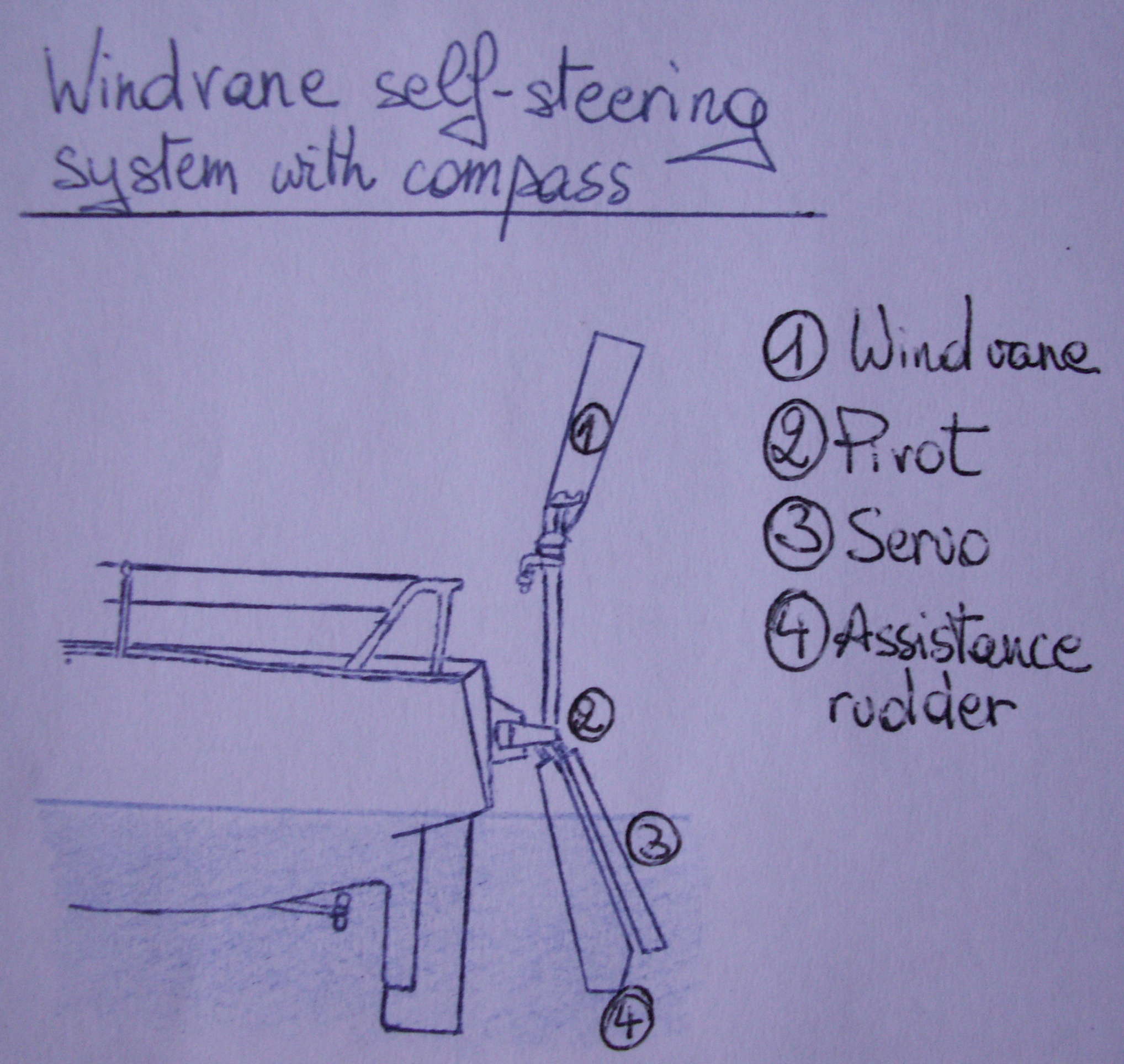
A servo-pendulum wind vane like the Monitor is a fundamentally different approach: instead of an electric or hydraulic drive correcting to a compass heading, a vane in the wind moves a water paddle towed behind the boat, and the water pressure on that paddle is amplified into real steering force applied to the boat's own rudder or a small auxiliary rudder. It draws no electrical power at all, and its steering force actually increases with wind and boat speed — the opposite of an electric pilot straining harder as conditions build.
The tradeoff is that a wind vane steers relative to apparent wind angle, not a compass course, so it needs sail trim that keeps the boat balanced and it does nothing useful under engine in calm conditions or in a marina. Many offshore sailors run both: the wind vane for open-ocean sailing legs where power conservation is the priority, and an electric pilot for motoring, light air, and close-quarters work where following a GPS route matters more than saving amp-hours.
Installation reality: backing plates and mounting loads
Whatever drive you choose, the mounting hardware transmits the full steering load into the boat's structure, and that structure needs to be strong enough to take it without flexing or cracking gelcoat over time. Cockpit-mounted wheel and tiller pilot brackets need a solid backing plate through the cockpit sole or coaming, not just screws into fiberglass laminate. Below-deck rams need an even more substantial mount, usually a fabricated bracket through-bolted with a large backing plate spreading load across several ribs or a bulkhead, since the ram is now taking the full rudder load that used to be shared across the wheel mechanism, cables, and quadrant bearings. If you're not confident fabricating and glassing in a proper backing plate, this is worth paying a rigger or yard to do once, correctly, rather than revisiting a failed mount at sea. Pair the drive with a properly sized chartplotter for route data if you haven't already settled on one.
Our picks
Raymarine EV-100 Wheel Pilot Pack
Best belt-driven wheel drive for small to mid-size wheel-steered sailboats
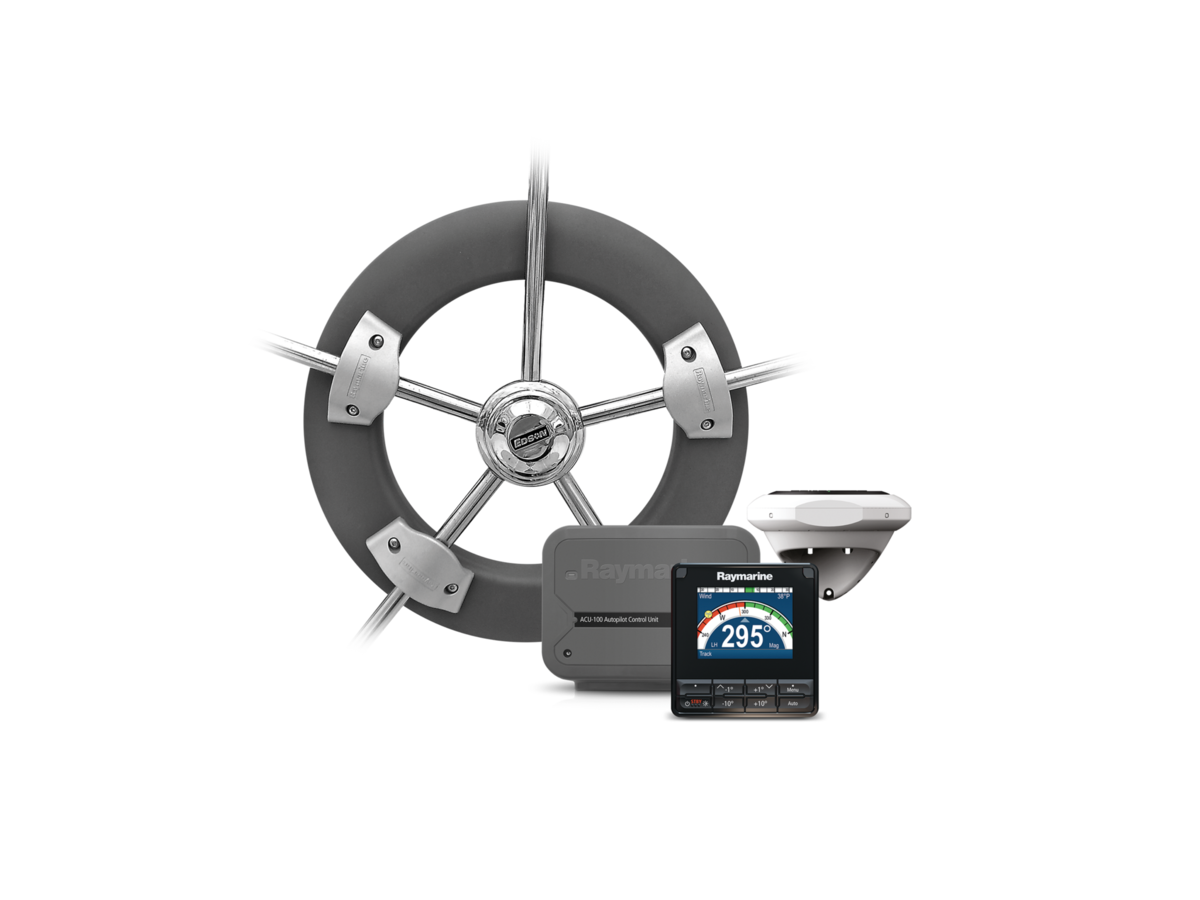
The EV-100 Wheel is the easiest possible autopilot retrofit for a wheel-steered boat because there's nothing to install below the cockpit sole — a belt drive clamps onto the wheel and turns it directly, the same way a human hand would. That simplicity is also its ceiling: it's a friction drive, not a mechanical linkage into the rudder stock, so it depends on the wheel turning smoothly and the boat not overpowering it in a seaway. It suits daysailers and coastal cruisers in the 25–35 ft range with light-to-moderate helm loads, not a heavy full-keel boat or anything routinely sailed offshore.
- Steering type
- Wheel drive — belt clamps directly onto wheel rim spokes
- Displacement rating
- Manufacturer-rated for boats up to roughly 13,200 lb (6,000 kg)
- Sensor
- EV-1 solid-state 9-axis course computer/sensor core
- Networking
- SeaTalkng / NMEA 2000 compatible
Pros
- No below-deck work at all — the whole system mounts in the cockpit in an afternoon
- Fully portable: unclip the drive and the wheel is free for hand steering with zero drag
- Solid-state EV-1 sensor self-calibrates instead of requiring a dockside swing
Cons
- Belt-and-pulley friction drive has real limits — it's not intended for boats with heavy weather helm or big rudders
- Exposed cockpit hardware is more vulnerable to green water and chafe than a below-deck unit
Raymarine EV-200 Sail Pilot with Type 1 Linear Drive
Best below-deck linear ram for mid-size cruising sailboats
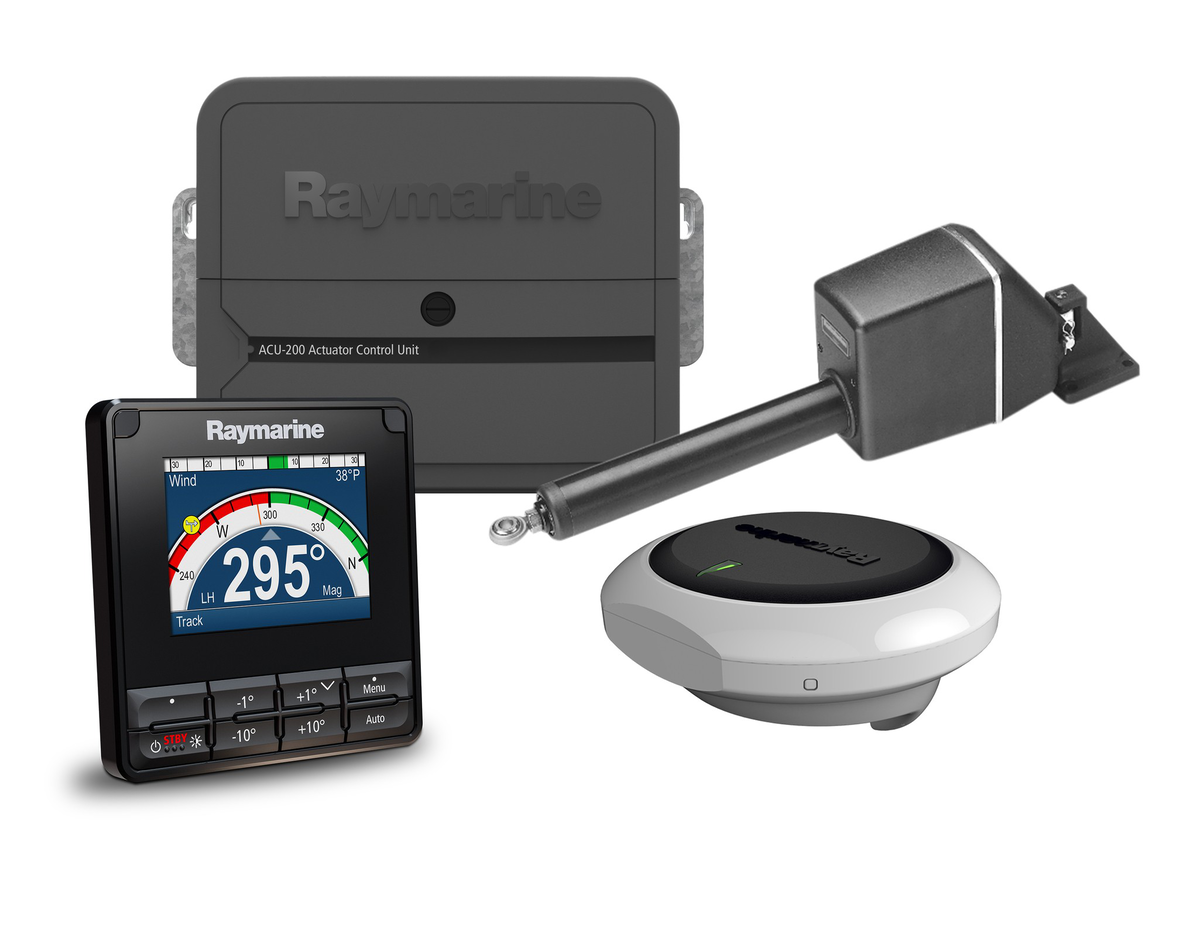
This is the step up from a cockpit-mounted pilot: a hydraulic-style mechanical ram bolted to a bracket below the cockpit sole, pushing directly on the rudder quadrant or a tiller arm extension. Because the ram acts on the rudder stock itself rather than the wheel, it delivers far more usable thrust and doesn't care whether the wheel mechanism has slop or friction. The tradeoff is installation complexity — this is a boatyard or serious DIY afternoon project involving fiberglass work, backing plates, and quadrant clearance, not a bolt-on accessory. See our autopilot roundup for how the EV-200 compares to competing packages at this size.
- Drive type
- Below-deck linear ram, mounts to the rudder quadrant or tiller arm
- Displacement rating
- Type 1 ram suited to boats roughly up to 30,000 lb (13,600 kg)
- Thrust
- Manufacturer-published peak thrust in the low-thousands of newtons range for Type 1
- Networking
- SeaTalkng / NMEA 2000, works with p70/p70S or MFD control heads
Pros
- Mechanical linkage straight into the quadrant is far more positive and robust than any wheel or tiller friction drive
- Hidden below deck — nothing exposed to weather or the cockpit crew
- Scales up cleanly: the same EV-200 course computer pairs with larger Type 2/3 rams as boat size grows
Cons
- Real installation project — needs quadrant access, a solid mounting point, and usually a tiller-arm or quadrant modification
- Not something you can remove for hand steering the way you can a wheel or tiller pilot
Simrad SD10 Sailboat Drive
Best mechanical cable/chain below-deck drive for 25–37 ft sailboats
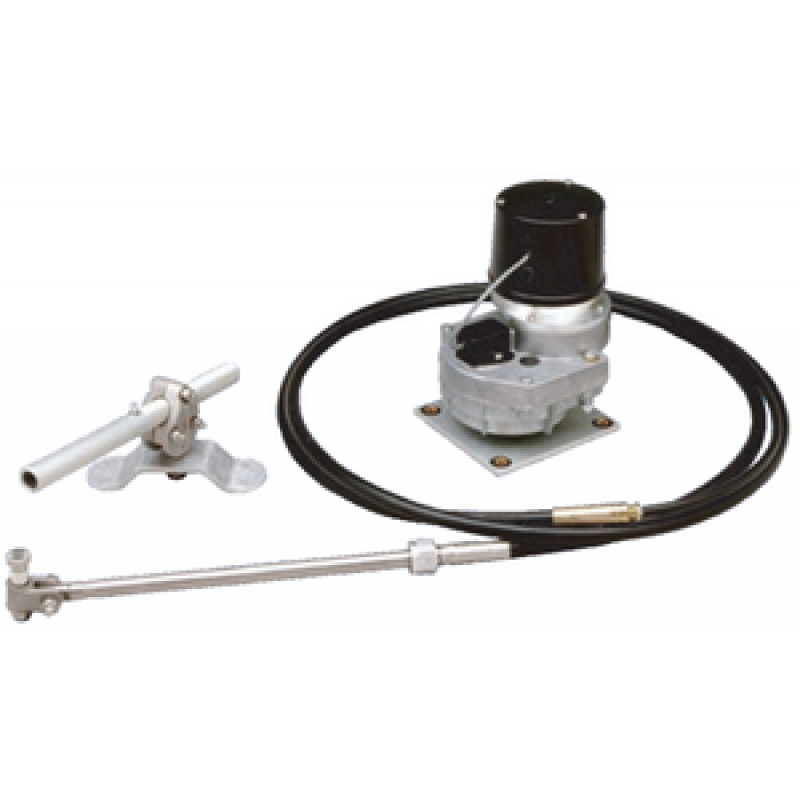
The SD10 represents the mechanical-cable branch of below-deck drives — a motor turning a drum that pulls cable or chain against the rudder quadrant, similar in principle to a below-deck steering cable run. It's a well-proven, economical way to add a real below-deck pilot to a mid-size sailboat without stepping up to a hydraulic pump and ram. We could not source a verified product photograph for this unit at the time of writing, so the image above is a placeholder — check the manufacturer link for current photos and specs before buying.
- Drive type
- Mechanical cable-drive unit with built-in rudder feedback
- Boat size
- Manufacturer-rated for sailboats roughly 25–37 ft
- Cable thrust
- Manufacturer-published figure around 180 kg (approx. 400 lb)
- Hard-over time
- Manufacturer-published roughly 12–15 seconds hard-over to hard-over
Pros
- Purpose-built for boats with an existing quadrant or tiller and no room for a full hydraulic pump system
- Built-in rudder reference feedback simplifies wiring versus a separate rudder sensor
- Pairs with a NAC-2 style course computer for a complete networked sail autopilot system
Cons
- Cable-drive mechanisms need periodic tension and wear checks that a sealed hydraulic ram doesn't
- Rated for a fairly specific boat-size window — undersized for anything much over 37 ft or heavy displacement
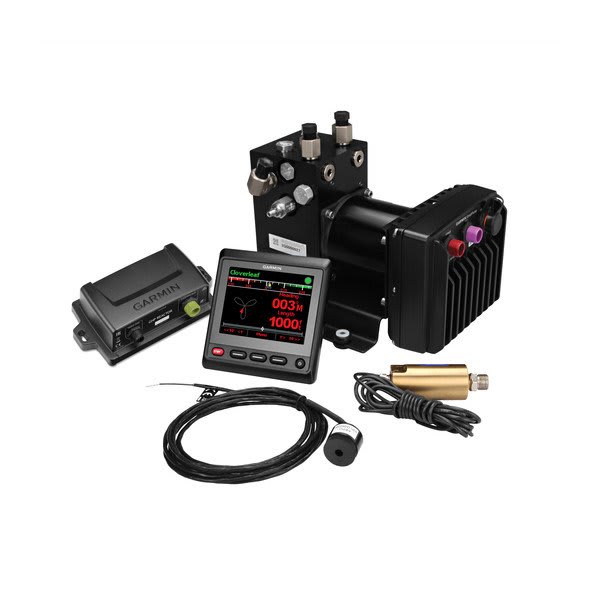
Garmin Reactor 40 Hydraulic Corepack
Best hydraulic rotary/linear drive for larger or heavier cruising boats
Hydraulic drives use a pump to push fluid through a ram or into the boat's existing hydraulic steering circuit, and they're the standard choice once a boat's displacement and rudder loads exceed what a mechanical cable or ballscrew ram can handle comfortably. The Reactor 40 is Garmin's compact hydraulic corepack, aimed at boats already running hydraulic steering or ready to have it installed. It's overkill — and unnecessarily expensive — on a light 28-footer, but it's the right category once you're talking about a 40-plus-foot cruiser or anything with a lot of rudder area and displacement.
- Drive type
- Hydraulic pump feeding an existing or dedicated hydraulic steering ram
- Flow rate
- Manufacturer-published SmartPump flow around 1 liter per minute
- Control head
- Pairs with GHC 50/52 or compatible Garmin MFD
- Networking
- NMEA 2000 backbone for wind, GPS, and heading data sharing
Pros
- Hydraulics scale to real displacement — the natural choice once a boat is too heavy for a mechanical below-deck drive
- SmartPump variable flow adjusts pump speed to the correction needed, rather than running flat-out for small corrections
- Integrates with the rest of a Garmin NMEA 2000 network (chartplotter, wind, autopilot) without a separate gateway
Cons
- Needs an existing hydraulic steering system, or the budget and space to add one — this is not a standalone bolt-on drive
- Higher continuous power draw than a mechanical ram of similar boat-size rating, which matters for a passage energy budget
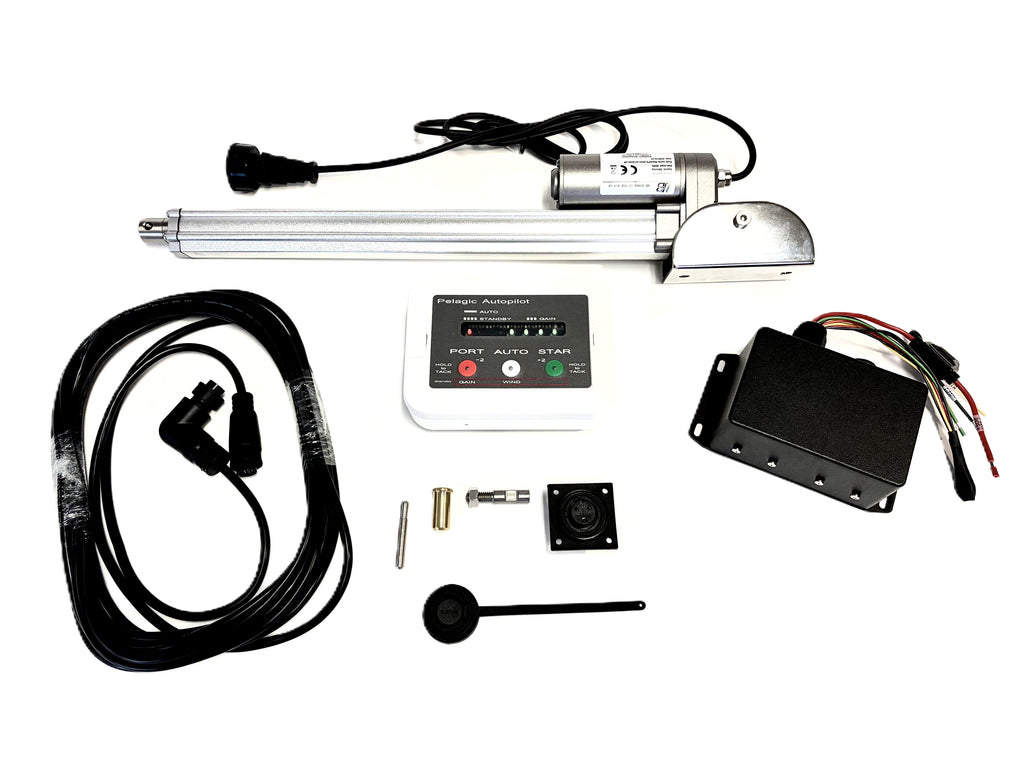
Pelagic Autopilot with Tiller Actuator
Best tiller-arm drive for offshore-oriented small to mid-size boats
Pelagic (built by Scanmar, the company behind the Monitor windvane) makes tiller pilots aimed squarely at offshore sailors rather than casual daysailing. The tiller-arm actuator design is mechanically simple — a linear ram pushes and pulls the tiller directly — but the 9-axis gyro sensor and control electronics are a notch above entry-level tiller pilots in how well they hold a course downwind in a seaway, which is where cheaper units struggle most. It remains, like all tiller drives, limited by how much load a tiller arm and its pintles can take before something bends.
- Drive type
- Cockpit-mounted linear actuator clamped to a tiller arm bracket
- Sensor
- 9-axis gyro-based sensor for pitch, roll, and yaw compensation
- Mounting
- Stern-facing or bow-facing control head options
- Upgrade path
- Same drive electronics can later pair with a below-deck actuator
Pros
- Gyro-based sensing holds a course better in a seaway than older fluxgate-only tiller pilots
- Designed and built specifically for offshore use, with a track record among long-distance cruisers and racers
- The same brain unit can later drive a below-deck ram if the boat is re-rigged, protecting the investment
Cons
- Still a cockpit-mounted actuator on the tiller arm, so it shares the exposure and load limits of any tiller-drive design
- Pricier than a basic wheel or tiller pilot, reflecting its offshore-focused build quality
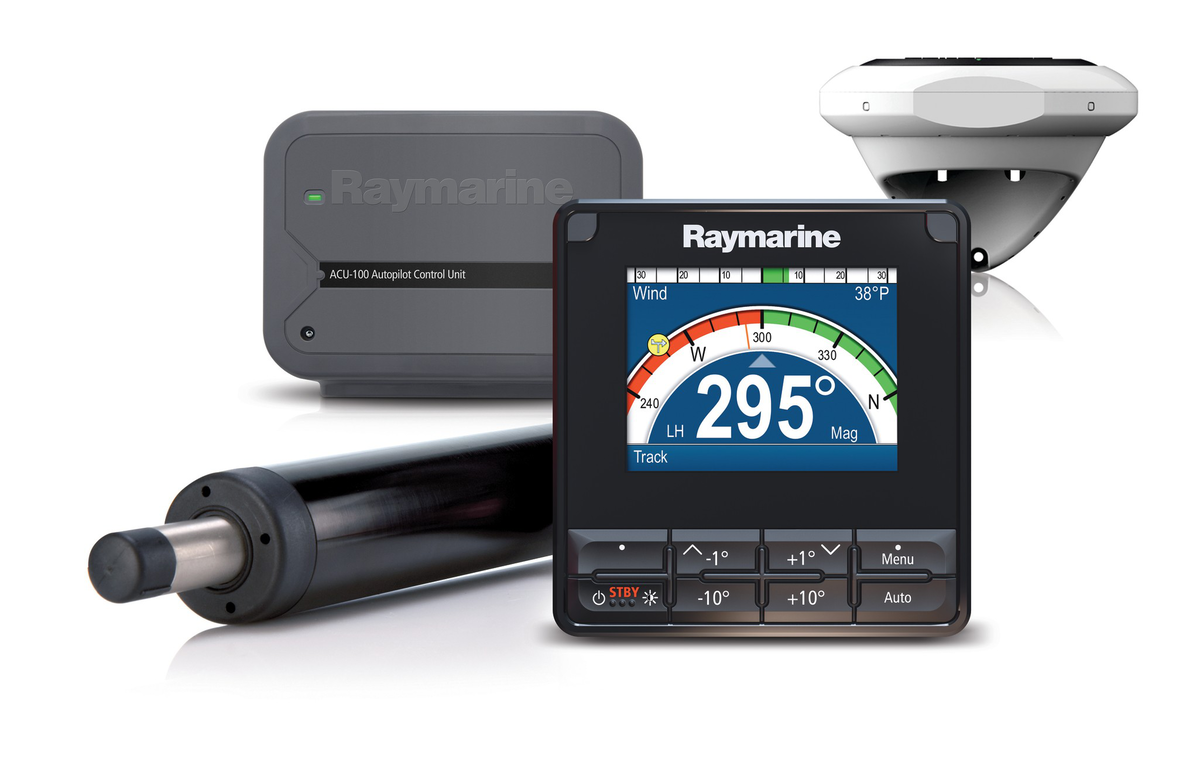
Raymarine EV-100 Tiller Pilot Pack
Best budget-friendly tiller drive for small tiller-steered sailboats
The tiller equivalent of the EV-100 Wheel Pilot, this is the standard entry point for adding an autopilot to a small tiller-steered sailboat. A linear ram pins between a cockpit-mounted bracket and a fitting on the tiller itself, pushing and pulling to steer. It's inexpensive to install and easy to remove, but because it acts on the tiller arm rather than the rudder stock, its holding power is limited by tiller-arm leverage — on a boat with a long tiller or heavy weather helm, that leverage disadvantage is exactly why undersized tiller pilots burn out clutches and gears prematurely.
- Drive type
- Cockpit-mounted linear ram, pin-mounted to tiller and cockpit bracket
- Displacement rating
- Manufacturer-rated for tiller boats up to roughly 13,200 lb (6,000 kg)
- Sensor
- EV-1 solid-state course computer, shared across the EV-100 range
- Removability
- Unpins from both mounts in seconds for hand steering or stowage
Pros
- Lowest-friction way to add a real networked autopilot to a small tiller boat
- Fully removable — no permanent below-deck work, and it stows in a cockpit locker off-season
- Shares the EV-1 sensor core with Raymarine's larger packs, so upgrading to a bigger boat later reuses know-how, if not hardware
Cons
- A tiller-arm pin mount concentrates load at two small pivot points — hardware and tiller strength both matter
- Rated only for boats under about 13,200 lb; undersizing it on a heavier tiller boat with real weather helm is a common mistake
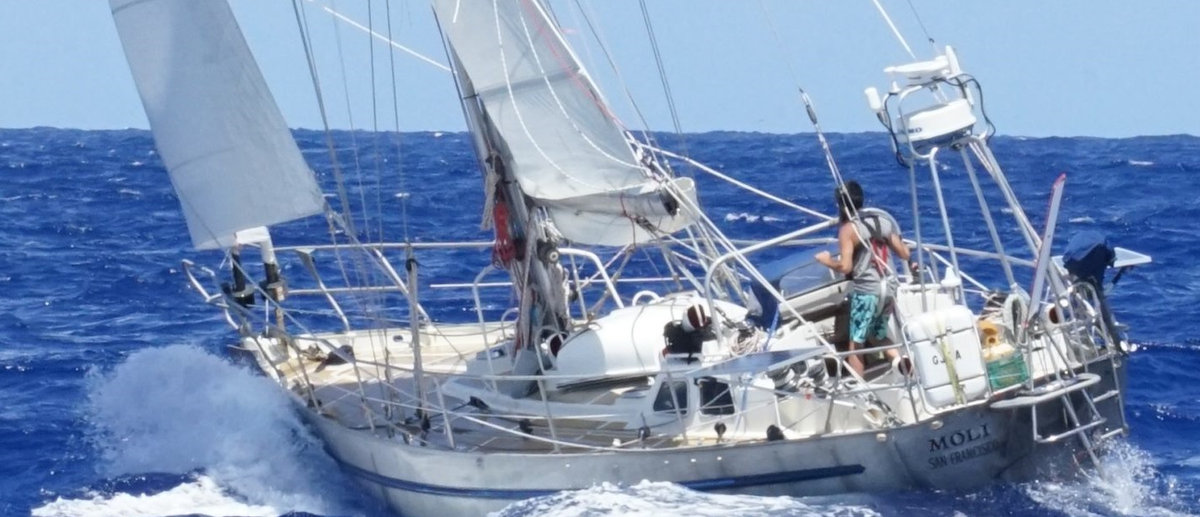
Monitor Windvane Self-Steering Gear
Best zero-power offshore alternative or backup to an electric autopilot
A windvane is not a drive-type option so much as a different steering philosophy: instead of an electric motor correcting to a compass heading, a servo-pendulum vane uses wind pressure and boat speed to move a water paddle that steers the boat relative to the wind, with no battery involved at all. Offshore sailors frequently run one alongside an electric pilot — the windvane for open-ocean legs under sail where power conservation matters, and the electric pilot for motoring, light air, and close-quarters work where a compass course is what's needed. We could not confirm a sourceable product photograph at time of writing; see the manufacturer link for current images.
- Steering principle
- Servo-pendulum: a water paddle amplifies vane movement into steering force
- Power draw
- None — fully mechanical, wind- and water-powered
- Mounting
- Transom-mounted bracket, boat-specific fitting kits
- Boat size range
- Manufacturer lists models across small cruisers to larger offshore yachts
Pros
- Draws zero electrical power, which matters enormously on a multi-week passage energy budget
- Servo-pendulum action gets more powerful as wind and boat speed increase, unlike an electric pilot straining harder in the same conditions
- Mechanically simple and field-repairable with basic tools, with no electronics to fail
Cons
- Only steers relative to apparent wind angle, not a compass course — useless in a flat calm under engine
- Requires a helmsman to trim sails for balance and to physically adjust the vane; it doesn't follow a route on a chartplotter
How to choose
| Product | Price range | Best for | Key spec |
|---|---|---|---|
| Raymarine EV-100 Wheel Pilot Pack | $1,700–$2,100 | Small wheel-steered daysailer | Rated to ~13,200 lb, belt-drive on wheel |
| Raymarine EV-200 with Type 1 Linear | $2,400–$2,900 | Mid-size cruiser, below-deck retrofit | Rated to ~30,000 lb, quadrant-mount ram |
| Simrad SD10 Sailboat Drive | $1,600–$2,000 | 25–37 ft with quadrant or tiller | ~180 kg cable thrust, built-in rudder feedback |
| Garmin Reactor 40 Hydraulic Corepack | $2,200–$2,800 | Larger or heavier cruising boats | SmartPump variable-flow, ~1 L/min |
| Pelagic Autopilot with Tiller Actuator | $900–$1,300 | Offshore-oriented tiller boats | 9-axis gyro sensing, tiller-arm mount |
| Raymarine EV-100 Tiller Pilot Pack | $1,800–$2,200 | Small tiller-steered sailboat | Rated to ~13,200 lb, removable pin mount |
| Monitor Windvane Self-Steering Gear | Contact retailer for current pricing | Offshore passages, zero-power steering | Servo-pendulum, no electrical draw |
Budget tiers
Under $1,500: basic tiller pilots and used or entry mechanical drives — fine for coastal daysailing on a small tiller boat, undersized for offshore weather helm.
$1,500–$2,500: the sweet spot for most cruising sailboats — wheel drives, mechanical cable drives, and entry below-deck linear rams sized correctly for 25–40 ft boats.
$2,500 and up: hydraulic corepacks and larger below-deck rams for heavier cruising boats, plus a wind vane as a zero-power complement for genuine offshore passage-making.
Related guides
 Navigation
Best Sailboat Autopilots
Raymarine, B&G, Garmin, Simrad and Pelagic autopilots compared — drives, sailing modes, and integration.
 Navigation
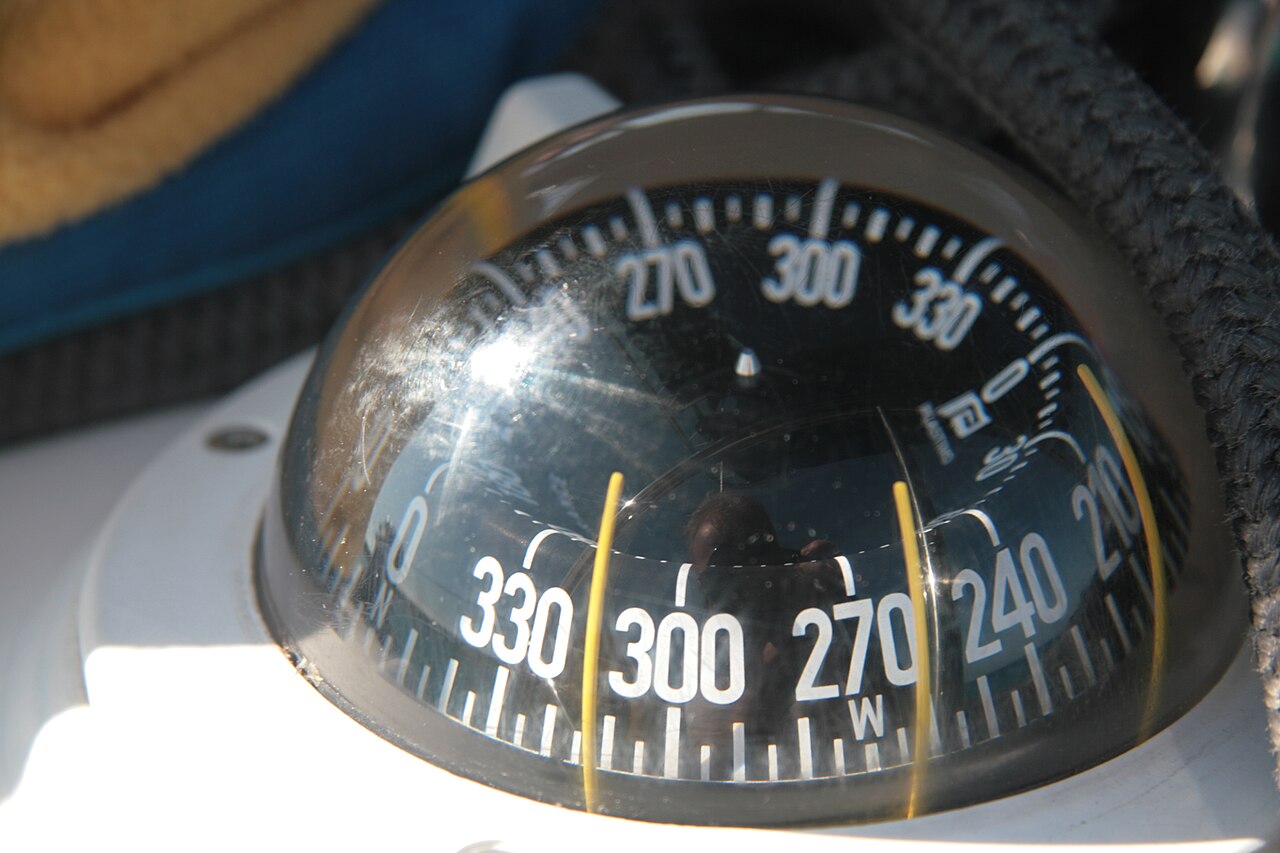
Best Boat Compasses: Steering and Handheld Picks
Card size, heel, mounting, lighting and deviation: choosing a magnetic compass for a sailboat.
 Navigation
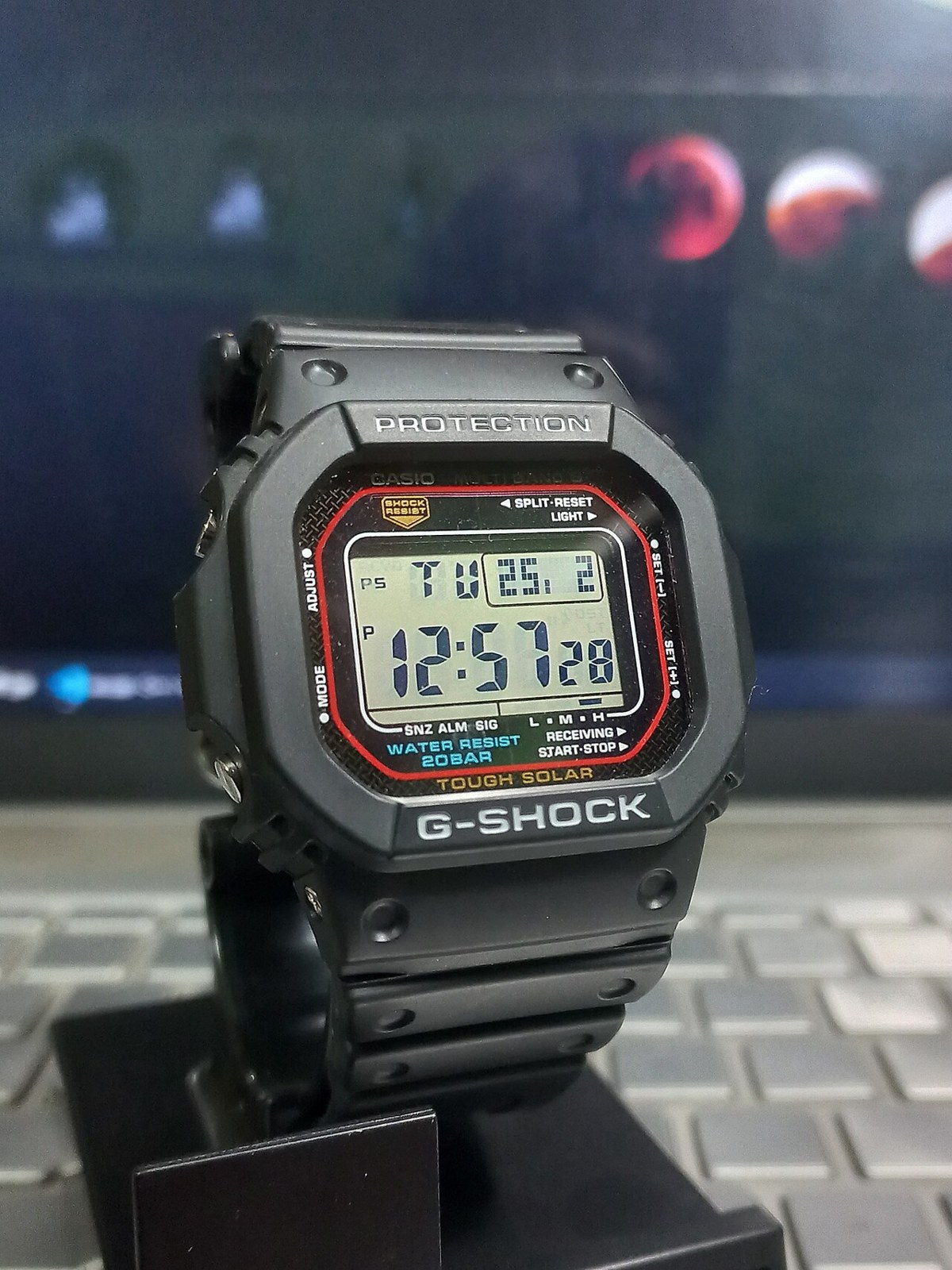
Sailing Watches: Race Timers and Cruising Choices
Countdown controls, water resistance, readability and battery care: choosing a practical watch for racing and cruising.
 Navigation
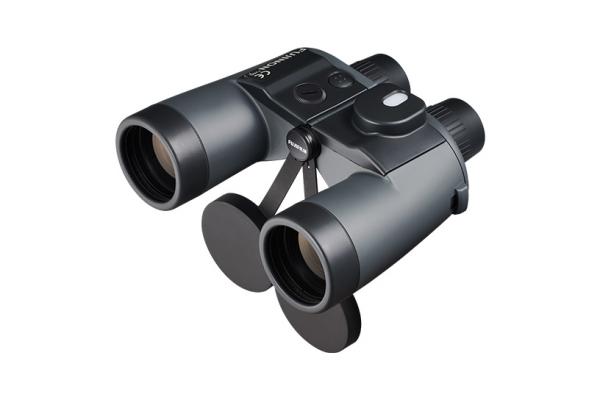
Best Marine Binoculars for Sailing
Why 7x50 is the sailing standard, compass and stabilized binoculars, and our top picks at every budget.
Looking for more gear guides? Browse all our gear recommendations or the full guides index.