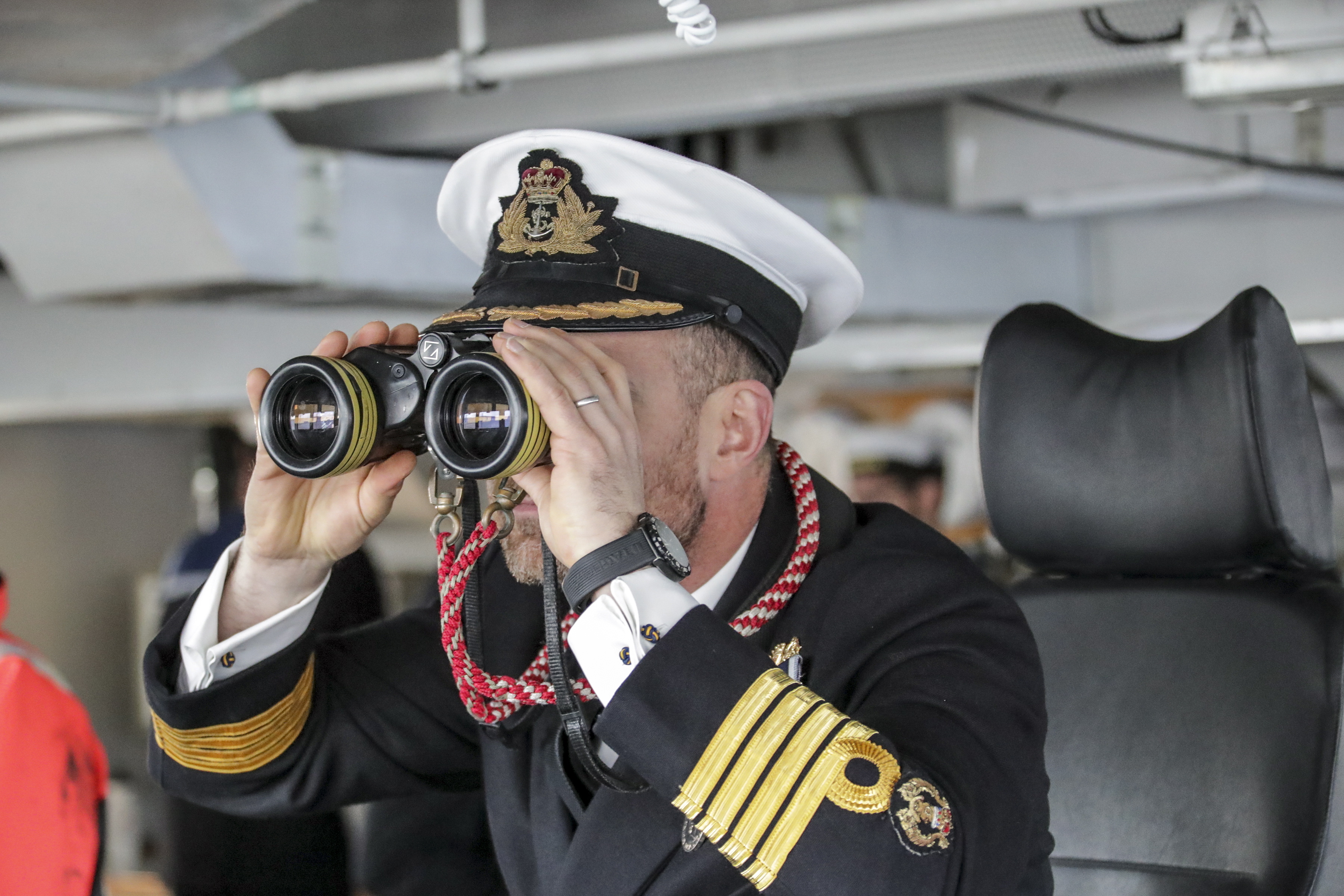
Best Marine Binoculars for Sailing
The best marine binoculars for sailing are the ones you can bring to your eyes quickly, hold steady, and see through comfortably when the cockpit is wet. For most cruising crews that still means a waterproof 7x50, not the highest magnification on the shelf. A compass is helpful; good fit and clear optics matter more.
This specification-led guide compares four distinct buying options, not hands-on test winners. Start with the Fujinon Mariner for a conventional boat pair, consider the heavier Polaris for its viewing specifications, compare Bushnell for budget navigation features, and choose Canon when stabilization solves a specific problem.
Sailboat Atlas may earn a commission from qualifying purchases made through links on this page, at no extra cost to you.
Why are 7x50 binoculars best for sailing?
The first number is magnification; the second is objective diameter in millimeters. Seven-power binoculars enlarge a buoy seven times, but also magnify your hand movements. A rolling deck is a poor foundation for high-power optics. At 7x, acquiring a target and keeping it in view is usually easier than with an unstabilized 10x or 12x pair.
The 50 mm objectives provide a generous exit pupil without turning the instrument into a tripod-sized observation binocular. There is still a handling penalty: most conventional marine pairs are bulky. Lift several models with wet-weather clothing on, check the hinge spacing against your eyes, and make sure the eyecups work with your sunglasses.
A wider true field helps find a channel mark after lowering the binoculars to look around. Avoid comparing apparent-field figures with true-field figures; they describe different things. Alternate short magnified inspections with broad unaided scans, because binoculars narrow your awareness and never replace a continuous lookout.
What do exit pupil and low-light performance mean?
Divide objective diameter by magnification: 50 ÷ 7 gives about 7.1 mm, while 42 ÷ 10 gives 4.2 mm. That is the diameter of the light bundle leaving each eyepiece. A large exit pupil can make eye placement more forgiving as you move, and can supply a dark-adapted eye with more light when its pupil opens wide enough.
It does not guarantee that every adult sees a brighter picture. Your pupil size, age, ambient light, optical transmission, and lens condition all matter. In daylight your eye may admit only part of the available beam. At dusk, coatings and contrast can matter as much as a shared 7x50 label; a printed relative-brightness number is not a measured verdict on image quality.
Keep lenses clean and give your eyes time away from bright cockpit displays. Binoculars cannot reveal unlit hazards in total darkness. For the limits of other lookout tools, read radar versus AIS versus thermal imaging; each answers a different question, and none turns optical magnification into night vision.
How do a marine compass and rangefinding reticle work?
A built-in compass gives the target's magnetic bearing while you look through the instrument. Confirm whether the compass is balanced for your cruising region or designed for global use. Keep it clear of speakers, phones with magnetic accessories, steel structures, and other sources of deviation. Compass illumination may require batteries even though normal optical viewing does not.
A reticle measures angular size, not distance directly. With a scale calibrated in milliradians, approximate range in meters equals known target height in meters multiplied by 1,000 and divided by its measured angular height in mils. A 10 m feature spanning 20 mils is roughly 500 m away. Check the manual: different markings or angular units need the appropriate conversion.
Use an actual known dimension, not a guessed mast height or a charted light elevation mistaken for tower height. Waves, heel, and uncertain endpoints compound error. Repeated bearings can inform lookout, but a bearing that appears steady while range closes needs prompt proper assessment. Keep an independent position source such as a handheld marine GPS; neither a compass nor a reticle supplies your position automatically.
Are waterproof, fogproof, and floating binoculars different?
Yes. Waterproofing describes resistance to water ingress under stated conditions. A depth-and-time test is not permission to use binoculars underwater, blast them with a pressure washer, or ignore aging seals. Compare the exact manufacturer's specification, not merely a retailer's marine badge, and close any battery compartments correctly.
Internally fogproof binoculars generally use sealed construction and dry gas to limit internal condensation. The outside lenses can still mist when moved between temperatures, and salt deposits can soften the view. Follow the maker's cleaning instructions, remove grit before wiping, and let optics and straps dry before storing them in a closed case.
Floating is a separate recovery feature. A body that sinks may need a correctly sized flotation strap; a strap that supports one model may not support a heavier replacement. Secure the binoculars while moving around the boat, avoid snagging loops, and check the supplied strap's attachment points. Buoyancy helps only if you can see and recover the instrument safely.
Are image-stabilized binoculars worth buying for sailing?
Stabilization addresses the small, rapid movements that blur useful detail. It can make a higher-power view easier to interpret when reading a buoy number or examining a harbor entrance. It does not remove the boat's motion, and every system has a finite correction range. When the bow pitches through a large angle, you still need to reacquire the target.
The Canon 10x42L IS WP is an interesting alternative because it combines stabilization with a stated waterproof test. Do not assume other Canon IS sizes share that sealing. Its 4.2 mm exit pupil and 16 mm eye relief are real compromises compared with the conventional marine options here, especially for users who wear glasses.
Budget for batteries, dry storage, and a backup viewing plan if stabilization stops. Brace yourself securely rather than leaning beyond the guardrails for a steadier view. If your real problem is tracking traffic in poor visibility, a different instrument may be the priority: our sailboat radar guide explains the relevant buying choices.
Our picks
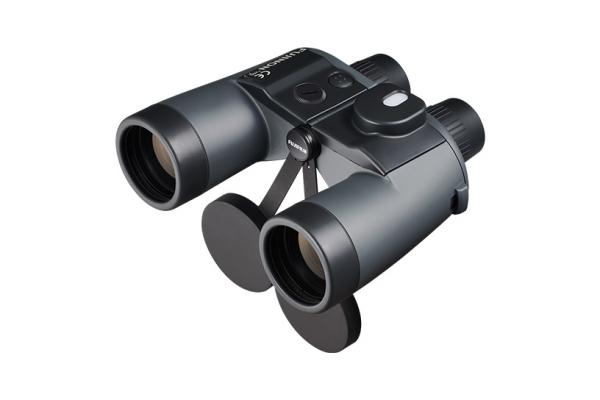
Fujinon Mariner 7x50 WPC-XL
Best starting point for a cruising sailboat
The compass-equipped Mariner is the sensible first shortlist for coastal cruising: conventional 7x50 optics, an illuminated global compass, and manageable weight for repeated scans. Choose the WPC-XL deliberately; the similar WP-XL lacks the compass. Set each eyepiece for your own eyes before leaving the dock and keep those settings noted if several crew share it. The supplied flotation strap is part of the recovery system, not permission to leave the binoculars unsecured. This is a specification-led recommendation, not a claim that we have tested its buoyancy or compared its twilight performance side by side.
- Optics
- 7x magnification; 50 mm objectives
- Exit pupil / eye relief
- 7.1 mm / 18 mm
- Field of view
- 7°; 122 m at 1,000 m
- Weight
- 910 g without batteries
- Sealing / compass
- 1 m for 5 minutes; illuminated global compass
Pros
- Useful illuminated compass without premium-optics expenditure
- Less weight than the Polaris compass model
- Floating-type strap included in the manufacturer's specification
Cons
- Individual eyepiece focus is slower to share between different prescriptions
- 18 mm eye relief may not show the full field with every pair of glasses
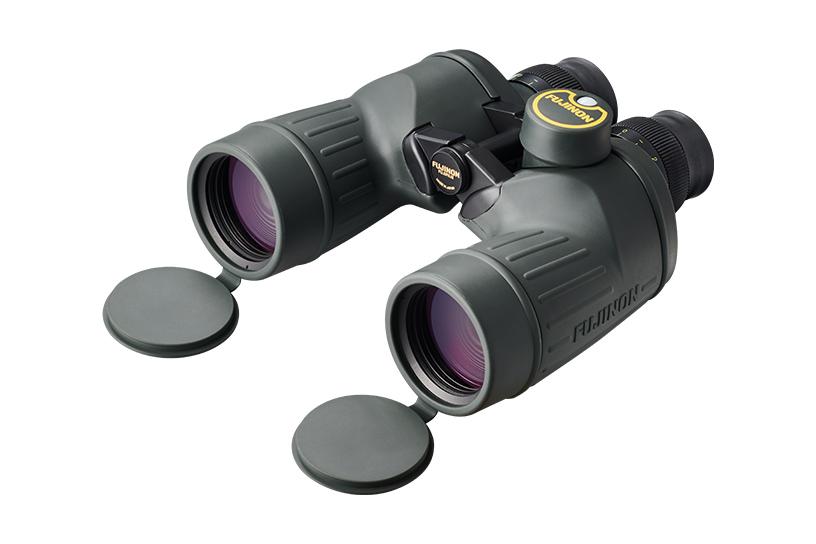
Fujinon Polaris 7x50 FMTRC-SX
Best premium conventional compass option
Buy the Polaris for its viewing ergonomics and conventional optical design rather than an expectation that a higher price increases magnification. Its 23 mm eye relief and 7.5-degree true field are useful distinctions when trying to acquire a buoy while wearing glasses. The trade-off is unmistakable: nearly a kilogram and a half hanging from your neck. Support your elbows and try its balance before committing. Specify FMTRC-SX if you want the compass; FMTR-SX is a different configuration. It suits a dedicated navigation station or serious watchkeeping role better than a lightweight grab-and-go shore bag.
- Optics
- 7x magnification; 50 mm objectives
- Field of view
- 7.5°; 131 m at 1,000 m
- Exit pupil / eye relief
- 7.1 mm / 23 mm
- Weight
- 1,460 g without battery
- Focus / sealing
- Individual focus; 2 m for 5 minutes
Pros
- Long published eye relief is promising for spectacle wearers
- Wider true field than the Mariner in this comparison
- Compass-equipped configuration with a substantial waterproof specification
Cons
- Heavy enough to discourage prolonged unsupported viewing
- Individual focus and bulk are inconvenient for casual shore use
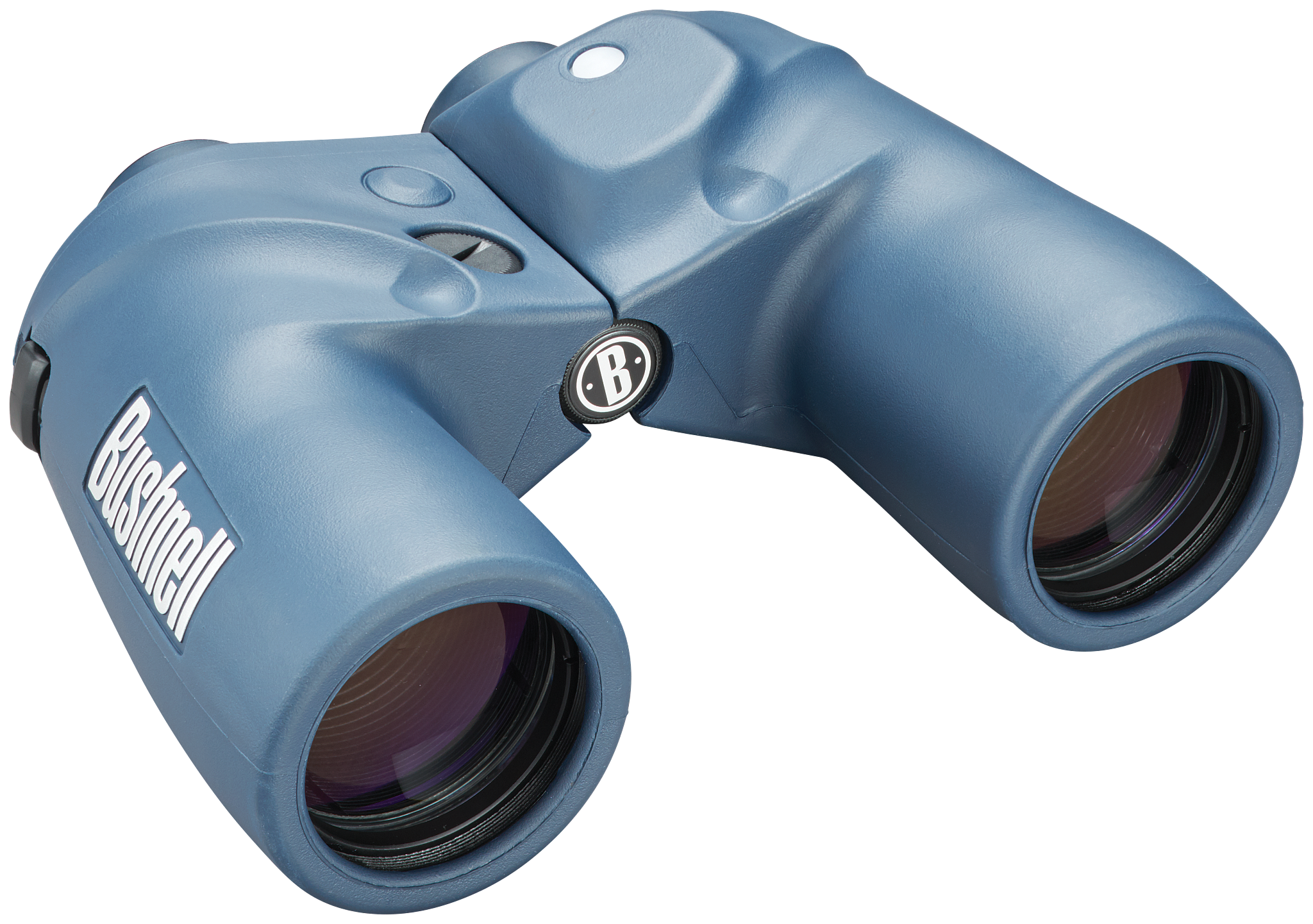
Bushnell Marine 7x50 with compass (137500)
Best budget compass-and-reticle shortlist
Bushnell's compass Marine is worth comparing when your priority is a dedicated pair that can live aboard without a premium purchase price. The reticle offers a useful introduction to angular ranging, provided you learn the scale rather than treating it as a laser rangefinder. Check the exact model number and compass region with the seller: Marine-branded listings can cover different configurations, and retailer specification tables are not always consistent. Prefer a seller with a clear return policy so you can check alignment, eyecup comfort, and compass readability immediately. Do not assume any advertised buoyancy covers your chosen accessories.
- Optics
- 7x magnification; 50 mm objectives
- Prism layout
- Porro
- Navigation aids
- Illuminated compass and rangefinding reticle
- Exit pupil
- Approximately 7.1 mm (50 ÷ 7)
Pros
- Combines bearings and angular measurement in one instrument
- Conventional 7x power is suitable for a moving cockpit
- A practical feature set for a first dedicated boat pair
Cons
- Compass suitability must be checked for your intended cruising region
- Reticle ranging needs a known target dimension and a steady reading

Canon 10x42L IS WP
Best stabilized option for reading distant detail
The Canon is the specialist choice when shaky hands, rather than insufficient magnification, stop you reading a distant mark. Stabilization can make ten-power detail genuinely useful, but it cannot hold the horizon still through a large roll. Try it from a moving platform if possible, and confirm that you can reach the controls with your normal sailing gloves. Its smaller exit pupil changes the low-light and eye-positioning experience compared with a 7x50. Keep spare batteries dry and retain a simple backup aboard. Product photography was unobtainable from the manufacturer and retailer pages checked; the image shown is a placeholder.
- Optics
- 10x magnification; 42 mm objectives
- Exit pupil / eye relief
- 4.2 mm / 16 mm
- Stabilization
- Powered Vari-Angle Prism image stabilization
- Waterproofing
- 1 m for up to 5 minutes
- Navigation aids
- No integrated bearing compass
Pros
- Stabilization reduces hand tremor when identifying distant marks
- Higher magnification helps reveal lettering in suitable conditions
- Waterproof model rather than a merely weather-resistant IS alternative
Cons
- Powered stabilization adds battery management to an optical tool
- Smaller exit pupil and shorter eye relief than the 7x50 alternatives
- Cannot cancel large rolling or pitching movements of the boat
How to choose
Marine binocular comparison
| Model | Optics | Eye relief | Main reason to choose |
|---|---|---|---|
| Mariner WPC-XL | 7x50 | 18 mm | Conventional compass-equipped cruising pair |
| Polaris FMTRC-SX | 7x50 | 23 mm | Long eye relief and 7.5° field |
| Bushnell Marine 137500 | 7x50 | Check regional listing | Compass plus reticle on a tighter budget |
| Canon 10x42L IS WP | 10x42 | 16 mm | Powered image stabilization |
Budget tiers: spend on the problem you actually have
Entry marine tier: prioritize sealed construction, comfortable eye placement, and a secure strap before paying for a compass. Bushnell is the budget-oriented shortlist here. Compare delivered offers for the exact compass configuration rather than assuming the cheapest search result is the same instrument. We do not quote a fixed price because regional stock and bundles change.
Dedicated cruising tier: the Mariner is the place to start comparing a purposeful compass-equipped pair. Spend the difference only if the fit, compass readability, or handling improves your actual lookout. A float strap, protective case, and easy cockpit stowage deserve a share of the budget.
Premium tier: compare the Polaris with a current Steiner Commander or Navigator compass model if you want conventional marine optics. Navigator Pro listings may refer to older stock, so verify generation and accessories. Nikon OceanPro is another center-focus alternative worth checking for shared-crew use; confirm whether a listing includes a compass rather than inferring it from the family name.
Stabilized tier: choose the Canon because you need steadier detail, not because 10x sounds more powerful. Before spending premium money, try every pair with your glasses, adjust diopters, and look for a merged, relaxed image. Double vision or eyestrain is a reason to reject a sample, not something to tolerate offshore.
Specification references: Fujifilm Mariner specification sheet, Fujifilm FMT specifications, Bushnell Marine, and Canon 10x42L IS WP. Product photos: Fujifilm and Bushnell; Canon uses a clearly disclosed placeholder.
Frequently asked questions
What are the best marine binoculars for most sailors?
Start with waterproof, internally fogproof 7x50 binoculars that fit your eyes comfortably. The Fujinon Mariner WPC-XL is a practical compass-equipped shortlist; the Polaris prioritizes eye relief and a wider field, while the Canon adds powered stabilization. Fit and handling should decide the final purchase.
Are 7x50 binoculars better than 10x50 on a sailboat?
Usually for general handheld lookout. Seven-power magnification makes hand and boat movement less intrusive and gives a larger exit pupil with the same objective size. Ten-power binoculars can reveal more detail from a steady position, especially with stabilization, but are not automatically more useful in chop.
Do marine binoculars float?
Some models float only with their specified flotation strap, while others may have buoyant bodies. Waterproofing alone says nothing about buoyancy. Confirm the exact model, strap, and accessory combination, and follow the manufacturer's instructions rather than testing by dropping expensive optics overboard.
Can binoculars measure distance to another boat?
A calibrated reticle can estimate distance if you know the target's actual height or width. Guessing another vessel's dimensions produces an unreliable answer. A reticle is not radar, a laser rangefinder, or a safe basis for deciding closest approach.
Are image-stabilized binoculars worth it for sailing?
They can be worthwhile for repeated short looks at distant lettering or identifying marks, particularly if hand tremor limits conventional binoculars. They cost more, need power for stabilization, and have finite correction range. Heavy vessel motion still requires good bracing and realistic expectations.
Should I buy a compass model for offshore cruising?
A compass model is useful for identifying magnetic bearings and recording repeated observations, but check hemisphere or global compatibility. Keep it away from magnetic interference and retain a separate hand-bearing compass. A binocular compass does not replace charts, a position source, or a proper collision-avoidance assessment.
Related guides
 Navigation
Best Boat Compasses: Steering and Handheld Picks
Card size, heel, mounting, lighting and deviation: choosing a magnetic compass for a sailboat.
 Navigation
Best Marine GPS for Small Boats and Sailboats
Fixed-mount and handheld marine GPS units compared — screens, charts, power draw, and picks at every budget.
 Navigation
Sailing Watches: Race Timers and Cruising Choices
Countdown controls, water resistance, readability and battery care: choosing a practical watch for racing and cruising.
 Navigation
Best Chartplotters for Sailboats
How to choose a chartplotter for cruising — screen size, charts, networking, and top picks at each budget.
Looking for more gear guides? Browse all our gear recommendations or the full guides index.