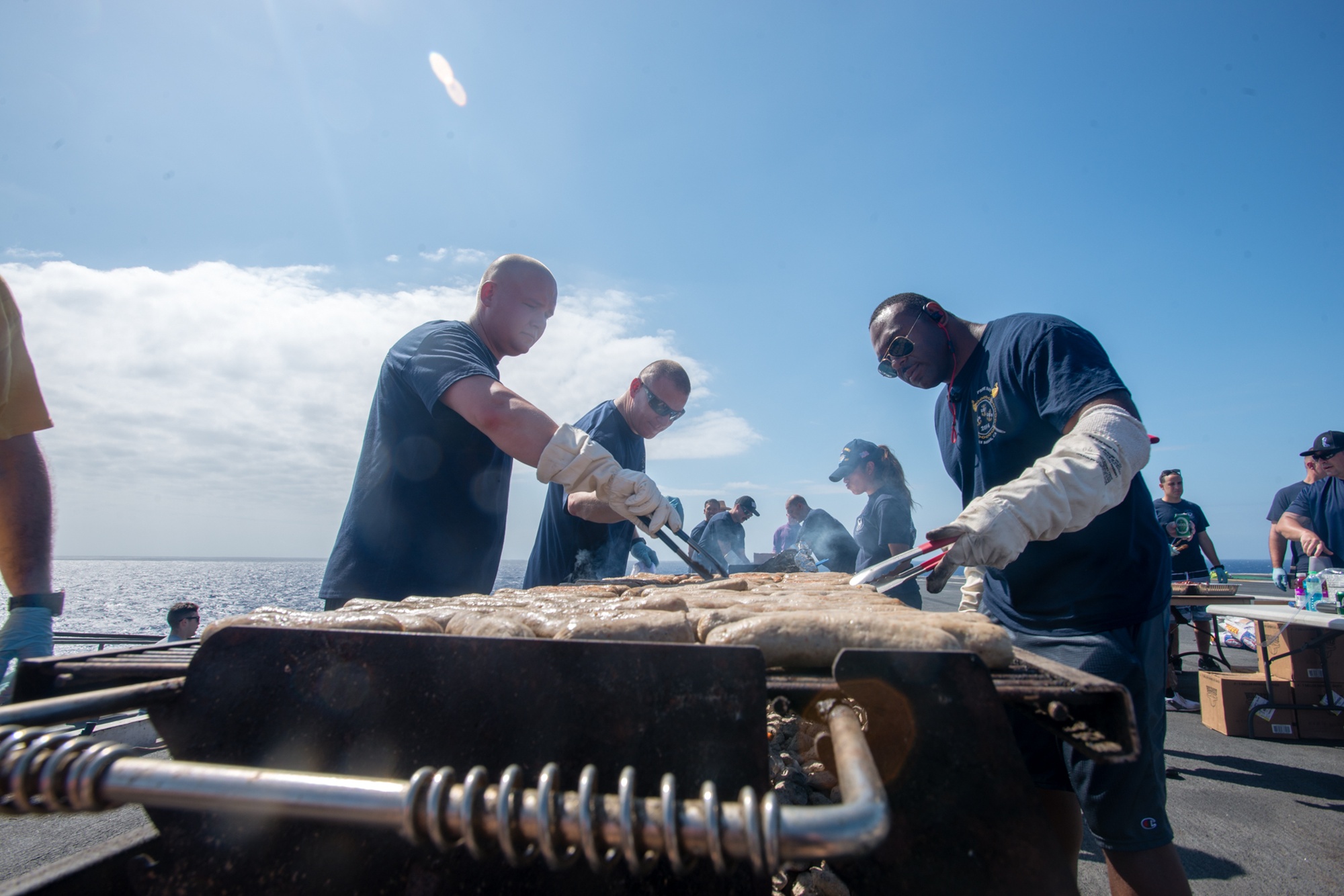
Best Boat Grills: Marine Propane Grills Compared
For most cruising sailboats, a purpose-built marine propane grill is a more practical starting point than a household barbecue balanced on deck. Choose the grill and its manufacturer-approved mount together: cooking area matters less if the unit cannot sit clear of the sails, people, and cockpit enclosure. The shortlist below separates a compact kettle, a larger rectangular cooking surface, and lower-cost or specialist alternatives rather than pretending one grill suits every stern.
These are specification-based recommendations, not claims of hands-on cooking tests. Prices, mounting kits, regulators, and fuel connections vary by market. A grill that works well at a calm anchorage may be unsuitable underway or beneath your particular bimini; make that decision before ordering.
Sailboat Atlas may earn a commission from qualifying purchases made through links on this page, at no extra cost to you.
What makes a marine boat grill different from a camping barbecue?
A boat grill has to solve three problems at once: salt exposure, secure attachment, and limited space around a hot appliance. Stainless steel resists corrosion but does not make a grill maintenance-free. Salt deposits, grease, dissimilar-metal fittings, and enclosed damp storage still cause trouble. Look for accessible burner components, a grease collection arrangement you can actually clean, and replacement parts from a supplier you can reach.
A household or camping grill may cook just as well ashore, yet offer no appropriate rail mount or safe arrangement for a moving deck. Do not improvise by resting it on a cockpit cushion, lazarette lid, or plastic table. A portable marine grill must still be secured as its instructions require. A manufacturer's marine label is not permission to use it under canvas, beside petrol cans, or in an enclosed cockpit.
Round kettles use space differently from rectangular grills. A kettle can be easier to store and reach around on a narrow stern; a rectangular grate usually makes it easier to arrange several portions side by side. Neither shape guarantees even heat. Burner layout, lid use, wind, food loading, and preheating affect results, so disregard unsourced claims that a particular shape never produces hot spots.
How do you choose a boat grill mount for your stern rail?
Measure the rail diameter, the available straight section, and the complete grill footprint with its lid open. Then check the maker's list of compatible mounts for that exact model. Rail curvature, stanchion spacing, stern-seat backs, davit lines, and a backstay can make a nominally suitable position unusable. A clamp that fits the tube is only the first part of the assessment; the attachment must also resist rotation and the weight of food and accessories.
Map the exclusion zone around hot surfaces using the manual's clearances. Include the enclosure in both its open and closed positions, a folded bimini, loose dock lines, and sails stored near the stern. Allow room to operate the lid without leaning across heat. Mounting outboard can move heat away from the cockpit, but it also puts the cook near an exposed edge and complicates retrieving food or handling a grease tray.
A removable mount is useful only if you can safely remove the grill when it is cold and disconnected. Check whether the mount is included; many advertised grill prices are for the appliance alone. Avoid assuming your existing fishing-rod holder or rail bracket has the correct load capacity or locking geometry. If you cannot find a secure position with the specified clearances, a shore-side barbecue may be the better purchase.
Is propane safe on a boat grill, and where should cylinders go?
Propane is heavier than air, so leaked gas can collect in low enclosed spaces rather than dispersing upwards. This makes fuel storage a separate decision from where you cook. Never put a connected or spare cylinder in an ordinary unvented cockpit locker simply because it fits. Follow the appliance instructions, applicable local marine LPG requirements, and your boat's fuel-system design; ask a qualified marine technician about storage and connections you are unsure of.
Small disposable cylinders and a connection to a vessel's fixed LPG system are not automatically interchangeable. Use the exact approved regulator, hose, and connection arrangement. Do not splice a convenient hose into the galley supply or substitute a regulator on the assumption that all propane appliances use the same pressure. A permanent installation requires a whole-system assessment, not just an adapter that threads into place.
Before lighting, inspect the connection and follow the prescribed leak-check procedure with an approved leak-detection solution, never a flame. Keep the valve accessible and the fuel supply away from hot components. Shut down and disconnect or isolate as the manual directs. A carbon-monoxide alarm below is a useful safety layer, but it does not make indoor grilling safe: never operate a grill in the cabin, under an enclosed tent-like cockpit cover, or inside a boat shed.
Can you barbecue while sailing or in strong wind?
The conservative choice is to cook only when securely moored or anchored in settled conditions and when the grill's instructions permit the arrangement. A mount is not a gimbal: heeling, a passing wake, and a person grabbing the rail can move hot food and grease unexpectedly. Do not treat marketing photographs of a grill on a boat as approval to use it during an exposed passage.
Wind affects burner operation and can make ignition or heat control unreliable. Follow the maker's ignition procedure and waiting period after an unsuccessful light. Do not repeatedly feed gas into an unlit grill. If gusts keep extinguishing the flame, shut down rather than trying to create a windbreak with towels, sailcloth, or a cockpit cushion. Any approved wind protection must preserve combustion air and clearances.
Choose a cooking position where the person at the grill can maintain three-point contact without stepping into running rigging. Keep children and pets outside the hot zone, and have an appropriate extinguisher readily accessible according to your boat's safety plan. Never pour water into burning grease. Close the lid or isolate fuel only when safe and as the appliance instructions advise; prioritize people over rescuing dinner.
How much cooking space and maintenance does a cruising crew need?
Size the grate for your normal crew, not the biggest party you might host once. A couple can cook successive batches on a compact grill; a larger rectangular surface helps when feeding several people at the same time. Think about the usable shape of the grate, not just its total area. Separate space for cooked food, a stable preparation surface, and a place for utensils can be more useful than extra burner output.
After the unit has cooled, empty and clean the grease collection system in accordance with the instructions. Wipe external salt deposits with a fresh-water-damp cloth, dry the surfaces, and inspect the burner and ignition components. Do not spray water into controls or use an aggressive chemical cleaner without checking compatibility. Replace corroded fasteners or damaged fuel components rather than compensating with extra tightening.
Before storing, disconnect fuel as directed and make sure both the grill and cover are dry. A damp fitted bag can trap salt and accelerate deterioration. Keep the appliance accessible enough to inspect before each use. Include a suitable mount, cover, fuel arrangement, spare service parts, and the space they occupy in the purchase decision; the smallest advertised price is rarely the complete installed cost.
Our picks
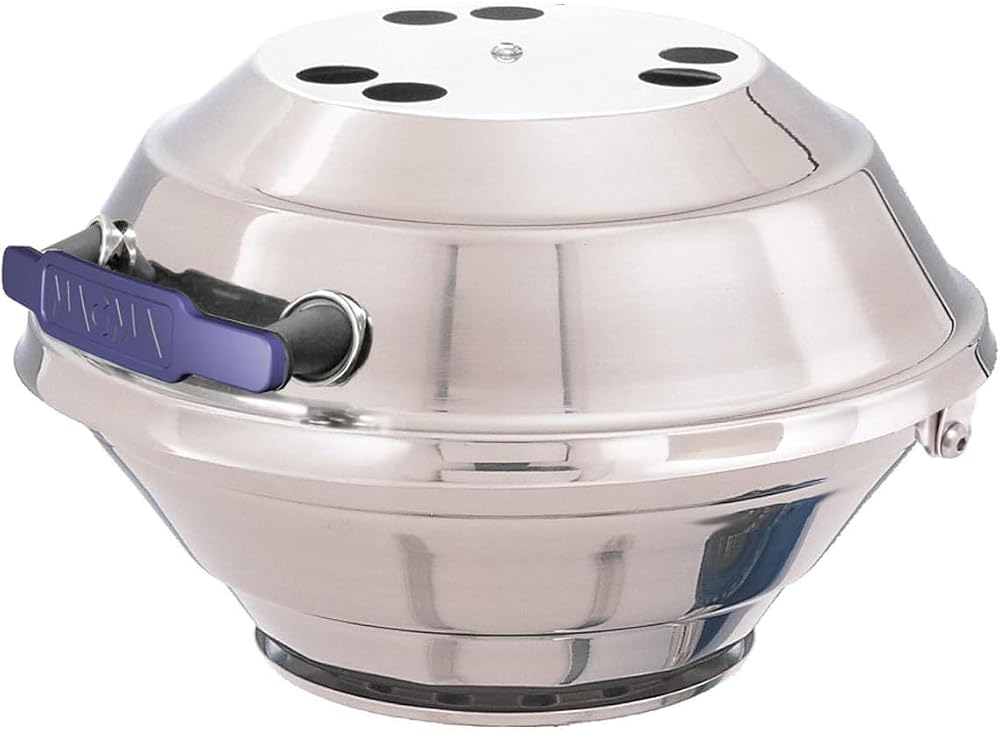
Magma Original Marine Kettle Gas Grill
Compact round grill for a couple at a settled anchorage
Choose the Original Kettle when a compact appliance and straightforward cleanup matter more than feeding a large crew simultaneously. Its round grate can accommodate meals in batches, but measure the open lid and the approved mounting arrangement before deciding it fits your stern. Skip it if you need a long uninterrupted cooking surface or cannot obtain the required clearances around canvas. Check that the listing is the A10-205 gas grill: the combination stove-and-grill and regional fuel variants are different products. The grill-only manufacturer price is not the complete installed cost.
- Cooking area
- 133 sq in
- Primary grate
- 13 in diameter
- Construction
- 304 mirror-polished stainless steel
- Fuel connection
- Supplied regulator for disposable 1 lb propane cylinders
Pros
- Compact circular footprint for a constrained stern
- Tool-free disassembly assists cleaning
- Swiveling venturi helps position the regulator
Cons
- Less usable cooking area than larger rectangular options
- Mount and propane cylinder are not included
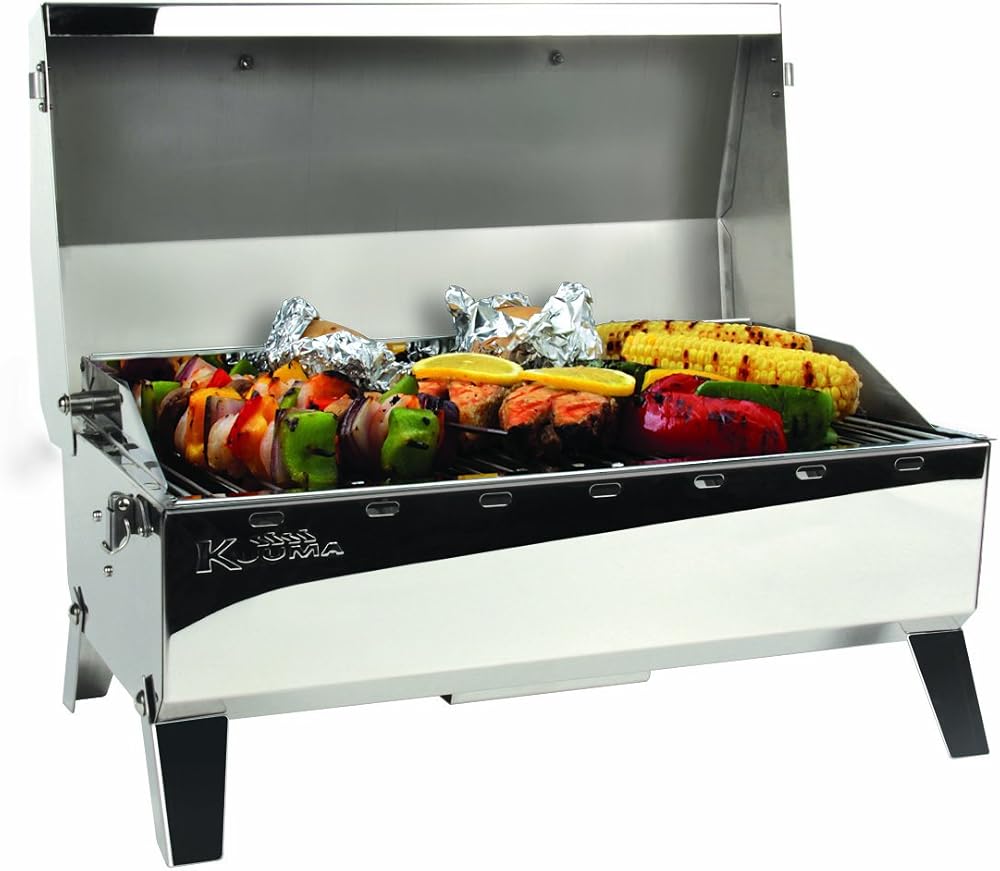
Kuuma Stow N’ Go 160, model 58130
Simple rectangular cooking surface with portable legs
The Stow N’ Go 160 is worth comparing when you want a straightforward rectangular marine grill without automatically moving to a premium model. Its legs and latching lid make transport practical, but a cockpit installation still needs an appropriate secure mount and safe clearances. Skip this particular high-pressure model if your intended arrangement requires the distinct low-pressure version. Model numbers matter: 58130, 58131, and 58133 are not interchangeable specifications. Confirm which accessories the seller supplies and whether the fuel arrangement matches the manufacturer’s instructions before purchasing.
- Cooking area
- 160 sq in
- Overall dimensions
- 23.25 × 11.25 × 11 in
- Cylinder connection
- 1-inch-20 disposable-cylinder thread
- Selected model
- 58130, high-pressure propane version
Pros
- Rectangular layout accommodates portions side by side
- Folding legs support appropriate portable use
- Removable grease tray simplifies cleanup
Cons
- Basic 58130 lacks the added igniter and thermometer of 58131
- Not the low-pressure 58133 for a different fuel arrangement
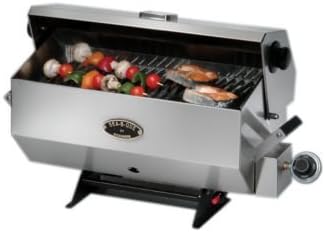
Dickinson Sea-B-Que Small
Two-person cooking with a sectional grate and rollaway hood
Choose the Small Sea-B-Que when its rollaway hood and removable grate sections solve your installation and cleaning needs. Dickinson includes several useful accessories, but included deck legs do not eliminate the need to assess a secure marine installation. Its overall width is greater than the cooking grate alone suggests, so sketch the complete envelope before ordering. Skip the Small if your normal crew needs a larger simultaneous meal or the stern cannot accommodate that width. Confirm the regional fuel connection and final currency with the seller rather than converting an ambiguous storefront price into a US quote.
- Burner rating
- 10,000 BTU manufacturer rating
- Cooking surface
- 9.25 × 16 in
- Construction
- 20-gauge 304 stainless steel
- Listed weight
- 18 lb
Pros
- Deck legs, drip tray, and thermometer supplied
- Four removable porcelain grate sections aid cleaning
- Rollaway hood has a different clearance pattern from a hinged lid
Cons
- 24-inch overall width is substantial for the cooking area
- Manufacturer positions the Small model for two people
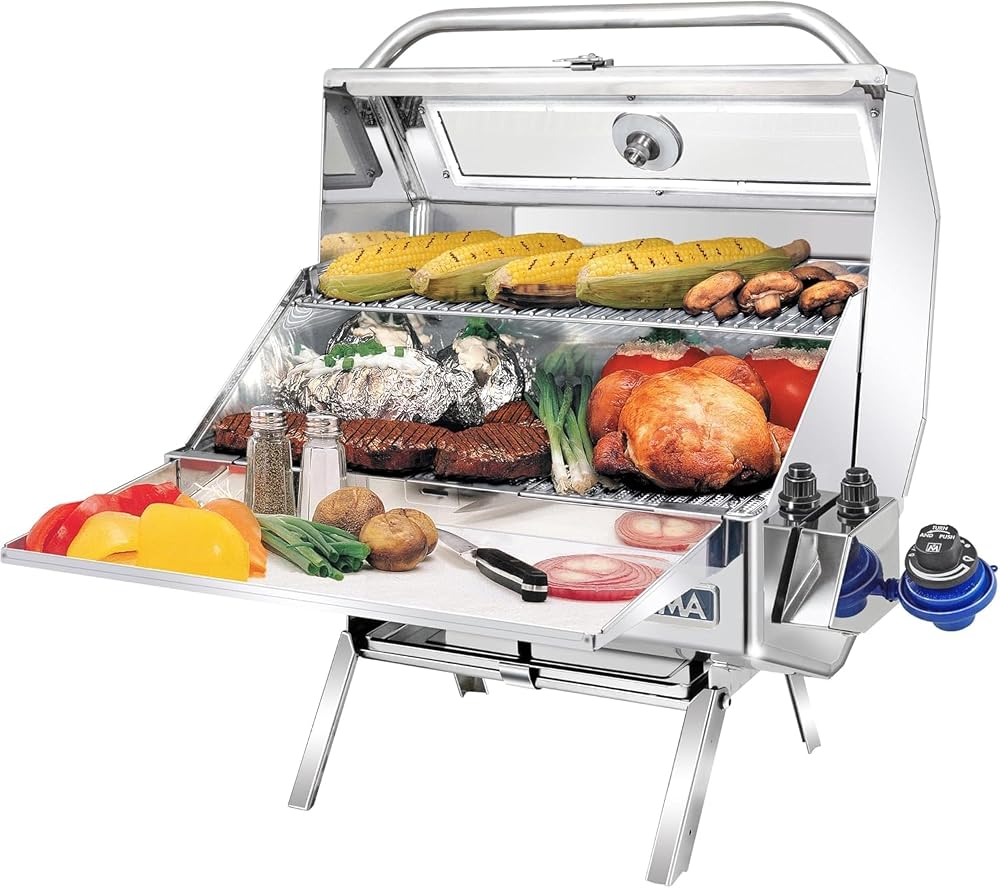
Magma Catalina II Infrared Gas Grill
Larger crews with room for a two-level cooking layout
Choose the Catalina II Infrared when your normal crew benefits from separate primary and secondary surfaces and the stern has room for the whole installation. Its window and thermometer can help monitor cooking, but manufacturer wind and flare-up claims are not independent test results. Skip it if you cook only a couple of portions or the larger body obstructs safe stern access. Magma recommends heavy-duty mounting hardware, and the mount, fuel cylinder, and serving tray are excluded. The observed manufacturer listing showed available stock, but check the exact US model and current availability before ordering.
- Construction
- 304 mirror-polished stainless steel
- Cooking layout
- Primary and secondary surfaces
- Ignition
- Electronic, one AAA battery included
- Portable supports
- Fold-away tabletop legs
Pros
- Two-level cooking arrangement adds flexibility
- Window and thermometer allow monitoring with the lid shut
- Electronic ignition and foldaway legs included
Cons
- Manufacturer recommends heavy-duty mounting hardware, bought separately
- Larger footprint and higher cost than a compact couple’s grill
How to choose
| Product | Price / purchase check | Best for | Key detail |
|---|---|---|---|
| Magma Original Marine Kettle Gas Grill | $289.99 manufacturer listing; mount extra | Compact round grill for a couple at a settled anchorage | 133 sq in cooking area |
| Kuuma Stow N’ Go 160, model 58130 | $244.99 observed retailer listing; verify stock | Simple rectangular cooking surface with portable legs | 160 sq in cooking area |
| Dickinson Sea-B-Que Small | Request regional quote; currency varies | Two-person cooking with a sectional grate and rollaway hood | 9.25 × 16 in cooking surface |
| Magma Catalina II Infrared Gas Grill | $709.99 manufacturer listing; mount extra | Larger crews with room for a two-level cooking layout | Primary and secondary cooking surfaces |
Prices and stock vary by region, size, configuration, and seller. Amazon links open searches rather than a verified individual listing: confirm the exact model, seller, approval label, and included accessories before buying. Where a price was not reliably confirmed, the table deliberately leaves a purchase check instead of inventing a range.
Budget tiers: what is worth paying for?
Entry-level: prioritize a secure approved mount and serviceable compact grill over cooking-area claims. Include the correct fuel connection and a dry storage arrangement; postponing those parts is not a sensible saving.
Midrange: choose a rectangular marine grill when its usable cooking surface solves a real crew-size problem. Compare complete packages rather than the appliance price alone, including a rail mount and any model-specific support bracket.
Premium: pay extra for serviceability, an appropriate larger layout, and parts support in your cruising region. Do not buy additional burner output to compensate for an unsafe location or persistent wind exposure.
Related planning decisions
- Compare galley stove fuels and installations
- Plan clearances around cockpit canvas
- Budget for equipment and replacement parts
Manufacturer references and review notes
- Magma Original Marine Kettle Gas Grill: manufacturer specifications
- Kuuma Stow N’ Go 160, model 58130: manufacturer specifications
- Dickinson Sea-B-Que Small: manufacturer specifications
- Magma Catalina II Infrared Gas Grill: manufacturer specifications
Specification-led editorial shortlist, not a claim of hands-on testing. Reviewed 2026-10-20; recheck regional documentation, product generations, stock, and prices before purchase.
Frequently asked questions
Can I use a normal camping grill on a sailboat?
Not simply by placing it on deck. The appliance needs a secure approved installation, suitable fuel storage, ventilation, and the clearances in its manual. If you cannot meet those requirements, use it ashore where its instructions permit instead.
Is a round or rectangular boat grill better?
Round grills can be convenient on a narrow stern and for compact storage. Rectangular grates often fit multiple portions more conveniently. Compare the usable cooking shape, lid clearance, and matching mounts rather than assuming one shape heats better.
Can a boat grill connect to the galley propane tank?
Only with an arrangement approved for the appliance and the vessel's LPG system. Regulator pressure and hose requirements vary. Have a qualified marine technician assess a permanent connection rather than fitting a generic adapter.
Can I grill underneath a bimini?
Only if the exact appliance instructions permit the location and every required clearance is met in all canvas positions. Many cockpit arrangements will not provide that space. Never close an enclosure around an operating grill.
Why does a marine grill keep blowing out?
Wind, burner contamination, or a fuel-system issue may be involved. Shut down and inspect according to the manual rather than repeatedly attempting ignition. Persistent flame failure is a reason to stop cooking and correct the cause.
Does stainless steel mean a boat grill will never rust?
No. Salt, trapped moisture, contaminated surfaces, and fittings can still deteriorate. Fresh-water cleaning, drying, burner inspections, and correct storage remain necessary even on a stainless marine appliance.
Related guides
 Comfort
Galley Stoves Compared: Propane, Alcohol, Diesel, Electric
How propane, alcohol, diesel and induction galley stoves compare at sea, how to plumb propane safely, and which stove to buy for each fuel.
 Comfort
Best Marine Speakers and Stereos for Sailboats
Waterproof marine speakers and stereo head units compared — power draw, NMEA 2000, mounting and wiring.
 Comfort
Best Marine Watermakers for Sailboats
Spectra, Rainman, Katadyn and more — which watermakers match cruising energy budgets and boat sizes.
 Comfort
Marine Diesel Heaters: Webasto vs Espar vs Refleks
Forced-air and radiant diesel heaters for cruising sailboats — how to choose, install, and avoid the top failure modes.
Looking for more gear guides? Browse all our gear recommendations or the full guides index.