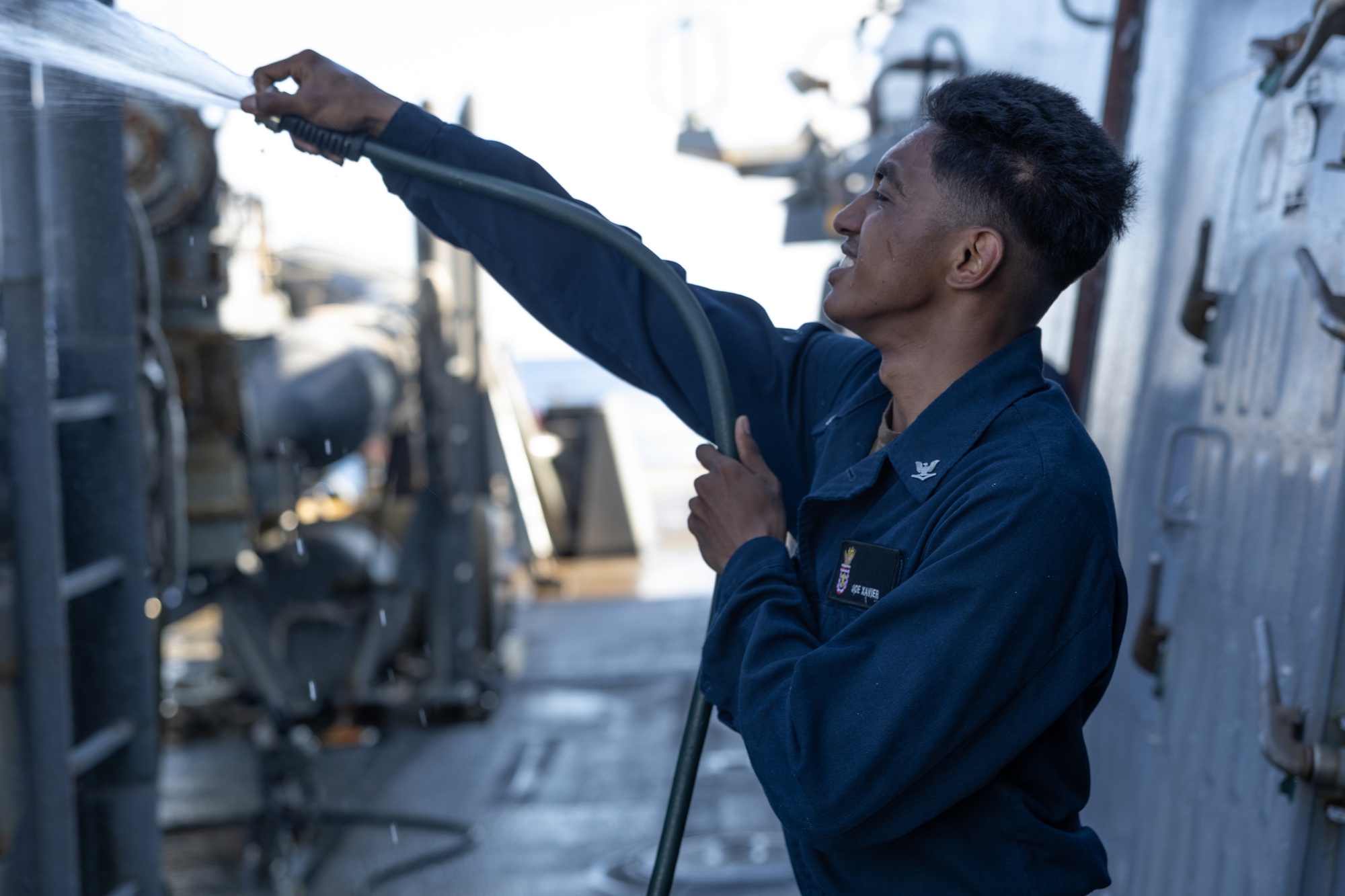
Boat Cleaners and Waxes: Gelcoat and Nonskid Care
For routine boat cleaning, start with the mildest cleaner approved for the surface; reserve specialist hull stain removers for the discoloration they are designed to treat. Protect clean smooth gelcoat with a compatible marine wax, but keep ordinary hull wax off walking surfaces. Deck cleaning, stain removal, oxidation correction, and waxing are separate jobs, so one bottle rarely does all four well.
The recommendations below cover four useful roles rather than four competing versions of the same product. They are based on manufacturer instructions, not invented long-term gloss tests. Before buying, identify whether the surface is gelcoat, paint, clear plastic, teak, or molded nonskid, and check its care guidance.
Sailboat Atlas may earn a commission from qualifying purchases made through links on this page, at no extra cost to you.
Which boat cleaner is right for gelcoat, paint and nonskid?
Gelcoat is the pigmented outer resin surface used on many fiberglass boats; painted topsides have a different coating system. A cleaner suitable for gelcoat is not automatically safe on every paint, decal, metal fitting, or window. Identify the finish before choosing a product. When the history is uncertain, start with the coating or boat maker's guidance and a small inconspicuous test rather than an aggressive whole-hull application.
Routine grime usually calls for a suitable wash and fresh-water rinse, not a specialist stain remover. Work in manageable sections so cleaner does not dry on the surface, and use tools approved for that finish. A stiff deck brush may suit some molded nonskid but damage soft paint, acrylic windows, or aging teak. Separate brushes and cloths so grit from the deck does not get rubbed into glossy topsides.
Nonskid is the textured or coated walking surface intended to provide grip. Its recesses hold dirt that a quick hose rinse can miss. A dedicated compatible deck cleaner and appropriate brushing can be more useful than a stronger acid or abrasive. Preserve the texture and follow any instructions about protective residue; do not assume a product sold as boat wax belongs on a cockpit sole.
How do you remove waterline stains without damaging fittings?
A yellow or brown waterline stain can be chemically different from general dirt. Specialist hull cleaners are intended to treat certain discoloration, but their ingredients and precautions vary. Read the label and safety data sheet for the exact formulation. Do not apply a stain remover to the entire boat simply because it works well on a small gelcoat patch.
Protect adjacent metals, trailers, decals, antifouling, fabrics, and other surfaces as the instructions require. Runoff can reach a fitting or cradle even when you apply carefully above it. Wear the prescribed personal protective equipment and avoid spraying overhead where liquid may blow back onto your face. Keep children, pets, and unrelated work outside the area until rinsing and cleanup are complete.
Never mix cleaning products, particularly acids and chlorine-containing cleaners. Combining chemicals can produce hazardous gases or reactions; adding a second bottle is not a shortcut to a stronger cleaner. If the first treatment does not work, rinse and reassess the stain rather than escalating blindly. A mark caused by damaged coating, corrosion, or embedded material may need a different repair, not more chemical exposure.
What is the difference between boat polish, compound and wax?
A compound removes material to reduce oxidation, scratches, or surface defects; a polish generally refines the surface, although product terminology varies. Wax adds a protective finish and can enhance gloss on a properly prepared surface. Read the actual product function rather than treating those names as interchangeable. Some combination products include cleaners or abrasives, while others assume the surface is already sound.
Chalky oxidized gelcoat may still look poor after waxing because the degraded surface remains beneath the film. On the other hand, sound shiny gelcoat may not need compounding at every wash. Repeated aggressive abrasion consumes surface material and can expose thin spots, edges, or underlying laminate. Start with the least invasive process that achieves the necessary correction and seek experienced help if the finish is thin or damaged.
Painted topsides often have manufacturer-specific polishing and protection limits. Do not transfer a fiberglass restoration routine to a high-performance paint system without checking. Test any machine process cautiously and avoid allowing heat to build at edges or fittings. This guide compares cleaning and protection products, not a universal machine-polishing recipe; the coating's instructions take priority.
Should you wax a sailboat's nonskid deck?
Do not apply ordinary smooth-hull wax to the walking areas simply to make the boat look uniformly shiny. Grip is a safety function, and a surface that feels acceptable dry can behave differently when wet. Use only treatments explicitly suitable for your particular nonskid and follow the instructions. Keep overspray, polishing dust, and buffing residue away from cockpit soles, companionway steps, and handholds.
Tape or otherwise separate work zones when waxing smooth cabin sides beside textured deck panels. Use separate cloths, work carefully near the border, and clean accidental transfer promptly with a method compatible with the surface. A protective deck cleaner residue is not necessarily equivalent to a conventional wax film, but the product's suitability still depends on the deck type and application.
Evaluate the deck after cleaning in the conditions that matter, without deliberately creating a dangerous slipping test. If traction has deteriorated, investigate contamination and surface wear rather than adding another shine product. Old painted nonskid may need renewal; rounded molded texture may require a repair plan. Cleaning cannot restore a physically worn grip pattern.
How do you build a safe wash, stain-removal and waxing routine?
Begin by rinsing loose grit, then wash with an appropriate routine cleaner. Inspect once the surface is clean: distinguish deposits and stains from oxidation, cracks, and coating damage. Treat localized stains only where the selected product is approved. Rinse thoroughly according to the label and let the surface reach the condition required for the next step. Waxing over contamination seals in a problem rather than correcting it.
Choose a shaded work period where possible, and avoid hot surfaces or wind that dries liquid faster than you can work. Keep the work area stable and reachable. A shiny hull is not worth leaning precariously over a rail or balancing a polisher on an unstable ladder. Use the yard's safe access equipment and arrange hauling or dockside work around weather and wash-water rules.
Keep written notes on the products and processes that worked with your finish. Product variants, regional formulas, and coating warranties can change. If a new cleaner is introduced, do not assume an old successful brand experience applies automatically. Consult current labels and the boat or paint maker, then test appropriately before committing a large area.
How often should you wax, and what happens to marina runoff?
There is no honest universal claim that a wax lasts a specific number of months on every sailboat. Sun, latitude, pollution, washing methods, salt exposure, and surface condition all affect the result. Inspect how the finish cleans and wears, follow the manufacturer's advice, and renew as needed. Water beading is one observation, not a complete measurement of UV protection or remaining coating thickness.
Plan cleaning where local rules permit it. A biodegradable description does not automatically authorize discharge into a marina, and specialist stain-removal chemicals may be subject to stricter handling requirements. Ask the yard about wash-water collection and the permitted products before starting. Work ashore with controlled runoff when required, and dispose of contaminated cloths and containers as instructed.
A modest supply of correctly chosen products is more useful than a locker of overlapping cleaners. Store bottles upright, labeled, secured, and separated according to their safety guidance. Protect them from inappropriate heat or frost and keep them away from food. Include gloves, eye protection, rinse water, brushes, and waste handling in the job budget rather than comparing bottle prices alone.
Our picks
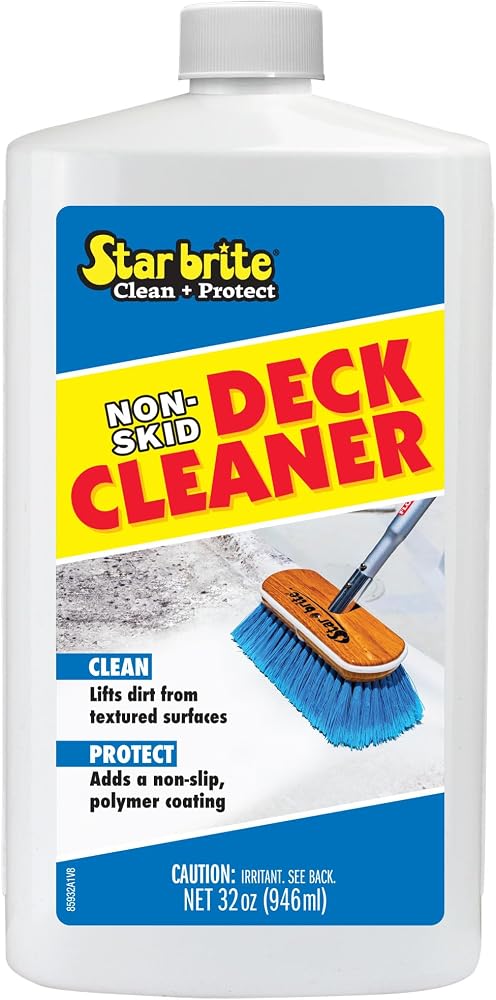
Star brite Non-Skid Deck Cleaner & Protectant
Embedded dirt on compatible textured decks
Start here when the main problem is dirt held in a compatible molded deck texture, not rust stains or dull topsides. Wet the area, allow the stated dwell period, scrub with an appropriate brush, and rinse according to the instructions. Skip it as a substitute for oxidation correction or a specialist hull stain treatment. The protective-polymer statement comes from the manufacturer; we are not claiming independently measured grip or durability. Confirm compatibility with your particular deck coating, use the prescribed eye and hand protection, and manage runoff as the marina or yard requires.
- Sizes listed
- 16, 22, 32 US oz and one US gallon
- Dwell time
- 2–3 minutes in manufacturer directions
- Process
- Wet, spread, scrub, then rinse thoroughly
- Listed surfaces
- Fiberglass, vinyl, rubber, plastic, metal and painted surfaces
Pros
- Designed to clean recesses in textured surfaces
- Broad manufacturer-listed surface compatibility
- Maker describes a protective polymer barrier
Cons
- Still requires appropriate brushing and a thorough rinse
- Stubborn contamination can require a second application
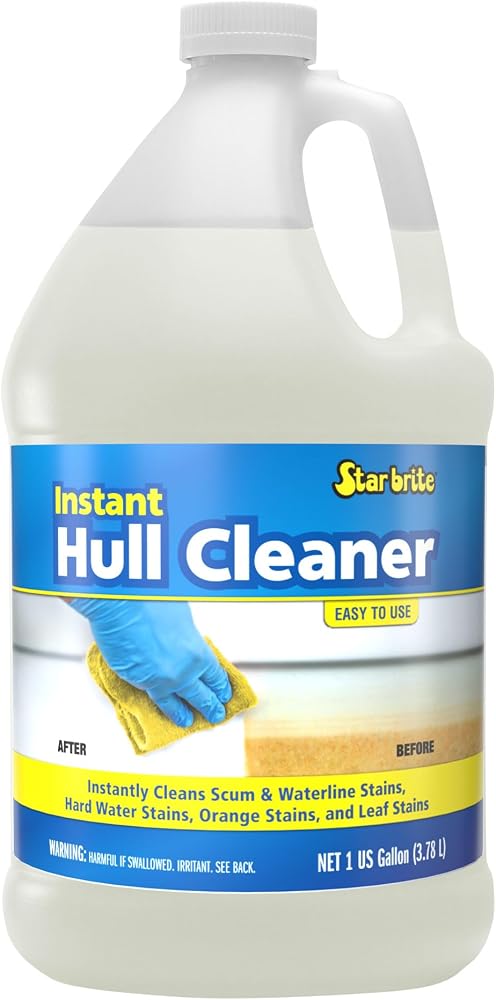
Star brite Instant Hull Cleaner, liquid
Specified waterline yellowing, rust and scum-line stains
Choose the liquid Instant Hull Cleaner when discoloration matches the manufacturer’s listed stains on an approved hull surface. Skip it for general deck washing, heavy oxidation, or an unverified coating or nearby metal. Protect fittings and control runoff; a broad reference to plastic does not establish suitability for clear boat windows. The pictured container is the gallon, while the Amazon search targets a 32-ounce liquid bottle; confirm the size and do not substitute the separate gel formulation’s directions. Wear the prescribed protection and never mix it with bleach or another cleaner.
- Formulation
- Manufacturer identifies oxalic acid
- Sizes
- 32 US oz and one US gallon
- Dwell time
- Two minutes, then fresh-water rinse
- Best-results temperature
- 10°C / 50°F or warmer
Pros
- Targets specified rust, yellowing and scum-line stains
- Wipe-on/rinse-off process
- Maker lists fiberglass, plastic and painted hulls
Cons
- Severe stains can require repeat treatment and light scrubbing
- Stain removal supplies no substitute for protective wax
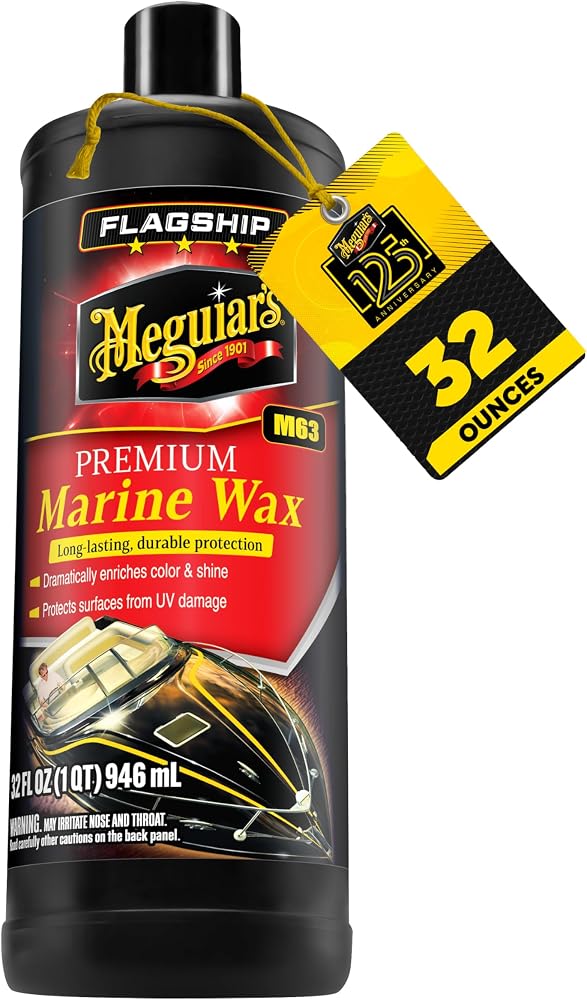
Meguiar’s Flagship Premium Marine Wax, M6332
Liquid protection with limited light-defect correction
Choose M6332 when sound gelcoat needs convenient liquid protection and limited light correction, not a wholesale restoration. Its formulation includes an abrasive ingredient, so it is not a non-abrasive pure finishing wax. Skip it for heavy oxidation or surfaces not approved by the product and coating makers, especially walking areas. Work on a cool, washed, dried surface and apply a thin coat as directed; thick application does not establish longer life. Check the exact M6332 size and specification rather than transferring instructions from another Flagship product, and keep residue off neighboring nonskid.
- Selected SKU
- M6332, 32 oz liquid
- Approved surfaces
- Fiberglass and gelcoat
- Correction scope
- Light oxidation, fine scratches and swirls
- Application
- Hand or dual-action polisher
Pros
- Liquid format for straightforward thin-coat application
- Addresses some light surface defects
- Manufacturer describes polymer protection against UV damage and wear
Cons
- Not a heavy-oxidation restoration treatment
- Fiberglass approval does not make it a universal deck or paint product
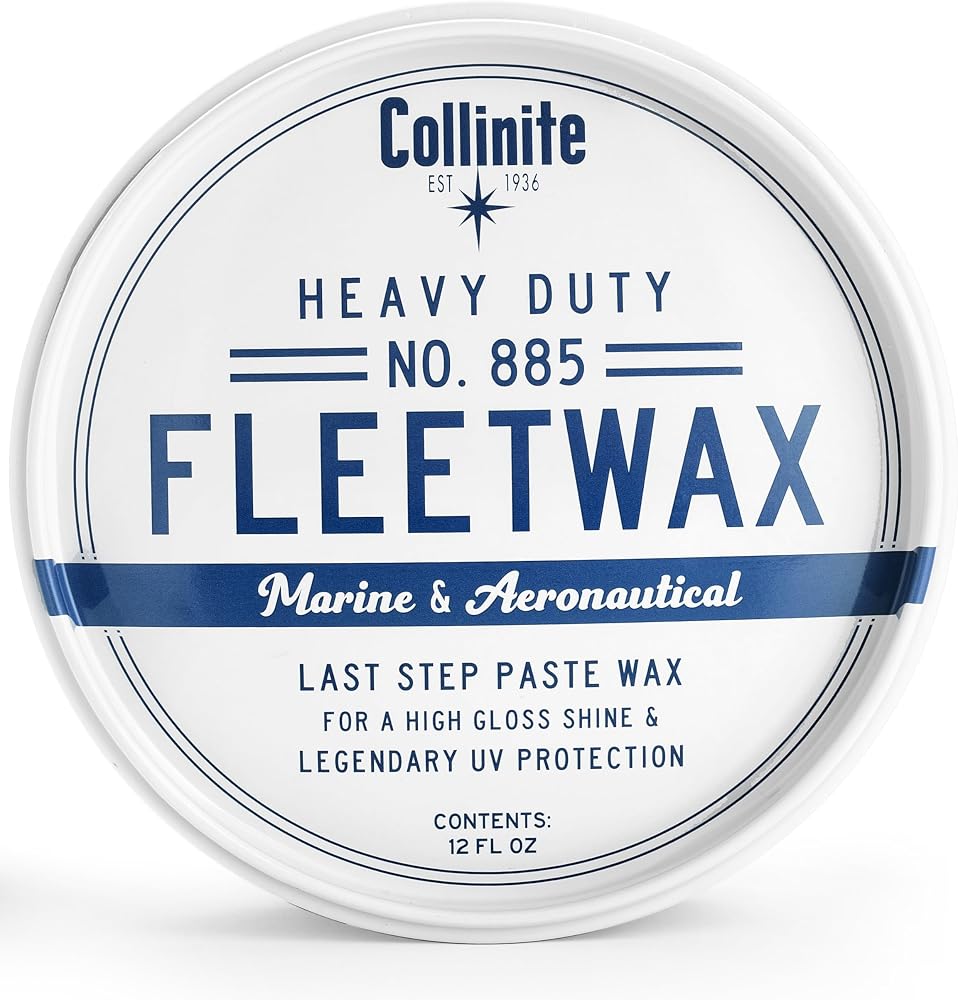
Collinite No. 885 Fleetwax Paste
Final protection after cleaning and any needed correction
Choose 885 after washing, stain treatment, and any appropriate correction when you want a dedicated final protective step. Skip it if you need one bottle to repair heavy oxidation, or if your work is mainly nonskid, rubber, glass, or other excluded surfaces. Collinite’s coverage range is a manufacturer average, not a promise for your application, and its durability positioning does not justify a fixed number of months aboard. Apply according to the current instructions on a suitable clean surface. Keep the paste distinct from similarly named liquid cleaner-wax products and protect nearby walking areas from residue.
- Form
- Hard paste
- Package
- 12 fl oz
- Manufacturer average coverage
- 1,400–2,200 sq ft; application conditions vary
- Approved surface condition
- Contaminant-free gelcoat, clearcoat and fiberglass
Pros
- High manufacturer-stated coverage from a small tin
- Hand or machine application supported
- Designed as final marine surface protection
Cons
- Requires a prepared surface rather than replacing oxidation removal
- Explicitly excluded from nonskid, rubber, vinyl, glass and non-painted plastic
How to choose
| Product | Price / purchase check | Best for | Key detail |
|---|---|---|---|
| Star brite Non-Skid Deck Cleaner & Protectant | Compare selected bottle size | Embedded dirt on compatible textured decks | 2–3 minute dwell before scrubbing and rinse |
| Star brite Instant Hull Cleaner, liquid | Compare 32 oz and gallon; photo shows gallon | Specified waterline yellowing, rust and scum-line stains | Oxalic-acid liquid formula |
| Meguiar’s Flagship Premium Marine Wax, M6332 | Check M6332 bottle, not another Flagship SKU | Liquid protection with limited light-defect correction | 32 oz liquid; fiberglass and gelcoat |
| Collinite No. 885 Fleetwax Paste | Compare the 885 paste, not liquid cleaner-wax | Final protection after cleaning and any needed correction | 12 fl oz hard paste |
Prices and stock vary by region, size, configuration, and seller. Amazon links open searches rather than a verified individual listing: confirm the exact model, seller, approval label, and included accessories before buying. Where a price was not reliably confirmed, the table deliberately leaves a purchase check instead of inventing a range.
Budget tiers: what is worth paying for?
Basic care: choose a compatible routine wash, suitable brush or mitt, and enough rinse water. Add a wax only for the smooth surfaces that need it, rather than buying a restoration kit for sound gelcoat.
Stain-focused care: add a specialist hull stain remover when the discoloration matches its stated uses. Budget for surface protection, personal protective equipment, and compliant runoff handling.
Restoration: get a coating assessment before buying aggressive compounds or machine equipment. Paying for correct diagnosis can avoid removing too much material or damaging paint that needs a different process.
Related planning decisions
- Separate topside cleaning from antifouling maintenance
- Choose a teak-specific maintenance plan
- Protect cockpit fabrics and clear windows
Manufacturer references and review notes
- Star brite Non-Skid Deck Cleaner & Protectant: manufacturer specifications
- Star brite Instant Hull Cleaner, liquid: manufacturer specifications
- Meguiar’s Flagship Premium Marine Wax, M6332: manufacturer specifications
- Collinite No. 885 Fleetwax Paste: manufacturer specifications
Specification-led editorial shortlist, not a claim of hands-on testing. Reviewed 2026-10-20; recheck regional documentation, product generations, stock, and prices before purchase.
Frequently asked questions
Can I use household detergent to clean a boat?
Use a cleaner approved for the actual coating and surface. Household products vary widely and may remove protection or damage adjacent materials. The boat or coating manufacturer's care guidance is a better starting point than a generic recipe.
Will boat wax remove oxidation?
A pure protective wax will not correct a degraded gelcoat surface. Some combination products contain cleaning or polishing ingredients, so check the exact formulation. Diagnose the finish before deciding whether abrasion is needed.
Can I wax nonskid?
Keep ordinary smooth-hull wax off walking surfaces. Only use a treatment explicitly compatible with the particular nonskid and follow the application instructions. Protect nearby textured areas when buffing or waxing smooth panels.
Is hull cleaner safe on aluminum?
Do not assume it is. Specialist stain removers may require avoiding or protecting metals and other nearby surfaces. Follow the exact product label and safety data sheet, including runoff precautions.
How long does marine wax last?
Exposure, washing, and surface preparation all change durability, so a universal lifespan would be misleading. Follow the maker's instructions and inspect the finish regularly. Renew protection when the condition and care guidance justify it.
Can biodegradable boat cleaner go directly into a marina?
Not automatically. Local discharge rules and marina requirements still apply. Ask about permitted products and wash-water handling, particularly when using specialist stain removers or working near antifouling.
Related guides
 Maintenance
Sailboat Teak Decks: Repair, Replace or Rip It Out?
How to judge teak deck wear, what re-caulking and replacement really cost, and when removing the teak is the better decision.
 Maintenance
Sailing Knives: Maintenance Tools and Rescue Tradeoffs
Plain and serrated blades, locks, multitools and saltwater care—with a clear distinction between maintenance and rescue.
 Maintenance
Marine Sealants: 4200 vs 5200 vs Sikaflex vs Life-Calk
Choose marine sealants for deck fittings, through-hulls and repairs. Compare bond strength, cure time, substrates and future removal before buying.
 Maintenance
Sailboat Water Pumps: Fresh, Bilge and Washdown
How to choose and install every pump on a cruising boat — fresh water, bilge, sump, washdown and manual backup — with real flow rates and failure modes.
Looking for more gear guides? Browse all our gear recommendations or the full guides index.