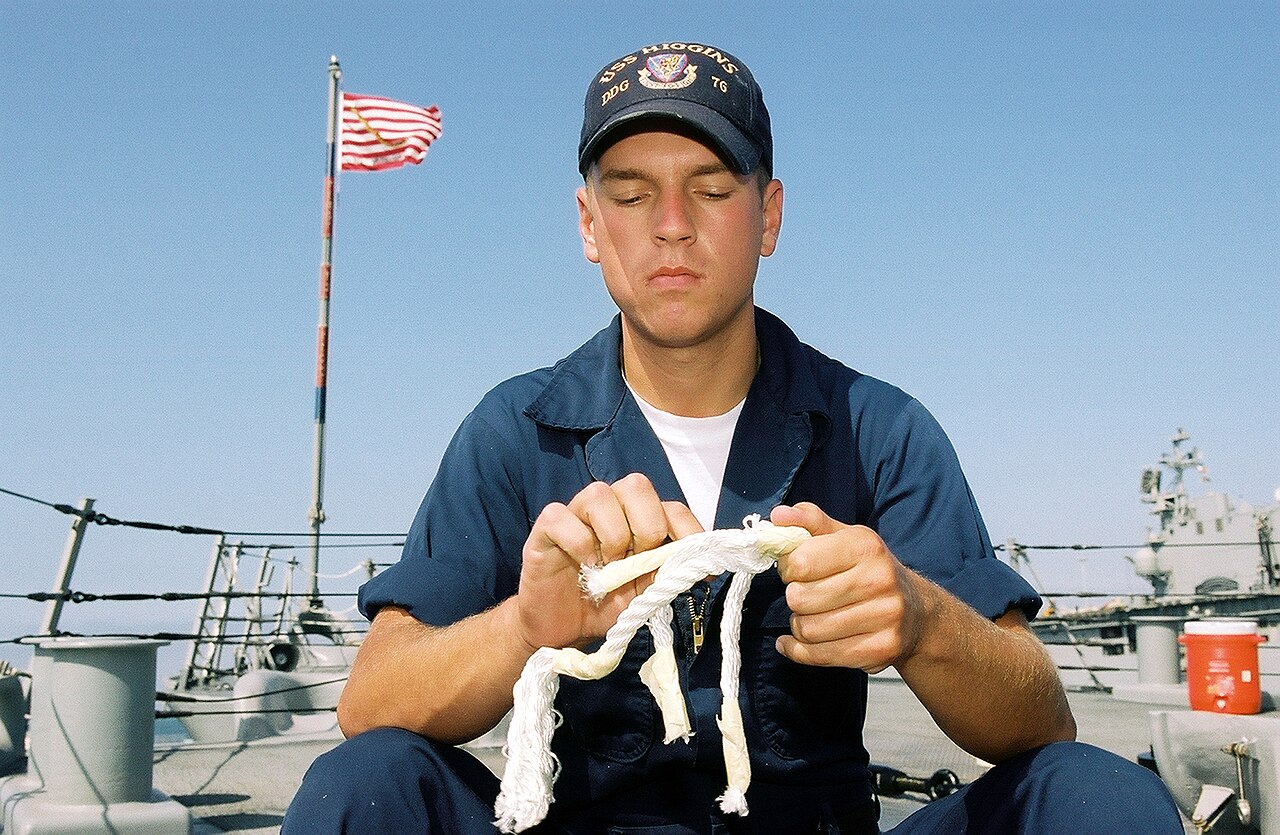
Sailing Knives: Maintenance Tools and Rescue Tradeoffs
For routine unloaded maintenance, choose a knife or multitool that you can control and keep sharp: an Opinel N°08 Stainless is a simple dry-stored blade, a Victorinox Huntsman adds scissors, and a SwissTool adds pliers at a substantial weight cost. None is a substitute for an appropriately positioned rescue cutter when immediate rope-cutting access is essential.
This guide separates maintenance buying from rescue requirements rather than claiming one universal sailing knife. It also explains when an existing legacy Leatherman Wave remains useful, why stainless steel still needs saltwater care and how locks, blade shapes and stowage change the decision.
Sailboat Atlas may earn a commission from qualifying purchases made through links on this page, at no extra cost to you.
What a sailing knife is for—and when not to reach for it
A sailing knife should be accessible when a line must be cut, but ordinary rope work is not an emergency. Relieve load, secure the boat and use a stable work area before cutting whenever possible. A severed loaded line can whip back, drop equipment or let a sail fill unexpectedly. The knife is one part of a safe response, not permission to skip the consequences of releasing the load.
Think about two separate roles: a personal pocket tool for small maintenance tasks and a rescue cutter positioned for an entanglement. A folding knife used for food or opening packaging may be fine at anchor but slow to open with a cold, injured hand. Conversely, an exposed rescue blade is not necessarily comfortable or safe as an everyday pocket tool. Some crews sensibly carry one of each rather than seeking a universal knife.
Match the tool to the boat's lines and the crew's skills. Modern braided rope, thin cord and webbing do not behave identically under a blade. Practice only on spare, unloaded material with a clear cutting direction. Manufacturer demonstrations are not proof that you will make the same cut in waves, gloves or poor light, and this guide does not claim a hands-on rope-cutting test.
Serrated versus plain blades for braided rope and webbing
A serrated edge has small teeth that can start a cut on slippery or fibrous material; a plain edge has a continuous cutting surface that is usually simpler to sharpen. Neither label guarantees a useful rescue knife. Edge condition, blade geometry, access and the material being cut all matter. A neglected serrated knife can be less effective than a sharp plain blade that is already in your hand.
For general maintenance, a plain edge is attractive because it makes controlled cuts and can be maintained with a simple sharpening system. For rope work, serrations can be helpful, but they need an appropriate sharpening method. Ask yourself who will service the edge during a season. A design that depends on specialist sharpening may be a poor match for a remote cruise.
A pointed tip is useful for some workshop tasks and hazardous near an inflatable tube, a person or a life jacket. A blunt tip reduces one kind of risk but still carries a sharp cutting edge. Do not imply that a blunt knife is safe against skin or that a pointed knife belongs in every rescue kit. Consider the intended task and storage position rather than buying solely by blade shape.
One-handed opening and blade locks: test the mechanism safely
One-handed opening means the mechanism can be operated with a single hand; it does not prove you can do so with either hand, thick gloves or an injured thumb. Test the exact tool in a controlled setting, pointed away from yourself and others. Check whether a jacket cuff blocks access to a pocket and whether the grip becomes slippery when wet.
A locking folder keeps the blade from freely folding during ordinary use, but every lock has an operating sequence and can fail if damaged or contaminated. Learn how it engages and how to release it without putting fingers in the closing path. A friction or collar-lock knife has different ergonomics from a dedicated one-hand rescue folder. Do not market them as equivalent merely because both fold into a handle.
Fixed blades avoid an opening step but require secure sheaths. Mounting a sheath near a companionway can make sense only if it does not obstruct movement, expose the edge or invite accidental removal. Have the crew agree on the location. A knife that is buried under spare lines or moved between pockets is not reliably accessible to the person who may need it.
Stainless steel still needs saltwater maintenance
Stainless steel resists corrosion; it is not rust-proof. Salt collects in hinges, behind scales and inside sheaths, while damp storage can keep those areas wet for days. Rinse and dry according to the manufacturer's instructions, especially after a dinghy trip or a deck wash. Do not put a wet knife into a closed locker and assume the alloy will compensate.
Carbon steel can be easy to sharpen but needs more deliberate corrosion care. A wooden handle can change fit when repeatedly wet. These can be reasonable compromises for a dry-stored maintenance knife, not ideal characteristics for something permanently mounted in exposed spray. Follow the exact product's instructions for lubricants and avoid contaminating food preparation areas with maintenance oils.
Check the pivot, lock, sheath retention and edge before departure. Remove the tool from service if the blade has play, a damaged tip or an unreliable lock. Dry the sheath as well as the knife. Replacement parts and straightforward maintenance may matter more over several seasons than a premium alloy name, particularly on a boat where the tool sees more neglect than deliberate workshop care.
Do you need a marlinspike, shackle key or multitool?
A marlinspike is a tapered tool for opening knots or working rope strands. A shackle key helps turn the pin of certain shackles, which are metal connectors used in rigging. These additions can make a pocket tool useful for routine deck work, but they are not permission to loosen loaded fittings. Unload and secure the system first, and use an appropriately sized tool.
More implements mean a thicker handle, extra joints to clean and sometimes a less comfortable blade grip. If your work mostly involves sail repairs and small adjustments, that compromise may be worthwhile. If your priority is immediate cutting access, a simpler dedicated cutter may be preferable. A tool buried among several folding implements can be difficult to identify by feel at night.
Do not improvise with a knife tip as a screwdriver or lever. Broken blades and slipping tools create an injury risk just when the boat needs a calm response. Keep proper rigging tools aboard and regard the pocket tool as a convenience for suitable unloaded tasks. A wrench that fits the fitting is often the better choice than forcing a built-in key that almost fits.
Where to carry a knife without creating another snag hazard
Accessibility and retention pull in opposite directions. A knife loose in a pocket can be lost, while an excessively long lanyard can catch in equipment. Use a secure arrangement appropriate to the tool and the task; keep loops clear of winches, the propeller and running rigging. No accessory is a substitute for staying out of loaded rope loops.
Check how the knife interacts with a personal flotation device and harness. Do not attach it where it interferes with inflation, damages the bladder, obscures a release or compromises the manufacturer's instructions. A sheath on a belt may be hidden under offshore clothing. Try retrieving the safely closed or sheathed tool while dressed as you will be at sea, not just while standing ashore in shorts.
Knife-carry laws vary by country, port, blade type and mechanism. A legitimate sailing purpose does not automatically exempt a tool when walking through town or boarding transport. Check the rules for your actual itinerary, especially restrictions on locking or one-handed knives, and stow tools appropriately ashore. This is a buying consideration for international cruising, not legal advice or a universal claim about what is permitted.
Our picks
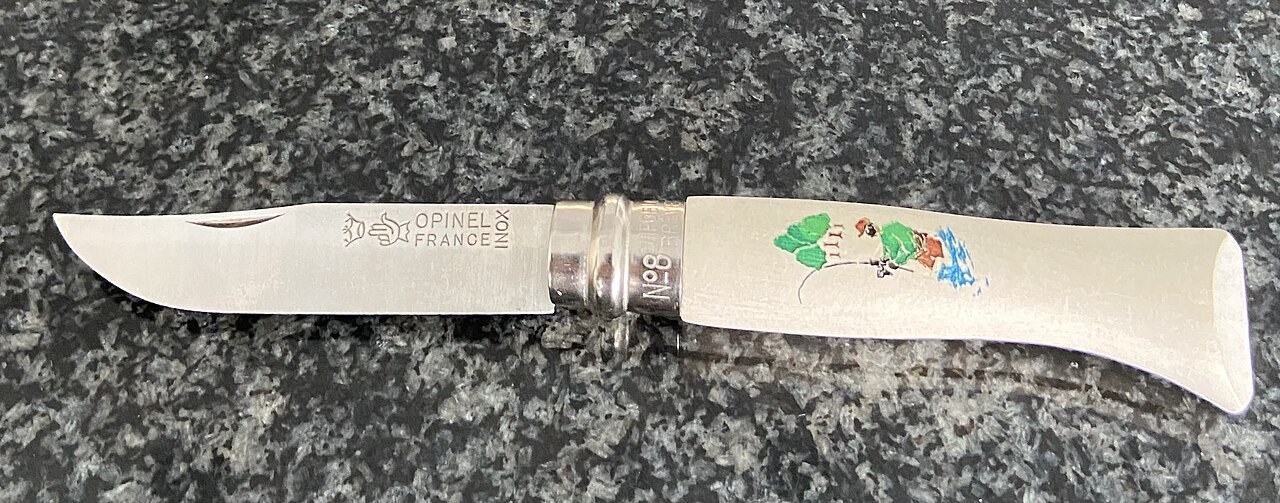
Opinel N°08 Stainless Steel
Dry-stored general maintenance, not rescue
Choose this Opinel for controlled maintenance and everyday dry-stored use, not because it is a cheap substitute for a dedicated marine rescue knife. The stainless No.08 is different from the carbon version, and Opinel itself cautions that aggressive environments including salt water can exceed the steel's limits. Skip it for permanent wet-deck storage, rapid one-hand rescue access or work close to an inflatable tube. Keep it clean and dry, learn the Virobloc collar lock, and inspect fit after wet exposure instead of assuming the handle and mechanism are unaffected.
- Blade length
- 8.5 cm
- Blade material
- Martensitic stainless steel
- Hardness
- 55–57 HRC, manufacturer figure
- Handle
- Beech
Pros
- Plain edge for controlled routine cuts
- Simple general-purpose tool
- Collar lock separates blade locking from handle grip
Cons
- Maker cautions prolonged saltwater exposure can exceed corrosion resistance
- Pointed blade and wood handle are poor matches for a permanently exposed rescue role
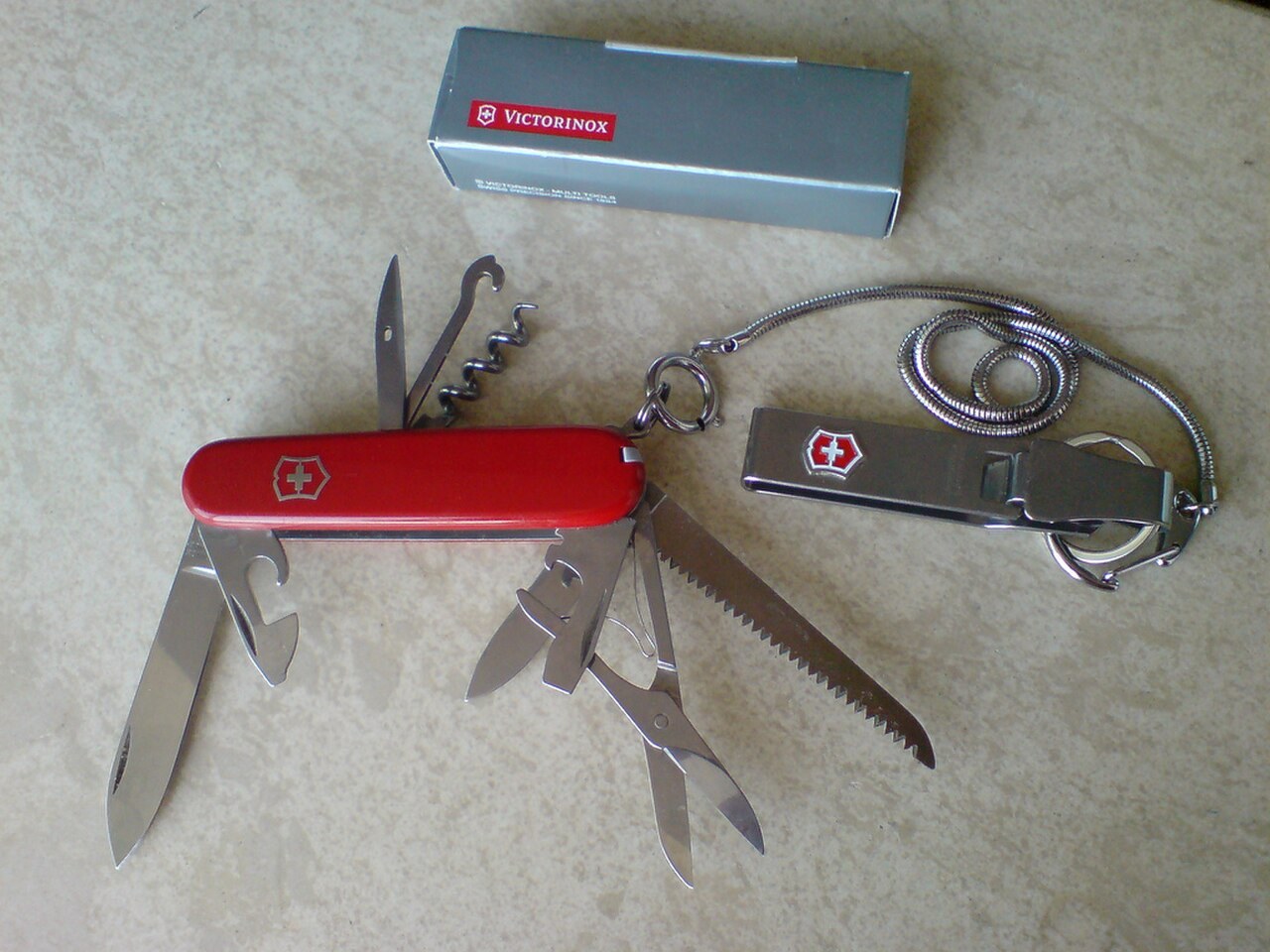
Victorinox Huntsman 1.3713
Small maintenance and scissors in a pocket
Buy a Huntsman if you want a modest pocket tool for small, unloaded maintenance jobs and value scissors more than full-size pliers. Its blades do not lock, and Victorinox explicitly says it is not a one-hand model; that makes it a poor answer to a rapid-access rescue requirement. Skip it if you need a dedicated rope cutter, a shackle key or leverage on stubborn fittings. Use the blade with a controlled cutting direction and never as a lever. The useful distinction is a convenient maintenance kit versus an emergency tool, not a claim that fifteen functions make the boat safer.
- Functions
- 15, including scissors and wood saw
- Length
- 3.6 in, US maker listing
- Weight
- 3.4 oz, US maker listing
- Blade controls
- Non-locking; not one-handed
Pros
- Scissors for small controlled repair tasks
- Several everyday tools without a pliers-sized body
- Straightforward general maintenance role
Cons
- Non-locking blade requires particular care against folding
- No one-hand opening or dedicated marine rescue design
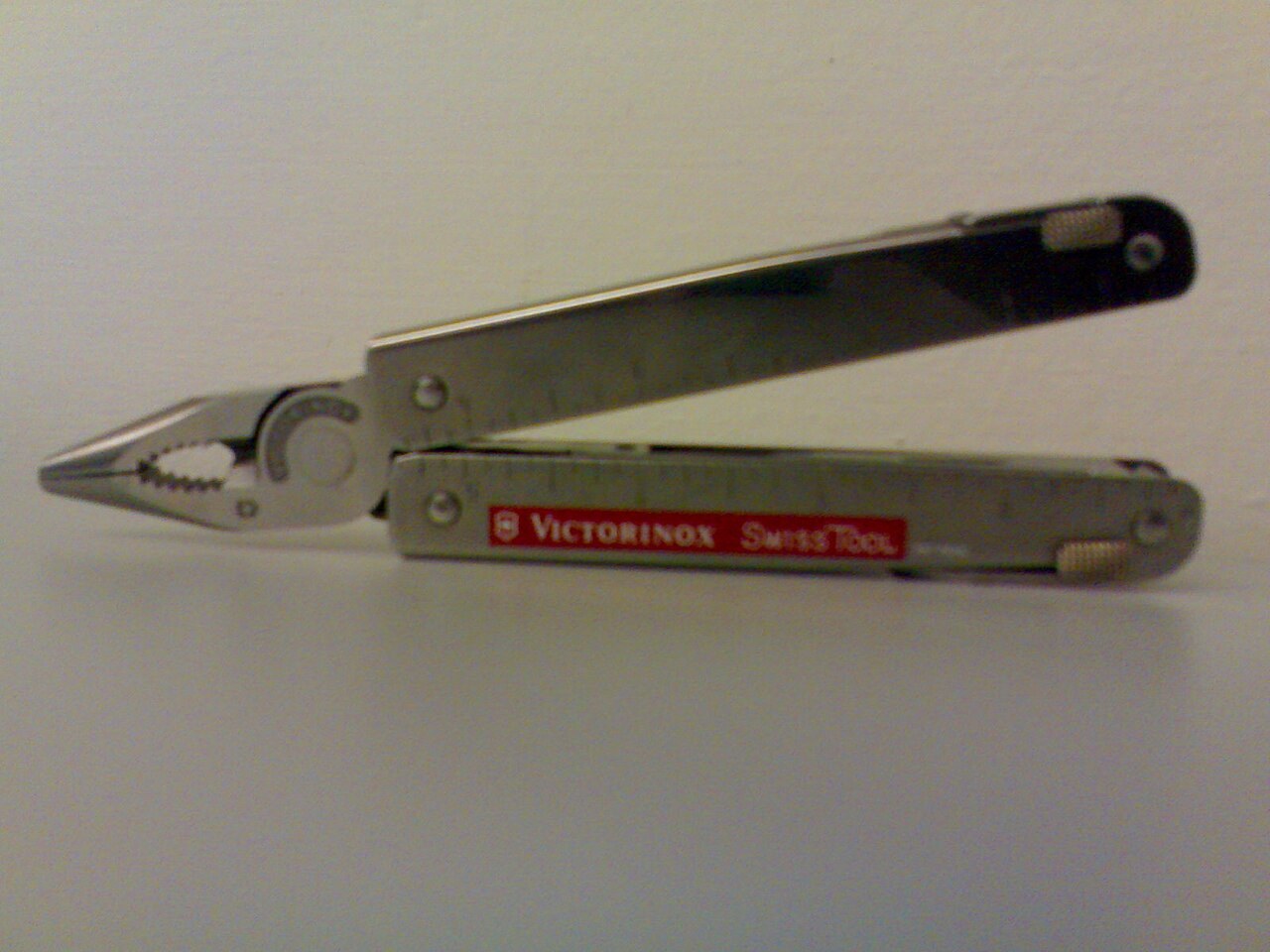
Victorinox SwissTool 3.0323.L
Locker-stored pliers and multiple cutting tools
The SwissTool suits a maintenance locker or secure belt pouch better than a minimal personal rescue kit. Its pliers and separate cutting implements are useful when they fit the task, but the maker identifies it as not one-handed and its weight is a real carrying tradeoff. Skip it if you want a lightweight blade ready immediately from under a life jacket. Confirm the exact classic SwissTool, not the different Spirit model, and check stock before ordering. Keep separate full-size tools aboard for stubborn fittings; a multitool is a convenience, not permission to force an implement that almost fits.
- Functions
- 26, manufacturer listing
- Length
- 4.5 in
- Weight
- 10.2 oz
- Blade controls
- Lockable; not one-handed
Pros
- Pliers and both plain and wavy-edge blades
- Locking tools for suitable controlled work
- Consolidates small maintenance implements
Cons
- 10.2 oz is substantial to carry all day
- Not one-hand access; cannot replace correctly sized full tools
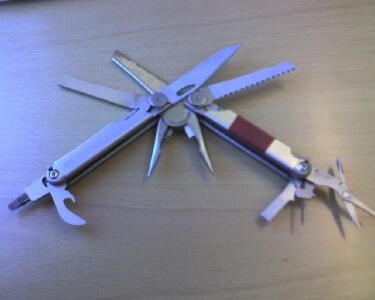
Leatherman Wave (legacy model)
Inspecting an existing or second-hand maintenance tool
This is an ownership and second-hand option, not a recommendation to buy a discontinued tool as new stock. If you already have a Wave, inspect locks, pivots, edge condition and corrosion before deciding whether it still serves your unloaded maintenance work. Leatherman distinguishes the 1998 launch, 2004 redesign and later upgrade with replaceable cutters; the photograph here shows a legacy Wave, not Wave+. Skip an unverified used listing that obscures condition or generation. For a new purchase compare current models against their own documentation rather than transferring historical specifications onto a similar-looking tool.
- Model status
- Legacy Wave; not current Wave+
- History
- Wave launched 1998; redesigned 2004
- Later generation
- 2018 upgrade added replaceable cutters
- Role
- General maintenance multitool, not rescue cutter
Pros
- Existing tool can remain useful if condition is sound
- Combines pliers and folding maintenance implements
- Avoids unnecessary replacement when a serviceable tool fits the job
Cons
- Second-hand condition and generation vary
- Older Wave photo does not illustrate Wave+ or its replaceable cutters
How to choose
| Product | Price check | Best for | Key detail |
|---|---|---|---|
| Opinel N°08 Stainless Steel | Verify stainless rather than carbon version | Dry-stored general maintenance, not rescue | 8.5 cm plain blade; beech handle |
| Victorinox Huntsman 1.3713 | Check model and included accessories | Small maintenance and scissors in a pocket | 15 functions; non-locking blades |
| Victorinox SwissTool 3.0323.L | Check stock; maker page showed out of stock | Locker-stored pliers and multiple cutting tools | 26 functions; locking tools |
| Leatherman Wave (legacy model) | Discontinued; inspect used condition | Inspecting an existing or second-hand maintenance tool | Not the current Wave Plus |
Amazon links open model searches, not verified individual listings. Availability and seller identity have not been independently confirmed; compare the exact model with its maker's documentation before buying. No unverified live price is quoted.
Budget tiers and the decision that matters
Budget tier: a simple maintenance knife can be worthwhile if it is sharpened, dry-stored and used for controlled tasks. Do not economize by treating that tool as a guaranteed emergency cutter. An inexpensive blade that cannot be retrieved with your actual clothing on is the wrong solution for that role regardless of its edge.
Rigging tier: a spike and shackle key justify extra cost when they fit your regular unloaded work. Check size and ergonomics before buying, and carry proper tools for fittings that do not match. A heavier multitool is convenient in a locker but may be uncomfortable on your person for a long watch.
Rescue tier: prioritize secure accessible placement, the intended cutting material and training rather than the biggest collection of implements. This shortlist does not claim a tested rescue winner. Discuss placement with the crew and follow the flotation-device or harness maker's instructions; a sharp tool must not introduce a new snag or puncture hazard.
Before departure, clean the tool and sheath, check the edge and lock, and verify local carry rules for the next port. Practise retrieval safely with the blade closed or sheathed and spare unloaded material in a controlled area. Keep the knife away from food if maintenance products have been used, and replace a damaged mechanism rather than relying on careful handling to compensate. None of these recommendations is supported by our own comparative emergency cutting test.
Related planning decisions
- Rode and loaded ground tackle
- Life jackets and harness compatibility
- Rigging systems and appropriate maintenance
Sources and photograph credits
- Opinel N°08 Stainless Steel: manufacturer documentation
- Victorinox Huntsman 1.3713: manufacturer documentation
- Victorinox SwissTool 3.0323.L: manufacturer documentation
- Leatherman Wave (legacy model): manufacturer documentation
- Opinel No.08 stainless by Kuroczynski, CC BY-SA 4.0. Display crops and JPEG recompression may apply; image adaptations retain the indicated license. Photo licensing does not imply endorsement.
- Victorinox Huntsman by Biso, CC BY-SA 2.0. Display crops and JPEG recompression may apply; image adaptations retain the indicated license. Photo licensing does not imply endorsement.
- Legacy Leatherman Wave by Kallemax, Public domain. Display crops and JPEG recompression may apply; image adaptations retain the indicated license. Photo licensing does not imply endorsement.
- Victorinox SwissTool by Giulio Barba (Giubar), Public domain. Display crops and JPEG recompression may apply; image adaptations retain the indicated license. Photo licensing does not imply endorsement.
- Rope splicing aboard USS Higgins by U.S. Navy / Lance Kirk, Public domain. Display crops and JPEG recompression may apply; image adaptations retain the indicated license. Photo licensing does not imply endorsement.
Reviewed 20 October 2026. Specification-led editorial guidance, not a claim of hands-on testing. Recheck models, manuals, availability and prices before purchase.
Frequently asked questions
Is a serrated blade always best for sailing?
No. Serrations can help start cuts in fibrous materials, while a plain edge is often simpler to maintain; sharpness, access and the actual rope matter as much as the label.
Is a stainless sailing knife rust-proof?
No. Salt can collect in pivots and sheaths, and even stainless alloys need maker-recommended cleaning and drying; Opinel explicitly cautions about prolonged saltwater exposure.
Can I cut a loaded line safely?
Cutting it can release stored energy, shift equipment or let a sail fill. Unload and secure the system wherever possible, and consider the consequences before using a blade; this guide is not emergency-response training.
What is a marlinspike for?
It is a tapered tool used in knot and rope work. A spike has no cutting blade, so it cannot replace a knife or rescue cutter.
Should a knife go on my life jacket?
Only use placement consistent with the flotation-device manufacturer's instructions. It must not interfere with inflation, releases or the bladder; retrieval and puncture risk need to be considered together.
Can I carry a locking sailing knife ashore?
Rules vary by jurisdiction and mechanism, and sailing use does not guarantee an exemption. Check the law for your itinerary and transport before carrying the tool beyond the boat.
Related guides
 Maintenance
Sailboat Teak Decks: Repair, Replace or Rip It Out?
How to judge teak deck wear, what re-caulking and replacement really cost, and when removing the teak is the better decision.
 Maintenance
Marine Sealants: 4200 vs 5200 vs Sikaflex vs Life-Calk
Choose marine sealants for deck fittings, through-hulls and repairs. Compare bond strength, cure time, substrates and future removal before buying.
 Maintenance
Boat Cleaners and Waxes: Gelcoat and Nonskid Care
Choose boat cleaner and marine wax by surface and stain. Compare deck cleaners, hull stain removers and gelcoat protection without making decks slippery.
 Maintenance
Sailboat Water Pumps: Fresh, Bilge and Washdown
How to choose and install every pump on a cruising boat — fresh water, bilge, sump, washdown and manual backup — with real flow rates and failure modes.
Looking for more gear guides? Browse all our gear recommendations or the full guides index.