Marine Wind Generators and Hydrogenerators
Wind generators and hydrogenerators both convert motion into battery amps without burning diesel, but they solve different problems on different points of a cruise. A wind turbine earns its keep at anchor, in a marina, or on a mooring — anywhere the boat itself isn't moving fast enough to spin a water turbine. A hydrogenerator does the opposite: it needs real boat speed to produce anything worthwhile, so it shines on ocean passages and does nothing tied up at the dock. Most cruisers who rely on this gear pair one or both with a solar array rather than picking a single source, since sun, wind, and boat speed rarely all disappear at once.
Sailboat Atlas may earn a commission from qualifying purchases made through links on this page, at no extra cost to you.
How much power does a wind generator actually make?
Manufacturer spec sheets quote a rated output at a specific wind speed — often 11–12.5 m/s (roughly 21–24 knots) — which is a genuinely strong, sustained breeze rarely seen for hours on end at a typical anchorage. In more common coastal and trade-wind conditions of 12–18 knots, real-world output from a mid-size 300–500W-class turbine is usually a fraction of its rated peak, though still meaningful overnight when solar production is zero.
Compared to solar, wind has the advantage of producing around the clock rather than only in daylight, which is exactly why the two are complementary rather than substitutes. In a genuinely sunny, low-wind cruising ground, a well-sized solar array will typically outproduce a wind generator over a full season; in a windy, frequently overcast trade-wind anchorage, the balance shifts the other way.
Cut-in speed and the cubic power curve
Every turbine has a cut-in wind speed below which it produces essentially nothing useful — typically in the 2–4 m/s range for the units in this guide. Above cut-in, output climbs roughly with the cube of wind speed: doubling wind speed can multiply available power by a factor of roughly eight in theory, though real turbines and regulators cap that curve well before it gets that extreme. In practical terms, this means the difference between a 10-knot breeze and a 15-knot breeze at anchor is far larger than the numbers suggest, and a turbine's output can look unimpressive right up until the wind builds a little more.
Noise and vibration: the number-one reason owners give up on wind power
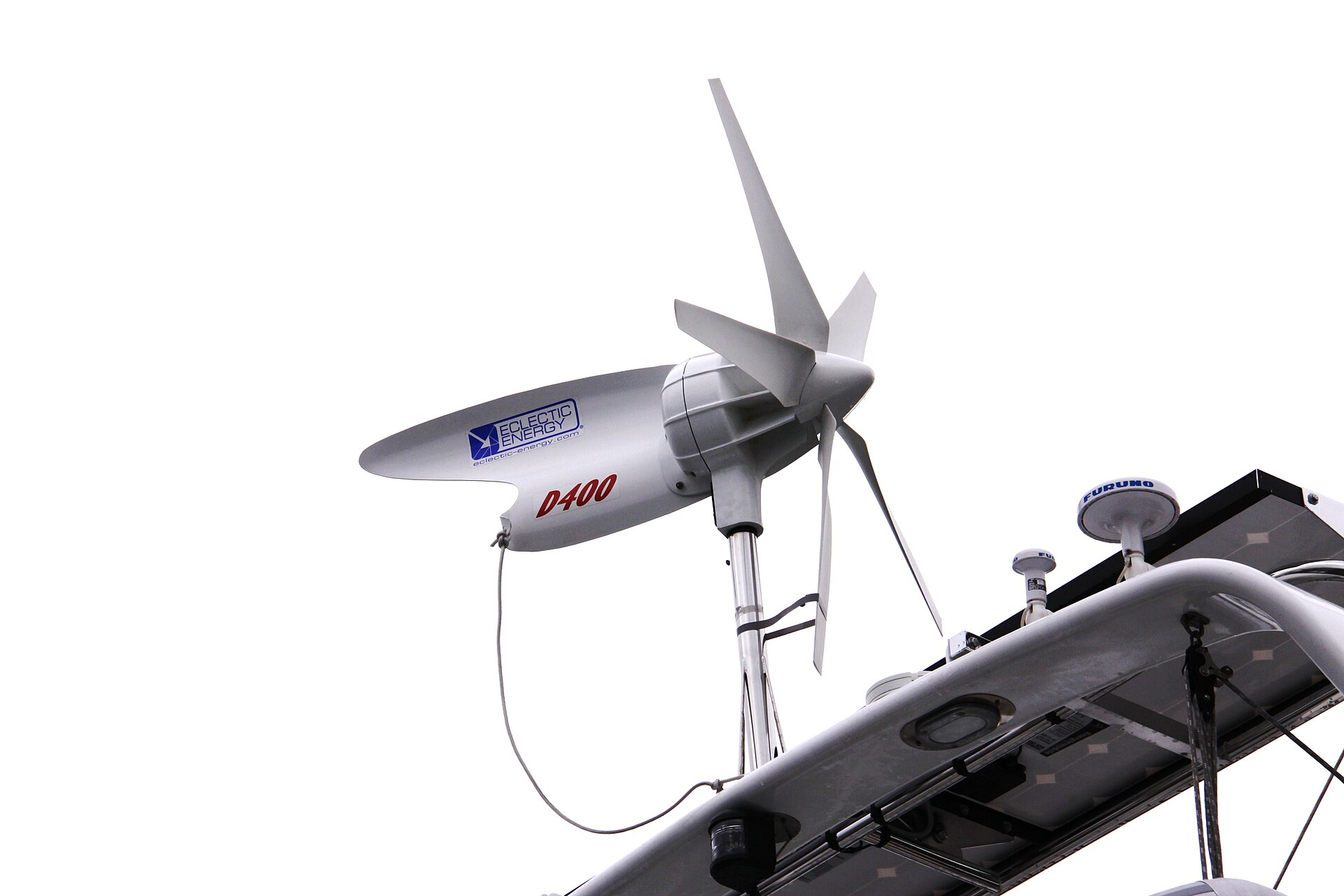
Ask any long-time cruiser about wind generators and noise complaints come up almost immediately. A turbine's blade tips moving through the air create an audible tone that changes pitch with wind speed, and if the mounting structure isn't sufficiently rigid, that vibration transmits into the hull or deck as a low hum that's far more noticeable belowdecks at 2 a.m. than it was during a dockside demo. Manufacturers have made real progress — carbon fibre blades, slower rotor speeds, and direct-drive designs like the Eclectic Energy D400 are specifically engineered to cut this down — but no wind generator is silent in genuinely strong wind, and it's worth weighing that reality against the charging benefit before committing to a permanent installation.
Mounting options: pole, mizzen, and arch
A dedicated stern pole gets the rotor clear of the cockpit, crew, and boom swing, and is the most common retrofit on a boat without an existing tall structure. It requires its own reinforced base plate and usually stays or shrouds to handle the combined static and dynamic loads of a spinning turbine in a gust — not a job for a lightly-built cockpit coaming.
A mizzen mast on a ketch or yawl is often the best aerodynamic position, sitting higher and further from turbulence than a stern pole, but adds real load to a spar that wasn't necessarily designed with a turbine's weight and gust loading in mind — worth a conversation with a rigger, in the same spirit as our standing rigging guide covers load paths elsewhere on the boat.
An existing radar or davit arch is the path of least resistance since the structure is already there, but many stock arches are built for static loads like solar panels and antennas, not the continuous vibration and periodic gust loading of a turbine — reinforcing the arch's base and cross-bracing before adding a wind generator is common practice, not an optional extra.
Braking, furling, and storm procedure
Every wind generator needs a way to stop or dramatically slow the rotor in genuinely severe wind, both to protect the unit itself and to reduce the load on its mount. Most modern units handle this electronically through the regulator — effectively short-circuiting the generator to create a braking torque — while some designs, like the Superwind, add mechanical overspeed blade pitching as a passive failsafe that doesn't depend on the electronics working correctly. Manufacturers uniformly recommend manually stopping and, on some designs, physically securing or removing the blades ahead of a forecast severe storm or hurricane rather than relying on the brake alone — check your specific model's manual for the shutdown procedure and follow it before you lose the weather window to do so.
Hydrogeneration: the passage-making alternative
A hydrogenerator flips the wind generator's use case: it needs the boat moving at real speed to produce anything, so it does nothing at the dock or on a slow drift but comes into its own on an ocean passage where the boat is already making 5–8 knots for days at a stretch. Units like the Watt&Sea Cruising 600 mount a small propeller on a retractable transom leg and, per the manufacturer's own output curves, produce dramatically more power as boat speed climbs past about 6 knots. The tradeoff is unavoidable: a spinning propeller in the water is drag, and that drag scales with the very same speed that makes the unit worthwhile, so it's a genuine dial-in decision on a race boat and a more straightforward win for a cruiser whose priority is topping off the battery bank on a multi-day passage rather than shaving hours off arrival time.
Sizing a wind-plus-solar hybrid system
Rather than treating wind and solar as competing choices, most experienced cruisers size a hybrid system around realistic average daily production from each source in their actual cruising ground, then add margin. A boat spending a season in the trade winds with reliably breezy anchorages can lean more heavily on wind; a boat cruising higher latitudes or a generally calmer coastal area gets more consistent value from solar. Either way, the sizing exercise should start from your house bank's actual daily consumption — covered in our lithium battery guide — rather than from a turbine or panel's best-case spec sheet number, since real production from both sources typically comes in well under the headline figures once you average across a full week of actual weather.
Regulators and dump loads: don't skip this part
A wind generator needs a charge regulator matched to its voltage and current output, and nearly all designs also require a dump load — a resistor bank the regulator switches current into once the battery bank reaches full charge, so the spinning turbine always has somewhere to send its output. Skipping or undersizing this component risks overspeed damage to the turbine and, in some designs, dangerous voltage spikes with nowhere to go. If you're adding a wind generator to a boat that already has solar and is moving toward electric propulsion or a more complex DC system, it's worth planning the wind regulator, solar MPPT, and overall charging hierarchy together rather than bolting each source on independently.
Our picks
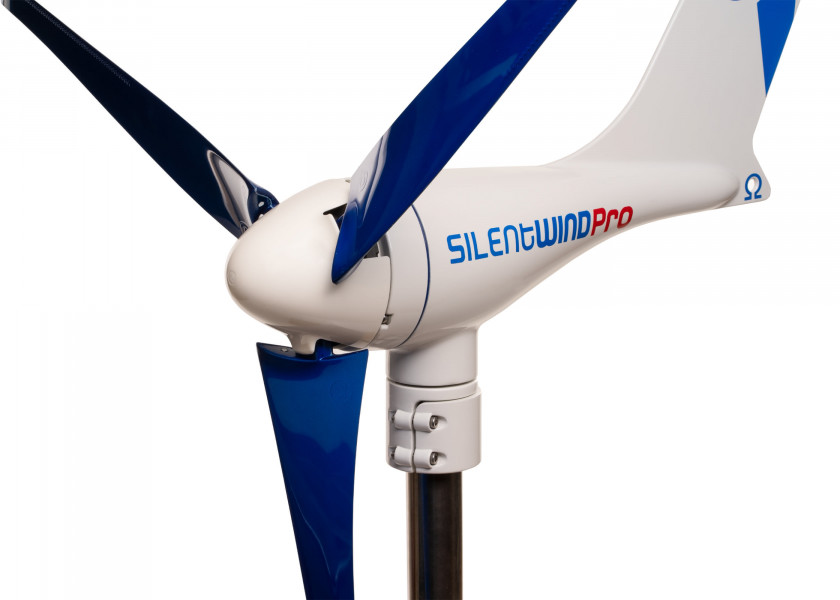
Silentwind Pro 420
Best low-noise wind generator for liveaboard cruisers
Silentwind built its reputation specifically on cutting the whine and hum that drove earlier-generation owners to give up on wind power altogether. The 420 uses carbon fibre blades tuned for a smoother acoustic signature and a genuinely low cut-in speed, so it's producing something in the gentle breezes typical of many anchorages. It pairs with an external hybrid charge controller that can also take a solar input, which is worth factoring into your overall regulator plan rather than running two separate controllers.
- Rated output
- 420W at 12V (450W 24V / 500W 48V versions available)
- Cut-in speed
- About 2.2 m/s (4.3 knots) per manufacturer spec
- Blades
- Handcrafted carbon fibre, 3-blade rotor, ~1.15m diameter
- Regulation
- External MPPT hybrid controller sold with the unit
Pros
- Carbon fibre blades and a purpose-built low-noise profile are the main reason owners choose it over older SCR-regulated designs
- Low quoted cut-in speed means it starts contributing in light anchorage breeze, not just a full trade-wind blow
- Hybrid controller can also manage a solar array, simplifying the charging system on a mixed-source boat
Cons
- Among the pricier options in this category, and the carbon blades are not a cheap replacement part if damaged
- Still audible at higher wind speeds — 'silent' is relative to older designs, not silence at anchor in 25 knots
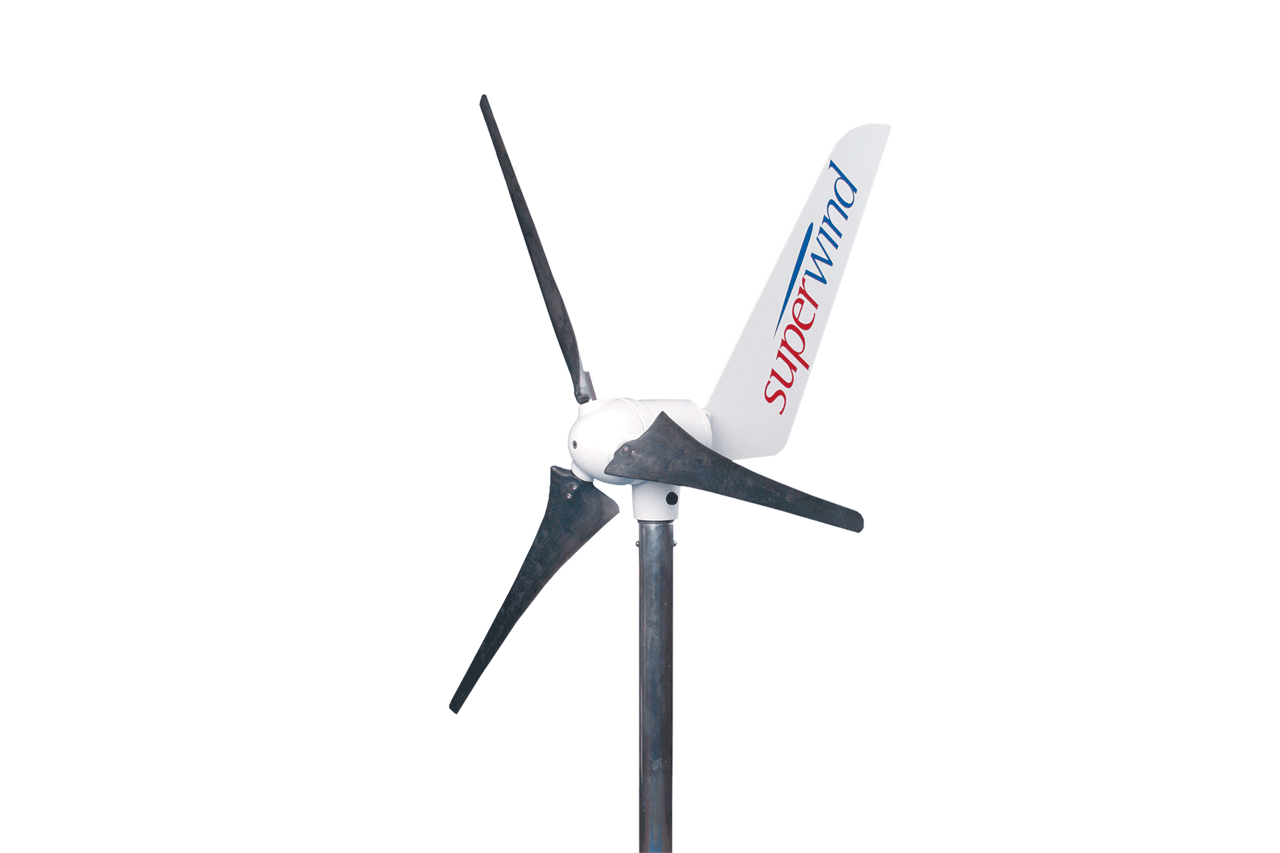
Superwind 350
Best rugged option for offshore and tradewind sailing
The Superwind 350 is built for continuous duty in demanding conditions — offshore platforms, remote telecom sites, and bluewater cruising boats that see real trade-wind and gale conditions, not just marina weekends. Its automatic overspeed protection pitches the blades mechanically rather than relying purely on electronic braking, which matters when a squall hits and you're not standing at the mount ready to intervene. It trades a bit of light-air sensitivity for genuine storm-duty confidence.
- Rated power
- 350W at rated wind speed of 12.5 m/s
- Cut-in speed
- 3.5 m/s, no cut-off — designed to keep charging in storm-force wind
- Rotor
- 1.22m diameter, 3 carbon-fibre-reinforced blades, automatic overspeed pitch control
- Build
- Sealed generator housing, made in Germany, aimed at continuous offshore duty
Pros
- No forced cut-off means it keeps producing in genuinely strong wind rather than shutting down when you need power most
- Automatic blade pitch control for overspeed protection is a mechanical failsafe rather than something you manage manually
- Reputation for durability built on offshore and remote-installation use, not just recreational sailing
Cons
- Higher cut-in speed than the lightest-air-optimized units, so it does less in genuinely calm anchorages
- Premium engineering comes with a premium price versus more basic recreational-grade turbines
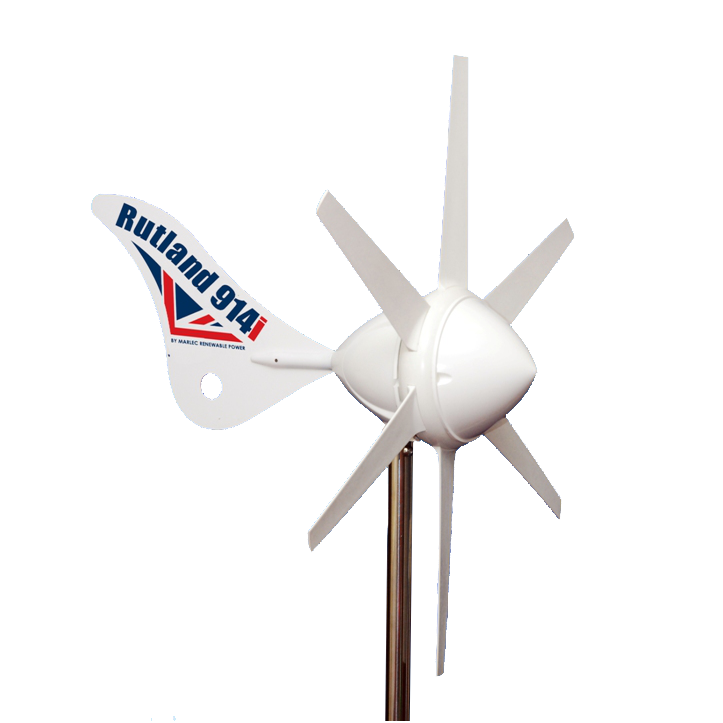
Rutland 914i Windcharger
Best mid-size unit with built-in MPPT
The 914i sits in Marlec's Rutland lineup as the step up from the smaller 504 model, aimed at cruising boats that want meaningful charging capacity without the size and cost of a Superwind or Silentwind Pro. Its built-in MPPT is the standout feature — it continuously re-matches the turbine's speed to the generator for better output in real-world gusty coastal wind rather than steady lab conditions. It's a sensible middle path for a 30–40 ft cruising boat with an anchor-heavy itinerary.
- Output
- Rated around 24V-equivalent output with built-in MPPT tracking
- Cut-in speed
- Starts producing from roughly 3 m/s
- Diameter
- Approximately 1.05m rotor, 6-blade design
- Regulation
- Integrated MPPT electronics; no separate wind regulator required for basic setup
Pros
- Built-in MPPT extracts more usable amp-hours from irregular, gusty wind than older SCR-only designs
- Marlec's decades of small-turbine manufacturing show in fit, finish, and available spare parts
- Reasonably compact for a mid-power unit, easing pole and mast mounting on smaller cruising boats
Cons
- Marlec still recommends pairing with their own charge control accessories for full protection, adding cost beyond the base unit
- Six-blade rotor produces more mechanical noise at speed than newer 3-blade carbon designs
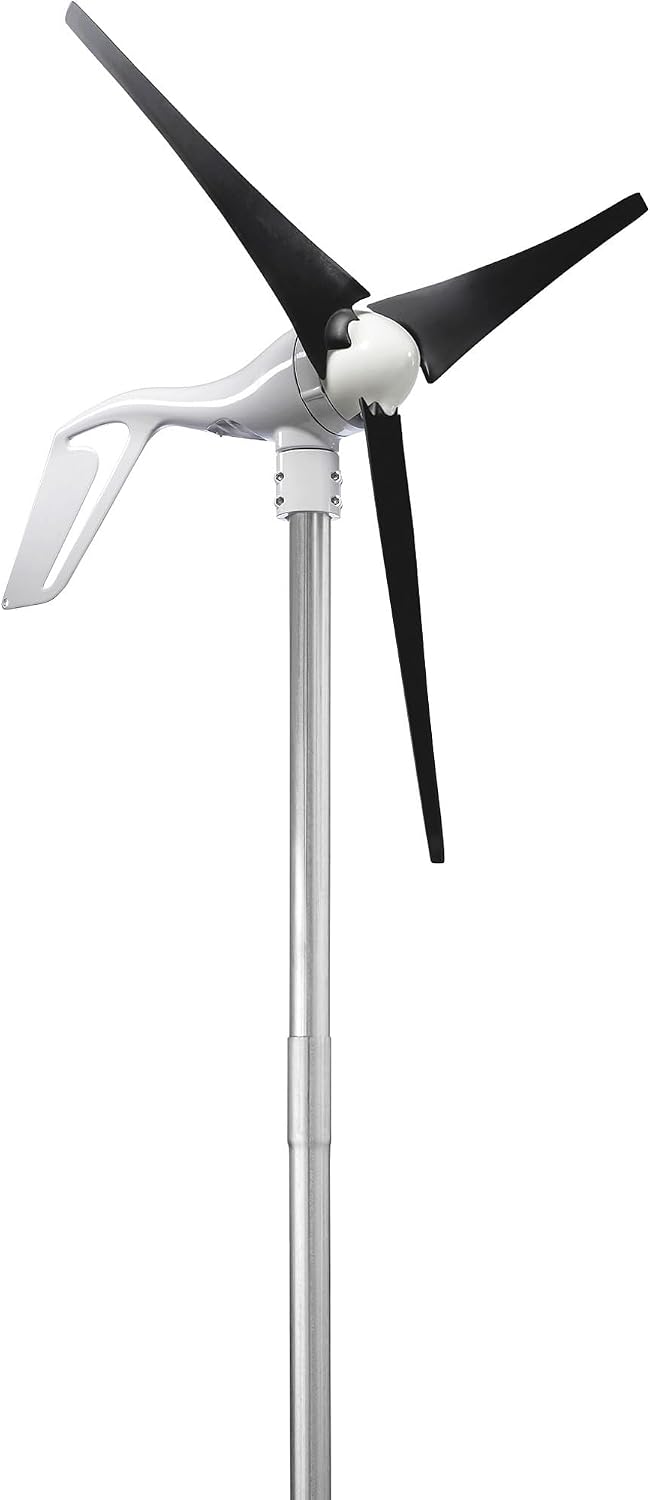
Primus Air Breeze
Best budget-friendly wind generator for coastal cruisers
The Air Breeze descends from the original AIR-X family that introduced a lot of cruisers to wind power in the first place, and it remains the cheapest way to add a genuine wind generator to a coastal cruising boat. Its output is modest next to the larger German- and Portuguese-made units above, and its blade noise is the most commonly cited owner complaint in online forums — a fair trade for the lower price if your realistic expectation is topping off a modest battery bank rather than running the boat entirely on wind.
- Rotor diameter
- 1.17m (46 in), 3-blade design, about 17 lbs total weight
- Output
- Manufacturer-quoted ~40 kWh/month at 5.5 m/s (12 mph) average wind
- Voltage
- Available in 12V, 24V, or 48V versions
- Controller
- Microprocessor-based internal smart controller, no separate regulator needed
Pros
- Lowest purchase price of the units in this list, making it an accessible entry point for a first wind generator
- Corrosion-resistant marine-grade finish and stainless fasteners specifically for saltwater exposure
- Internal smart controller simplifies wiring — no separate wind-specific charge controller to buy or mount
Cons
- Lower rated output than the larger Superwind, Silentwind, or Rutland units, so it contributes less to a large house bank
- Widely reported by owners as one of the noisier units in typical anchorage-strength wind, a common reason it gets removed
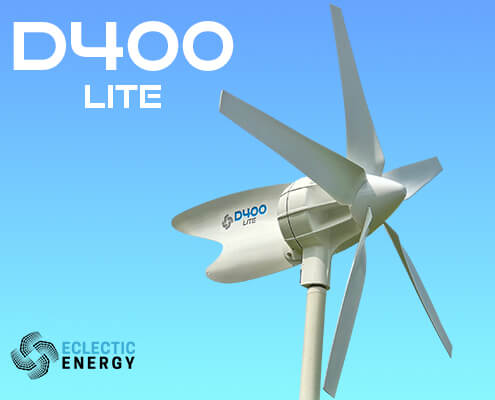
Eclectic Energy D400 Lite
Best direct-drive design for smooth, low-vibration output
Eclectic Energy, a UK manufacturer with decades in micro wind and hydro generation for yachts, designed the D400 Lite specifically to be usable near people — at anchor, at a dock, or moored close to other boats — without the buzz and thrum that gives wind generators a bad reputation. It shares its underlying alternator design with Eclectic's DuoGen hybrid unit below, so parts and support experience carry across both products if you're considering the wind-only unit now and a combined system later.
- Rated output
- 500W
- Design
- Direct-drive, no gearbox, engineered specifically to minimize vibration transfer
- Voltage
- 12V or 24V versions
- Weight
- Roughly 13 kg (about 4 kg lighter than the original D400)
Pros
- Direct-drive design avoids gearbox noise and wear points found in some competing turbines
- Independent test coverage (Practical Boat Owner) has rated it strong on low-speed power output
- Lighter than the original D400, easing the load on a stern arch or pole mount
Cons
- Not sold through Amazon or most US marine retailers — ordering from the UK manufacturer means longer lead times and shipping cost to North America
- At 500W rated output it is a serious investment for what remains a modest average daily contribution in real-world coastal wind
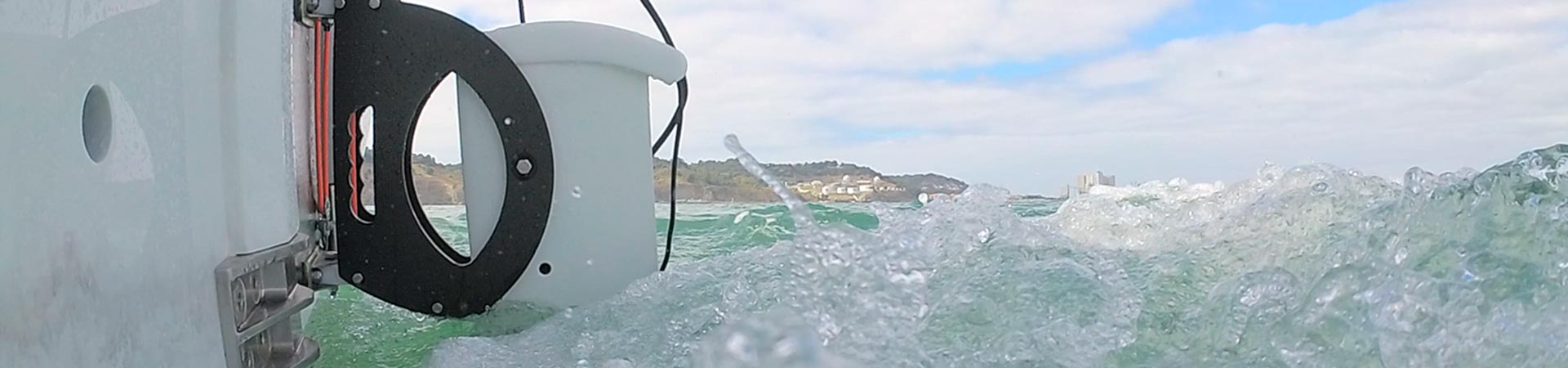
Watt&Sea Cruising 600
Best hydrogenerator for serious passage-making
A hydrogenerator only makes sense once boat speed is doing the work a wind turbine's rotor would otherwise do — which is precisely the case on an ocean passage where the boat itself is moving at 5–8 knots for days at a time, wind generator or not. The Cruising 600 folds down into the water on a transom-mounted leg and its output climbs sharply as boat speed increases, which is the opposite performance curve from a wind generator that does its best work at anchor. The tradeoff is drag: every watt it makes comes partly at the expense of boat speed, so it earns its keep on long passages, not short daysails.
- Max output
- Up to 600W, manufacturer-quoted 10A at 5.6 knots boat speed with the 240mm prop
- Design
- Transom-mounted retractable leg with a dedicated underwater propeller
- Sizing guidance
- Manufacturer recommends it for boats over roughly 35 ft
- Output curve
- Manufacturer states output rises exponentially above about 6 knots of boat speed
Pros
- Produces meaningfully more power on a fast passage than a wind generator can deliver in the same conditions
- Retracts clear of the water at the dock or when motoring, avoiding drag and fouling when not in use
- Purpose-built for offshore racing and long-distance cruising use, with a track record in ARC and transatlantic fleets
Cons
- Adds measurable drag to boat speed whenever deployed and generating, a real cost on a passage where every fraction of a knot counts
- Meaningful investment and a through-hull/transom installation, not a simple retrofit for every hull shape or steering arrangement
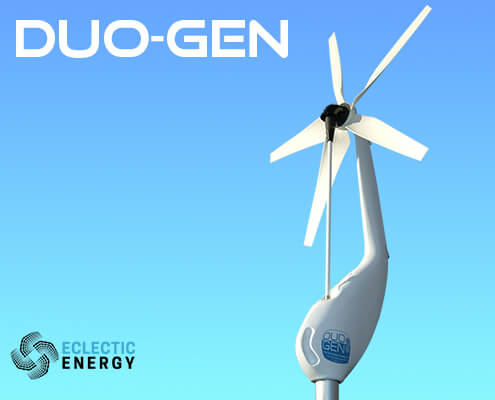
Eclectic Energy DuoGen 3
Best combined wind-and-water hybrid unit for a single mount
The DuoGen answers the practical question of why a cruising boat should carry two separate stern-mounted generators when passages and anchorages both need charging. It uses essentially the same alternator core with an interchangeable wind rotor or underwater impeller, so you swap the working end depending on whether you're sailing fast or sitting at the hook. It won't out-produce a dedicated hydrogenerator on a fast passage or a dedicated turbine on a windy anchorage, but for a boat with limited stern real estate it is a genuinely clever single-mount compromise.
- Modes
- Switches between water (underway) and wind (at anchor) generation on the same mount
- Mode change
- Tool-free swap between the wind rotor and water impeller, per manufacturer
- Mounting
- Stern-rail or pushpit mount, available in Short, Long, and Ex-Long leg lengths
- Drive
- Shares its core alternator design with the D400 wind generator
Pros
- One mounting point and one alternator cover both underway hydro generation and at-anchor wind generation
- Avoids paying for, wiring, and mounting two completely separate charging systems
- Established design refined over multiple product generations with a long track record on cruising boats
Cons
- As a hybrid it's a compromise in both modes compared to a dedicated best-in-class wind unit or a dedicated hydrogenerator like the Watt&Sea
- Manual mode-swapping means someone has to actually go aft and change it over as conditions shift from underway to anchored
How to choose
| Product | Price range | Best for | Key spec |
|---|---|---|---|
| Silentwind Pro 420 | $1,800–$2,300 | Low-noise liveaboard charging | 420W, carbon blades, ~2.2 m/s cut-in |
| Superwind 350 | $2,000–$2,600 | Offshore/tradewind duty | 350W, no cut-off, auto overspeed pitch |
| Rutland 914i Windcharger | $800–$1,100 | Mid-size coastal cruiser | Built-in MPPT, ~1.05m rotor |
| Primus Air Breeze | $1,400–$2,000 | Budget-entry coastal cruiser | ~40 kWh/mo at 5.5 m/s, internal controller |
| Eclectic Energy D400 Lite | $2,000–$2,500 | Low-vibration direct-drive charging | 500W, direct-drive, no gearbox |
| Watt&Sea Cruising 600 | $5,000–$7,000 | Ocean passage-making | Up to 600W, 10A at 5.6 knots boat speed |
| Eclectic Energy DuoGen 3 | $4,500–$5,500 | Combined wind + hydro, one mount | Swaps wind rotor / water impeller, no tools |
Budget tiers
Under $1,500: entry-level wind generators like the Air Breeze — a reasonable first step for a coastal cruiser, with the tradeoff of more audible noise and lower rated output than the premium units.
$1,800–$2,600: the mainstream range for a quality mid-to-large wind generator — Silentwind, Superwind, Rutland, and Eclectic's D400 all sit here, differentiated more by noise profile and duty cycle than raw output.
$4,500 and up: hydrogenerators and hybrid wind/water units — a serious investment aimed squarely at bluewater passage-makers and offshore racers who spend meaningful time at real boat speed, not a purchase most coastal cruisers need to make.
Related guides
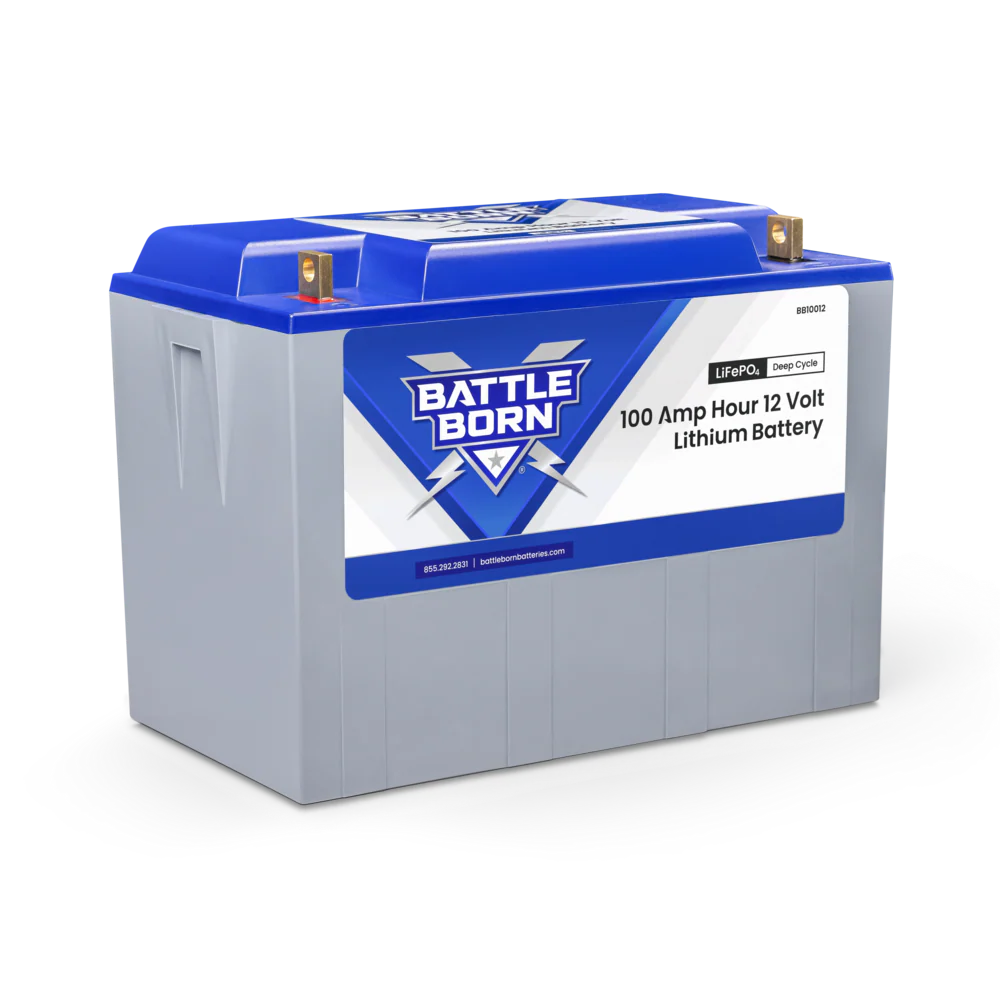 Power
PowerBest Lithium Batteries for Sailboats
LiFePO4 house-bank picks and how to plan a lithium conversion — Battle Born, Victron, Renogy, Epoch, Dakota.
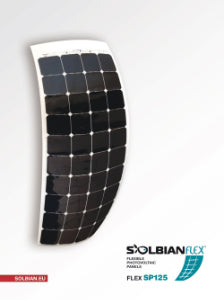 Power
PowerMarine Solar Panels for Sailboats
Rigid vs flexible marine solar panels, how to size an array for your house bank, and top picks for cruising sailors.
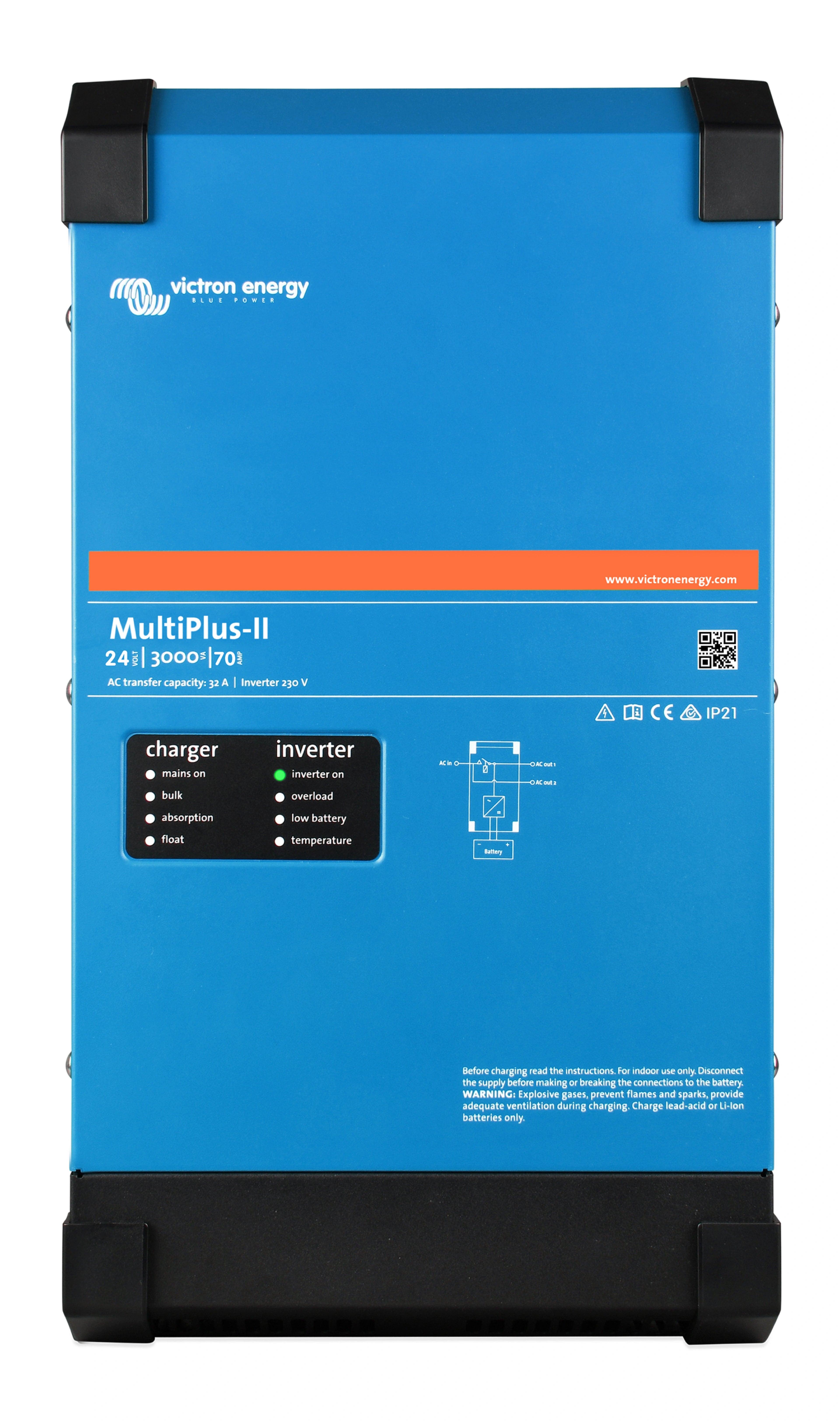 Power
PowerMarine Inverter/Chargers: Victron vs Mastervolt vs Xantrex
How to choose a marine inverter/charger — sizing, LFP compatibility, integration, and the units we'd install today.
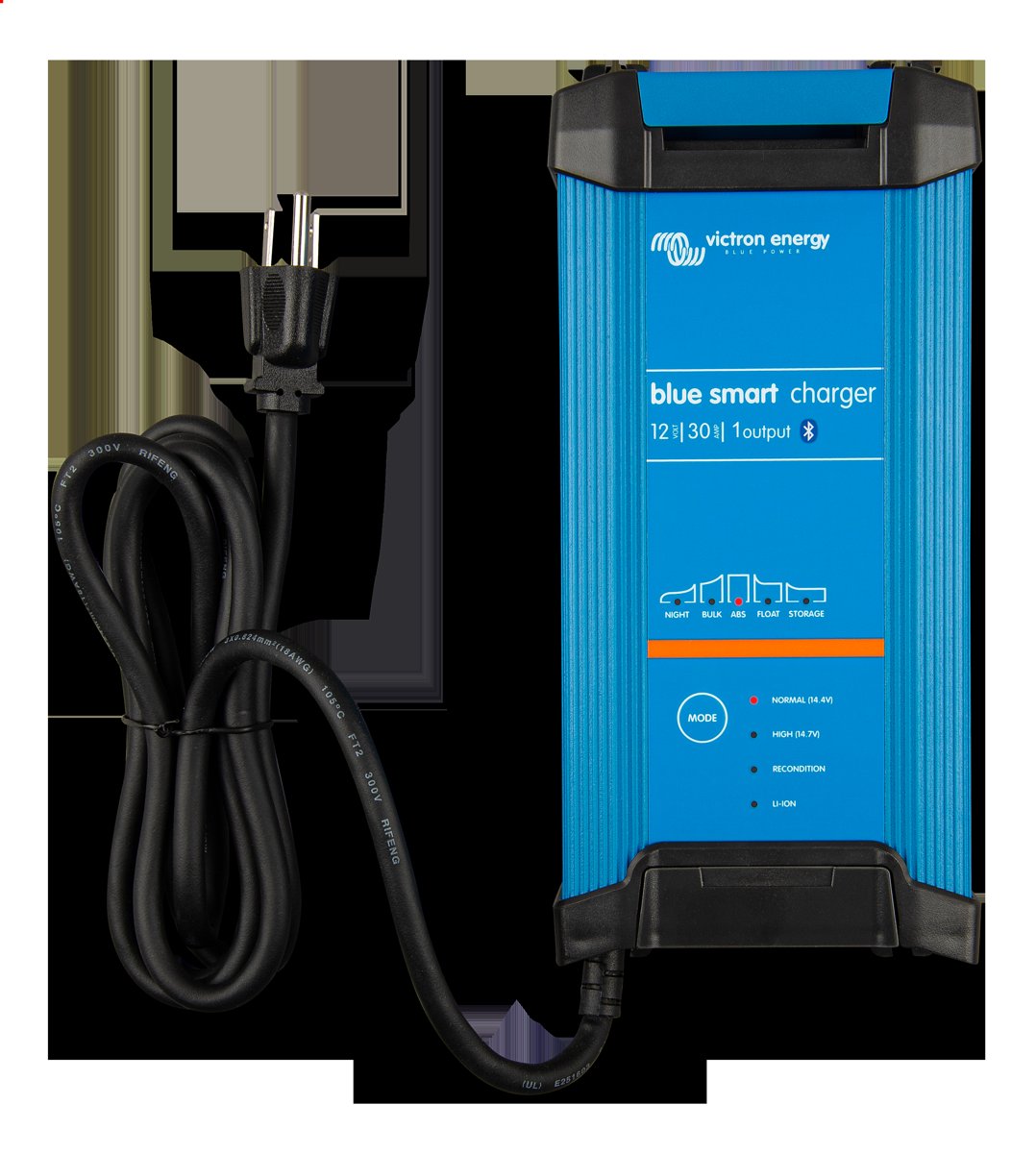 Power
PowerBest Marine Battery Chargers and DC-DC Chargers
Shore-power chargers and DC-DC chargers compared — sizing output to your bank, lithium profiles, wiring and top picks.
Looking for more gear guides? Browse all our gear recommendations or the full guides index.