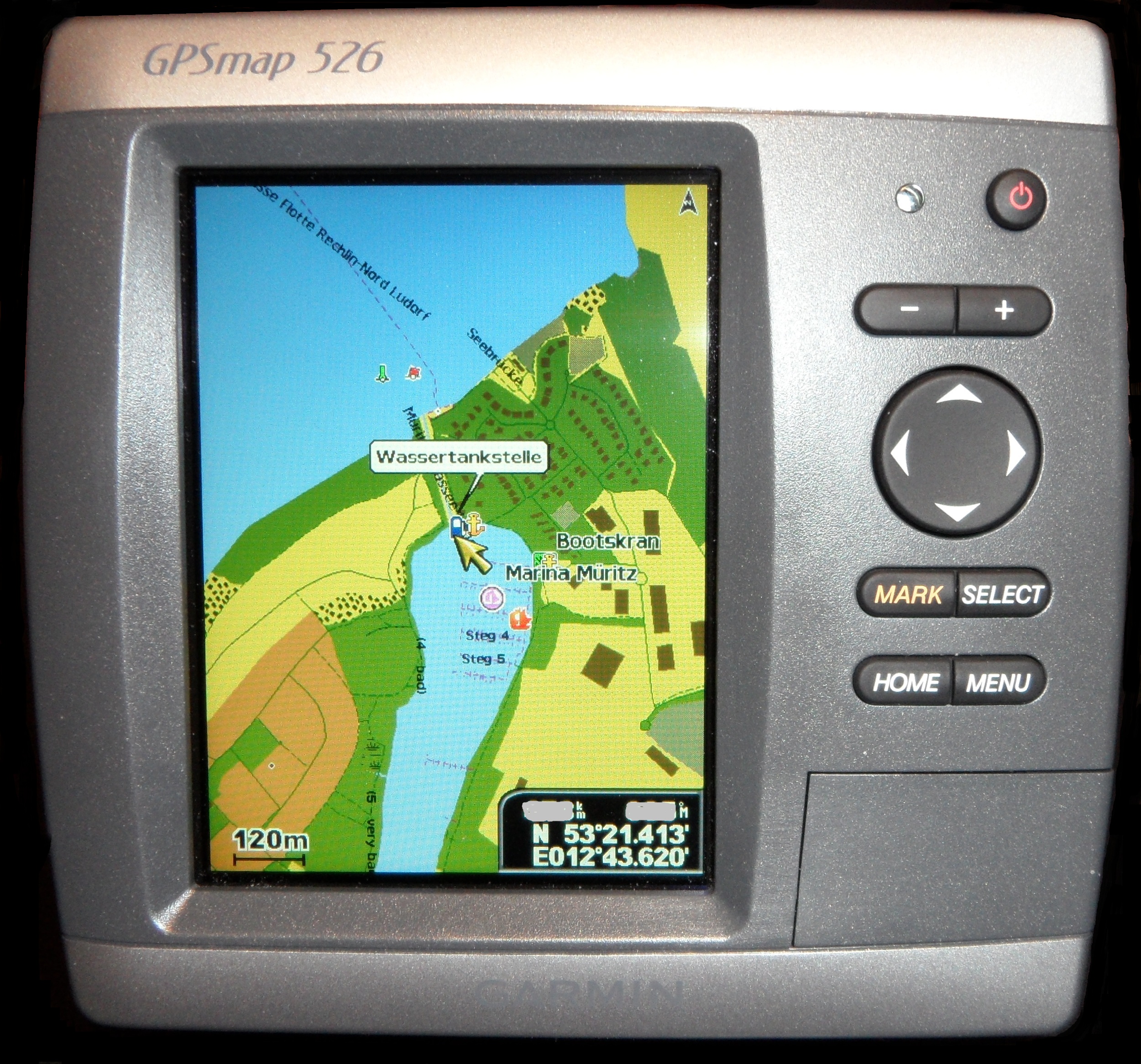
Best Chartplotter Fishfinder Combos for Sailboats
A combo unit puts navigation and sonar on one screen at the helm — useful for reading depth into an anchorage, watching bottom structure on passage, and keeping the cockpit free of extra boxes. But sailboats have installation constraints powerboats don't: deep fin keels, no usable transom, and helms that see spray and full sun. Here's how the technology works, what actually matters for a sailboat installation, and the combos worth buying.
Sailboat Atlas may earn a commission from qualifying purchases made through links on this page, at no extra cost to you.
What a chartplotter/fishfinder combo actually is
A combo unit bundles two historically separate devices — a GPS chartplotter (for position, charts, waypoints, and routes) and a sonar fishfinder (for depth and water-column imaging) — into one screen and processor. For a cruising sailboat this is usually the right call: one helm display, one power and data run, one thing to keep updated, instead of two separate boxes competing for panel space. The trade-off is that combo units are a compromise on both sides compared to a dedicated navigation-only plotter or a dedicated high-end fishfinder, though the gap has narrowed a lot in the last five years.
See our anchor and windlass guide and AIS transponder guide for the other instruments that typically share the NMEA 2000 backbone with a combo unit.
Transducer types: transom, in-hull, and thru-hull — and why sailboats care
The transducer is the part that actually sends and receives sonar pulses, and its mounting location matters more than the brand of screen it's wired to. A transom-mount transducer bolts to the back of the hull — cheap and easy on a powerboat, but on a sailboat it sits in prop wash and turbulent water thrown off the keel and rudder, and many sailboats don't have a clean transom to mount one on at all. A thru-hull transducer penetrates the hull below the waterline forward of the keel, in smooth laminar flow, and gives the cleanest readings at speed and under sail — but it requires a proper below-the-waterline installation, a sea cock, and haul-out access, so it's a job for a yard or an experienced DIYer. An in-hull transducer mounts inside the hull, glued to the inner laminate with no hole at all — it sacrifices a little sensitivity through the fiberglass but is the easiest and safest retrofit on a solid-glass hull, and it's the common choice for boats that don't want to haul out or drill a hole below the waterline. Cored hulls generally rule out in-hull transducers unless a solid-glass mounting pad exists or is built.
CHIRP vs traditional sonar
Traditional (single or dual-frequency) sonar sends one fixed-frequency ping and listens for the echo. CHIRP (Compressed High-Intensity Radiated Pulse) sweeps a band of frequencies on every ping and processes the returns as a set, which separates individual fish or debris that would blur together on traditional sonar, and holds detail in deeper water. Virtually every combo worth buying today includes CHIRP as standard; the meaningful differences between units now come down to transducer quality, processing power, and screen resolution rather than whether CHIRP exists at all.
DownVu, SideVu, and Live sonar — what they add
Scanning sonar (Garmin ClearVu/SideVu, Lowrance DownScan/SideScan, Humminbird MEGA Imaging, Raymarine DownVision/SideVision) uses a wide, thin beam to render a photo-like image of the bottom and water column, rather than the traditional "arch" fish symbols of CHIRP sonar. This is genuinely useful for reading bottom composition (sand vs. rock vs. weed) before dropping the hook, and for spotting wrecks, reefs, or structure along a cruising route. Live sonar (Garmin LiveScope, Humminbird MEGA Live) shows real-time moving targets and is built primarily for anglers actively fishing a spot with a trolling-motor-mounted transducer — it's a poor fit for a fixed-hull sailboat installation and not worth the premium unless you're specifically chasing fish rather than navigating.
Depth sounding for anchoring vs. for fishing
These are different jobs even though the same sonar does both. Anchoring wants a clear, reliable numeric depth readout with a fast update rate and a shallow-water alarm — precision at 10–60 feet, not maximum range. Fishing wants imaging detail, target separation, and often greater depth range in open water. A combo unit does both acceptably, but if anchoring confidence is your main goal, prioritize a clean, large-digit depth display and a reliable transducer install over sonar-imaging resolution.
Screen size and helm mounting on a sailboat
A 7-inch screen is the practical minimum for helm use in daylight; 9-inch units are markedly easier to read at a glance while hand-steering or trimming, and are worth the extra cost and panel space if you have room. Mount the unit where it's protected from direct green-water spray and where the helmsperson can see it without leaning — a pod on the pedestal guard or a recessed nav-station mount both work well. Sunlight-readable transflective or glass-bridge displays (most modern units) are essential; older LCD screens wash out badly in direct sun.
Charts and NMEA 2000 integration
Preloaded base charts vary widely — Garmin units typically ship with Navionics+ coastal data for one region, Lowrance and Simrad units often ship with base charts only and expect a Navionics or C-MAP card purchase for real cruising detail. Budget for chart cards separately from the unit price when comparing. NMEA 2000 is the standard data backbone that lets the plotter share GPS position, depth, and heading with an autopilot, a second display, AIS transponder, or wind instruments — for background on wiring that network correctly, see our marine electrical systems guide. If you're considering AIS or a satellite communicator on the same backbone, check our satellite communications guide and AIS transponder guide.
Common mistakes when installing a combo unit
The most common failure is mounting a transom-mount transducer on a sailboat and then blaming the unit for noisy, inconsistent readings — the transducer location, not the electronics, is almost always the culprit. Second is skipping a proper NMEA 2000 backbone (using cheap, unshielded splices instead of a certified network) which causes intermittent data dropouts that are miserable to diagnose later. Third is underestimating chart card cost — a $900 unit with no charts loaded for your cruising ground isn't actually a $900 solution.
Our picks
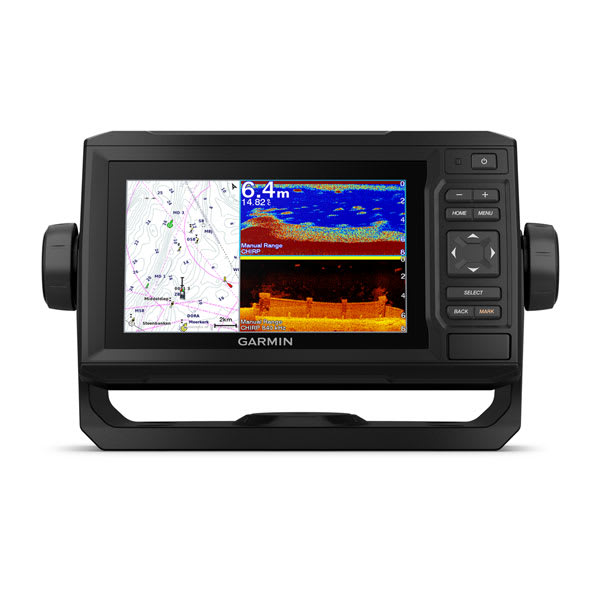
Garmin ECHOMAP UHD2 6sv / 9sv
Best all-around combo for cruising sailboats
The ECHOMAP UHD2 line is the default recommendation for a cruising sailboat that wants one screen at the helm for navigation and occasional fishing. Garmin's charts and UI are the most polished in the category, the built-in ClearVu scanning sonar is excellent for reading bottom structure near an anchorage, and the unit pairs with a huge range of transducers — including thru-hull models that work with deep fin keels. The 9sv gives real chart detail at the helm; the 6sv is the practical minimum for a nav station or smaller cockpit pod.
- Screen
- 6" (6sv) or 9" (9sv) sunlight-readable UHD display
- Sonar
- Built-in CHIRP, ClearVu and SideVu scanning sonar
- Charts
- Preloaded Garmin Navionics+ US coastal charts, Quickdraw contours
- Networking
- NMEA 2000, Garmin Marine Network, ActiveCaptain app pairing
- Typical price
- $900–$1,600 depending on screen size and transducer bundle
Pros
- Best chart quality and clearest menu system of any combo in this class — genuinely easy to use underway
- ClearVu/SideVu scanning sonar renders structure and bottom composition with photo-like clarity
- Wide transducer compatibility, including thru-hull options for deep-draft sailboats
Cons
- Preloaded charts cover US coastal waters only — offshore/international cruisers need to buy additional Navionics+ regions
- Live sonar (Garmin Panoptix LiveScope) is a separate, expensive add-on, not included
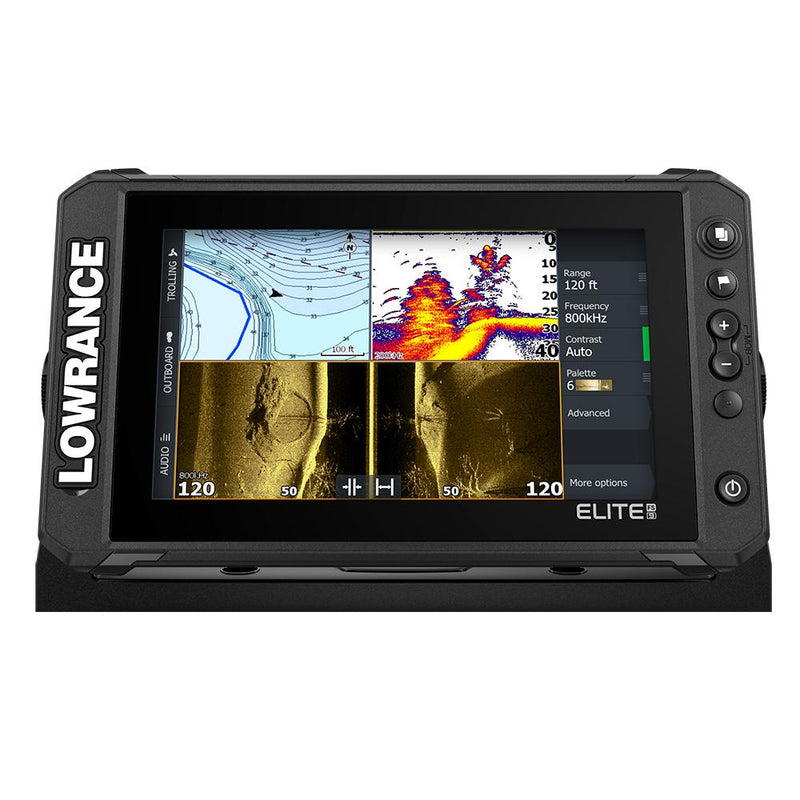
Lowrance Elite FS 9
Best value combo with built-in GPS and easy setup
The Elite FS 9 undercuts Garmin and Simrad on price while keeping the sonar and mapping features cruisers actually use — CHIRP, SideScan, and DownScan sonar plus solid built-in GPS and charts. It's a sensible choice for a coastal cruiser who wants a capable combo without paying for live sonar or premium charting they won't use. Budget separately for a proper transducer install; the stock transom puck isn't right for most sailboats.
- Screen
- 9" IPS touchscreen with keypad backup
- Sonar
- Active Imaging 3-in-1 (CHIRP, SideScan, DownScan)
- Charts
- Preloaded C-MAP US coastal; Genesis Live custom mapping
- Networking
- NMEA 2000, Ethernet, built-in WiFi
- Typical price
- $700–$1,000
Pros
- Best price-to-feature ratio in the 9-inch class — sonar, charts, and GPS all standard
- Genesis Live lets you build your own high-resolution depth contours as you cruise, useful in poorly charted anchorages
- Touchscreen plus physical keys works well at a wet, moving helm
Cons
- C-MAP chart coverage and POI density are a step behind Garmin's Navionics in some cruising regions
- Active Imaging transducer bundled with the unit is transom-mount; sailboats need to budget for a separate thru-hull or in-hull transducer
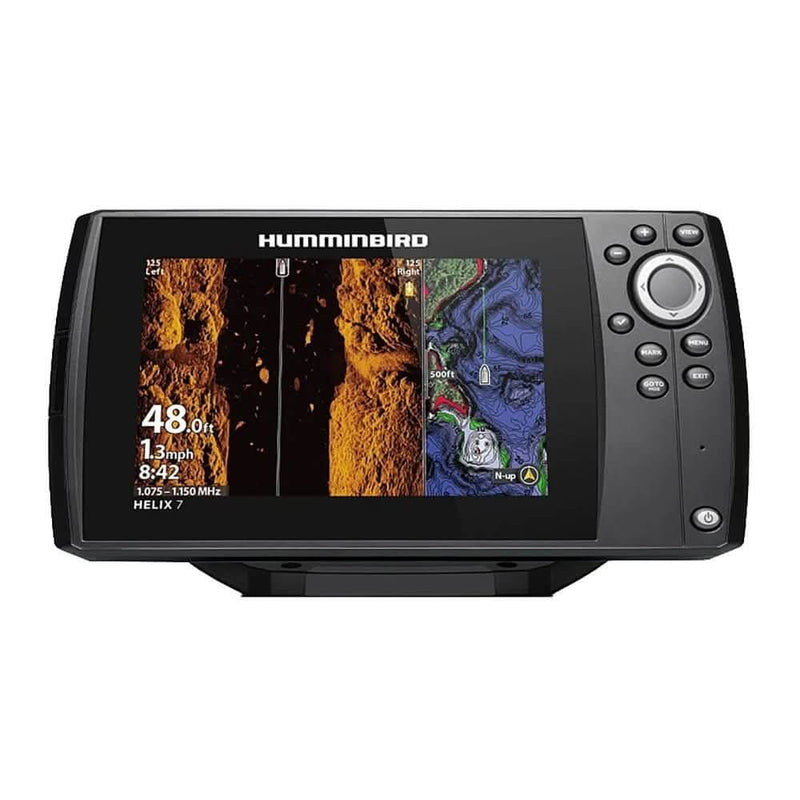
Humminbird HELIX 7 CHIRP MEGA SI
Best sonar detail on a mid-size screen
Humminbird built its reputation on side-imaging sonar clarity, and the HELIX 7 CHIRP MEGA SI carries that forward at a genuinely accessible price. For a sailboat that anchors out and fishes along the way — reading structure to set the hook or to find fish on passage — the MEGA imaging is hard to beat at this size and price. It's a lighter navigation tool than a dedicated chartplotter brand, so serious offshore navigators will want to pair it with a phone or tablet chart app as backup.
- Screen
- 7" widescreen, 800x480 resolution
- Sonar
- MEGA Side Imaging and MEGA Down Imaging plus dual-beam CHIRP
- Charts
- Humminbird Basemap preloaded; AutoChart Live contour mapping
- Networking
- NMEA 2000 (via adapter cable), Ethernet
- Typical price
- $550–$750
Pros
- MEGA Side Imaging resolution is class-leading for spotting structure, wrecks, and bait balls
- AutoChart Live builds usable bottom contour maps of anchorages and channels in real time
- Strong value for anglers who fish more than they navigate offshore
Cons
- Screen resolution and chart polish lag behind Garmin and Simrad's touchscreen units
- NMEA 2000 integration needs an add-on adapter cable rather than being native
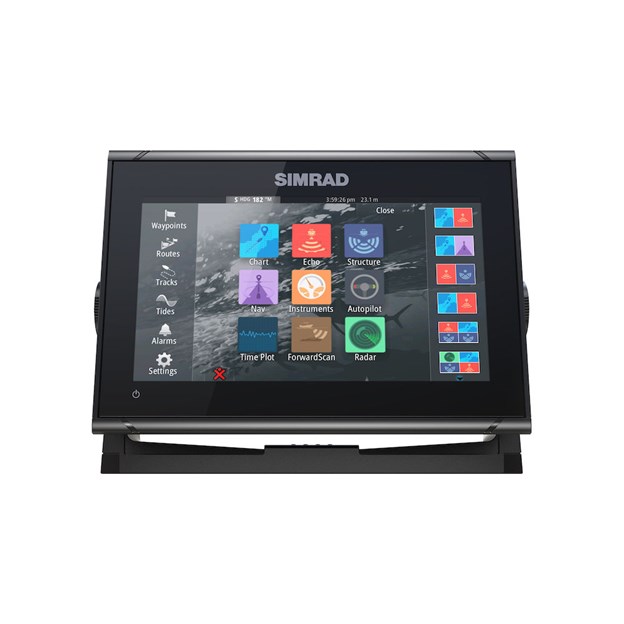
Simrad GO9 XSE
Best combo for boats also running radar or autopilot
The GO9 XSE is the right pick for a sailboat that already has, or plans to add, a Simrad or B&G autopilot, radar, or wind instruments — the whole system talks over the same SimNet/NMEA 2000 backbone with minimal fuss. As a standalone fishfinder it's competent but not class-leading; the reason to choose it is systems integration, not sonar detail. If you're outfitting a boat for offshore passage-making with a full B&G instrument suite, this is worth the premium.
- Screen
- 9" glass-bridge touchscreen, sunlight-viewable
- Sonar
- Built-in CHIRP, StructureScan; supports Active Imaging 3-in-1 transducers
- Charts
- C-MAP compatible, Navionics compatible via chart card
- Networking
- NMEA 2000, Ethernet, integrates with Simrad/B&G autopilot and radar
- Typical price
- $1,000–$1,400
Pros
- Deep integration with Simrad and B&G autopilots, radar, and instruments — a strong pick if you're already in that ecosystem
- Glass-bridge touchscreen feels the most like a modern tablet of any unit here
- Robust waypoint and route planning tools carried over from Simrad's larger NSS/NSO systems
Cons
- No charts preloaded — budget for a Navionics or C-MAP card on top of the unit price
- Premium price relative to Lowrance and Humminbird for similar core sonar features
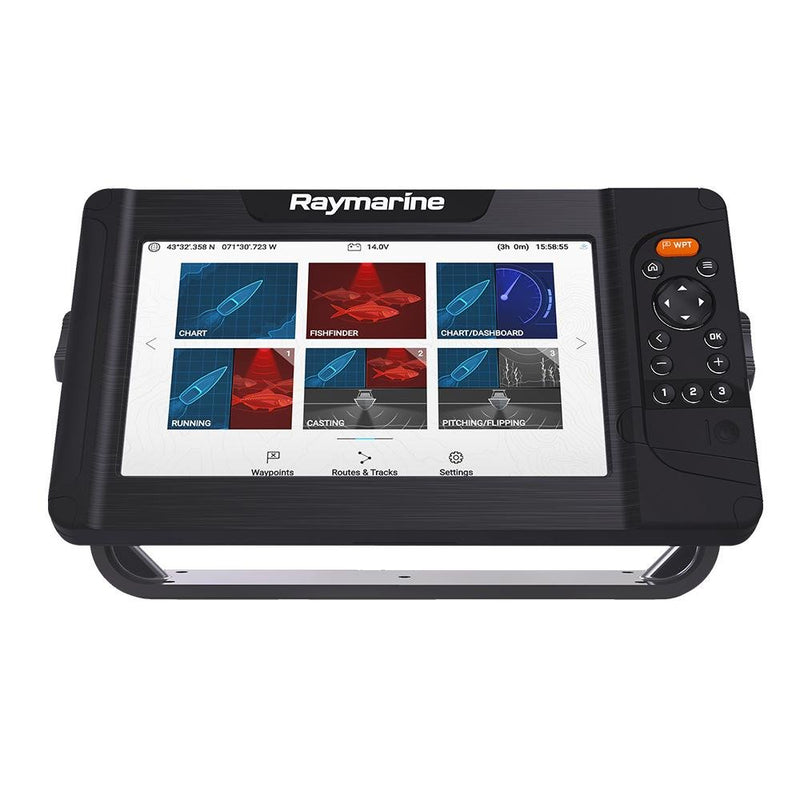
Raymarine Element 9 HV
Best for HD sonar clarity with CHIRP DownVision and SideVision
The Element 9 HV pairs a genuinely nice touchscreen chartplotter with Raymarine's RealVision 3D sonar, which renders bottom contour and structure in a way that's more intuitive than traditional side-scan for a lot of users. It's a strong choice for a Raymarine-equipped boat, but sailors with deep fins or full keels should budget for a compatible in-hull or thru-hull transducer rather than relying on the stock transom puck.
- Screen
- 9" glass-bridge touchscreen, sunlight-viewable
- Sonar
- HV-100 transducer with RealVision 3D, CHIRP DownVision and SideVision
- Charts
- LightHouse charts preloaded; Navionics/C-MAP card compatible
- Networking
- NMEA 2000, SeaTalkng, integrates with Raymarine autopilots and radar
- Typical price
- $1,100–$1,500 with HV-100 transducer bundle
Pros
- RealVision 3D sonar gives an intuitive 3D read of bottom structure that's easier to interpret than flat side-scan images
- Fast, responsive LightHouse OS interface with clean route planning
- Strong fit for boats already running Raymarine Evolution autopilots or radar
Cons
- The bundled HV-100 transducer is a transom-mount skimmer, not ideal for deep-keel sailboats — plan on a compatible thru-hull separately
- 3D sonar mode has a learning curve compared with simple side-scan

Garmin Striker Vivid 7cv
Best budget fishfinder with basic plotting
The Striker Vivid 7cv is honest about what it is: a genuinely good sonar unit with basic plotting bolted on, at a fraction of the price of the units above. For a secondary display at a cockpit fishing station, a dinghy, or a budget-limited daysailer where the primary navigation is handled elsewhere (phone, tablet, or a second plotter), it's a smart way to add real sonar capability without the NMEA 2000 integration cost.
- Screen
- 7" sunlight-readable color display
- Sonar
- CHIRP traditional and ClearVu scanning sonar, vivid color palettes
- Charts
- Built-in Garmin Quickdraw Contours; no preloaded cartography
- Networking
- No NMEA 2000 — standalone unit only
- Typical price
- $250–$350
Pros
- Lowest price of any combo here while still delivering real CHIRP and ClearVu sonar performance
- Built-in GPS with track/waypoint plotting is enough for basic anchorage and reef marking
- Simple enough to hand to guests without a manual
Cons
- No NMEA 2000 networking — it can't share data with an autopilot, AIS, or other instruments
- No base charts, so it's a fishfinder-first device rather than a real navigation chartplotter
How to choose
| Product | Price range | Best for | Key spec |
|---|---|---|---|
| Garmin ECHOMAP UHD2 6sv/9sv | $900–$1,600 | All-around cruising | UHD display, ClearVu/SideVu |
| Lowrance Elite FS 9 | $700–$1,000 | Best value | Active Imaging 3-in-1 |
| Humminbird HELIX 7 CHIRP MEGA SI | $550–$750 | Sonar detail on a budget | MEGA Side/Down Imaging |
| Simrad GO9 XSE | $1,000–$1,400 | Simrad/B&G ecosystems | Autopilot/radar integration |
| Raymarine Element 9 HV | $1,100–$1,500 | 3D sonar clarity | RealVision 3D, HV-100 |
| Garmin Striker Vivid 7cv | $250–$350 | Budget / secondary display | CHIRP + ClearVu, no NMEA 2000 |
Budget tier (under $400): Garmin Striker Vivid 7cv — solid sonar, basic plotting, no networking. Mid tier ($600–$1,000): Lowrance Elite FS 9 or Humminbird HELIX 7 CHIRP MEGA SI, both with full charting and scanning sonar. Premium tier ($1,000+): Garmin ECHOMAP UHD2 9sv, Simrad GO9 XSE, or Raymarine Element 9 HV — pick based on which autopilot/instrument ecosystem you already run, since brand integration matters more here than raw sonar specs.
Frequently asked questions
Do I need a thru-hull transducer on a sailboat, or will a transom mount work?
It depends on your hull and how the boat is used. Transom-mount transducers are cheap and easy to install but sit in turbulent water behind the keel and prop wash, which degrades readings under sail and at speed — and on many sailboats there's no usable transom to mount one on at all. Thru-hull and in-hull transducers read cleanly in the smoother water forward of the keel and are the better choice for most cruising sailboats; see the section below on transducer types for the trade-offs.
What's the difference between CHIRP and traditional (single/dual-frequency) sonar?
Traditional sonar pings a single fixed frequency and interprets the echo; CHIRP sweeps a range of frequencies on every ping and processes the returns together, producing sharper target separation, better bottom detail, and useful readings in deeper water. Nearly every combo sold today includes CHIRP; the meaningful differences between units now are transducer quality, screen resolution, and chart data.
Can a chartplotter/fishfinder combo replace a full plotter for offshore navigation?
For coastal and near-shore cruising, yes — modern combos have capable chart plotting, waypoint/route management, and AIS integration. For serious offshore passage-making, most cruisers still want a dedicated primary plotter at the helm or nav station with paper charts and a phone/tablet chart app as backup, using the fishfinder combo as a secondary or cockpit display.
Do I need NMEA 2000 if I just want depth and a basic chart?
No — a standalone unit like the Garmin Striker Vivid works fine on its own. NMEA 2000 matters once you want the depth, GPS position, or sonar data to talk to an autopilot, a second display, AIS, or wind instruments — which most cruising sailboats eventually want.
How deep can these units read, and does that matter for anchoring?
Most CHIRP-equipped combos with a mid-range transducer read reliably to 300–1,000+ feet depending on frequency and water conditions — far beyond what any sailboat needs for anchoring in typical cruising depths of 10–60 feet. What matters more for anchoring is update rate and a clear numeric depth readout, not maximum range.
Will Live sonar (Garmin LiveScope, etc.) work well on a sailboat?
Live sonar transducers are typically mounted on a trolling motor or a pole for real-time scanning, which doesn't translate well to a fixed-hull sailboat installation. Unless you're specifically targeting real-time fish tracking, the scanning (ClearVu/SideVu/DownVision) and CHIRP sonar built into the picks above deliver far more practical value for depth sounding and anchorage/reef reading.
Related guides
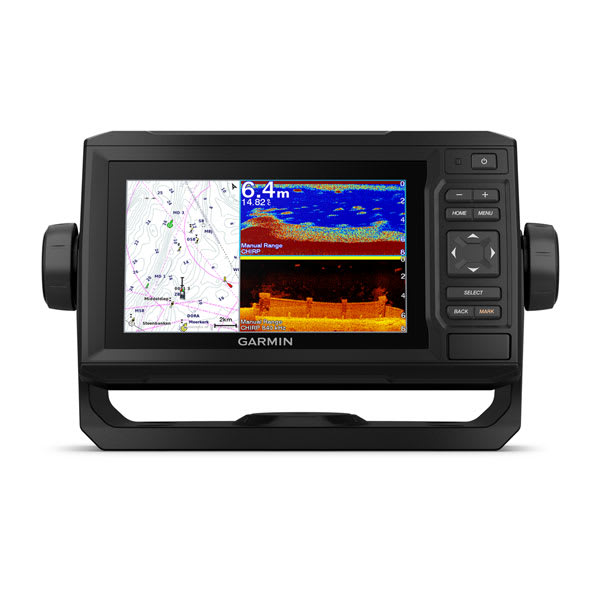 Navigation
Best Marine GPS for Small Boats and Sailboats
Fixed-mount and handheld marine GPS units compared — screens, charts, power draw, and picks at every budget.
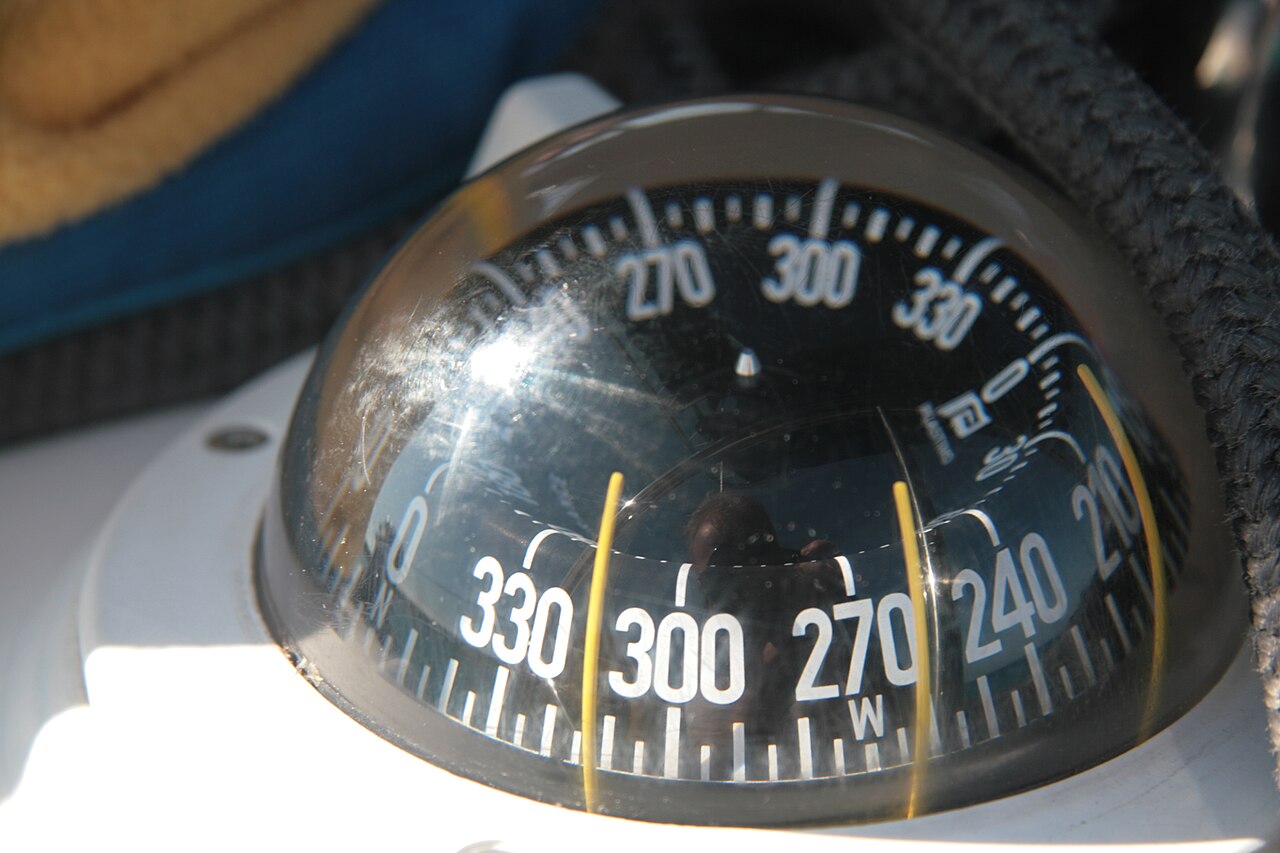 Navigation
Best Boat Compasses: Steering and Handheld Picks
Card size, heel, mounting, lighting and deviation: choosing a magnetic compass for a sailboat.
 Navigation
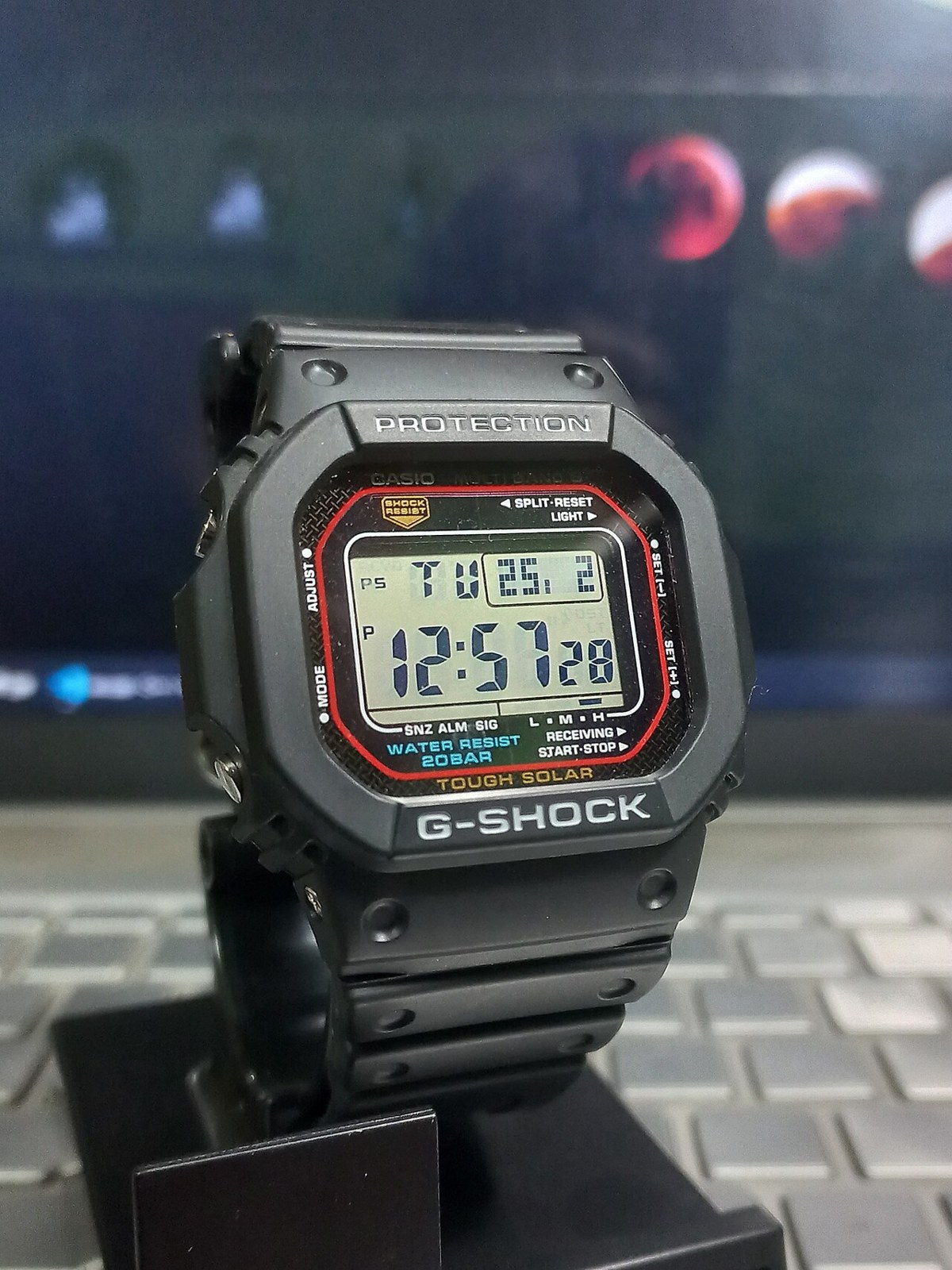
Sailing Watches: Race Timers and Cruising Choices
Countdown controls, water resistance, readability and battery care: choosing a practical watch for racing and cruising.
 Navigation
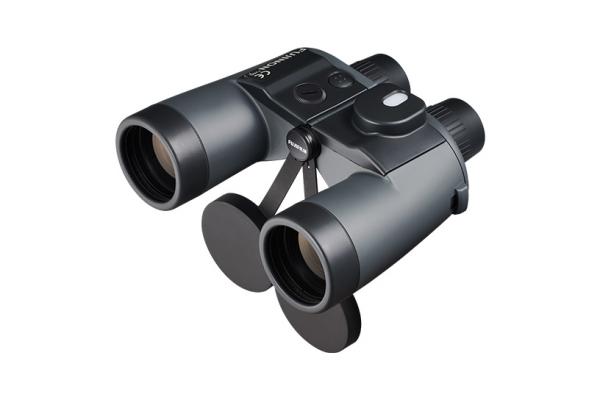
Best Marine Binoculars for Sailing
Why 7x50 is the sailing standard, compass and stabilized binoculars, and our top picks at every budget.
Looking for more gear guides? Browse all our gear recommendations or the full guides index.