Best Bluewater Sailboats Under 40 Feet
If you want one boat under 40 feet that will take two people across an ocean without a five-year refit first, buy a Valiant 40 with a clean blister survey, or a Pacific Seacraft 37 if your budget stretches and you value build quality over speed. Everything else on this list is a specialist answer to a specific budget or sailing plan — the Contessa 32 for heavy weather on a small budget, the Hallberg-Rassy 342 if you want to leave this year, the Bristol Channel Cutter 28 if you want the smallest boat that is genuinely up to it. Below we cover what actually makes a hull offshore-capable, how to read displacement and stability numbers, and what each of these boats will cost you after the purchase price.
Sailboat Atlas may earn a commission from qualifying purchases made through links on this page, at no extra cost to you.
What makes a sailboat bluewater capable
"Bluewater" is not a certification, and no builder is stopped from using the word. What it should mean is that the boat can stay intact and keep sailing when it is hit by conditions you cannot escape — because 400 miles offshore, you cannot duck into a harbour.
Structurally, that comes down to a few unglamorous details. Deck hardware bolted through with metal backing plates rather than screwed into cored deck. Chainplates you can inspect without demolishing joinery. A companionway that is narrow, high-silled, and takes solid washboards that can be secured from outside. A cockpit small enough that a boarding wave drains in seconds rather than sitting as a ton of water above the waterline. Deep bilges so that any water that does get below stays low and out of the electrics.
Then there is stability. The number that matters is the angle of vanishing stability (AVS): the heel angle beyond which the boat prefers to stay upside down. Offshore boats generally want an AVS above about 120°, and the boats on this list are typically in the 120–140° range. A beamy coastal cruiser with a shallow bilge can sit closer to 110°, which is fine in the Chesapeake and a real liability in the Southern Ocean.
Finally, redundancy. Two ways to steer, two ways to navigate, two ways to make water potable, and a rig you can still use after losing any single sail. That is more about how the boat is equipped than how it was moulded, which is why an older, well-prepared boat routinely beats a newer, unprepared one.
Reading displacement, ballast ratio, and D/L before you fall for a boat
Three numbers tell you most of what you need to know about how a hull will behave offshore, and all three are published on every listing.
Displacement-to-length ratio (D/L) is displacement in long tons divided by (0.01 × waterline length)³. Under about 150 is a light, quick boat; 150–250 is moderate; above 300 is heavy-displacement. The Westsail 32 sits well above 350 and sails accordingly. Heavy boats carry stores without changing trim and have an easier motion; light boats sail faster in less wind and let you make shorter weather windows work.
Ballast ratio (ballast ÷ displacement) tells you how much of the boat's mass is working to keep it upright. 35–45% is typical for offshore designs. But it is a crude measure on its own — where the ballast sits matters more than how much there is, which is why a deep, narrow Contessa 32 at 43% is stiffer in practice than a shoal-draft boat with the same number.
Sail area-to-displacement ratio predicts light-air performance. Below about 15 the boat needs real wind to move; 16–18 is a good cruising balance. This number explains why the Valiant 40 and the Tayana 37 feel like different boats in 8 knots despite similar cruising reputations.
None of these replace a sea trial. Sail the boat in 18–20 knots, not 8, and see how it feels when the rail goes down and someone has to go forward.
Why 32 to 40 feet is the sweet spot for a cruising couple
Almost every ocean rally fleet clusters in this range for reasons that have little to do with seaworthiness and everything to do with running costs and physical effort.
Below 32 feet, the constraint is carrying capacity. You can build a very seaworthy 28-footer — the Bristol Channel Cutter proves it — but water, fuel, food, spares, and ground tackle still weigh what they weigh, and a small hull either carries them at the cost of trim and performance or you simply carry less and make shorter hops.
Above 40 feet, the loads change character. A 45-foot boat's mainsail, anchor, and sheet loads are past what most people can handle without powered winches and a windlass, and every haul-out, berth, sail, and rigging replacement scales with length. Two-handed crews start needing systems to do work that muscle used to do — and every system is another thing to fix in a foreign port.
In the 32–40 range, one reasonably fit person can still hank on a staysail, break out an anchor with a manual backup, and get a mainsail down by hand in a squall. That is the practical definition of the sweet spot.
The refit costs nobody puts in the listing
On a 1970s–80s boat, assume the following are due regardless of what the seller says. Standing rigging has a service life of roughly 10–15 years offshore; replacement on a 37-footer is typically in the $6,000–$12,000 range depending on whether you go rod or wire and who does the work. Read our standing rigging guide before you negotiate.
Sails are usually the second-biggest number. A cruising main and furling genoa for a 37-footer typically run $8,000–$15,000 in offshore-grade cloth. Ground tackle — an oversized modern anchor, 200+ feet of chain, and a windlass that can actually lift it — is another $3,000–$6,000; see our anchors and windlasses guide and the chain and rode guide.
Then there are the boat-specific landmines. Teak decks on a Tayana. Blisters on a late-1970s Valiant. Owner-completed systems on a kit-built Westsail. Deck core saturation around chainplates and stanchion bases on anything of that era. Each of these is a five-figure number if it has been ignored, and each is discoverable by a competent surveyor with a moisture meter.
Systems that turn a capable hull into a cruising boat
A sound hull gets you across; systems determine whether you enjoy it. In rough priority order for a boat in this size range:
Self-steering. Hand steering an ocean passage two-handed is not realistic. A windvane costs nothing to run and never fails from a flat battery; an electric autopilot is better under power and in light air. Most serious passagemakers carry both.
Power. Fridge, autopilot, and instruments set your daily amp-hour budget. Solar panels plus a lithium house bank now make engine-free days normal on a 37-footer, which is a genuine change from what these boats were designed around.
Water. A 37-footer might carry 100 gallons. A small watermaker removes the biggest single constraint on how long you can stay away from a dock.
Safety and communications. An EPIRB, an AIS transponder, a life raft, and satellite communications for weather routing. These are the items that turn an emergency into an inconvenience.
Common mistakes when buying your first offshore boat
Buying for the interior. You will spend a handful of hours a day below and the rest of the time sailing. Boats sell on joinery and get you home on chainplates.
Skipping the rig survey. A standard hull survey often does not include going up the mast. Terminal fittings, tangs, and spreader roots are where dismastings start, and a separate rigging inspection is a few hundred dollars.
Underestimating the delivery. The boat is rarely where you are. Add delivery crew, fuel, yard time, and insurance to your budget before you commit to a bargain 2,000 miles away.
Buying too big. The single most common regret among cruising couples is length. Sails, berths, haul-outs, and marina fees all scale, and so does the effort of every manoeuvre. A well-prepared 36-footer leaves; an under-prepared 45-footer stays in the marina.
Our picks
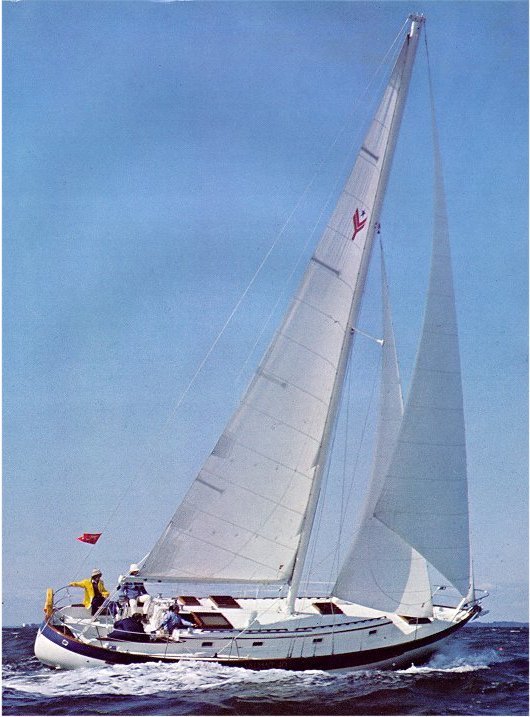
Valiant 40
Best all-round bluewater boat under 40 feet
If you buy one boat on this list sight-unseen and expect it to get you across an ocean, this is it. Perry's canoe-stern hull carries enough displacement to be comfortable in a seaway but has the waterline and rig to actually make 150-mile days, which matters more on a long passage than any single comfort feature. The caveat is specific and well known: many boats from the late-1970s Uniflite years suffer hull blistering, and the fix ranges from cosmetic to a full peel-and-recoat. Get a moisture-meter survey and price the remediation into your offer rather than walking away — a properly sorted Valiant is one of the best offshore values in the 40-foot range.
- LOA
- 39' 11"
- Displacement
- ~22,000 lb
- Hull
- Fin keel with skeg-hung rudder
- Designer / year
- Robert Perry, 1975
Pros
- The design that proved a cruising boat could be fast — a genuinely quick passagemaker rather than a heavy-displacement plodder
- Skeg-hung rudder gives most of the protection of a full keel without the tracking-only handling
- Enormous circumnavigation record and an active owners' community, so problems are documented and parts knowledge is shared
Cons
- Hulls built roughly 1976–1981 are known for blistering from a fire-retardant resin; a survey must confirm what was done about it
- Tankage and stowage are tight by modern 40-foot standards because the hull is narrow aft
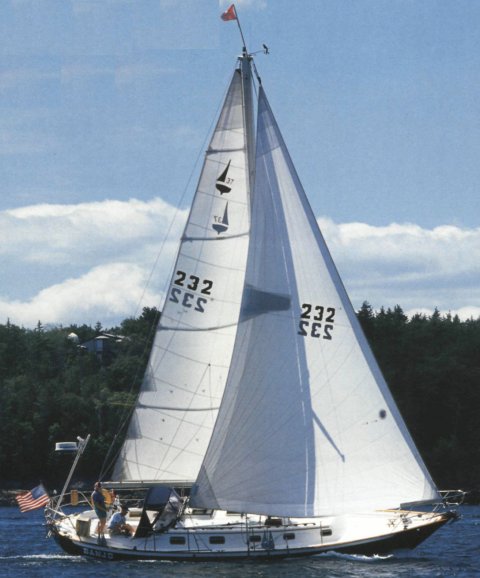
Pacific Seacraft 37
Best build quality for a couple's offshore boat
The Crealock 37 (sold under the Pacific Seacraft name) is the boat experienced cruisers point to when someone asks what 'built for offshore' actually means in a production hull. Deck hardware is bolted through with backing plates as standard, the chainplates are accessible, and the bilge is deep enough to keep water where it belongs when the boat is heeled. The trade is space and money: you are buying seakeeping, not volume. For a couple who plan to be aboard for years rather than seasons, that trade is usually the right one — but do the sums on your stowage needs before you fall in love with the joinery.
- LOA
- 36' 11"
- Displacement
- ~17,000 lb
- Rig
- Cutter
- Designer / year
- William Crealock, 1980
Pros
- Among the best-finished production boats ever built in the US — bronze ports, hand-laid glass, oversized hardware throughout
- Cutter rig lets you shorten down to staysail and reefed main without changing headsails offshore
- Motions are notably easy: the fine entry and moderate beam keep the boat from slamming upwind
Cons
- Prices stay high because supply is small and reputation is enormous — you pay a premium over comparable 37-footers
- Interior volume is modest; the boat feels a size smaller below than a modern 37-foot production cruiser
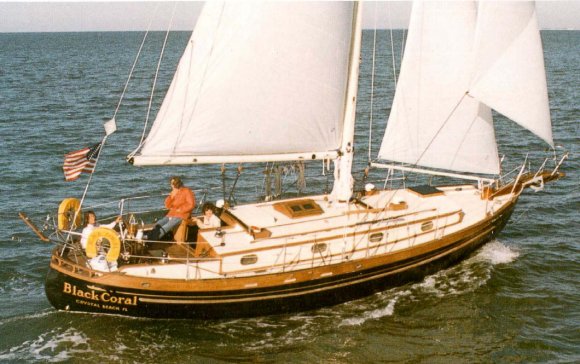
Tayana 37
Best value heavy-displacement cruiser
The Tayana 37 is the pragmatic answer to 'how do I get an ocean-capable boat for the least money without buying a project.' It is heavy, deeply built, and unfashionably slow in a drifter, and none of that stops the class from showing up in every anchorage from the Marquesas to Trinidad. Because so many were semi-custom, condition and configuration vary wildly between hulls — two boats of the same year can differ by $40,000 in real value. Survey the deck core, the chainplates, and the fuel tanks hard, and treat the teak deck question as the single biggest number in your budget.
- LOA
- 36' 8"
- Displacement
- ~18,500 lb
- Rig
- Cutter (pilothouse variants exist)
- Designer / year
- Robert Perry, 1976
Pros
- Well over 500 built, so the market is liquid and you can afford to be picky about condition
- Heavy layup and a long keel make it forgiving when short-handed and reassuring in heavy weather
- Almost every boat is different below — many were semi-custom, so you can find a layout that suits you
Cons
- Teak decks on many hulls are now at or past end of life; recoring or removing them is a five-figure job
- Slow in light air — under about 8 knots of breeze you will be motoring where lighter boats keep sailing
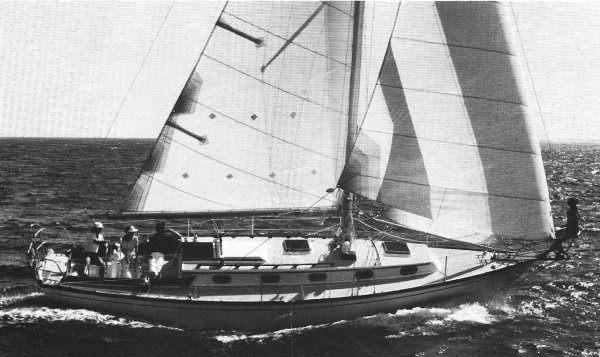
Cape Dory 36
Best full-keel boat for coastal-to-offshore transition
This is the boat for the sailor stepping up from coastal cruising who wants the confidence of a traditional underbody without a 20,000-pound displacement. The full keel and attached rudder mean a grounding is usually an inconvenience rather than a haul-out, and the boat self-steers with a windvane more willingly than most fin-keel designs. The costs are real: it is slow to tack, awkward under power at low speeds, and the accommodation is old-fashioned. If you sail short-handed and value predictability over performance, none of that will bother you.
- LOA
- 36' 1"
- Displacement
- ~15,000 lb
- Hull
- Full keel, attached rudder
- Designer / year
- Carl Alberg, 1977
Pros
- Full keel with attached rudder is about as damage-tolerant an underbody as you can buy
- Tracks beautifully — the boat will hold a course under windvane with very little tending
- Alberg's classic sheerline and moderate beam make it one of the better-looking boats of the era
Cons
- Narrow beam and a small cockpit mean it feels cramped compared to any modern 36-footer
- Poor manoeuvrability under power in tight marinas — plan for spring lines and patience
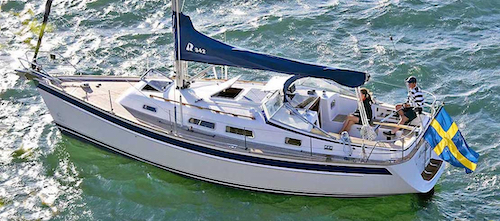
Hallberg-Rassy 342
Best modern boat with offshore credentials
The 342 answers a question the older boats on this list can't: what if you want offshore capability without spending your first two years refitting? Hallberg-Rassy's build quality is the reason these boats hold value, and the practical detail that decides it for many buyers is the fixed windscreen — on a cold, wet North Atlantic passage the difference between an exposed cockpit and a sheltered one changes how many hours a shift you can actually stand. You pay handsomely for that, and the boat is not a bargain at any point in its life. What you get is a boat you can buy, provision, and sail.
- LOA
- 34' 6"
- Displacement
- ~15,400 lb
- Hull
- Fin keel, skeg-supported rudder
- Designer / year
- Germán Frers, 2007
Pros
- Modern systems, modern insulation, and a windscreen that makes cold-weather passages genuinely tolerable
- Build standards are the highest of any volume production yard — hull-deck joints and bonding are exemplary
- Resale is exceptionally strong, so depreciation over a few cruising seasons is limited
Cons
- Costs roughly two to three times what a comparably sized 1980s cruiser does
- The centre-cockpit-style protection and heavy joinery add weight for the size; it isn't a light-air flyer
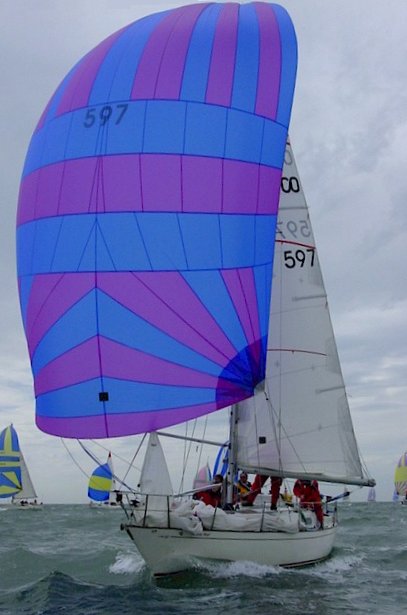
Contessa 32
Best heavy-weather boat on a small budget
The Contessa 32 is the cheapest genuinely ocean-worthy boat on this list, and its heavy-weather reputation is earned rather than marketed. The hull is narrow and deep with a lot of ballast low down, which produces a boat that heels early, then stiffens and settles into a motion that is remarkably kind offshore. What it doesn't offer is living space: the interior is a 1970s 32-footer with a fine entry and no beam carried aft, so stores, water, and personal gear are all constrained. Buy it if you want to cross oceans on a modest budget and are honest about living small.
- LOA
- 32' 0"
- Displacement
- ~10,000 lb
- Hull
- Fin keel with skeg-hung rudder
- Designer / year
- David Sadler, 1971
Pros
- Famous survival record — the class came through the 1979 Fastnet storm with a reputation nothing since has dented
- Narrow, deep hull form with high ballast ratio gives outstanding stability and a soft motion
- Cheap to buy, cheap to berth, and cheap to maintain relative to anything else offshore-capable
Cons
- Very tight below — two people can live aboard for a passage but not comfortably for a season
- Narrow beam means limited tankage and stowage, which constrains true long-distance independence
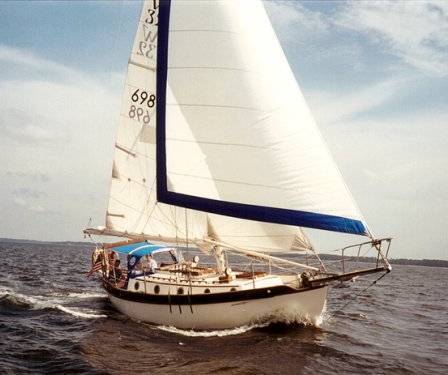
Westsail 32
Best for a slow, sturdy, self-sufficient passage
Nicknamed the 'wet snail' by its critics and defended fiercely by its owners, the Westsail 32 does one thing extremely well: it carries two people and a lot of stores across an ocean without drama. The displacement that makes it slow is the same displacement that lets it carry six months of provisions without changing its trim. The critical buying detail is provenance — a large share of the fleet was completed by owners from factory kits, and the difference between a professionally finished hull and a poorly executed home build shows up in wiring, tankage, and bulkhead bonding rather than in the gelcoat. Survey accordingly.
- LOA
- 32' 0"
- Displacement
- ~19,500 lb
- Rig
- Cutter
- Designer / year
- William Atkin / W. Crealock lineage, 1971
Pros
- Immensely strong double-ender with thick hand-laid glass and a bulletproof full keel
- Carries stores and water far beyond what a 32-footer normally can, thanks to the heavy displacement
- Very low purchase prices — often the cheapest route to a boat that can genuinely cross an ocean
Cons
- Genuinely slow: expect 100-mile days rather than 140, which adds days to every passage and weather window
- Many hulls were owner-finished from kits, so quality below the waterline varies enormously between boats
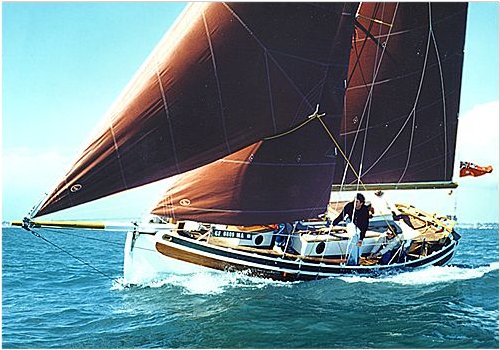
Bristol Channel Cutter 28
Best small boat for genuine ocean passages
The BCC is the smallest boat here that experienced sailors will unhesitatingly call ocean-capable, and its reputation comes from the hull rather than the marketing. Lyle Hess drew a heavy, powerful little cutter that heaves to under a backed staysail and sits quietly in conditions that have larger boats working hard. In practical terms it is a boat for one or two people with modest possessions and real skills — the payoff is the lowest possible cost of entry to genuine offshore sailing, and a boat you can haul, paint, and rerig yourself. Plan your heavy-weather kit around storm sails and a drogue before you commit to a passage.
- LOA
- 28' 1" (hull)
- Displacement
- ~14,000 lb
- Rig
- Gaff-influenced cutter with bowsprit
- Designer / year
- Lyle Hess, 1976
Pros
- Displacement-to-length ratio closer to a 34-footer, so it behaves far bigger than its 28 feet suggests
- Hess's hull form is exceptionally seakindly and heaves to beautifully — a real heavy-weather tactic, not a theory
- Small enough to be maintained and single-handed by one person on a modest budget
Cons
- Long bowsprit and heavy ground tackle make marina handling and slip fees more awkward than the 28-foot number implies
- Standing headroom and berth space are minimal; long-term liveaboard comfort is not on offer
How to choose
| Boat | Typical price | Best for | Displacement |
|---|---|---|---|
| Valiant 40 | $60k–$120k | Fast, proven passagemaking | ~22,000 lb |
| Pacific Seacraft 37 | $90k–$180k | Build quality, easy motion | ~17,000 lb |
| Tayana 37 | $45k–$90k | Value heavy cruiser | ~18,500 lb |
| Cape Dory 36 | $40k–$75k | Full-keel predictability | ~15,000 lb |
| Hallberg-Rassy 342 | $180k–$260k | Buy it and go | ~15,400 lb |
| Contessa 32 | $25k–$60k | Heavy weather, small budget | ~10,000 lb |
| Westsail 32 | $25k–$55k | Stores capacity, low cost | ~19,500 lb |
| Bristol Channel Cutter 28 | $60k–$120k | Smallest true offshore boat | ~14,000 lb |
Prices are broad market ranges for boats in sound, sailing condition and move with refit history and location — verify current listings before budgeting.
Under $60,000 total: Contessa 32 or Westsail 32, bought cheap with money set aside for rigging, sails, and ground tackle. Both can cross oceans; neither will be comfortable for long-term living.
$80,000–$150,000 total: The sweet spot. A Valiant 40 or Tayana 37 with a documented refit, or a Cape Dory 36 with money left over for solar, a watermaker, and self-steering. This is where most successful first circumnavigations start.
$180,000+: A Hallberg-Rassy 342 or a late Pacific Seacraft 37 — boats you can buy, provision, and leave in within months rather than years. You are paying to skip the refit, which is a legitimate use of money if your time is the scarcer resource.
Whatever you buy, sail it hard for a season close to home before you commit to an ocean. Every weakness in a boat and its crew shows up in the first 500 miles.
Frequently asked questions
What actually makes a sailboat 'bluewater' capable?
Three things, in order: a hull and deck structure that stays watertight when green water lands on it, a rig and steering system with redundancy, and enough stability to recover from a knockdown. Cosmetic markers like a full keel or a canoe stern matter far less than bolted-through deck hardware, strong chainplates, small companionway openings with proper washboards, and a cockpit that drains fast.
Is a full keel safer than a fin keel offshore?
Not inherently. A full keel protects the rudder and tracks well, which suits short-handed windvane steering. A modern fin keel with a skeg-hung rudder is faster, more manoeuvrable, and lets you outrun weather systems — a real safety factor. The Valiant 40 and Contessa 32 both have excellent offshore records with fin keels.
Is 40 feet big enough to cross an ocean?
Comfortably, for two people. Boats in the 32–40 foot range make up the bulk of every ocean rally fleet. Below about 32 feet the limiting factor is usually stowage and water capacity rather than seaworthiness, which is why watermaker and tankage planning matters more on smaller boats.
What should I budget beyond the purchase price?
Plan on 30–60% of the purchase price for a first-year refit on a boat 20+ years old, and a smaller but non-zero figure on a newer one. The big-ticket items are standing rigging (replace at 10–15 years regardless of appearance), sails, ground tackle, and self-steering. Systems like watermakers, solar, and lithium banks come after the boat itself is sound.
Which of these boats is easiest to single-hand?
The Cape Dory 36 and Bristol Channel Cutter 28 self-steer most willingly under windvane, and cutter rigs on the Tayana, Pacific Seacraft, and Westsail let you reduce sail without leaving the cockpit or changing headsails. The Hallberg-Rassy 342 is easiest under power and has the most modern short-handed systems.
Should I buy an older boat and refit, or a newer boat and sail?
Be honest about your time and skills. A 1978 Valiant 40 plus a $60,000 refit and two years of work can end up better equipped than a newer boat at the same total cost — but only if you enjoy the work. If your goal is to leave within a year, buy the most recently refitted boat you can afford and spend your money on sails, ground tackle, and safety gear.
Related guides
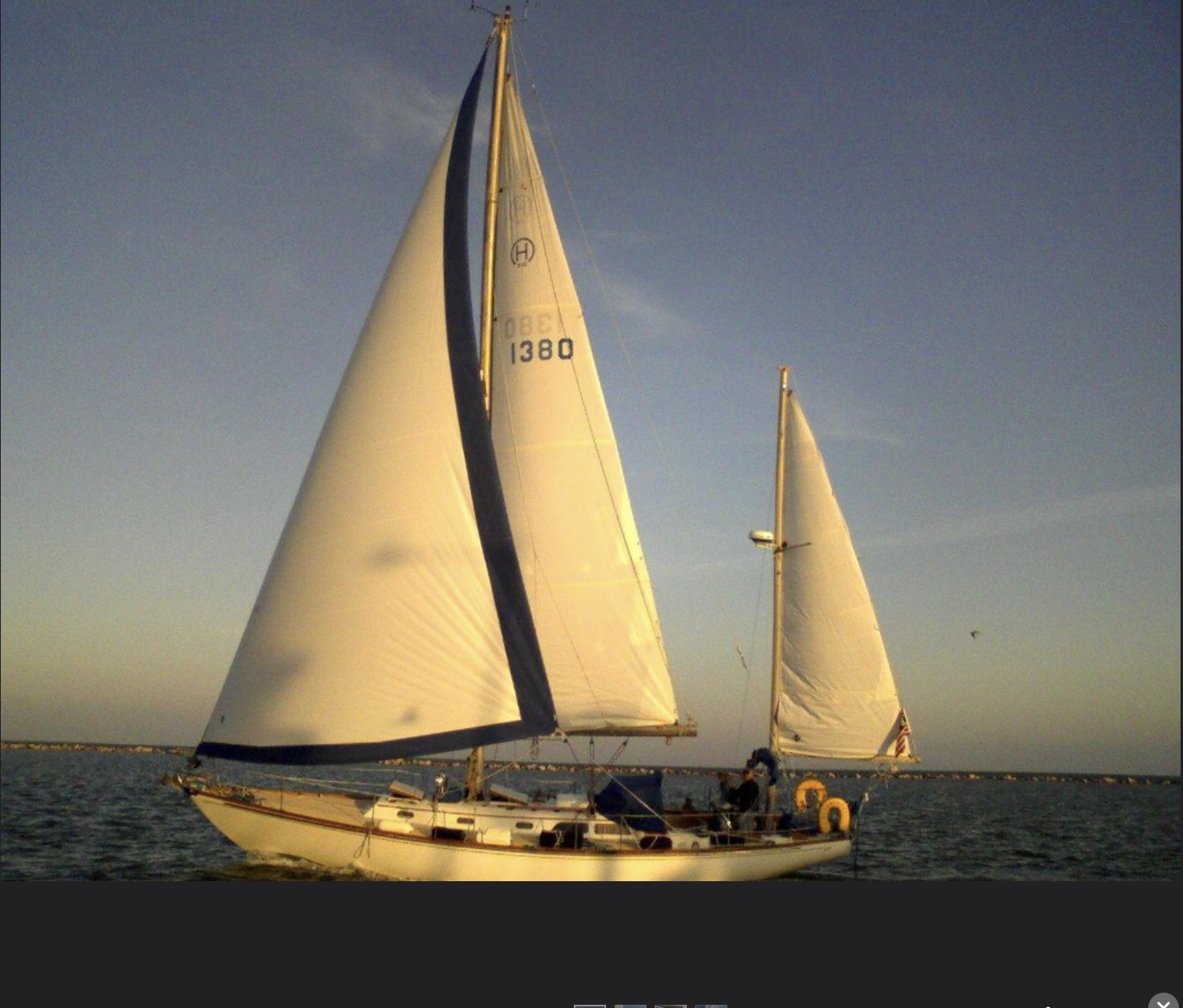 Boats
BoatsTrawlers vs Motorsailers vs Sailboats for Ocean Crossings
Range, motion, fuel and cost compared across trawlers, motorsailers and sailboats — which types can genuinely cross an ocean.
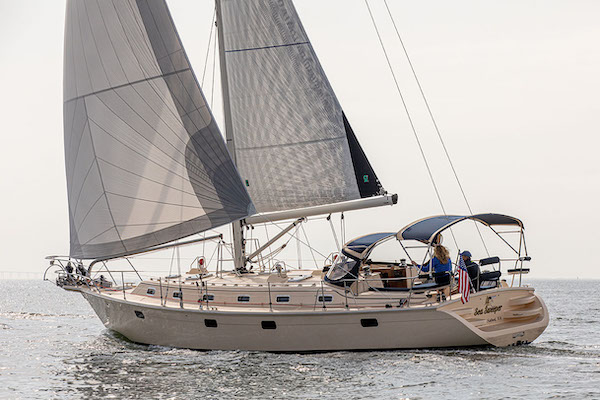 Boats
BoatsBest Liveaboard Sailboats
Monohulls and catamarans compared for full-time living — space, running costs, comfort at anchor and systems.
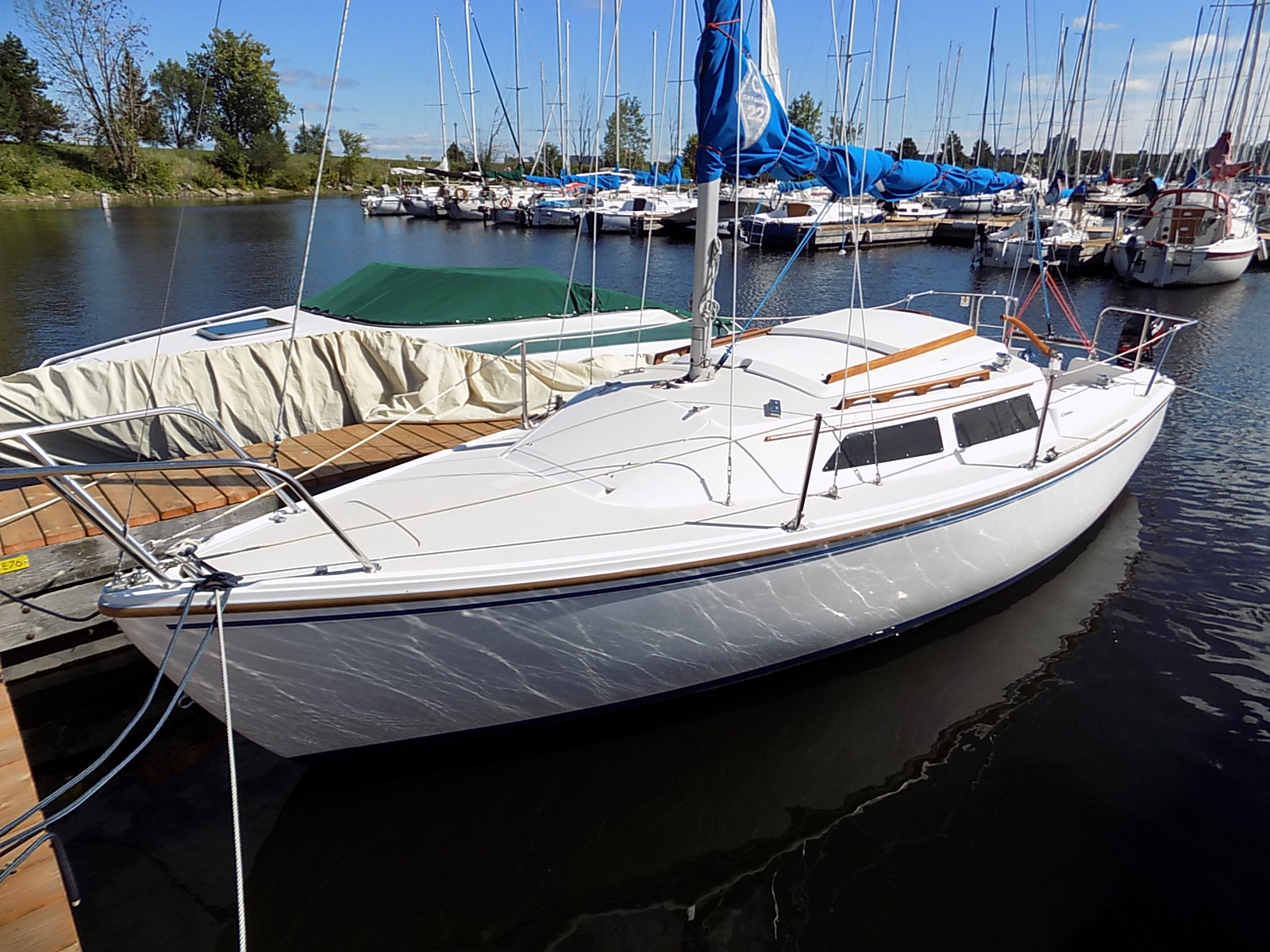 Boats
BoatsBest Trailerable Sailboats
Tow weights, ramp setup time, keel types and five trailer sailers worth owning, from Catalina 22 to Corsair 760.
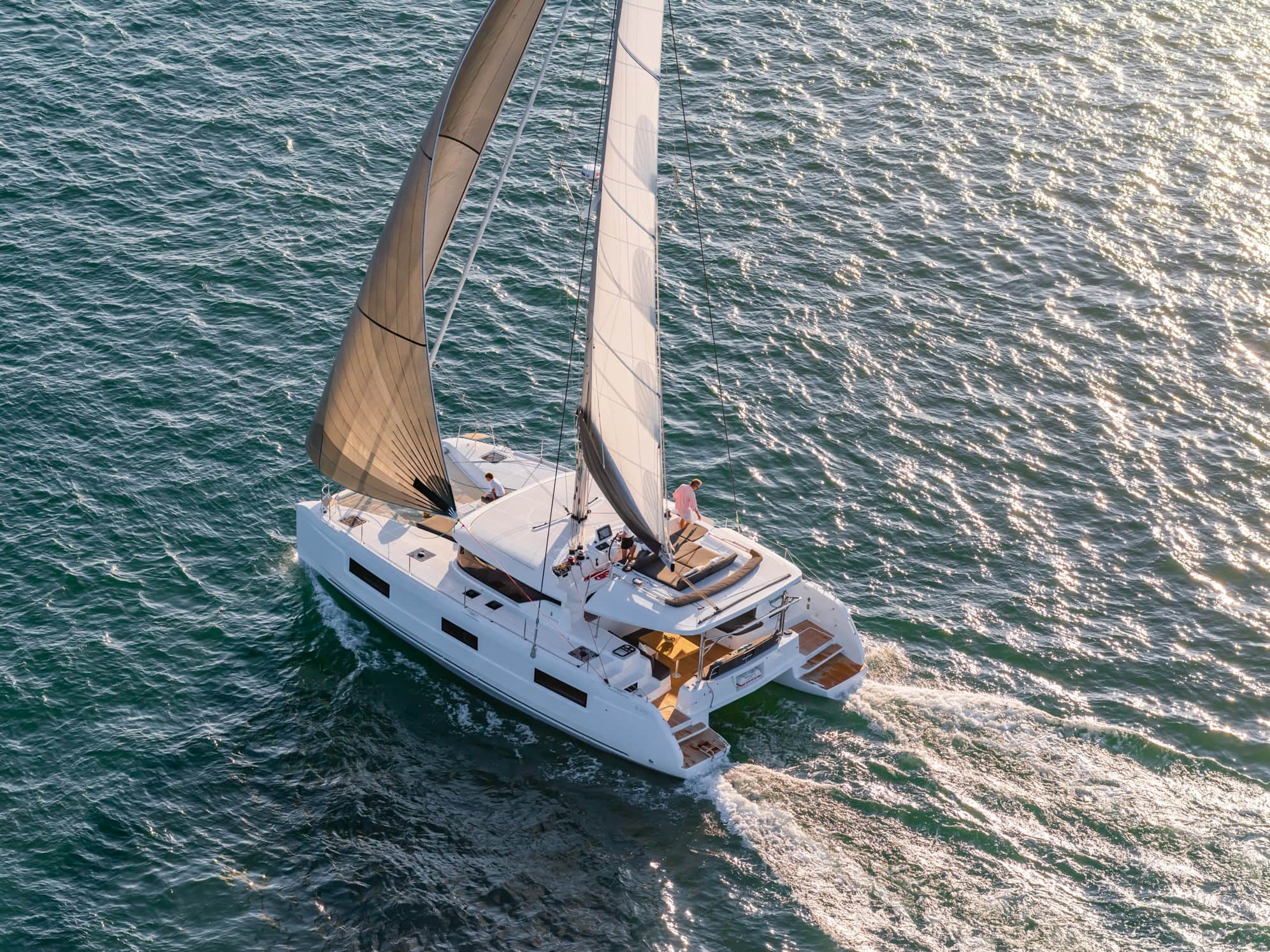 Boats
BoatsBest Liveaboard Catamarans: 7 Top Picks (2026)
The Lagoon 46 suits most families; couples should start with the Astréa 42. All 7 compared, with real running costs.
Looking for more gear guides? Browse all our gear recommendations or the full guides index.